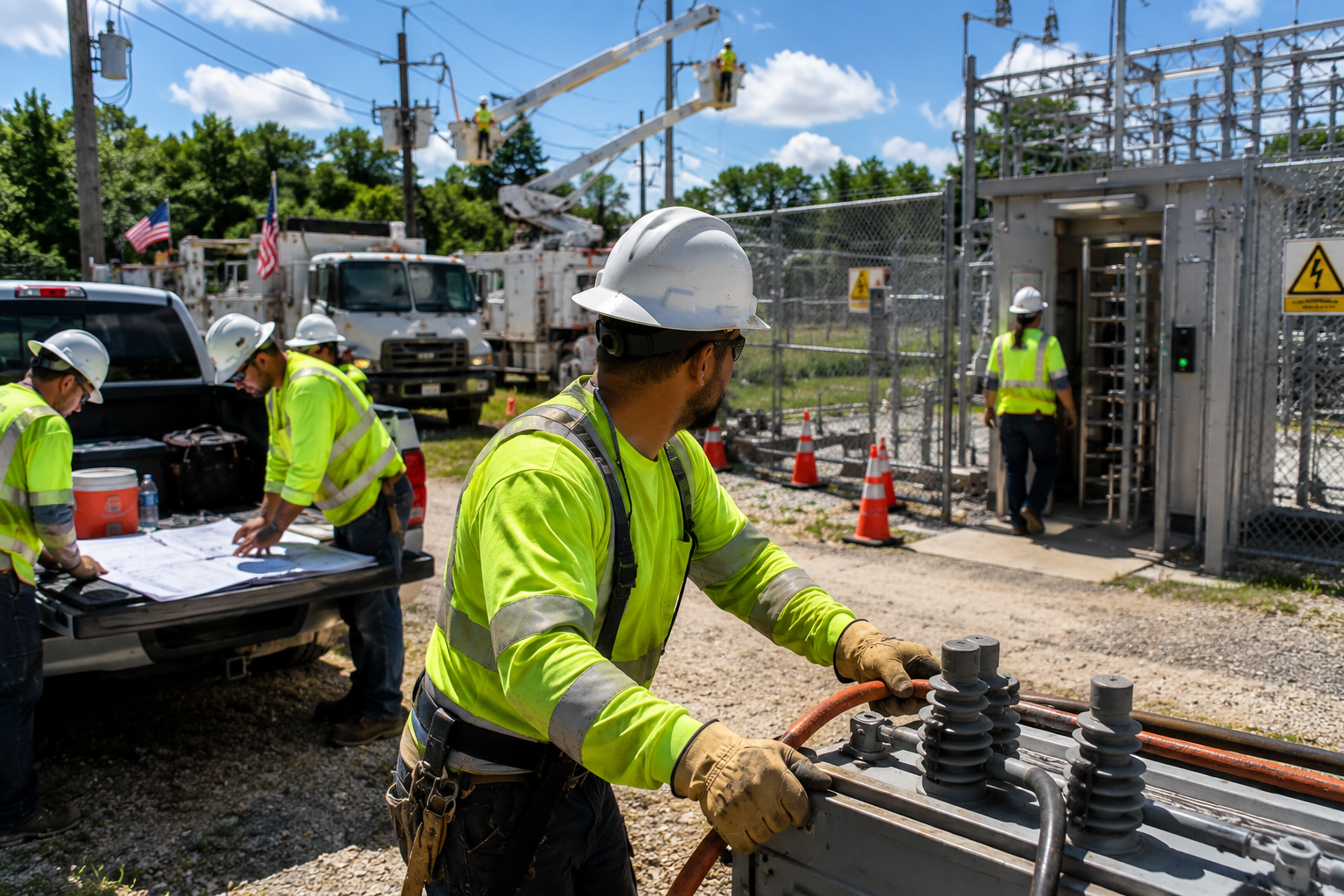
Energy and utility employers operate critical infrastructure where a single hiring or compliance failure can create safety incidents, regulatory violations, and public service disruptions. Power generation, transmission, pipeline operations, water treatment, and renewable energy development employ field crews, contractors, and technical staff under strict safety, security, and regulatory requirements. GCheck supports criminal background checks, drug testing, occupational health, global watchlist screening, and continuous monitoring in one FCRA-compliant platform built for the safety and compliance demands of the energy sector.

Power plants, pipelines, transmission networks, and water treatment facilities employ full-time staff, rotating contractors, and field crews who require different screening programs depending on their access level, regulatory classification, and role type. Generic background check platforms were not built for the contractor-heavy, safety-regulated, federally overseen workforce reality of the energy sector. GCheck handles each requirement as an orderable service within a single FCRA-compliant workflow.
Federal pipeline safety regulations, NERC CIP standards for critical electric infrastructure, and nuclear access requirements impose specific screening obligations for workers with access to sensitive or safety-critical systems.
DOT drug and alcohol testing applies to CDL drivers and pipeline safety-sensitive employees under PHMSA regulations, with testing programs, random pools, and documentation requirements that must be maintained across field operations.
Contractor and subcontractor workforces are difficult to screen consistently when each contractor manages their own onboarding. Gaps in contractor screening create security and compliance exposure for the prime operator.
Field roles in transmission, pipeline, and generation environments require pre-placement occupational health clearances and ongoing medical surveillance that must be coordinated alongside background checks without a separate vendor relationship.
Workers with access to critical infrastructure, federal contracts, or international supply chains require global watchlist and sanctions screening that standard criminal background check programs do not include.
Submit worker or contractor details through GCheck’s platform or your existing HRIS or contractor management system integration. Authorization and consent are collected before any check begins, including for drug testing and occupational health coordination.
Verified Entry® confirms worker identity before background checks are initiated. Criminal searches, global watchlist screening, drug testing, occupational health scheduling, and license verification run based on the services ordered. Each follows a documented, FCRA-compliant workflow.
Findings are returned in standardized formats that support consistent adjudication across candidates, contractors, roles, and sites. Pre-adverse and adverse action workflows are available when findings affect a hiring or access decision.
Continuous criminal monitoring, driver monitoring, DOT random testing programs, and occupational health surveillance continue throughout employment for field workers and safety-sensitive roles requiring ongoing oversight.
Requirements vary by role type, employer classification, and regulatory program. Most energy and utility employers run criminal background checks at state, county, and federal levels, along with employment verification. Drug testing is standard for safety-sensitive and field roles. Workers subject to DOT pipeline safety regulations require federally mandated drug and alcohol testing. Workers with access to critical electric infrastructure may have additional requirements under NERC CIP standards. Every GCheck package includes biometric identity verification through Verified Entry® before any check begins.
DOT drug and alcohol testing under PHMSA regulations applies to operators of natural gas pipelines, hazardous liquid pipelines, and liquefied natural gas facilities whose employees perform safety-sensitive functions. CDL drivers operating commercial motor vehicles for energy employers are subject to FMCSA drug and alcohol requirements. GCheck supports Part 40-compliant pre-employment, random, reasonable suspicion, post-accident, and return-to-duty testing programs for both regulatory frameworks.
Energy companies and utilities operate critical national infrastructure, hold federal contracts, and maintain international supply chains that create sanctions and prohibited party compliance obligations. Hiring a sanctioned individual or entity creates regulatory violations under OFAC and applicable federal programs regardless of whether the employer was aware of the sanction. For roles with access to critical infrastructure, federal contractor relationships, or international procurement, watchlist screening is a compliance requirement, not an optional add-on.
Pre-placement physicals verify that field workers are medically fit for the physical demands and hazard exposures of their specific role before assignment begins. Common services for energy and utility roles include fitness-for-duty evaluations, respirator clearance, hearing conservation exams, and medical surveillance for chemical, noise, or physical hazard exposure. GCheck coordinates occupational health services alongside background checks and drug testing through one platform.
GCheck’s platform supports consistent screening standards across direct employees, contractors, and subcontractors operating on behalf of a prime energy operator. Screening packages can be configured by access level, regulatory classification, and site requirements so every worker category receives the appropriate checks before site access is granted. Centralized reporting provides operators with documentation that demonstrates consistent contractor screening compliance during regulatory audits.
Yes. Every GCheck workflow includes the consent, disclosure, and adverse action procedures the FCRA requires. This includes pre-adverse action notices, waiting periods, and the candidate’s right to dispute before a final adverse action is communicated. Audit trails document each step for regulatory inspections, internal compliance reviews, and legal defense.