



Prescription medications can trigger positive results on standard employment drug tests, creating compliance challenges that require employers to balance workplace safety with privacy rights and Americans with Disabilities Act (ADA) protections. Understanding which prescription drugs cause detection, implementing legally compliant verification processes, and establishing fair accommodation frameworks are essential for HR professionals navigating the intersection of legitimate medical use and workplace safety obligations.
Key Takeaways Outline
- Standard 5-panel and 10-panel employment drug tests can detect prescription opioids, benzodiazepines, amphetamines, and other controlled substances that employees may legally use under medical supervision.
- The Americans with Disabilities Act (ADA) prohibits discrimination against employees using prescription medications for documented disabilities, requiring employers to engage in an interactive accommodation process before taking adverse action.
- Medical Review Officers (MROs) serve as critical intermediaries who verify legitimate prescription use before reporting positive test results to employers, protecting employee privacy while maintaining testing integrity.
- Employers must establish clear written drug testing policies that distinguish between illegal drug use and lawful prescription medication use, with specific procedures for handling positive results tied to documented prescriptions.
- Opioid analgesics, ADHD medications, anti-anxiety drugs, and certain antidepressants represent the most common prescription categories that trigger positive employment drug screenings.
- False positive results can occur when legal medications mimic the chemical structure of illegal substances, necessitating confirmatory testing protocols and proper documentation review processes.
- Mental health medications require particularly sensitive handling under ADA guidelines, as employers cannot discriminate based on psychiatric disability while maintaining legitimate safety-sensitive position requirements.
- Proactive policy frameworks that incorporate reasonable accommodation assessments, fitness-for-duty evaluations, and documented safety protocols help employers minimize legal exposure while supporting employee health needs.
Understanding Employment Drug Testing and Prescription Medications
Employment drug testing has become standard practice across industries, with approximately 56% of U.S. employers conducting pre-employment screening. Many organizations also implement random or post-incident testing protocols. However, the increasing prevalence of prescription medication use creates complex compliance scenarios that HR professionals must navigate carefully.
Prescription drugs that show up on drug tests present unique challenges because they represent both legitimate medical treatment and potential workplace safety concerns. Unlike illegal substances, lawful prescription use enjoys legal protections under federal disability law. This creates a nuanced landscape where employers must balance competing interests: maintaining safe work environments while respecting employee privacy and accommodation rights.
The Legal Framework Governing Prescription Drug Testing
Federal law does not mandate employment drug testing for most private employers. However, regulations from the Department of Transportation (DOT) require testing for safety-sensitive positions in transportation industries. For most organizations, drug testing remains voluntary but subject to important legal constraints.
The Americans with Disabilities Act (ADA) provides the primary legal framework affecting prescription drug screening. Under ADA provisions, employers cannot discriminate against individuals based on disability. Lawful prescription medication use for a documented disability receives explicit protection. Employers must reasonably accommodate employees who use prescription medications unless doing so would create undue hardship or pose a direct threat to workplace safety.
Experience with screening procedures has shown that compliance choices are rarely as black-and-white as policy suggests. Distrust can be eroded quickly where a procedure may seem inflexible and unintelligible or where it ignores the underlying reality. At the same time, a responsibility is retained by organizations to ensure that the performance of this procedure has not compromised safety or been inconsistent. With transparency and respect, this is a procedure that is a means for fairness rather than fear. �
Standard Drug Testing Panels and Detection Capabilities
Employment drug tests typically use either 5-panel or 10-panel screening formats that detect specific drug categories rather than individual medications. These standardized panels provide consistent screening across different testing facilities.
The standard 5-panel test screens for these substance categories:
- Marijuana metabolites (THC)
- Cocaine metabolites
- Amphetamines and methamphetamines
- Opiates and opioids
- Phencyclidine (PCP)
The expanded 10-panel test adds these additional categories:
- Benzodiazepines
- Barbiturates
- Methadone
- Propoxyphene
- Quaaludes (methaqualone)
These panels detect both illegal substances and prescription medications within the same drug classes. A positive result indicates presence of the substance but does not distinguish between lawful prescription use and illegal consumption. This determination occurs during the Medical Review Officer verification process.
Prescription Drugs That Commonly Trigger Positive Test Results
Understanding which prescription medications cause positive drug test results enables employers to establish informed policies. This knowledge also helps employees understand disclosure obligations. Different medication categories interact with standard testing panels in specific ways.
Opioid Pain Medications
Prescription opioids represent the most common category of medications that show up on drug tests. Standard panels detect both natural opiates derived from poppy plants and synthetic opioids created in laboratories.
| Medication Type | Common Brand Names | Typical Detection Window |
| Hydrocodone | Vicodin, Norco | 2-4 days |
| Oxycodone | OxyContin, Percocet | 2-4 days |
| Morphine | MS Contin | 2-4 days |
| Codeine | Tylenol #3 | 2-4 days |
| Hydromorphone | Dilaudid | 2-3 days |
| Tramadol | Ultram | 2-4 days (extended panels) |
| Fentanyl | Duragesic | Requires specific testing |
Detection windows vary by medication, dosage, metabolism, and testing method. Chronic use of long-acting formulations may extend detection periods beyond typical timeframes.
ADHD and Stimulant Medications
Prescription stimulants used to treat Attention-Deficit/Hyperactivity Disorder (ADHD) and narcolepsy trigger positive results in the amphetamine category. These medications present particular compliance challenges because ADHD qualifies as a disability under the ADA.
Medications that cause amphetamine-positive results include:
- Amphetamine/dextroamphetamine (Adderall): Mixed amphetamine salts commonly prescribed for ADHD. Detection typically occurs for 2-4 days after last use.
- Lisdexamfetamine (Vyvanse): Prodrug converted to dextroamphetamine in the body. Shows as amphetamine on standard panels.
- Methylphenidate (Ritalin, Concerta): Central nervous system stimulant with similar detection characteristics.
- Dexmethylphenidate (Focalin): Refined form of methylphenidate with comparable testing implications.
Safety-sensitive positions may require accommodation discussions regarding timing of medication use and fitness-for-duty considerations. However, blanket exclusions based on ADHD medication use generally violate disability discrimination protections.
Anti-Anxiety and Sleep Medications
Benzodiazepines prescribed for anxiety disorders, panic disorders, and sleep disturbances appear on 10-panel tests and some expanded screening protocols. These medications slow down the central nervous system to produce calming effects.
| Generic Name | Brand Name | Primary Use | Detection Window |
| Alprazolam | Xanax | Anxiety, panic disorder | 3-7 days |
| Diazepam | Valium | Anxiety, muscle spasms | 3-7 days (up to 30 with chronic use) |
| Lorazepam | Ativan | Anxiety, insomnia | 3-7 days |
| Clonazepam | Klonopin | Panic disorder, seizures | 3-7 days |
| Temazepam | Restoril | Insomnia | 3-7 days |
Detection windows depend significantly on individual metabolism and medication half-life. Long-acting benzodiazepines with chronic use patterns may remain detectable for extended periods.
Mental Health Medications and Antidepressants
Most antidepressants do not trigger standard drug test panels. However, certain medications can cause unexpected positive results or require specialized testing considerations.
Bupropion (Wellbutrin), prescribed for depression and smoking cessation, has occasionally caused false positive results for amphetamines on initial screening tests. Confirmatory testing typically resolves these findings. Quetiapine (Seroquel) and other atypical antipsychotics do not typically appear on standard panels but may be detected through specialized testing.
Prescription Drugs That Cause False Positive Results

False positive results occur when legal substances produce positive initial screening results that confirmatory testing later refutes. Understanding common causes of false positives helps employers establish proper verification protocols.
Over-the-Counter Medications and Supplements
Several non-prescription substances can trigger initial positive results on immunoassay screening tests. Cold and allergy medications containing pseudoephedrine or phenylephrine may cause false positives for amphetamines or methamphetamines. Common products include Sudafed, Claritin-D, and many sinus relief formulations.
Additional over-the-counter causes of false positives include:
- Dextromethorphan: Cough suppressant ingredient in Robitussin and DayQuil that has occasionally triggered false positive results for PCP or opioids.
- DMAA supplements: Dietary supplements and weight loss products containing dimethylamylamine may cause amphetamine-positive results.
- NSAIDs: Certain non-steroidal anti-inflammatory drugs like ibuprofen have rarely caused false positives for marijuana or PCP.
Responsible testing protocols always include confirmatory analysis before reporting positive results. Employers should never take adverse action based solely on initial screening without proper verification.
Prescription Medications That Cross-React
Some prescription medications cause false positive results for different drug categories due to chemical structure similarities. Confirmatory testing using more specific analytical methods resolves these cross-reactivity issues.
| Medication | Prescribed For | Potential False Positive |
| Trazodone | Depression, insomnia | Amphetamines, LSD |
| Sertraline (Zoloft) | Depression, anxiety | Benzodiazepines, LSD |
| Labetalol | High blood pressure | Amphetamines, methamphetamines |
| Quinolone antibiotics | Bacterial infections | Opiates |
| Quetiapine (Seroquel) | Bipolar disorder, schizophrenia | Methadone, tricyclic antidepressants |
Medical Review Officers recognize these common cross-reactivity patterns and conduct appropriate verification procedures. This protects employees from adverse consequences based on testing artifacts.
The Role of Confirmatory Testing
Because false positives occur with immunoassay screening methods, responsible drug testing protocols always include confirmatory testing. Gas chromatography-mass spectrometry (GC-MS) or liquid chromatography-tandem mass spectrometry (LC-MS/MS) provides chemical specificity for any positive initial results. These advanced techniques distinguish between different substances within a drug class and eliminate false positives caused by cross-reactivity.
Confirmatory testing typically takes 2-4 business days after initial screening. Employers should never take adverse action based solely on initial screening results without confirmatory testing and MRO verification.
The Medical Review Officer Verification Process
Medical Review Officers (MROs) serve as licensed physicians who specialize in reviewing and interpreting drug test results. They act as critical gatekeepers between laboratory findings and employer notifications.
MRO Responsibilities and Functions
When a laboratory reports a positive drug test result, the MRO conducts a verification process before reporting findings to the employer. The MRO contacts the tested individual confidentially to discuss the positive result. This contact provides an opportunity to present medical explanations, including legitimate prescription use.
If the MRO determines that a valid prescription explains the positive result, the officer typically reports the test as negative to the employer. This protects the employee’s private medical information. The employer receives only pass/fail information without details about specific medications used.
Prescription Verification Standards
MROs apply specific criteria when evaluating prescription documentation to ensure consistency and integrity. These standards protect both employees with legitimate prescriptions and employers seeking reliable testing results.
Key verification criteria include:
- Prescription currency: The prescription must be valid for the time period when the test specimen was collected.
- Prescriber authority: The medication must be prescribed by a licensed practitioner with prescribing authority in the relevant jurisdiction.
- Substance consistency: The detected substance must match the reported prescription.
- Patient identity: Prescriptions must be issued to the tested individual.
Documentation from practitioners operating outside their scope of practice may not satisfy verification requirements. MROs exercise professional judgment in evaluating borderline situations.
Privacy Protections and Information Flow
The MRO verification process creates a privacy barrier that prevents employers from accessing detailed medical information when legitimate prescriptions explain positive results. Employers receive only verified negative or positive result notifications without specific drug identification.
However, for safety-sensitive positions or when specific regulatory requirements apply, employers may receive additional information. This disclosure remains limited to safety-relevant considerations necessary to conduct fitness-for-duty evaluations or accommodation assessments.
ADA Compliance and Reasonable Accommodation Frameworks
The Americans with Disabilities Act creates specific obligations for employers when prescription medication use relates to documented disabilities. These requirements demand careful accommodation processes rather than automatic disqualification.
Protected Prescription Medication Use
The ADA explicitly protects individuals who use prescription medications as prescribed by licensed healthcare providers. Employers cannot discriminate against employees or applicants based on their use of lawful prescription drugs for documented disabilities.
Protected medication use encompasses:
- Pain management: Opioid medications prescribed for chronic pain conditions including back pain, arthritis, or post-surgical recovery.
- Mental health treatment: Stimulants for ADHD, antidepressants for depression, anti-anxiety medications for anxiety disorders, and antipsychotics for bipolar disorder or schizophrenia.
- Neurological conditions: Anti-seizure medications, migraine preventatives, and treatments for movement disorders.
Simply testing positive for a prescription drug does not justify adverse employment action. Employees who hold valid prescriptions and can perform essential job functions with or without reasonable accommodation maintain legal protections.
The Interactive Accommodation Process
When an employee or applicant discloses prescription medication use that may affect job performance or safety, employers must engage in an interactive process. This good-faith dialogue identifies potential reasonable accommodations that enable continued employment.
Key interactive process steps include:
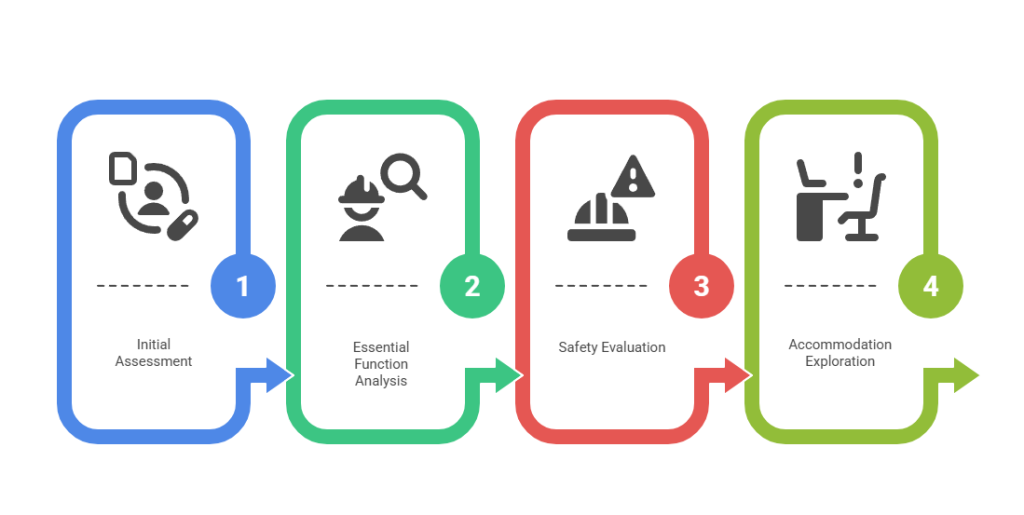
- Initial assessment: Determine whether the individual has a disability as defined by the ADA and whether the prescription medication relates to that disability.
- Essential function analysis: Identify the essential functions of the position and evaluate whether the individual can perform those functions while using the prescribed medication.
- Safety evaluation: Assess whether the medication use creates a direct threat—a significant risk of substantial harm that cannot be eliminated through reasonable accommodation.
- Accommodation exploration: Consider potential accommodations such as modified work schedules, temporary reassignment, or unpaid leave during medication adjustment periods.
Employers should approach this process with flexibility and creativity. Many accommodations involve minimal cost while enabling continued employment for qualified individuals.
Direct Threat and Safety-Sensitive Positions
The ADA permits employers to exclude individuals who pose a direct threat to workplace safety that cannot be eliminated through reasonable accommodation. However, direct threat determinations must be based on objective evidence rather than generalized concerns.
| Evaluation Factor | Required Analysis | Documentation Needed |
| Duration of risk | How long will the potential risk continue? | Medical evaluations, medication timelines |
| Nature and severity | What specific harm might occur? | Job hazard analysis, incident data |
| Likelihood | How probable is the potential harm? | Statistical evidence, expert opinions |
| Imminence | How soon might harm occur? | Functional capacity assessments |
For safety-sensitive positions such as heavy equipment operation or commercial driving, employers may establish legitimate safety requirements. These requirements must be based on actual job functions and supported by objective evidence.
Mental Health Medication Considerations
Mental health medications require particularly sensitive handling due to historical stigma and discrimination. Employers cannot make employment decisions based on assumptions about mental health medication effects.
Many mental health medications stabilize conditions and enable optimal functioning rather than impairing performance. Depression, anxiety disorders, and bipolar disorder qualify as disabilities under the ADA. Discrimination based on mental health medication use violates ADA protections and creates significant legal exposure.
Progressive employers implement policies that treat mental health medications the same as physical health medications. Fitness-for-duty determinations should be based on objective performance evidence rather than medication use alone.
Implementing Compliant Drug Testing Policies
Effective drug testing policies balance workplace safety objectives with legal compliance requirements. Clear written policies provide guidance to employees while protecting employer interests.
Essential Policy Components
Comprehensive drug testing policies should address multiple critical elements to ensure legal compliance and operational effectiveness. These components work together to create a coherent framework that employees and managers can understand.
Key policy components include:
- Purpose statement: Articulate legitimate business reasons for drug testing, such as workplace safety, regulatory compliance, and maintaining a productive environment.
- Scope and coverage: Specify which positions are subject to testing and which testing circumstances apply (pre-employment, random, post-incident, reasonable suspicion).
- Testing procedures: Describe the testing process, including specimen collection methods, laboratory standards, confirmatory testing protocols, and Medical Review Officer verification.
- Substance categories: Identify which drug panels will be used and which substance categories are tested.
- Prescription medication disclosure: Establish procedures for employees to disclose prescription medication use and how medical privacy will be protected.
Additional policy elements should address reasonable accommodation procedures, consequences for verified positive results, confidentiality protections, and record retention requirements.
Fitness-for-Duty Evaluation Protocols
For safety-sensitive positions where prescription medication effects may create legitimate concerns, fitness-for-duty evaluation protocols provide objective assessment mechanisms. These protocols comply with ADA requirements by focusing on functional capabilities rather than diagnosis or medication use.
Effective fitness-for-duty protocols incorporate these elements:
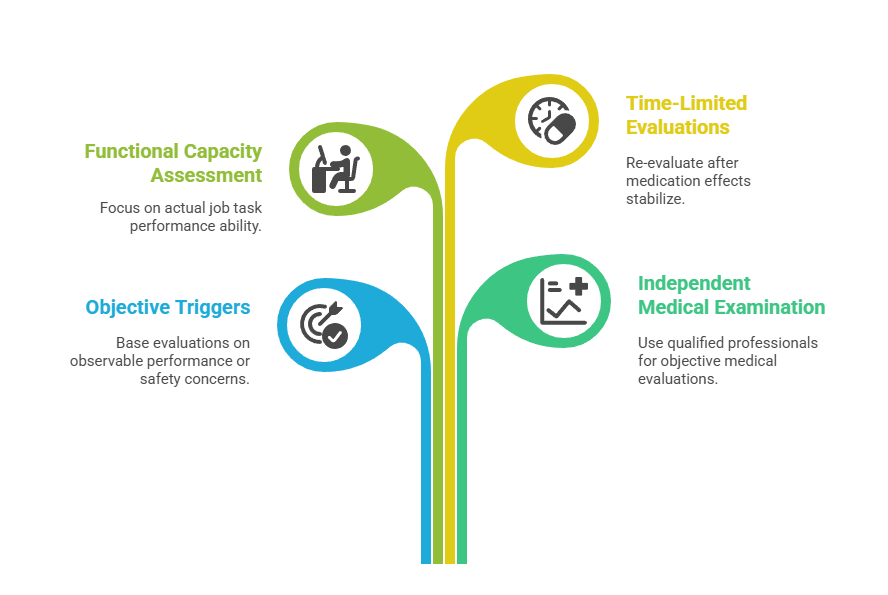
- Objective triggers: Base evaluation requirements on observable performance concerns, safety incidents, or verifiable behavioral changes rather than medication use alone.
- Independent medical examination: Utilize qualified medical professionals to conduct objective evaluations focused on essential job function capabilities.
- Functional capacity assessment: Emphasize actual ability to perform specific job tasks rather than generalized assumptions about medication effects.
- Time-limited evaluations: Recognize that medication effects may be temporary during initial prescription periods, permitting re-evaluation after stabilization.
Documentation should include the specific safety concerns identified, evaluation methods used, objective findings, and functional limitations that support work restrictions.
Sample Policy Language for Prescription Drug Provisions
Employers should incorporate clear prescription drug provisions into drug testing policies using language that balances safety and accommodation obligations:
“The company recognizes that employees may lawfully use prescription medications that could cause positive results on drug screening tests. Employees with valid prescriptions will not face adverse employment action solely based on prescription medication use disclosed during the Medical Review Officer verification process.
Employees using prescription medications that may affect their ability to safely perform essential job functions should consult with their healthcare providers. Employees who have concerns about prescription medication effects may confidentially discuss accommodation options with Human Resources.
For safety-sensitive positions, the company may require medical clearance to verify that the employee can safely perform essential job functions while using prescription medications. Such requirements will be implemented in accordance with Americans with Disabilities Act guidelines.”
This language acknowledges legal prescription use while preserving employer ability to assess safety considerations.
Managing Drug Testing for Remote and Multi-State Workforces
Remote work arrangements and geographically distributed teams create practical and legal complications for drug testing programs. Employers must navigate varying state laws, ensure collection site access, and maintain consistent policy application.
Key considerations include:
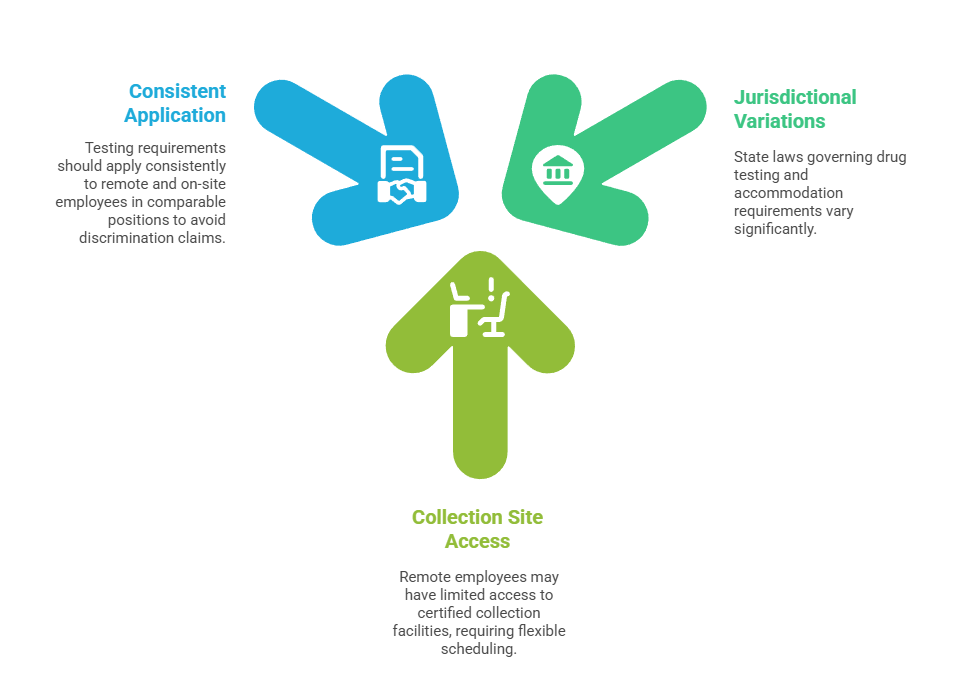
- Jurisdictional variations: State laws governing drug testing and accommodation requirements vary significantly. Policies must comply with requirements in each state where employees work.
- Collection site access: Remote employees may have limited access to certified collection facilities, requiring flexible scheduling.
- Consistent application: Testing requirements should apply consistently to remote and on-site employees in comparable positions to avoid discrimination claims.
Employers should document the business rationale for any testing requirement differences between remote and on-site workers.
Record Retention and Documentation Requirements
Proper documentation practices support legal compliance and provide evidence of fair implementation should policies be challenged. Comprehensive records demonstrate good faith and consistent application.
| Record Type | Retention Period | Storage Location | Access Restrictions |
| Negative test results | 1-2 years | Confidential medical files | HR designated personnel only |
| Positive test results | 5 years | Confidential medical files | HR designated personnel, legal counsel |
| MRO verification records | 5 years | Confidential medical files | HR designated personnel, legal counsel |
| Accommodation documentation | Duration of employment + 1 year | Confidential medical files | HR designated personnel, legal counsel |
Records should be maintained in separate confidential medical files rather than general personnel files. Access should be restricted to designated HR personnel and legal counsel.
Conclusion
Successfully managing prescription drug issues in employment drug testing requires balancing workplace safety imperatives with legal compliance obligations under the ADA. By implementing clear policies, utilizing proper verification processes, and engaging in good-faith accommodation discussions, employers can maintain safe work environments while respecting employee privacy rights. Another crucial consideration is the achievement of effective communication to ensure the employees have a clear understanding of what is being tested for, the importance of conducting the testing, as well as the procedures for processing the prescription. If employers engage in drug testing processes that are consistent, understanding, and properly documented, they reduce their liability while increasing employee trust.
Frequently Asked Questions
Can an employer refuse to hire me because I take prescription medications?
Employers cannot discriminate against applicants based on lawful prescription medication use for documented disabilities under the Americans with Disabilities Act. If you provide valid prescription documentation to the Medical Review Officer, the test should be reported as negative. However, for safety-sensitive positions, employers may assess whether you can safely perform essential job functions with or without reasonable accommodation.
What happens if I test positive for my legally prescribed medication?
The Medical Review Officer will confidentially contact you to discuss the result before reporting to your employer. You will have an opportunity to provide prescription documentation. If you present valid verification, the MRO typically reports a negative result without disclosing your specific medication use.
Do I have to tell my employer about my prescriptions before a drug test?
You are not required to disclose prescription medications to your employer before drug testing in most circumstances. The Medical Review Officer verification process provides a confidential opportunity to present documentation after any positive result. However, if your prescription medication may affect job safety, you may wish to discuss accommodation options proactively.
Can prescription drugs cause false positive results for illegal drugs?
Yes, certain medications can cause false positive results on initial screening tests. Common examples include pseudoephedrine in cold medications triggering false positives for amphetamines. Confirmatory testing using more specific methods should eliminate these false positives before results are reported.
Are ADHD medications protected under disability discrimination laws?
ADHD qualifies as a disability under the Americans with Disabilities Act, and individuals who use prescribed stimulant medications receive protection from disability discrimination. Employers cannot take adverse action solely because you use prescription ADHD medication, though safety-sensitive positions may require accommodation discussions.
How long do prescription drugs stay detectable in drug tests?
Detection windows vary based on medication type, dosage, individual metabolism, and testing method. Most prescription opioids remain detectable for 2-4 days. Benzodiazepines typically show for 3-7 days for short-acting formulations and potentially up to 30 days with chronic use.
Can my employer find out what specific medications I take?
The Medical Review Officer verification process protects your medical privacy. When valid prescriptions explain positive results, the MRO typically reports a negative test without disclosing medication information. Your employer should not learn details unless safety-sensitive position requirements necessitate limited disclosure for accommodation purposes.
What if I need accommodation for prescription medication side effects?
If prescription medication use related to a documented disability affects your ability to perform job functions, you may request reasonable accommodation under the ADA. Contact Human Resources to initiate an interactive accommodation process including modified schedules or temporary duty restrictions.
Do mental health medications show up on standard employment drug tests?
Most antidepressants and mental health medications do not trigger standard drug tests. However, benzodiazepines prescribed for anxiety disorders appear on 10-panel tests. The same ADA protections and privacy safeguards apply to mental health medications as to any other disability-related prescriptions.
Can an employer test for specific prescription drugs not included in standard panels?
Employers can implement expanded testing panels that detect additional substances beyond standard formats. Such testing must comply with state law requirements, apply consistently to comparable positions, and respect ADA accommodation obligations while being justified by legitimate business needs.
Additional Resources
- Americans with Disabilities Act: Employment
https://www.ada.gov/topics/employment/ - U.S. Department of Labor – Drug-Free Workplace Policies
https://www.dol.gov/general/topics/workplace-substance-abuse - Substance Abuse and Mental Health Services Administration – Workplace Resources
https://www.samhsa.gov/workplace - Equal Employment Opportunity Commission – ADA and Prescription Drugs
https://www.eeoc.gov/laws/guidance/ada-your-employment-rights-individual-disability

ABOUT THE CREATOR
GCheck Editorial Team
Meet the GCheck Editorial Team, your trusted source for insightful and up-to-date information in the world of employment background checks. Committed to delivering the latest trends, best practices, and industry insights, our team is dedicated to keeping you informed.
With a passion for ensuring accuracy, compliance, and efficiency in background screening, we are your go-to experts in the field. Stay tuned for our comprehensive articles, guides, and analysis, designed to empower businesses and individuals with the knowledge they need to make informed decisions.
At GCheck, we're here to guide you through the complexities of background checks, every step of the way.