


Summer construction hiring does not fail at the policy level. It fails at the workflow level, when the informal process that handles two or three hires a month gets applied to fifteen or twenty in a single week, and the gaps that were invisible at low volume become certification misses, FCRA violations, and delayed project starts. This playbook covers the specific pressure points that summer creates for GCs: subcontractor crew screening under client certification deadlines, multi-state project deployment, jobsite access-tiered verification, and the adverse action process under volume.
Key Takeaways
- The compliance gaps most likely to create liability for GCs are not found in January during a policy review. They show up in May and June when volume spikes and informal workflows get applied to scale they were never built for.
- Prior season clearances do not carry forward. Each new seasonal engagement is a new screening event regardless of whether the worker returned the prior year.
- Client certification deadlines and FCRA compliance obligations are independent. Satisfying the contract does not satisfy the regulation, and both must be met in every instance.
- FCRA may apply to 1099 subcontractor screenings depending on degree of control. GCs should not assume the independent contractor classification resolves the FCRA question. Consult qualified legal counsel for your specific program structure.
- Turnaround time in summer is primarily a workflow design and initiation timing problem, not a check-length problem. Tying initiation to subcontractor mobilization confirmation rather than project start date is the single highest-impact workflow change available to construction HR.
- The adverse action two-step process applies to every worker individually. Batch adverse action is not FCRA-compliant regardless of volume pressure.
- Multi-state project deployment means multi-jurisdiction compliance. Ban-the-box requirements, lookback periods, and adverse action timing rules vary across major construction markets.
Why Summer Volume Breaks GC Background Check Programs
GC background check programs are typically built around steady-state hiring. A superintendent role opens, a candidate clears, and work begins. This works at low volume. It does not work when Memorial Day approaches and a GC needs to mobilize three subcontractor crews, two direct hires in safety-sensitive roles, and a site superintendent across two states in the same two-week window.
Three structural pressure points drive summer failure for GCs specifically.
Volume Compression
A GC that processes two or three background checks per month may need to process fifteen or twenty in the same week as project mobilization dates converge. A workflow built for the former creates a queue for the latter. That queue translates directly into delayed project starts and missed client certification windows, both of which carry real cost consequences for a GC managing multiple summer projects at once.
Worker Classification Complexity
Summer construction hiring spans W-2 employees, 1099 subcontractors, labor broker placements, and returning seasonal workers. Each group carries different FCRA applicability questions and different program design requirements. A uniform workflow applied to all of them either over-processes low-risk workers or under-processes high-risk ones. GCs who apply the same process to a direct W-2 hire and a 1099 specialty subcontractor crew without confirming FCRA applicability for each are working from an assumption that may not hold.
The Returning Worker Assumption
GC programs often treat prior season clearances as carrying forward to the current season. They do not. A worker who cleared a check in September is presenting a clearance that is now eight or nine months old. Any criminal activity, new sex offender registry listing, or license suspension in that window stays hidden from the GC. Each new seasonal engagement is a new screening event, and treating it otherwise creates exactly the undisclosed post-hire history gap that a current check is designed to close.
“Pressure does not break hiring systems. It exposes the weak ones.” One thing I have learned about high-volume hiring is that the real test is not when operations are calm, but when teams are hiring at scale under tight timelines. For example, in logistics, things happen very fast, from the storage facilities to deliveries, and the systems need to be resilient enough to keep up with the pressure. To me, strong hiring leadership is about building processes that people can trust even during the busiest seasons, because consistency matters most when the pressure is highest. �
What Background Checks Do GCs Need to Run on Summer Workers?
Jobsite access level is the right organizing variable for GC background check program design, not employment classification or role title. A W-2 laborer and a 1099 specialty subcontractor with identical jobsite access profiles create similar risk profiles and should receive similar verification depth. The framework below organizes verification by access tier.
Tier 1: Limited or Perimeter Access
Workers with no access to occupied structures, hazardous materials, or security-sensitive areas. Examples include exterior site prep crews, perimeter labor, and delivery and logistics workers. This tier requires:
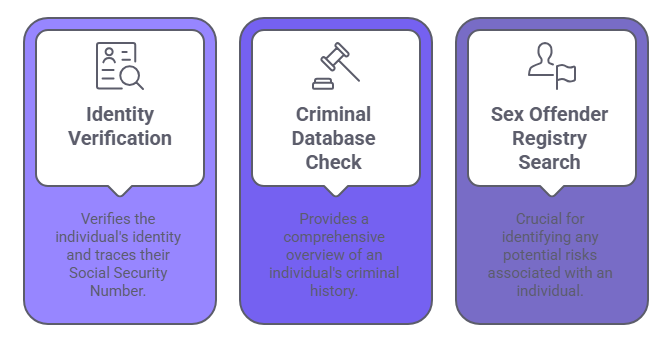
- Identity verification and SSN trace.
- National criminal database check.
- Sex offender registry search.
Tier 2: General Jobsite Access
Workers with general jobsite access, including interior work areas, but without access to security-sensitive systems, controlled materials, or sensitive client data environments. Examples include general trade workers, framing and finishing crews, and most specialty subcontractor personnel. This tier requires:
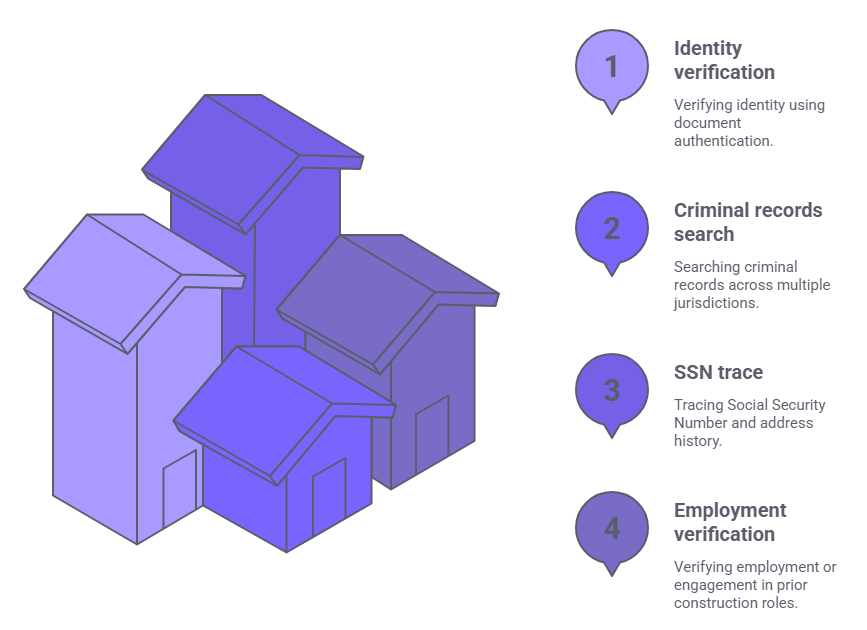
- Identity verification with document authentication.
- Multi-jurisdiction county and state criminal records search.
- SSN trace and address history.
- Employment or engagement verification for prior construction roles.
Tier 3: Safety-Sensitive, Security-Sensitive, or High-Access Roles
Workers with access to occupied or sensitive structures, utility systems, hazardous materials, or client security-sensitive environments. Examples include electrical and mechanical systems workers, project managers with site-wide access, safety officers, and workers on federal or government projects. This tier requires:
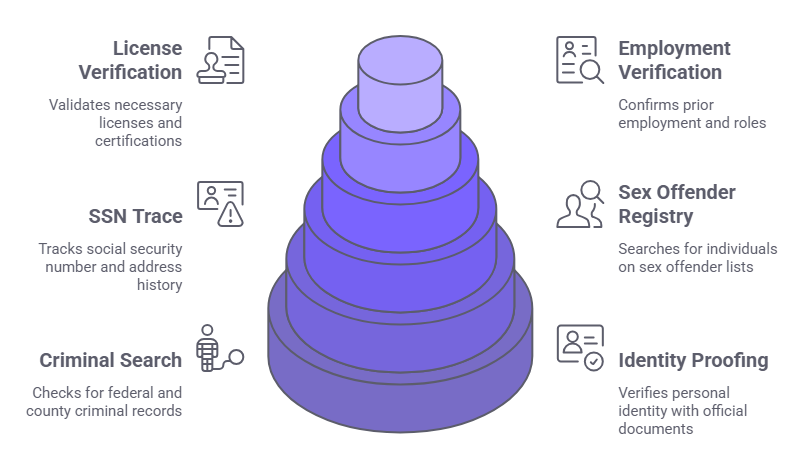
- Full identity proofing.
- Federal and multi-jurisdiction county criminal search.
- Sex offender registry search.
- Full SSN trace and address history.
- Employment or engagement verification with specific reference to prior safety-sensitive or access-level roles.
- License and certification verification where applicable to the role.
| Verification Component | Tier 1 | Tier 2 | Tier 3 |
| Identity verification and SSN trace | Yes | Yes, with document authentication | Yes, full identity proofing |
| National criminal database check | Yes | Yes | Yes |
| Multi-jurisdiction county criminal search | No | Yes | Yes, including federal |
| Sex offender registry | Yes | Yes | Yes |
| Address history | No | Yes | Yes, full history |
| Employment or engagement verification | No | Prior construction roles | Safety-sensitive or access-level roles specifically |
| License and certification verification | No | No | Yes, where applicable |
Every worker with safety-sensitive or security-sensitive jobsite access should sit in Tier 3 regardless of W-2 or 1099 classification. The tier-to-role mapping should be documented in the GC’s screening policy and shared with HR, safety, and project management before summer mobilization begins.
Subcontractor Screening: The FCRA Question GCs Get Wrong
The most common FCRA mistake in GC summer hiring is assuming that the independent contractor classification resolves the FCRA applicability question for subcontractor screenings. It does not. When a GC uses a consumer reporting agency to screen a 1099 subcontractor or their crew, FCRA may apply depending on the degree of control the GC exercises over the work and the worker.
The degree-of-control analysis is fact-specific and varies by jurisdiction and circumstance. GCs should not assume that the 1099 classification settles the question. When a CRA conducts the screening, the safer approach is to apply FCRA disclosure and authorization requirements to all screenings regardless of worker classification, and to confirm the specific applicability question with qualified legal counsel. To avoid friction at the point of screening, GCs should also build the FCRA disclosure and authorization into the standard subcontractor engagement agreement as a condition of engagement, not as a separate request at the time of screening. This approach makes the process routine for all subcontractors regardless of classification and reduces the risk of authorization refusal creating a timeline gap.
FCRA applicability to independent contractor screenings involves legal interpretation that varies by degree of control and specific circumstances. This section is informational only and does not constitute legal advice. Consult qualified legal counsel before establishing or modifying your subcontractor screening program.
Client Certification Deadlines: The Compliance Trap GCs Hit Every Summer
Many GCs operate under client contracts that require certification that all project personnel have completed background checks meeting stated standards. These certification requirements create deadline pressure unique to the GC context and produce a specific compliance trap that surfaces most often during summer mobilization.
How the Trap Works
A subcontractor mobilization date is set. The client certification deadline falls before that date. HR starts background checks on the subcontractor crew to meet the certification window. The checks clear, the GC certifies, and the project proceeds. What the GC may not have confirmed is whether those checks ran with proper FCRA standalone disclosure and written authorization from each worker before initiation. If they did not, the GC has satisfied the client contract and created FCRA violations at the same time. Client certification and FCRA compliance are independent obligations, and in summer the pressure of the certification deadline often causes the FCRA disclosure step to get bundled into onboarding paperwork rather than delivered as a standalone document.
How to Avoid It
Separate the certification compliance workflow from the FCRA compliance workflow and manage both. The certification deadline governs when checks must be complete. The FCRA disclosure and authorization requirement governs what must happen before checks begin. Both timelines must be mapped before mobilization is scheduled. When the certification window is tight, the right response is to initiate checks earlier, not to skip the FCRA step. Tying initiation to subcontractor mobilization confirmation, rather than project start date, is the workflow change that resolves this problem.
The GC Workflow: Running 20 Checks in a Summer Week Without a Queue
GCs who meet summer certification deadlines without FCRA failures run the same checks as everyone else through a workflow built for volume. Five design principles separate programs that scale from programs that stall.
Tie Initiation to Mobilization Confirmation
Tying check initiation to mobilization confirmation rather than project start date adds two to three weeks of runway at no cost to the project schedule. This single change resolves more summer certification deadline misses than any other workflow adjustment. Every day between offer acceptance and check initiation is a day added to the total timeline.
Batch Checks by Tier
Rather than processing workers in hire order or mobilization date order, batch Tier 1 and Tier 2 checks together for faster turnaround while Tier 3 checks run in parallel. Tier 1 and Tier 2 checks typically clear in 24 to 72 hours when a CRA has direct county court access. Tier 3 checks typically take two to five business days. Batching by tier ensures faster checks do not wait behind slower ones, and project managers receive crew clearances in a predictable sequence.
Confirm Direct County Court Access
A CRA with direct court access returns county records in 24 to 48 hours. By contrast, a CRA relying on a third-party researcher in the same market may take five to seven days. For a GC managing a client certification deadline, that difference is the difference between meeting the window and missing it. Confirm this before summer begins, not after the first miss.
Build FCRA Disclosure Into Engagement Packets
The standalone FCRA disclosure form and written authorization should be delivered and returned before any check is initiated. Building both into the subcontractor engagement packet removes the most common summer FCRA failure point from the GC process. Same-day initiation becomes achievable when authorization arrives with offer acceptance.
Automate Adverse Action Tracking
A platform that generates pre-adverse notices, tracks waiting periods by worker, and triggers final adverse action notices removes the human failure point. Before implementing platform automation, confirm that the platform generates final adverse action notices that identify the CRA by name, address, and telephone number, state that the CRA did not make the adverse action decision, and tell the worker about their right to a free copy of the report within 60 days and their right to dispute it. Without this confirmation, a GC managing twenty simultaneous adverse action timelines during summer mobilization may still produce FCRA failures.
Multi-State Projects: The Compliance Layer Most GCs Miss
Summer GC projects often deploy crews across state lines, and multi-state deployment means multi-jurisdiction compliance. Three compliance areas create the most complexity for GCs managing summer project portfolios.
Ban-the-Box and Conditional Offer Requirements
Several major construction markets have ban-the-box ordinances or conditional offer requirements governing when background check initiation can occur. California, New York City, Chicago, Philadelphia, and Washington D.C. are among these jurisdictions. This list is illustrative rather than exhaustive, and requirements vary between jurisdictions even where both have ban-the-box frameworks. A GC deploying crews from a Florida office to a New York City project must apply New York City’s conditional offer requirements to workers engaged for that project, not the Florida standard.
Lookback Period Variability
California imposes criminal history reporting limits that apply regardless of salary level, which is a key distinction from federal FCRA treatment. The specific California limits vary by record type and circumstances. As a result, GCs with California project deployments should confirm the applicable criminal history reporting limits with qualified legal counsel before setting up or updating their screening program for California-based work. Multi-state GCs must map lookback requirements for each project jurisdiction before deployment, not after a result raises a compliance question.
Jurisdiction-Specific Adverse Action Requirements
Some jurisdictions impose adverse action timing and notice requirements that go well beyond the federal FCRA floor. New York City’s Fair Chance Act is among the most demanding of these frameworks. It requires a multi-factor written assessment, delivery of the assessment and supporting documents to the applicant, a minimum response period of at least five business days, and a written final assessment before adverse action can proceed. For a GC managing a certification deadline on a New York City project, the NYC Fair Chance Act process is not a minor overlay on the federal two-step. GCs deploying to New York City projects should build the NYC Fair Chance Act process into their project-specific adverse action workflow and confirm current requirements with qualified legal counsel before summer deployment begins.
The Adverse Action Process Under Summer Volume
The FCRA adverse action process does not bend for volume pressure. Every worker whose engagement is affected by a background check result gets an individual pre-adverse action notice with a copy of the consumer report and the Summary of Rights Under the FCRA. Each worker then has a waiting period, generally at least five business days per CFPB and FTC guidance, before the final adverse action notice goes out. The final adverse action notice must identify the CRA by name, address, and telephone number, state that the CRA did not make the adverse action decision, and tell the worker about their right to a free copy of the report within 60 days and their right to dispute its accuracy or completeness.
The most common summer failure for GCs is sending adverse action decisions in batch across a crew or subcontractor group without individual notices and waiting periods. Batch adverse action is not FCRA-compliant regardless of the volume or timeline. A platform that tracks individual waiting periods and automates notice generation removes this failure point when it produces fully compliant notices.
Conclusion
Summer does not create new compliance obligations for GCs. Instead, it creates the conditions under which existing obligations are most likely to be skipped or misapplied. The GCs who get through summer without FCRA failures, missed certification deadlines, and delayed project starts are the ones who designed their screening workflow for volume before mobilization season began. Tying initiation to mobilization confirmation, building FCRA disclosure into subcontractor engagement packets, batching by tier for turnaround efficiency, and running a platform-managed adverse action process are the design decisions that separate GCs who absorb summer from those who get buried by it.
Frequently Asked Questions
The summer season for construction hiring comes with a unique set of pressures, particularly when the projects, the subcontractors, and the deadlines for certifications begin to coincide. It does not take long for issues about screening, compliance, schedules, and multistate compliance to get complicated without an efficient system in place. The Frequently Asked Questions provided below should serve as a guide for general contractors in identifying the most pressing problems.
What background checks do construction employers need to run on summer workers?
GCs should use a jobsite access-tiered framework. Perimeter and limited-access workers need identity verification, a national criminal check, and a sex offender registry search. General jobsite workers add multi-jurisdiction county records and engagement verification. Safety-sensitive and high-access roles require a full Tier 3 stack including federal records, full address history, and license and certification verification where applicable.
Does FCRA apply to subcontractor background checks in summer construction hiring?
FCRA may apply depending on the degree of control the GC exercises over the subcontractor and the work. The 1099 classification does not automatically resolve the FCRA applicability question. When a CRA conducts the screening, the safer approach is to apply FCRA disclosure and authorization requirements regardless of classification and confirm with qualified legal counsel.
How long does a construction background check take in summer?
Tier 1 and Tier 2 checks typically clear in 24 to 72 hours when the CRA has direct county court access. Tier 3 checks with federal records and full address history typically take two to five business days. Summer delays are primarily caused by late initiation tied to project start dates rather than check processing time.
Can a GC start a worker before the background check clears?
Starting a worker before a check clears is a business decision evaluated against the specific jobsite access profile and role requirements. Negligent hiring exposure exists across all tiers when a check later returns a disqualifying result and work has already begun, and is most acute for safety-sensitive Tier 3 roles. Whatever the business decision, the FCRA process must be completed and any adverse action must follow the two-step notice and waiting period process.
What happens if a subcontractor cannot meet a client background check certification deadline?
A missed certification deadline creates breach of contract risk and a project delay. The right response is earlier initiation tied to mobilization confirmation. The FCRA disclosure and authorization step cannot be skipped when a certification window is tight. Skipping it creates a FCRA violation on top of the certification problem.

ABOUT THE CREATOR
Charm Paz, CHRP
Recruiter & Editor
Charm Paz is an HR professional at GCheck, specializing in background screening, fair hiring, and regulatory compliance. She holds from the Professional Background Screening Association (PBSA) and helps organizations navigate employment regulations with clarity and confidence.
With a background in Industrial and Organizational Psychology, she translates policy into practice to build ethical, compliant, human-centered hiring systems that strengthen decision-making over time.