

Nevada hospitality employers face evolving background screening requirements shaped by federal compliance mandates, state-specific regulations, and industry-specific risk considerations. Understanding how to balance regulatory obligations with operational efficiency remains critical for hotels, casinos, resorts, and restaurants managing high-volume hiring cycles while maintaining guest safety standards.
Key Takeaways
- Nevada hospitality employment screening requirements blend federal FCRA standards with specific state provisions that may affect certain uses of criminal history information.
- Employers should verify whether timing restrictions on criminal history inquiries apply to their specific operations, as requirements vary by jurisdiction, employer type, and position category within Nevada's hospitality sector.
- Multi-jurisdictional screening protocols become necessary when hospitality chains operate across state lines or hire workers who relocate between properties.
- Seasonal hiring surges demand streamlined processes that maintain compliance while reducing time-to-hire for large applicant volumes.
- Guest safety concerns must be addressed through individualized assessments rather than blanket disqualification policies that may violate state or federal law.
- Technology-assisted screening methods offer efficiency gains but require careful implementation to avoid introducing bias or non-compliance into hiring decisions.
- Adverse action procedures under federal law require specific notice sequences that many hospitality employers fail to execute correctly during rapid hiring periods.
- Ongoing verification of requirements remains essential, as state and local rules continue to develop in response to workforce policy debates.
Understanding Nevada's Employment Screening Legal Framework
As of 2026, Nevada hospitality employers continue to navigate the established framework of federal and state employment screening requirements, with ongoing attention to compliance challenges that have evolved alongside workforce dynamics in the post-pandemic hospitality sector. The Fair Credit Reporting Act establishes baseline requirements for how employers obtain and use background information through third-party providers. This federal law requires written authorization before obtaining reports, mandates specific adverse action procedures, and defines permissible purposes for accessing consumer data.
Nevada state law includes certain fair chance hiring provisions that may restrict when and how specific employers can consider criminal history. Requirements vary based on employer type, position category, and local jurisdiction. Private hospitality employers should verify current applicable requirements, as Nevada's framework differs substantially from comprehensive ban-the-box states. Gaming-licensed positions and other regulated roles may have distinct requirements established by regulatory agencies rather than general employment law.
Federal Compliance Foundations
Employment screening conducted through consumer reporting agencies triggers FCRA obligations regardless of industry or location. Key requirements include:

- Clear disclosures provided to applicants before screening occurs
- Separate written authorization obtained on standalone documents
- Pre-adverse action notices delivered with report copies and rights summaries
- Reasonable waiting periods before final decisions
- Final adverse action notices explaining ultimate decisions and dispute rights
Many compliance failures in hospitality settings stem from using combined application-authorization forms that violate disclosure requirements, or from failing to provide required waiting periods between adverse action notices during high-volume hiring. These procedural errors create legal exposure even when underlying screening criteria remain legally defensible.
State-Specific Considerations in Nevada
Nevada's approach to criminal history in employment decisions includes certain regulatory frameworks that affect specific employer categories and position types. Employers generally should verify current requirements before implementing criminal history inquiry procedures, as applicable rules depend on factors including employer classification, position regulatory status, and local jurisdiction requirements. Once screening becomes appropriate within applicable frameworks, employers must apply individualized assessment standards rather than automatic disqualification rules.
Certain hospitality positions face distinct regulatory requirements. Gaming-licensed roles, positions involving access to controlled substances, and other regulated functions may require background investigation based on agency mandates. Employers must clearly understand which positions qualify for specific regulatory treatment and document the regulatory basis for different screening approaches.
Hospitality Industry Screening Challenges and Solutions
The operational realities of hospitality hiring create unique screening implementation challenges. Seasonal demand fluctuations, high turnover rates, multi-property hiring, and diverse position types all complicate efforts to maintain consistent compliance while meeting urgent staffing needs.
High-Volume Seasonal Hiring Dynamics
Nevada's hospitality sector experiences significant seasonal variation, with properties adding substantial temporary staff for peak convention periods, holidays, and special events. Traditional screening processes designed for individual position fills often break down when applied to hiring hundreds of workers within compressed timeframes.
| Challenge | Compliant Solution Approach |
| Compressed hiring timelines | Implement rolling recruitment cycles that distribute screening workflow across extended periods |
| Inconsistent authorization procedures | Deploy standardized templates and automated compliance checkpoints at each hiring stage |
| Rushed adverse action processes | Build required waiting periods into hiring schedules through advance timeline planning |
| Staff errors during high-pressure periods | Create pre-configured workflow systems that reduce manual decision points |
Advance planning becomes critical. Properties that identify seasonal hiring needs months ahead can implement rolling recruitment and screening processes that distribute workflow more evenly rather than concentrating hundreds of checks into final weeks before staffing deadlines.
Multi-Jurisdictional Screening Complexity
Hospitality chains operating properties across multiple states encounter inconsistent screening rules that vary by location. An applicant hired in Nevada may transfer to a California property with different criminal history consideration rules, or a corporate hiring center may screen candidates for positions across several jurisdictions simultaneously.
Multi-jurisdictional employers face complex questions about which state's screening requirements apply to specific hiring decisions. Relevant factors may include position work location, where hiring decisions are made, employer headquarters location, and where the employment relationship is primarily based. Choice-of-law analysis often requires legal review, particularly for remote positions, employees working across multiple states, or roles involving significant travel.
Technology solutions can help manage jurisdictional complexity through rule engines that apply appropriate screening criteria based on position location. However, these systems require regular updates as state and local requirements evolve, and cannot substitute for legal review of novel scenarios that automated rules may not address correctly.
Balancing Guest Safety and Fair Chance Principles
Hospitality employers face legitimate concerns about guest safety, property security, and protection of vulnerable populations including children and elderly guests. These concerns must be addressed within legal frameworks that prohibit blanket exclusion of applicants based on criminal history categories.
Individualized assessment processes provide the legally required approach. When criminal history information emerges during screening, employers must evaluate the nature and severity of the offense, time elapsed since the conduct occurred, and relationship between the criminal history and specific job responsibilities. Documentation of this analysis becomes critical if hiring decisions face later challenges.
Position-specific screening criteria help structure individualized assessments consistently. A front desk role involving access to guest credit card information presents different risk factors than a kitchen position or maintenance function. Employers should identify legitimate job-related concerns for each position type, then evaluate how specific criminal history relates to those particular concerns rather than applying uniform disqualification standards across all roles.
Implementing Compliant Screening Protocols
Effective screening programs in Nevada hospitality settings require clear procedures that employees can execute consistently during both routine and high-pressure hiring situations.
Authorization and Disclosure Procedures
Proper authorization begins with standalone disclosure documents that clearly inform applicants that background reports may be obtained for employment purposes. This disclosure should not be buried within application forms or combined with authorization language. A separate authorization form then provides space for applicant signature permitting the specific screening activities the employer intends to conduct.
Digital application systems require particular attention to ensure that disclosure and authorization steps meet legal requirements. Clickwrap agreements or embedded checkboxes may not satisfy requirements for clear standalone disclosures and separate written authorization. Legal review of digital hiring platforms helps identify compliance gaps before implementation.
Adverse Action Process Requirements
When background information leads an employer toward a negative hiring decision, federal law requires a specific two-stage notice process:
Pre-Adverse Action Notice Phase:
- Provide copy of background report to applicant
- Include summary of consumer rights
- Allow reasonable time for review and dispute
- Delay final decision during waiting period
Final Adverse Action Notice Phase:
- Inform applicant of ultimate decision
- Provide screening company contact information
- Explain rights to dispute report accuracy
- Document completion in hiring records
Many hospitality employers struggle to implement appropriate waiting periods between pre-adverse and final adverse action notices during urgent hiring. However, eliminating or shortening required waiting periods creates legal exposure that outweighs operational convenience.
Technology-Assisted Screening Approaches
Various technology solutions offer potential efficiency improvements for hospitality screening workflows, though each introduces considerations that employers must evaluate carefully.
Automated Background Check Platforms
Integrated screening platforms connect directly to applicant tracking systems, allowing background checks to initiate automatically when applicants reach appropriate hiring stages. These systems can reduce manual processing time and help ensure consistent application of screening protocols across hiring personnel.
Employers implementing automated platforms must verify that systems execute required compliance steps correctly. Automated workflows should include proper disclosure and authorization collection, appropriate delays between adverse action notices, and audit trails documenting that procedures occurred as required. Technology vendors cannot guarantee that their platforms satisfy all legal requirements for specific employer situations, making legal review of automated workflows essential.
Database Search Technologies
Background screening relies substantially on searches of criminal record databases, sex offender registries, professional license verifications, and other information repositories. Search comprehensiveness varies based on which databases are accessed, how frequently they update, and whether information sources provide complete coverage of relevant records.
Database characteristics vary significantly based on specific vendors, data sources, and coverage scope. The following represents general patterns rather than uniform standards:
| Database Type | Typical Coverage | Update Frequency | Verification Need |
| National criminal databases | Aggregated multi-source data | Varies by source | High (may contain gaps) |
| County courthouse searches | Specific jurisdiction records | Current to search date | Medium (jurisdiction-specific) |
| Sex offender registries | State and federal registries | Regular government updates | Low (official sources) |
| Professional license databases | State licensing boards | Varies by board | Medium (direct verification recommended) |
Employers should verify the specific scope, update frequency, and limitations of databases used in their screening programs rather than relying on general database category assumptions. Verification of database findings through courthouse research helps ensure accuracy before adverse decisions occur based on potentially incomplete or outdated information.
Artificial Intelligence Screening Applications
AI-assisted screening approaches raise substantial legal compliance questions. Regulatory agencies have indicated that automated decision tools may violate fair lending, fair chance hiring, and anti-discrimination requirements if they produce discriminatory outcomes, lack transparency, or effectively implement blanket disqualification policies prohibited under individualized assessment requirements. Employers remain fully liable for outcomes produced by vendor algorithms and cannot delegate legal responsibility to technology providers.
Hospitality employers considering AI-enhanced screening should evaluate whether these tools genuinely improve decision quality or simply automate problematic practices that would violate fair chance principles if applied manually. The fact that an algorithm generates a recommendation does not exempt employers from legal requirements to conduct individualized assessments or from liability for discriminatory patterns that result from algorithmic decision-making.
Position-Specific Screening Considerations
Different hospitality roles present distinct screening considerations based on job duties, regulatory requirements, and risk profiles.
Gaming and Licensed Positions
Positions requiring Nevada Gaming Control Board licensing face extensive background investigation requirements established by gaming regulations. These regulatory mandates operate independently of general employment screening frameworks and may require earlier and more comprehensive criminal history investigation than other hospitality roles. Employers should verify how gaming regulatory requirements interact with any applicable fair chance hiring restrictions based on specific position classifications and jurisdictional requirements.
Guest-Facing Service Roles
Front desk staff, concierge personnel, room service attendants, and similar positions involve direct guest interaction and often access to guest rooms, personal belongings, or financial information. Screening for these roles appropriately focuses on history relevant to theft, fraud, violence, or other conduct directly related to guest safety and property security.
Employers should identify specific job-related concerns for guest-facing positions, then limit criminal history consideration to offenses that genuinely relate to those particular concerns. Categorical exclusions based on criminal history unrelated to guest interaction duties may face challenges as not sufficiently job-related.
Food Service and Kitchen Staff
Kitchen and food preparation positions typically involve less guest interaction but require attention to food safety, workplace safety, and team environment considerations. Screening focus areas might include violence history relevant to workplace safety and any regulatory restrictions on food handler eligibility.
State and local health departments sometimes impose criminal history restrictions on food handler permits, which can limit employer flexibility in hiring decisions. Verification of current food handler eligibility requirements helps employers understand which criminal history may create regulatory barriers distinct from employer screening criteria.
Maintenance and Facilities Positions
Maintenance staff often have broad property access including guest rooms, back-of-house areas, and building systems. Screening appropriately considers history relevant to theft, property damage, or violence, along with any safety-sensitive aspects of specific maintenance duties.
Positions involving operation of vehicles, heavy equipment, or hazardous materials may trigger additional screening considerations including motor vehicle record checks or verification of required safety certifications.
Common Compliance Errors and Risk Mitigation
Certain screening compliance failures occur with particular frequency in hospitality employment contexts, often resulting from workflow shortcuts during high-pressure hiring or misunderstanding of legal requirements.
Inadequate Authorization Documentation
Using application forms that combine employment questions with background check authorization language violates FCRA disclosure requirements. Employers must provide clear standalone disclosure of background check practices and obtain separate written authorization before screening occurs.
Common errors include:
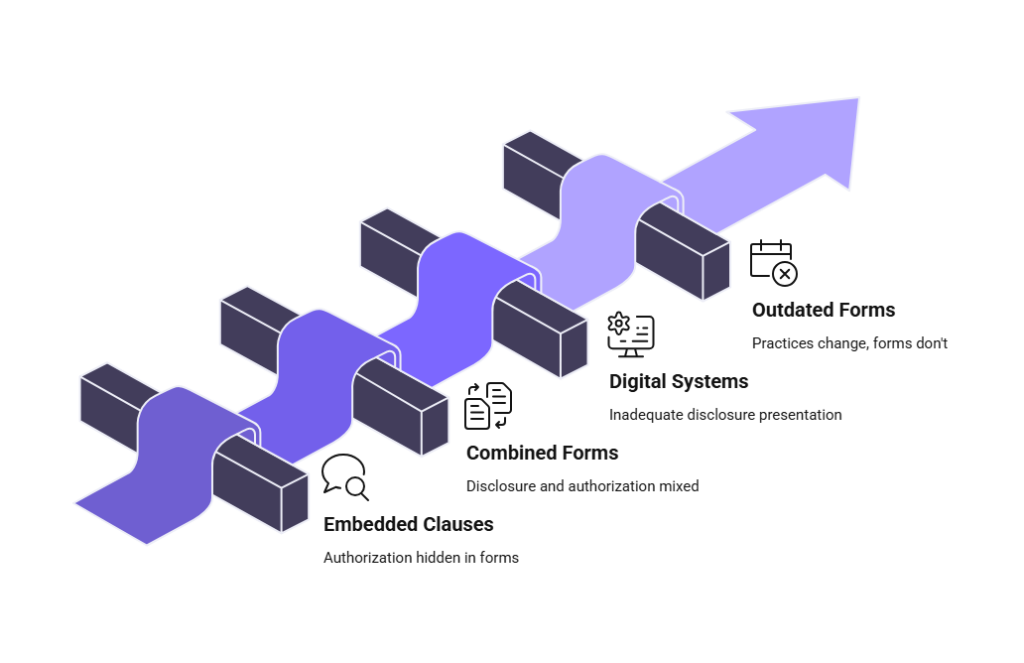
- Embedding authorization clauses within multi-page application forms
- Using single-document combined disclosure and authorization forms
- Implementing digital systems with inadequate disclosure presentation
- Failing to update authorization forms when screening practices change
Compliance risk increases when hiring managers use outdated forms, modify templates without legal review, or implement digital hiring systems that embed authorization in broader application flows. Regular audit of authorization documents and hiring system workflows helps identify compliance gaps before they result in legal challenges.
Improper Adverse Action Procedures
Rushing or skipping adverse action notice steps represents one of the most common FCRA violations in hospitality hiring. The required waiting period between pre-adverse and final adverse action notices exists to provide applicants a meaningful opportunity to identify and correct inaccurate background information before final decisions occur.
Employers should build adverse action timelines into hiring schedules rather than treating them as unexpected delays. When urgent hiring needs create pressure to accelerate decisions, proper response involves earlier screening initiation to accommodate required waiting periods, not elimination of legally mandated procedures.
Blanket Disqualification Policies
Automatic exclusion rules that disqualify applicants based on criminal history categories without individualized assessment violate fair chance hiring principles and may create disparate impact liability. These policies often emerge from well-intentioned efforts to create clear, consistent screening standards but fail to satisfy legal requirements for job-related, individualized evaluation.
Compliant approaches establish position-specific screening criteria identifying legitimate job-related concerns, then require documented individualized assessment of how particular criminal history relates to those specific concerns for each position and applicant.
Maintaining Current Compliance Knowledge
Employment screening legal requirements continue evolving as states adopt new fair chance hiring laws, courts interpret existing statutes, and regulatory agencies issue updated guidance.
Monitoring Regulatory Developments
Hospitality employers should establish processes for tracking relevant legal developments affecting screening practices. This monitoring should cover federal regulatory agency guidance, Nevada state employment law changes, and local ordinances that may apply to specific property locations.
Professional networks, industry associations, and legal counsel provide valuable resources for staying informed about regulatory changes. However, ultimate responsibility for compliance remains with employers, who must verify that their screening practices align with current requirements rather than assuming that past practices remain permissible.
Periodic Screening Program Audits
Regular internal review of screening practices helps identify compliance gaps before they generate legal exposure:
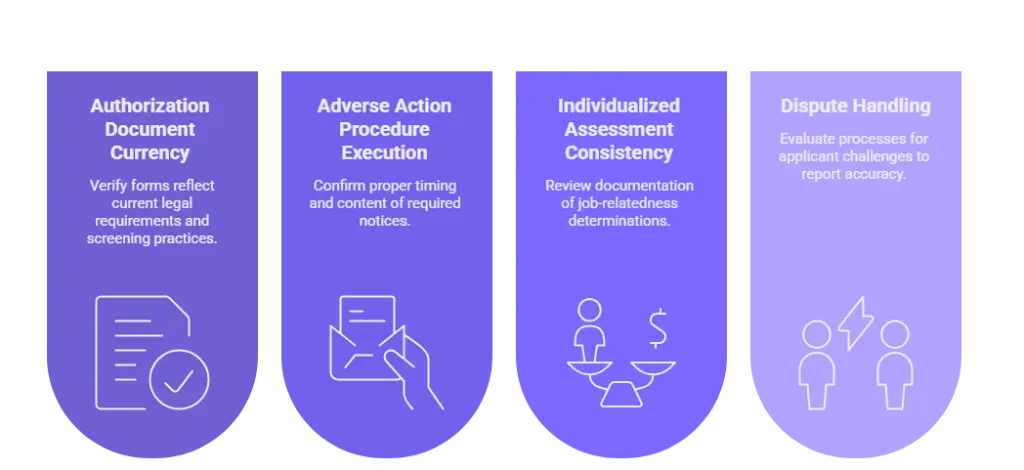
- Authorization document currency: Verify forms reflect current legal requirements and screening practices
- Adverse action procedure execution: Confirm proper timing and content of required notices
- Individualized assessment consistency: Review documentation of job-relatedness determinations
- Dispute handling: Evaluate processes for applicant challenges to report accuracy
Third-party compliance assessments provide objective evaluation of screening program effectiveness and can identify risks that internal personnel may overlook due to familiarity with existing processes.
Documentation and Record Retention
Comprehensive documentation of screening decisions protects employers when hiring practices face scrutiny. Records should demonstrate proper authorization, appropriate adverse action procedures, individualized assessment of criminal history when applicable, and legitimate business justifications for employment decisions.
Retention periods for screening records depend on multiple legal requirements including EEOC recordkeeping rules, state employment law, and document retention obligations that may arise from litigation holds. Privacy law compliance extends beyond FCRA requirements. State privacy statutes may impose additional obligations regarding how screening data is collected, stored, shared, and retained. Employers should evaluate whether state privacy laws applicable in their operating jurisdictions create obligations beyond federal consumer reporting requirements. Legal counsel should advise on appropriate retention schedules that balance competing requirements.
Conclusion
Nevada hospitality employment screening requirements demand careful attention to federal consumer protection standards, state-specific regulatory frameworks, and industry-specific operational realities. Employers who invest in compliant screening protocols, appropriate technology tools, and ongoing compliance monitoring can effectively balance workforce quality, guest safety, and legal risk management while meeting demanding hiring timelines.
Frequently Asked Questions
What criminal history can Nevada hospitality employers consider during hiring?
Nevada employers should verify current requirements for criminal history consideration, as applicable rules vary by employer type, position category, and jurisdiction. When criminal history screening becomes appropriate within applicable frameworks, individualized assessment is required rather than automatic disqualification rules. Gaming-licensed positions and certain other regulated roles may have different requirements based on regulatory mandates.
When should background checks begin in the hospitality hiring process?
Background screening timing depends on applicable legal requirements that vary by employer classification, position type, and jurisdiction. Employers must obtain proper written authorization before initiating checks regardless of hiring stage. Gaming-licensed roles and other regulated positions may have specific requirements based on agency mandates that should be verified before implementing screening procedures.
How long do adverse action procedures take in employment screening?
Adverse action procedures require sufficient time between pre-adverse notice and final decision for applicants to review reports and dispute inaccurate information. While no specific timeframe is mandated federally, reasonable periods must provide sufficient opportunity for applicants to review reports and gather documentation to dispute inaccuracies. Appropriate timing depends on the complexity of background information, availability of courthouse records, and other case-specific factors. Many employers provide five to ten business days, though some situations may require longer periods.
Do background check requirements differ for seasonal hospitality workers?
Seasonal employment status does not change fundamental screening compliance requirements. Temporary workers are entitled to the same disclosure, authorization, and adverse action procedures as permanent employees. High-volume seasonal hiring may require enhanced workflow planning to maintain compliance during compressed timeframes.
What screening applies to hospitality workers with guest room access?
Positions involving guest room access justify screening focused on theft, fraud, violence, and property damage history based on legitimate safety and security concerns. However, employers must conduct individualized assessments of how specific criminal history relates to particular job duties rather than applying categorical exclusions.
Can hospitality employers use AI tools for background screening decisions?
Technology-assisted screening tools may provide efficiency benefits but cannot replace required individualized assessment of criminal history or excuse employers from liability for discriminatory outcomes. Employers remain legally responsible for decisions influenced by algorithmic recommendations and should evaluate whether AI tools genuinely improve decision quality while maintaining compliance. Regulatory agencies have indicated that automated tools may violate anti-discrimination requirements if they produce discriminatory outcomes or implement blanket disqualification policies.
How do multi-state hospitality companies handle different state screening laws?
Multi-jurisdictional employers face complex questions about which state's screening requirements apply to specific hiring decisions. Relevant factors may include position work location, where hiring decisions are made, employer headquarters location, and where the employment relationship is primarily based. Choice-of-law analysis often requires legal review, particularly for remote positions, employees working across multiple states, or roles involving significant travel.
What happens if background check information is inaccurate?
Applicants have legal rights to dispute inaccurate background information with screening companies and receive investigation of disputed items. Employers must provide reasonable time during adverse action procedures for applicants to identify inaccuracies before finalizing negative hiring decisions.
Additional Resources
- Fair Credit Reporting Act Overview and Compliance Guide
https://www.ftc.gov/legal-library/browse/statutes/fair-credit-reporting-act - Nevada Labor Commissioner Employment Resources
https://labor.nv.gov/ - EEOC Enforcement Guidance on Criminal Records in Employment
https://www.eeoc.gov/laws/guidance/enforcement-guidance-consideration-arrest-and-conviction-records-employment - Nevada Gaming Control Board Licensing Information
https://gaming.nv.gov/ - Consumer Financial Protection Bureau Summary of Consumer Rights
https://www.consumerfinance.gov/consumer-tools/background-checks/

ABOUT THE CREATOR
GCheck Editorial Team
Meet the GCheck Editorial Team, your trusted source for insightful and up-to-date information in the world of employment background checks. Committed to delivering the latest trends, best practices, and industry insights, our team is dedicated to keeping you informed.
With a passion for ensuring accuracy, compliance, and efficiency in background screening, we are your go-to experts in the field. Stay tuned for our comprehensive articles, guides, and analysis, designed to empower businesses and individuals with the knowledge they need to make informed decisions.
At GCheck, we're here to guide you through the complexities of background checks, every step of the way.