
LEGAL & COMPLIANCE

Master the process of how to verify 1099 contractor employment and ensure compliance with FCRA regulations in your organization.
Created by

Verifying 1099 contractor employment requires a fundamentally different approach than traditional employee screening, as contractors operate without centralized payroll records or HR departments. This guide provides HR teams with a step-by-step verification framework that addresses documentation gaps, consent requirements, and risk assessment protocols specific to independent workers.
The support system for employee verification does not exist for independent contractors. Traditional employment verification relies on HR departments, payroll systems, and central records kept by employers. In contrast, contractors operate as independent business entities, often working at the same time for multiple clients without formal employment relationships.
Contractors typically lack W-2 wage records, employer-kept files, or single points of contact for verification. Instead of job titles and supervisors, contractors provide client lists and project descriptions. Rather than employment dates, they offer work periods that may overlap across multiple clients.
The documents available for contractor verification depend entirely on how the individual runs their business. For example, some keep formal business entities with articles of incorporation and business licenses. On the other hand, others operate as sole owners with minimal records beyond tax forms and contracts.
Organizations cannot simply call a human resources department to confirm contractor employment. Instead, verification requires contacting multiple clients, reviewing business filings, checking contracts, and validating credentials through issuing authorities. As a result, this process introduces time delays, information gaps, and reliance on third parties who may have different record-keeping practices.
| Verification Category | What Can Be Confirmed | Common Limitations |
| Business Legitimacy | State business registrations, tax ID numbers, business licenses | Sole proprietors may lack formal registration |
| Professional Credentials | Licenses, certifications, educational degrees | Verification timeframes vary by issuing authority |
| Work History | Client references, contracts, invoices, project documentation | No centralized employment database exists |
| Identity | Government-issued identification, SSN validation | Standard protocols apply |
| Income | Tax returns, 1099 forms, financial statements | Contractors may not disclose complete client lists |
| Performance Quality | Subjective client feedback | No objective metrics without client input |
Certain verification activities may trigger legal limits. For instance, using consumer reports for contractor screening requires permissible purpose under applicable law. Additionally, some jurisdictions limit criminal history inquiries or impose timing restrictions. Furthermore, credit checks face increasing legal constraints. Meanwhile, medical information remains protected regardless of employment classification.
Effective contractor verification follows a clear workflow that balances thoroughness with practical efficiency.
First, determine what verification level the work requires based on access levels, financial authority, data exposure, and regulatory obligations. For example, a contractor with network administrator access requires more thorough verification than one performing limited administrative tasks. Therefore, document the business reason for each verification element.
Next, obtain written permission before getting consumer reports or conducting other verification activities subject to consent requirements under applicable federal or state law. Additionally, provide required disclosures about what information will be collected, how it will be used, and the contractor's rights. Furthermore, ensure consent forms meet applicable federal and state requirements. Finally, keep records of permission.
Then, request documents directly from the contractor:
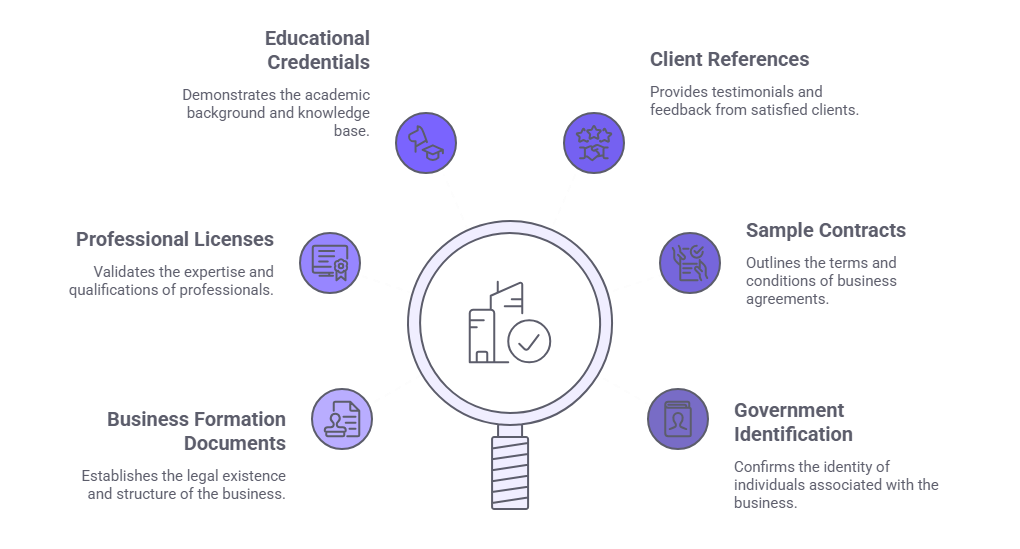
Also, specify timeframes for submission and formats accepted.
After that, contact licensing boards to confirm credential validity and status. Similarly, reach out to client references using contact information you verify independently, not solely relying on contractor-provided details. Moreover, check business registrations with state authorities. Likewise, verify educational credentials with institutions when relevant to the work.
Subsequently, compare information across sources for consistency. Then, identify differences requiring clarification. Next, assess whether verification results support the decision to hire. Afterward, document findings, sources, and decision rationale. Finally, keep records according to retention requirements.
If verification results lead to hiring denial or ending the contract, then follow applicable adverse action procedures. Specifically, this may include providing pre-adverse action notice, opportunity to respond, and final adverse action notification, depending on the nature of the screening and legal requirements.
Organizations should set clear documentation requirements that reflect work risk and meet applicable legal constraints.
Tax documentation serves as basic verification. Specifically, Form W-9 provides the contractor's legal name, business structure, and taxpayer identification number. In turn, this information enables basic identity and business legitimacy confirmation.
Business formation documents vary by structure. For instance, sole owners may only have a doing-business-as (DBA) filing. However, LLCs and corporations should provide articles of organization or incorporation. Additionally, professional service providers may need state registration or business licenses.
Professional licenses and certifications should include license numbers, issuing authorities, expiration dates, and any restrictions or conditions. Moreover, contractors should give permission for direct verification with licensing boards.
Work history documentation may include:
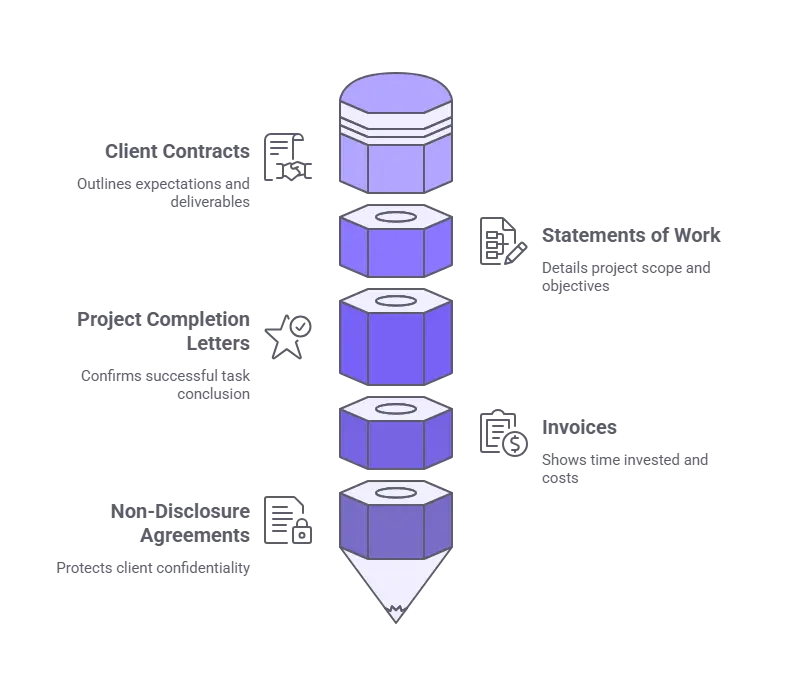
Together, these documents establish the timeline and nature of previous work.
Insurance certificates show business maturity and risk management. Specifically, professional liability coverage, general liability insurance, and workers compensation policies (where applicable) provide additional legitimacy indicators.
References should include contact information for previous clients, project descriptions, work dates, and the reference's relationship to the work performed. Therefore, request multiple references spanning different time periods.
| Industry | Typical Documentation Requirements |
| Financial Services | Background checks, credit history, securities licensing verification |
| Healthcare | Credential verification, background screening with specific lookback periods |
| Technology | Security clearances for system access, technical certifications |
| Construction/Skilled Trades | License verification, safety certifications, insurance coverage |
Client references replace traditional employer verification for contractors and therefore require special validation techniques.
Effective reference verification requires smart selection:
Structure reference calls to gather objective information. First, confirm work dates and project scope. Then, ask about specific deliverables and outcomes. Next, inquire about reliability, communication patterns, and meeting deadlines. Finally, request information about technical skills relevant to your work.
Certain reference responses need closer review. For example, vague or evasive answers about project specifics may indicate the reference lacks direct knowledge. Similarly, differences between the contractor's description and the reference's account require clarification. In addition, unwillingness to provide specific examples or confirm basic dates suggests potential issues. Furthermore, overly scripted or rehearsed responses may indicate coordinated presentation rather than honest feedback.
Do not rely only on contractor-provided reference contact information. Instead, verify that references represent actual businesses through independent research. Also, confirm that the contact person holds the position claimed and has authority to provide references. Additionally, look for patterns suggesting references may be personal friends rather than professional clients.
Record reference verification conversations in writing, noting the date, contact person, topics discussed, and key responses. Furthermore, keep consistent documentation across all contractor reviews. Finally, store reference records with other verification materials according to retention policies.
Recognizing warning signs during verification helps organizations make informed risk assessments.
| Risk Category | Specific Red Flags | Verification Response |
| Documentation Inconsistencies | Mismatched dates, timeline gaps, failed credential checks | Request clarification with supporting documentation |
| Reference Problems | Unverifiable contacts, disconnected numbers, unwilling references | Require substitute references, document patterns |
| Credential Issues | Expired licenses, unaccredited institutions, disciplinary actions | Direct verification with issuing authorities |
| Communication Patterns | Evasiveness, pressure to skip steps, inconsistent explanations | Additional scrutiny, expanded verification scope |
| Business Legitimacy | Lack of basic infrastructure, recent formation conflicting with experience | Independent business verification, additional documentation |
Organizations should review red flags in context rather than applying automatic rejection rules. Specifically, some issues may have legitimate explanations, while others indicate serious misrepresentation requiring hiring denial.
Contractor verification operates within a complex legal environment requiring careful navigation.
When organizations use third-party consumer reporting agencies to conduct background checks on contractors for employment purposes, the Fair Credit Reporting Act imposes specific requirements. Organizations must obtain written permission from the contractor, provide required FCRA disclosures before getting the report, and follow adverse action procedures if verification results lead to hiring denial. Specifically, adverse action procedures include providing a pre-adverse action notice with a copy of the consumer report and a Summary of Rights Under the FCRA, allowing reasonable time for the contractor to respond, and issuing a final adverse action notice if the decision stands. Additionally, organizations must also ensure they have a permissible purpose under federal law before getting consumer reports.
Organizations conducting verification directly using their own staff may not trigger FCRA requirements if they are not getting consumer reports from consumer reporting agencies. However, the determination depends on multiple factors, including how the organization collects and uses information. Organizations that regularly gather consumer information for their own use in certain ways may themselves meet the definition of a consumer reporting agency under federal law. Moreover, even when FCRA does not apply, state background check laws, anti-discrimination statutes, and privacy rules still govern verification activities. Therefore, organizations should talk with legal counsel to determine which requirements apply to their specific verification methods.
Jurisdictions across the United States have enacted diverse restrictions affecting contractor verification, including but not limited to criminal history inquiry limits, lookback period restrictions, credit check usage constraints, required disclosure language, and waiting periods between notices. Furthermore, some jurisdictions distinguish between employees and independent contractors in how these restrictions apply, while others apply identical standards regardless of classification. Additionally, state and local requirements may include salary history inquiry bans, arrest versus conviction record distinctions, individualized assessment mandates, and posting or notice obligations. As a result, organizations operating in multiple jurisdictions must analyze requirements in each specific location where they engage contractors or maintain operations, as requirements vary widely and cannot be addressed through generic policies.
State law may impose requirements beyond federal standards. Consequently, organizations operating in multiple jurisdictions must meet requirements in each location where the contractor will perform work or where the organization keeps operations.
Written permission before conducting verification activities protects both parties. Specifically, consent documentation should identify what information will be collected, from what sources, and for what purpose. Moreover, contractors should receive information about their rights to access verification results and dispute inaccurate information.
Generic consent forms may not meet jurisdiction-specific requirements. Therefore, organizations should review consent procedures with legal counsel familiar with the locations where they operate and hire contractors.
Verification documentation should be kept according to applicable legal requirements and business needs. Additionally, some jurisdictions require specific retention periods. Furthermore, records may be needed to show compliance with verification procedures if decisions are later questioned.
Retention applies to both positive and negative verification results. Therefore, organizations should keep documentation showing what verification was conducted, what was discovered, and how that information informed hiring decisions.
Organizations face decisions about whether to conduct contractor verification internally or hire outside providers.
Organizations lacking dedicated compliance staff may struggle to manage verification workflows consistently. For instance, when human resources teams handle verification alongside other duties, quality and timeliness may suffer. Additionally, volume spikes from seasonal contractor hiring can overwhelm internal resources.
Certain verification activities require special access or know-how:
Third-party providers operating as consumer reporting agencies assume certain compliance duties. Specifically, organizations concerned about keeping consistent adverse action procedures or navigating complex state law variations may prefer structured outside processes. Furthermore, providers focusing on background screening keep knowledge of changing legal requirements across jurisdictions.
External verification services provide standard documentation and audit trails. As a result, this consistency supports compliance demonstrations during regulatory reviews or legal proceedings. Additionally, central record systems may offer advantages over scattered internal documentation practices.
Organizations should review the total cost of internal verification including staff time, technology systems, legal review, and error correction against outside service pricing. Ultimately, the calculation depends on verification volume, complexity, and internal ability maturity.
Some organizations conduct basic verification internally while outsourcing special parts. For example, reference calls and document review may remain internal while criminal record searches or credential verification use outside providers. However, this division requires clear protocols about who is responsible for what and how information gets combined.
Practical verification workflows encounter predictable obstacles requiring systematic responses.
| Challenge | Root Cause | Practical Solution |
| Unresponsive Contractors | Delay tactics, organizational issues | Clear timelines in engagement agreements, reminder communications, consequences for non-compliance |
| Incomplete Documentation | Unclear requirements, missing information | Detailed checklists with examples, early gap identification, specific deficiency communication |
| Unverifiable References | Invalid contacts, defunct businesses | Multiple reference requirements, alternative contact methods, substitute requests |
| International Verification Complexity | Limited access to foreign records | Focus on domestic history and current credentials, recognize limitations, adjust risk assessment |
| Timeline Gaps | Economic cycles, business transitions | Request explanations, consider industry context, evaluate overall pattern |
| Credential Verification Delays | Slow agency response times | Early initiation, online systems usage, buffer time in schedules, contingency protocols |
| Conflicting Information | Administrative errors, misrepresentation | Document discrepancies, request clarification, conduct additional verification, assess materiality |
Organizations should develop standard protocols for common challenges rather than addressing each case individually. Specifically, consistency improves efficiency and reduces legal risk from unequal treatment.
Contractor verification demands systematic processes adapted to the realities of independent work arrangements. Organizations that build structured verification workflows, keep compliance awareness, and document decisions consistently can effectively assess contractor qualifications while managing risk exposure across their extended workforce.
Organizations may conduct background checks on contractors, but requirements depend on how the check is performed and what information is collected. Specifically, using a consumer reporting agency typically triggers specific permission and disclosure requirements. However, direct verification by the organization may operate under different standards. Additionally, state and local laws may impose further restrictions.
Income verification for contractors generally requires documentation from the contractor themselves, as no central payroll system exists. For example, contractors may provide tax returns, 1099 forms from clients, bank statements, or financial statements. However, organizations should verify whether income verification is necessary for the work purpose and whether requesting specific income documentation meets applicable privacy and discrimination laws.
Documents showing contractor status include IRS Form W-9, business licenses or registrations, articles of incorporation or organization for business entities, professional liability insurance policies, client contracts or statements of work, and business tax returns. However, no single document clearly establishes status, as the determination depends on the actual working relationship rather than documentation alone.
Verification timeframes depend on work risk, industry requirements, and legal restrictions. Typically, many organizations focus on the most recent three to five years of work history. Additionally, some jurisdictions limit how far back certain background checks can extend. Furthermore, regulated industries may impose specific lookback periods.
FCRA applies when organizations use consumer reporting agencies to get background checks on contractors for employment purposes or other allowed purposes. Specifically, the law's requirements for permission, disclosure, and adverse action apply regardless of employment classification. However, organizations conducting verification directly without using consumer reporting agencies may not trigger FCRA requirements, though other laws may apply.
Insufficient verification may expose organizations to multiple risks, including hiring contractors who lack represented credentials or qualifications, granting system access to individuals with undisclosed concerning backgrounds, liability for contractor actions when negligent hiring claims arise, and regulatory violations in industries with required screening requirements.
Professional license verification involves contacting the issuing authority directly rather than relying only on documents provided by the contractor. Specifically, most licensing boards keep online verification systems or verification phone lines. Additionally, verification should confirm the license number, current status, expiration date, any restrictions or conditions, and disciplinary history.
Contractor and employee verification processes differ because of documentation availability and relationship structure. Specifically, employees typically have central employment records verifiable through HR departments. In contrast, contractors require verification through multiple clients and business documentation. Therefore, organizations should develop processes appropriate to each classification rather than applying employee procedures to contractors.
Recruiter & Editor
Charm Paz is an HR and compliance professional at GCheck, working at the intersection of background screening, fair hiring, and regulatory compliance. She holds both FCRA Core and FCRA Advanced certifications through the Professional Background Screening Association (PBSA) and supports organizations in navigating complex employment regulations with clarity and confidence.
With a background in Industrial and Organizational Psychology and hands-on experience translating policy into practice, Charm focuses on building ethical, compliant, and human-centered hiring systems that strengthen decision-making and support long-term organizational health.

Contact us today for efficient, FCRA-compliant screening solutions
designed to keep your hiring process moving safely and smoothly.



LEGAL DISCLAIMER: The information provided in this article is for general informational and educational purposes only and should not be construed as legal advice or a substitute for consultation with qualified legal counsel. While we strive to ensure accuracy, employment screening laws and regulations—including but not limited to the Fair Credit Reporting Act (FCRA), Equal Employment Opportunity Commission (EEOC) guidelines, state and local ban-the-box laws, industry-specific requirements, and other applicable federal, state, and local statutes—are subject to frequent changes, varying interpretations, and jurisdiction-specific applications that may affect their implementation in your organization. Employers and screening decision-makers are solely responsible for ensuring their background check policies, procedures, and practices comply with all applicable laws and regulations relevant to their specific industry, location, and circumstances. We strongly recommend consulting with qualified employment law attorneys and compliance professionals before making hiring, tenant screening, or other decisions based on background check information.