

Higher education institutions face uniquely complex screening obligations that extend beyond standard FCRA compliance to include grant-imposed requirements, academic credential verification standards, and role-specific regulatory frameworks governing faculty, student workers, and international appointees. Effective college employee background checks require segmented, role-based protocols that accommodate the structural diversity of the academic workforce while maintaining consistent compliance across federal, state, and institutional policy layers.
Key Takeaways
- College employee background checks must address distinct compliance obligations for traditional employees, academic appointees, student workers, international scholars, and grant-funded researchers under a unified institutional framework.
- FCRA compliance in higher education intersects with Title IX obligations, Clery Act requirements, and grant-specific personnel screening mandates from federal funding agencies.
- Academic credential verification presents unique challenges requiring validation of international degrees, accreditation status of issuing institutions, and authentication of professional licensure claims.
- University background check policy must account for state-specific Ban-the-Box laws, salary history prohibitions, and educational institution carve-outs that vary significantly by jurisdiction.
- Student employee background check requirements differ substantially from those governing staff and faculty, with FERPA considerations and work-study program rules adding compliance layers.
- Continuous monitoring university employees raises distinct privacy, collective bargaining, and data retention concerns in the academic employment context.
- Grant-funded positions may carry screening requirements that exceed institutional baseline standards, necessitating enhanced protocols for federally sponsored research roles.
- Background checks for university faculty must balance academic freedom principles with institutional safety obligations and accreditation standards for instructional personnel.
Understanding the Higher Education Screening Ecosystem
College employee background checks operate within a regulatory environment fundamentally different from corporate or government screening frameworks. Higher education institutions employ a workforce spanning tenured faculty with shared governance rights, contingent instructors, administrative staff, facilities personnel, clinical practitioners, student workers, postdoctoral researchers, and visiting scholars. Each category may trigger distinct screening obligations under federal law, state statutes, collective bargaining agreements, grant conditions, accreditation standards, and institutional policies.
The Fair Credit Reporting Act establishes baseline requirements for employment screening conducted through consumer reporting agencies. However, FCRA compliance represents only the foundation of a compliant university background check policy. Institutions must simultaneously address the following obligations:
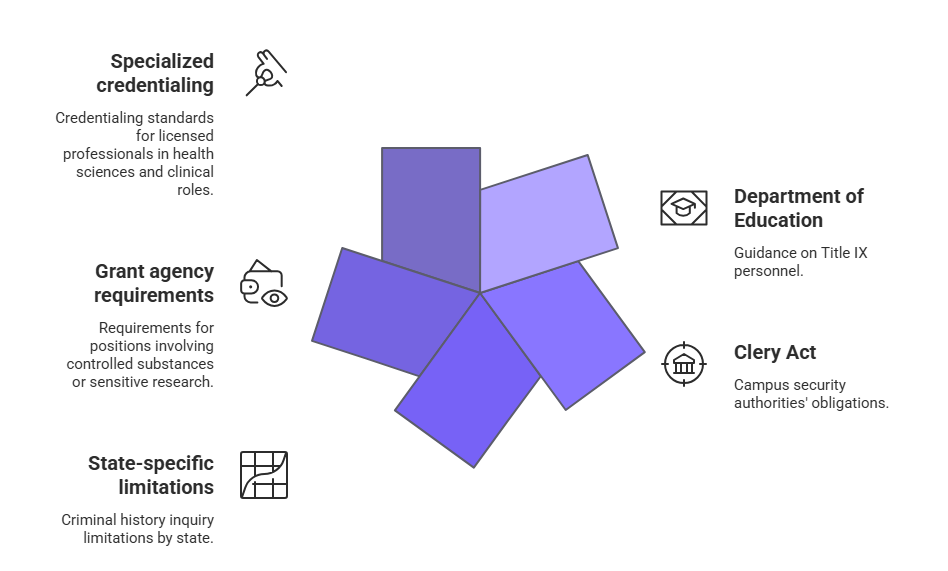
- Department of Education guidance on Title IX personnel
- Clery Act obligations for campus security authorities
- State-specific limitations on criminal history inquiries
- Grant agency requirements for positions involving controlled substances or sensitive research
- Specialized credentialing standards for licensed professionals in health sciences and clinical roles
These overlapping requirements create complexity that demands careful policy design and implementation.
Workforce Segmentation and Screening Tiers
Effective background checks for university faculty and staff require tiered screening protocols aligned with job function, access levels, and regulatory exposure. The following table outlines typical screening tiers used in higher education contexts:
| Position Category | Typical Screening Elements | Additional Considerations |
| Administrative Staff (Non-Sensitive) | Criminal history checks, employment verification | Standard FCRA protocols apply |
| Faculty Positions | Enhanced academic credential verification, professional reference validation, degree authentication | May require international credential evaluation |
| Clinical Faculty and Practitioners | Professional licensure verification, sanctions database checks | State-specific licensure requirements vary |
| Grant-Funded Research Roles | Additional screenings mandated by funding agencies, debarment list checks | Requirements specified in grant terms |
| Student Employees | Role-appropriate criminal checks, position-specific screenings | FERPA considerations apply |
Student employee background check requirements present distinct considerations. Work-study positions, resident advisor roles, peer tutoring assignments, and research assistantships each carry different risk profiles and regulatory implications. Institutions must determine appropriate screening thresholds that protect campus safety without creating unnecessary barriers to student employment opportunities or violating FERPA protections.
Regulatory Intersection Points
University screening programs must account for multiple regulatory touchpoints. Title IX compliance efforts may require specific screening for employees with student contact or supervisory authority. The Clery Act designates certain employees as campus security authorities, which may influence screening decisions for those roles. Meanwhile, accreditation bodies maintain standards for instructional personnel credentials that inform faculty screening protocols.
FCRA Compliance Higher Education Context
Consumer reporting agencies providing background screening services to colleges and universities must comply with FCRA provisions governing permissible purposes, disclosure requirements, authorization procedures, and adverse action protocols. Higher education institutions using these services assume end-user obligations under the statute.
Disclosure and Authorization Requirements
Before obtaining a consumer report for employment purposes, institutions must provide clear and conspicuous written disclosure that a report may be obtained, presented as a standalone document. The disclosure cannot be embedded in employment applications or combined with the following:
- Liability waivers
- Arbitration agreements
- Other employment documents
Authorization from the applicant or employee must be obtained in writing.
University background check policy must address the practical challenge of obtaining compliant authorizations from diverse applicant populations. International candidates may not be familiar with U.S. employment screening practices. Faculty candidates engaged through academic search processes that span months require special attention. Student workers hired through decentralized departmental processes can create compliance gaps. Centralized HR systems and standardized authorization forms help ensure consistency, but academic hiring traditions often involve department-level decision-making that requires oversight.
Adverse Action Procedures in Academic Hiring
When background check findings may result in withdrawal of an offer or termination of employment, FCRA requires a pre-adverse action process. The institution must provide the individual with a copy of the consumer report, a written summary of rights under FCRA, and reasonable time to review and dispute the information before finalizing the adverse decision. After completing the pre-adverse action period, if the institution proceeds with the adverse decision, final adverse action notice must be provided.
Academic hiring timelines, particularly for faculty positions filled through national searches, can complicate adverse action procedures. Offers extended in spring for fall start dates may involve background checks completed months before employment begins. If disqualifying information surfaces after an offer has been accepted and the candidate has relocated or declined other opportunities, the institution faces heightened legal exposure. University background check policy should specify the timing of screening relative to offer extension and contingency language in offer letters.
State and Municipal Law Considerations
State-specific legislation significantly impacts background checks for university faculty and other personnel. Ban-the-Box laws in numerous jurisdictions restrict when and how employers, including educational institutions, may inquire about criminal history. Some states prohibit criminal history questions on initial applications, require individualized assessments before disqualification based on conviction records, or mandate consideration of rehabilitation evidence.
Educational Institution Exemptions and Carve-Outs
Certain state laws provide exemptions or modified requirements for educational institutions, particularly regarding positions with student contact or campus access. These carve-outs recognize legitimate institutional interests in campus safety while still imposing procedural safeguards. Institutions operating multiple campuses across state lines must navigate varying requirements, as screening practices permissible in one state may violate restrictions in another.
| Legal Restriction Type | Typical Impact on Higher Education | Compliance Approach |
| Ban-the-Box Laws | Timing restrictions on criminal history inquiries | Delayed inquiry protocols, exemption verification |
| Salary History Bans | Limits on compensation discussions in faculty negotiations | Modified offer processes, market-based compensation |
| Arrest vs. Conviction Distinctions | Restrictions on using non-conviction arrest data | Enhanced vendor filtering, policy clarification |
| Lookback Period Limits | Time restrictions on consideration of older records | Automated date filtering, state-specific configurations |
Salary history inquiry bans enacted in multiple states prohibit employers from asking applicants about previous compensation. While these laws apply broadly, their interaction with academic hiring practices warrants attention. Faculty salary negotiations often reference previous academic rank and compensation as market benchmarks. Institutions must structure compensation discussions to comply with inquiry prohibitions while accommodating academic labor market norms.
Arrest Records and Lookback Limitations
Some states distinguish between arrest records and conviction records, limiting employer use of arrest information that did not result in conviction. Lookback periods restricting consideration of older convictions vary by state, with common limits ranging from five to ten years depending on conviction type and jurisdiction.
Continuous monitoring university employees through automated systems may surface historical information that institutions are prohibited from considering under state law. This creates compliance risks if screening vendors do not apply jurisdiction-specific filters. Institutions should work with vendors to configure monitoring systems that respect state-level restrictions and prevent flagging of legally irrelevant information.
Academic Credential Verification Best Practices
Background checks for university faculty must include rigorous academic credential verification, as degree fraud and credential misrepresentation pose significant institutional risks. Verification extends beyond confirming degree conferral to the following:
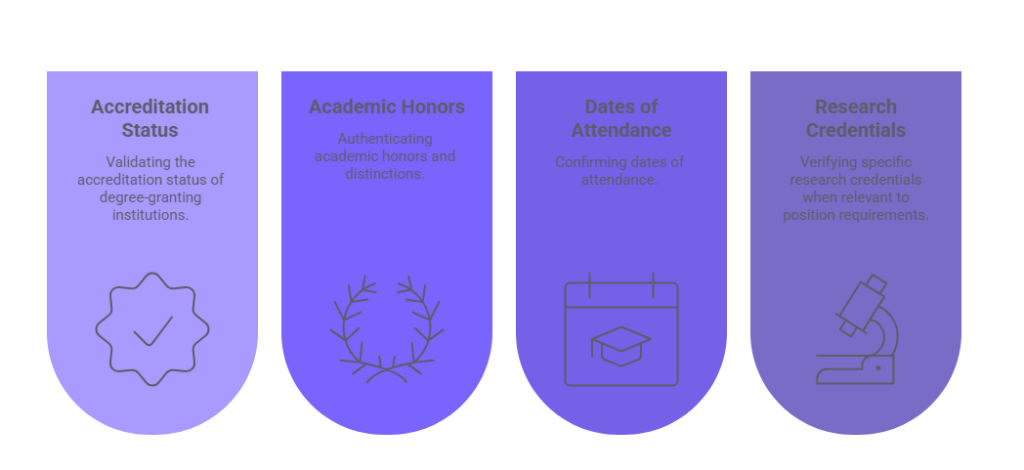
- Validating the accreditation status of degree-granting institutions
- Authenticating academic honors and distinctions
- Confirming dates of attendance
- Verifying specific research credentials when relevant to position requirements
Each element serves to establish the legitimacy and accuracy of claimed academic credentials.
International Degree Validation
Faculty candidates with degrees from foreign institutions require specialized verification procedures. Credential evaluation services assess international degrees for U.S. equivalency, but these evaluations vary in rigor and reliability. Institutions should establish standards for acceptable evaluation providers and specify which credentials require formal evaluation versus direct institutional verification.
Verification of degrees from institutions in countries without centralized registries or standardized transcript formats presents logistical challenges. Political instability, institutional closures, and language barriers can impede direct verification efforts. University background check policy should outline alternative verification methods and escalation procedures when standard verification channels fail.
Professional Licensure and Certification Verification
Faculty and staff in licensed professions including nursing, psychology, social work, engineering, law, and medicine must maintain active, unrestricted licenses appropriate to their roles. Verification includes the following steps:
- Confirming current licensure status
- Checking disciplinary action databases maintained by licensing boards
- Validating board certifications where applicable
- Reviewing practice restrictions or conditions
State licensing boards provide online verification tools with varying levels of detail and reliability. Some boards maintain comprehensive disciplinary histories, while others report only current status. Multi-state practitioners may hold licenses in multiple jurisdictions, requiring verification across all relevant states. Institutions employing health sciences faculty with clinical responsibilities face heightened verification obligations given patient safety implications.
Grant-Imposed Screening Requirements
Federal grant awards often impose personnel screening requirements that exceed institutional baseline standards. The National Institutes of Health, National Science Foundation, Department of Energy, Department of Defense, and other funding agencies maintain distinct requirements for personnel working on sponsored projects involving controlled substances, human subjects, sensitive data, or classified information.
Role-Based Enhanced Screening for Federally Funded Research
Principal investigators and key personnel on certain grants require additional screening elements beyond standard employment checks. The following table outlines common grant-imposed screening requirements:
| Grant Context | Additional Screening Elements | Responsible Agency |
| Controlled Substances Research | DEA registration when applicable, enhanced criminal checks | DEA (when substances are scheduled), NIH, NSF |
| Human Subjects Research | Research ethics training verification, conflicts of interest review | NIH, NSF, OHRP |
| Classified or Sensitive Data | Security clearance verification, foreign influence checks | DOD, DOE, NSF |
| Animal Research | IACUC training credentials, veterinary licensure (if applicable) | NIH, USDA |
University background check policy must establish clear protocols for identifying positions subject to grant-imposed screening requirements and ensuring enhanced checks are completed before individuals begin work on covered projects. Institutions should maintain documentation demonstrating compliance with grant conditions, as federal audits may review personnel screening records. Failure to comply with grant-imposed requirements can jeopardize current funding and future award eligibility.
Continuous Monitoring in Sponsored Research Contexts
Some federal agencies require ongoing monitoring of personnel throughout the grant period, not merely initial screening at hire. Continuous monitoring university employees in research roles through automated systems that flag new criminal records, sanctions, or debarment actions helps institutions maintain grant compliance.
However, such monitoring raises several concerns:
- Privacy implications for employees under continuous surveillance
- Collective bargaining obligations if monitoring exceeds baseline practices
- Data retention and use policy requirements
- Notification and dispute rights for monitored employees
Institutions implementing continuous monitoring must define triggering events that require review, establish procedures for investigating flagged information, and determine appropriate responses when disqualifying information surfaces mid-employment.
Student Employee Screening Considerations
Student employee background check requirements depend on job function and access levels. Resident advisors with keys to residence halls, student IT administrators with access to sensitive systems, student health educators working with minors, and research assistants handling controlled substances each present distinct risk profiles requiring tailored screening approaches.
FERPA and Student Privacy Implications
The Family Educational Rights and Privacy Act protects student education records from unauthorized disclosure. When students apply for institutional employment, their educational records generally cannot be accessed or considered as part of the hiring process without consent, even though the institution maintains those records.
Background screening of student employees must rely on the same external verification processes used for non-student applicants, not internal access to academic records. This creates operational complexity, as hiring departments cannot simply review internal transcripts or conduct records to assess suitability. Work-study programs funded through federal student aid involve additional compliance considerations. The Department of Education does not mandate background checks for work-study participants, but institutions may impose screening requirements as a condition of work-study employment.
Balancing Access and Opportunity
Overly restrictive background check requirements for student employment can limit opportunities for students with prior justice system involvement, potentially conflicting with institutional missions around access and second-chance employment. University background check policy should differentiate between the following:
- High-risk positions genuinely requiring enhanced screening (resident advisors, positions with minor contact, controlled substance access)
- General student employment where less intensive checks suffice (library assistants, dining services, general office support)
Individualized assessment processes allow institutions to consider the nature, recency, and relevance of any adverse information in relation to specific job duties. This approach supports both campus safety and educational access objectives.
Implementing Compliant Screening Frameworks
Effective college employee background checks require written policies that define screening tiers, specify required checks by position category, establish timelines for screening completion, and outline adverse action procedures. Policies should address who is authorized to access background check results, how long reports are retained, and under what circumstances re-screening occurs.
Vendor Selection and Oversight
Institutions typically engage consumer reporting agencies to conduct background checks. Vendor selection should consider the following factors:
- FCRA compliance capabilities and track record
- Experience with higher education clients and unique institutional needs
- Ability to handle international verifications and credential evaluations
- Turnaround times appropriate for academic hiring cycles
- Data security practices and breach notification protocols
- Capacity to apply state-specific legal requirements through jurisdictional filtering
Contracts should clearly allocate compliance responsibilities and specify indemnification provisions. Ongoing vendor oversight includes periodic compliance audits, accuracy reviews, and monitoring of turnaround times and report completeness. Institutions should establish feedback mechanisms for reporting vendor issues and procedures for addressing inaccurate or incomplete reports that affect hiring decisions.
Training and Decentralized Hiring
Academic departments often manage faculty searches with limited HR involvement until the offer stage. This decentralization creates risks of non-compliant practices if search committee members are unfamiliar with FCRA requirements, state restrictions on criminal history inquiries, or proper handling of background check information.
| Stakeholder Group | Required Training Topics | Delivery Method |
| Search Committee Chairs | FCRA basics, prohibited questions, timing requirements | Annual online module + reference guide |
| Department Heads | Authorization procedures, adverse action coordination, confidentiality | In-person session with HR liaison |
| Hiring Managers | Vendor portal use, report interpretation, escalation protocols | Role-based training upon assignment |
| HR Generalists | Full compliance framework, individualized assessment, documentation | Comprehensive onboarding + annual updates |
Training should address permissible and prohibited questions during interviews, timing of background check authorization, confidentiality of screening results, and coordination with central HR for adverse action procedures. Standardized checklists and templates help ensure consistency across decentralized hiring units.
Addressing Findings and Individualized Assessment
When college employee background checks surface potentially disqualifying information, institutions must conduct individualized assessments before making adverse decisions. Blanket disqualification policies that automatically bar individuals with certain criminal histories without considering job-relatedness, recency, or rehabilitation evidence create legal vulnerability under Title VII of the Civil Rights Act and state fair chance hiring laws.
Job-Relatedness and Business Necessity
Individualized assessment frameworks evaluate the nature and gravity of the offense, time elapsed since the offense or completion of sentence, and the nature of the position sought. A conviction for financial fraud may be job-related for positions with budget authority or financial system access but not relevant for a facilities maintenance role. Violent offenses may be disqualifying for positions with unsupervised access to minors or vulnerable populations but not necessarily for remote research positions.
Institutions should document the analysis connecting specific criminal history to job duties and articulate why the identified risk cannot be mitigated through supervision, modified duties, or other accommodations. Documentation provides evidence of non-discriminatory decision-making if challenged.
Rehabilitation Evidence and Reconsideration
Candidates should have the opportunity to provide context, evidence of rehabilitation, or mitigating circumstances related to adverse background check findings. The following forms of evidence may support reconsideration:
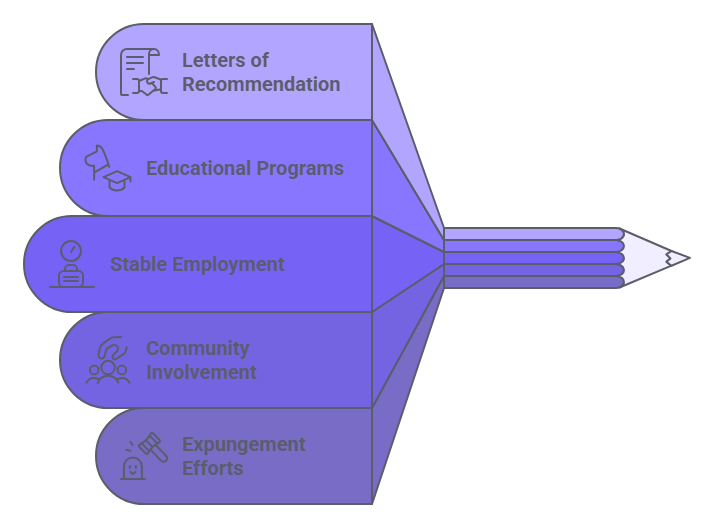
- Letters of recommendation addressing rehabilitation and character development
- Completion of educational programs, vocational training, or treatment programs
- Stable employment history since the offense demonstrating workforce reintegration
- Community involvement, volunteer work, or service activities
- Documentation of expungement efforts or appeals (even if unsuccessful)
University background check policy should establish clear procedures and timelines for candidates to submit additional information and specify who makes final decisions after individualized assessment. Decisions should be reviewed by HR professionals or legal counsel familiar with employment discrimination risks, not left solely to hiring departments without oversight.
Conclusion
College employee background checks demand specialized frameworks that address the structural complexity of academic employment, layered regulatory obligations spanning FCRA and grant-imposed requirements, and role-based screening protocols differentiated by workforce segment. Higher education institutions must implement compliant policies that balance safety imperatives with legal constraints while accommodating decentralized hiring cultures characteristic of academic environments.
Frequently Asked Questions
What makes background checks for university faculty different from other employment screening?
Faculty screening typically requires enhanced academic credential verification including degree authentication, validation of accreditation status of degree-granting institutions, and professional reference checks specific to academic roles. Teaching positions may trigger additional requirements under state education laws, while research faculty on federal grants face sponsor-imposed screening mandates beyond standard employment checks.
Are colleges required to conduct background checks on student employees?
Federal law does not mandate background checks for all student employees, but institutions may impose screening requirements based on job function and risk assessment. Positions involving access to sensitive systems, residence hall master keys, work with minors, or handling of controlled substances typically warrant screening. Requirements should be job-related and applied consistently within position categories.
How do Ban-the-Box laws apply to university hiring?
Ban-the-Box laws restrict when and how employers may inquire about criminal history. Some jurisdictions provide exemptions for certain educational institution positions, while others apply restrictions uniformly. Exemption availability and scope vary significantly by state and should be verified for each applicable jurisdiction. Institutions must comply with laws in each jurisdiction where they operate, which may require different application forms and procedures for campuses in different states.
What screening is required for grant-funded research positions?
Screening requirements vary by funding agency and project type. Federal grants may require enhanced background checks, degree verification, employment history validation, and monitoring of debarment lists. Positions involving controlled substances, human subjects research, or sensitive data may trigger additional requirements specified in grant terms and conditions or agency-specific guidance.
Can universities use continuous monitoring for existing employees?
Continuous monitoring is permissible if properly disclosed and authorized, but raises privacy, collective bargaining, and policy concerns. Institutions implementing monitoring should define covered positions, triggering events requiring review, employee notification procedures, and protocols for addressing flagged information. State laws may impose additional restrictions on automated employment monitoring.
How should universities verify degrees from foreign institutions?
International credential verification typically requires credential evaluation services that assess foreign degrees for U.S. equivalency and authenticate documents. Institutions should establish standards for acceptable evaluation providers and determine which credentials require formal evaluation. Direct verification with foreign institutions may be necessary when evaluation services cannot authenticate credentials.
What is individualized assessment in the context of background check findings?
Individualized assessment involves evaluating potentially disqualifying criminal history information in relation to specific job duties rather than applying blanket exclusion policies. Assessment considers the nature and severity of the offense, time elapsed, evidence of rehabilitation, and job-relatedness. This approach reduces discrimination risks and ensures compliance with fair chance hiring laws.
Do FCRA adverse action requirements apply to academic hiring?
Yes, FCRA adverse action procedures apply when background check findings from a consumer reporting agency will result in withdrawal of an offer or denial of employment. Institutions must provide pre-adverse action notice with a copy of the report and summary of rights, allow reasonable time for response, then provide final adverse action notice if proceeding with the unfavorable decision.
Additional Resources
- Fair Credit Reporting Act Full Text and Compliance Guide
https://www.ftc.gov/legal-library/browse/statutes/fair-credit-reporting-act - EEOC Guidance on Use of Arrest and Conviction Records in Employment
https://www.eeoc.gov/laws/guidance/arrest-and-conviction-records - Department of Education FERPA Regulations and Guidance
https://studentprivacy.ed.gov/ferpa - National Student Clearinghouse Degree Verification Services
https://www.studentclearinghouse.org - National Institutes of Health Grants Policy Statement Personnel Requirements
https://grants.nih.gov/grants/policy/nihgps/index.htm

ABOUT THE CREATOR
GCheck Editorial Team
Meet the GCheck Editorial Team, your trusted source for insightful and up-to-date information in the world of employment background checks. Committed to delivering the latest trends, best practices, and industry insights, our team is dedicated to keeping you informed.
With a passion for ensuring accuracy, compliance, and efficiency in background screening, we are your go-to experts in the field. Stay tuned for our comprehensive articles, guides, and analysis, designed to empower businesses and individuals with the knowledge they need to make informed decisions.
At GCheck, we're here to guide you through the complexities of background checks, every step of the way.