



Effective volunteer screening protects vulnerable populations, reduces organizational liability, and builds public trust in nonprofit missions. As state and local regulations continue to evolve, nonprofit administrators must balance thoroughness with operational efficiency while maintaining welcoming, inclusive recruitment processes that reflect the diversity of communities they serve.
Key Takeaways
- Volunteer screening requirements vary significantly by state, jurisdiction, and the populations served by your organization.
- Risk-based screening frameworks help allocate limited resources to roles with the greatest potential for harm or liability exposure.
- Consent, disclosure, and authorization requirements apply to formal background checks even in nonprofit settings.
- Multiple verification layers beyond criminal history checks strengthen overall volunteer safety protocols.
- Technology tools can streamline screening workflows but must be implemented with attention to compliance and data security.
- Federal and state laws regulate what information can be collected, how it must be handled, and when adverse decisions require notice.
- Individualized assessment policies reduce legal risk and support equitable access to volunteer opportunities.
- Regular policy review ensures alignment with changing legal landscapes and operational realities.
Understanding the Legal and Ethical Foundation of Volunteer Screening
Nonprofit volunteer screening exists at the intersection of risk management, legal compliance, and mission advancement. Organizations must navigate federal regulations like the Fair Credit Reporting Act, state-specific volunteer protection statutes, and local ordinances that may restrict what information can be considered in volunteer selection decisions. The regulatory environment continues to evolve as jurisdictions refine their approaches to balancing safety with fair access to opportunities.
Volunteer screening serves multiple organizational functions beyond basic safety. It demonstrates due diligence to funders, insurers, and the communities served while protecting vulnerable populations including children, elderly individuals, people with disabilities, and others who may interact with volunteers in positions of trust or authority. Screening also protects volunteers themselves by creating clear boundaries, establishing accountability structures, and reducing the likelihood of false allegations.
When implemented thoughtfully, screening processes signal organizational professionalism and commitment to safety without creating unnecessary barriers to participation. The challenge lies in designing systems that are both thorough and welcoming, ensuring that how to vet volunteers aligns with both protective and inclusive organizational values.
In my experience, volunteer screening is all about protection and building trust, not just checking boxes. The best teams have robust and consistent checks carried out for the right reasons. When it’s done well, it’s a real force for safety and inclusion. �
The Regulatory Landscape for Volunteer Organizations
The legal framework governing nonprofit volunteer screening has become increasingly complex. While some federal laws apply uniformly, many screening requirements reflect state or local policy decisions about criminal history consideration, juvenile records, and the distinction between arrests and convictions.
| Regulatory Level | Common Requirements | Variation Factors |
| Federal | FCRA compliance for consumer reports, adverse action procedures | Industry-specific regulations |
| State | Mandated checks for certain populations, lookback limitations, individualized assessment | Volunteer protection statutes, fair chance laws |
| Local | Ban-the-box ordinances, timing restrictions | Municipal employment policies, city-specific protections |
Certain jurisdictions have enacted ordinances that restrict when and how employers can inquire about criminal history. Some of these laws also apply to volunteer screening, though coverage varies significantly by jurisdiction. Organizations should verify whether such restrictions apply to their volunteer programs. Some states mandate specific types of checks for volunteers working with designated populations, while others have established lookback period limitations that restrict how far into an individual’s history organizations can review.
Organizations operating across multiple jurisdictions must account for the most restrictive applicable requirements. Nonprofit volunteer screening policies should clearly document which legal standards apply to each volunteer role based on location and function.
Developing a Risk-Based Volunteer Screening Framework
Not all volunteer positions carry equal risk or require identical screening protocols. A risk-based framework categorizes roles by their potential for harm and applies proportionate verification measures, allowing organizations to allocate limited resources strategically while maintaining appropriate safety standards.
Categorizing Volunteer Roles by Risk Level
High-risk positions typically involve unsupervised access to vulnerable populations, financial authority, or control over sensitive information. These might include:
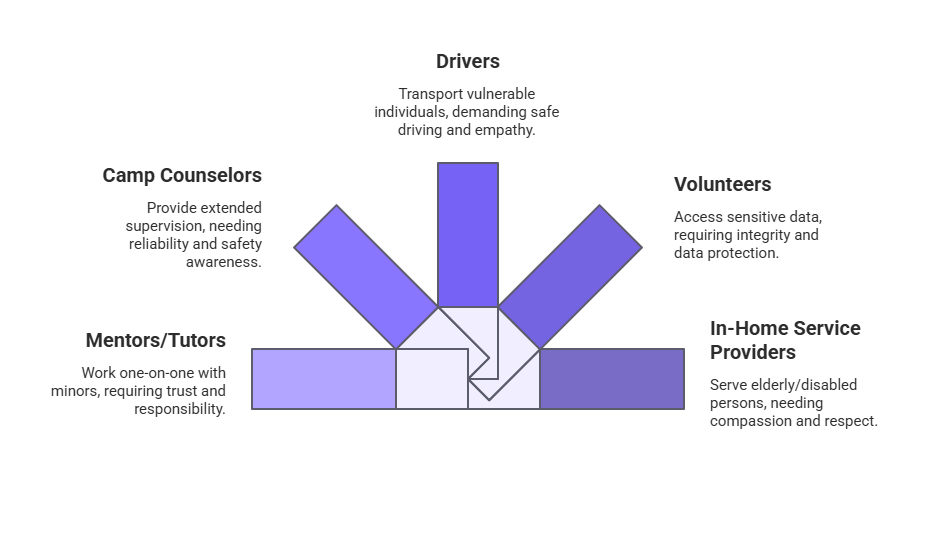
- Mentors and tutors working one-on-one with minors
- Overnight camp counselors with extended supervision responsibilities
- Drivers transporting vulnerable individuals
- Volunteers with access to donor databases or financial systems
- Individuals providing in-home services to elderly or disabled persons
Medium-risk positions involve supervised contact with vulnerable populations or limited access to assets. Examples include event volunteers who interact with children in group settings, administrative volunteers with partial data access, or individuals handling small amounts of cash under oversight.
Low-risk positions involve minimal safety concerns and no access to vulnerable populations or sensitive resources. These might include one-time event helpers, advocacy volunteers, or individuals performing supervised manual labor or clerical tasks. Risk categorization should be documented in policy, applied consistently, and reviewed periodically as roles evolve.
Matching Screening Components to Risk Categories
The intensity of nonprofit volunteer screening best practices should align directly with the risk level associated with each position category.
| Risk Level | Screening Components | Rationale |
| High | Identity verification, criminal history checks, reference verification, role-specific checks (sex offender registry, motor vehicle records) | Positions with greatest potential for harm require most comprehensive verification |
| Medium | Identity verification, self-disclosure forms, reference checks, potentially limited criminal history verification | Supervised access warrants moderate verification proportionate to exposure |
| Low | Basic identity confirmation, organizational orientation | Minimal safety concerns justify streamlined processes that facilitate participation |
This tiered approach ensures resources align with actual risk while avoiding both over-screening and under-protection. Organizations should document the rationale for each category assignment and apply standards consistently across similar roles.
Essential Components of Volunteer Screening Programs
Effective screening combines multiple verification layers that together create a more complete picture than any single check provides. Each component serves a distinct function in the overall assessment process.
Application and Self-Disclosure
A structured application collects consistent information from all candidates and establishes a documentary record. Self-disclosure questions allow candidates to explain gaps in history, provide context for past issues, and demonstrate transparency. This foundational step initiates the volunteer relationship with clear expectations about information sharing.
Self-disclosure should be carefully worded to comply with jurisdictional restrictions on criminal history inquiries. Questions should focus on convictions rather than arrests where legally required and should specify relevant timeframes that align with organizational policy and legal limitations.
Identity Verification
Confirming that applicants are who they claim to be prevents impersonation and ensures that subsequent checks are conducted on the correct individual. Identity verification can range from visual inspection of government-issued identification to more formal documentation processes, depending on position sensitivity and organizational policy.
For positions requiring higher security, organizations might maintain copies of identification documents, verify Social Security numbers through authorized systems, or use digital identity verification tools that have become more accessible to nonprofits. The verification method should be proportionate to the role’s risk level and the potential consequences of identity fraud.
Reference Checks
Reference verification provides qualitative information about reliability, interpersonal skills, and past performance that quantitative checks cannot capture. Effective reference checks ask specific behavioral questions rather than seeking general impressions, focusing on observable actions relevant to volunteer responsibilities.
References should be contacted directly using independently verified contact information rather than details provided solely by the applicant. Questions should focus on observable behaviors relevant to volunteer responsibilities and should document responses systematically. Multiple references may be appropriate for high-risk positions.
Criminal History Verification
Criminal history checks represent one component of volunteer safety protocols but carry significant legal and operational considerations. Organizations must understand what information is legally accessible, how it can be used in decisions, and what procedures are required when checks are conducted through consumer reporting agencies.
When criminal history information will be obtained through a third-party consumer reporting agency that provides consumer reports for permissible purposes, including certain employment and volunteer screening contexts, specific notice, authorization, and adverse action procedures apply. Organizations must:
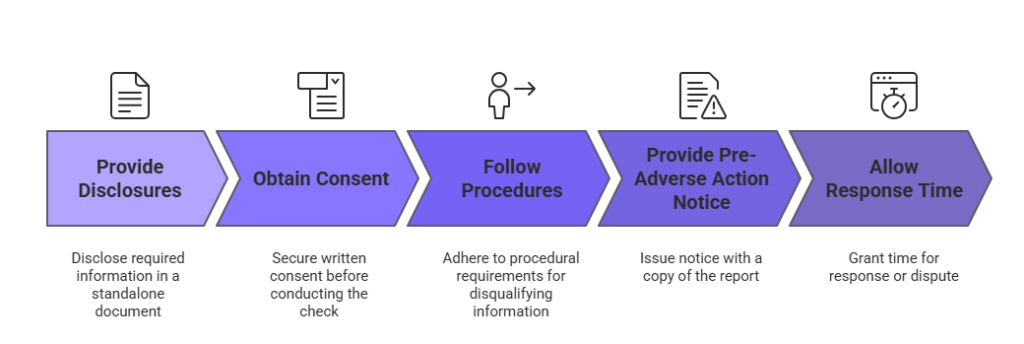
- Provide required disclosures in a standalone document
- Obtain written consent before conducting the check
- Follow procedural requirements if potentially disqualifying information is discovered
- Provide pre-adverse action notice with a copy of the report
- Allow time for the individual to respond or dispute inaccuracies
Some organizations conduct checks directly through state or local agencies, which may have different procedural requirements. Direct searches may be limited to specific jurisdictions and may not capture out-of-state history, creating potential gaps in verification coverage.
Specialized Screening Components
Depending on role requirements, additional verification might include motor vehicle record checks for drivers (where legally permissible and obtained through authorized channels), professional license verification for volunteers providing specialized services, or education verification for roles requiring specific credentials. These targeted checks address risks specific to particular volunteer functions.
For volunteer roles involving financial responsibilities, some organizations consider whether additional financial history verification is appropriate and legally permissible, though many consumer credit provisions have restrictions on non-employment uses. Legal counsel should review any proposals to include financial checks in volunteer screening protocols.
Compliance Considerations in Nonprofit Volunteer Screening
Legal compliance in volunteer screening requires attention to federal consumer protection laws, state-specific volunteer statutes, anti-discrimination principles, and data privacy requirements. Navigating this complex landscape is essential for protecting both the organization and the individuals it serves.
Federal Law Considerations
The Fair Credit Reporting Act establishes procedural requirements when background checks are obtained from third-party consumer reporting agencies that provide consumer reports for permissible purposes, including certain employment and volunteer screening contexts. These include providing a standalone disclosure, obtaining written authorization, and following specific adverse action procedures if information in a consumer report leads to a decision not to accept a volunteer.
The adverse action process requires providing pre-adverse action notice with a copy of the report and a summary of consumer rights under FCRA, followed by a reasonable period for the individual to respond or dispute inaccuracies (typically at least five business days), and then providing final adverse action notice if the decision stands. The final notice must include the name and contact information of the consumer reporting agency, a statement that the agency did not make the adverse decision, and notice of the right to dispute information with the agency. Many organizations fail to recognize that these requirements apply to volunteer screening, not just employment, creating unintended compliance gaps.
State and Local Volunteer Screening Laws
Many states have enacted volunteer protection statutes, though these primarily protect volunteers themselves from personal liability rather than guaranteeing organizational immunity. Some state laws specify screening procedures that may support organizational due diligence defenses in negligent hiring or supervision claims. Organizations should verify what protections, if any, apply in their specific jurisdiction and should not assume that conducting screening alone provides complete liability protection.
State laws may also restrict what information can be considered:
- Prohibiting discrimination based on arrest records without conviction
- Limiting consideration of convictions beyond a specific timeframe
- Requiring individualized assessment of criminal history relevance
- Mandating opportunity for candidates to provide context before adverse decisions
Local jurisdictions may impose additional restrictions through fair chance hiring ordinances that limit criminal history inquiries or require specific assessment procedures. Nonprofit administrators must research requirements specific to their operating locations and update policies as regulations evolve.
Individualized Assessment Requirements
Rather than applying automatic disqualification rules, legally safer approaches involve individualized assessment that considers the nature of any concerning information, the time elapsed, evidence of rehabilitation, and the specific responsibilities of the volunteer role. This approach recognizes that past events do not necessarily predict future behavior, particularly when substantial time has passed or circumstances have changed significantly.
Individualized assessment policies should document what factors are considered, who makes decisions, and how candidates can provide additional context. This approach reduces legal risk while allowing organizations to make nuanced judgments about suitability based on the totality of available information.
Data Privacy and Security
Information collected during volunteer screening must be handled in compliance with applicable privacy laws and organizational data protection policies. Sensitive personal information should be collected only when necessary, accessed only by authorized personnel with legitimate need, and retained for the shortest period consistent with legal obligations and documented business requirements. Organizations should establish and follow clear retention schedules rather than retaining screening information indefinitely.
| Privacy Element | Best Practice | Risk Mitigation |
| Collection | Gather only information directly relevant to screening decisions | Reduces exposure to data breach liability |
| Access | Limit to personnel with legitimate need to know | Prevents unauthorized disclosure |
| Storage | Use secure systems with encryption for sensitive data | Protects against external and internal threats |
| Retention | Establish clear schedules based on legal and operational needs | Minimizes ongoing privacy risk |
| Disposal | Use certified destruction methods for physical and electronic records | Ensures information cannot be reconstructed |
Organizations should establish clear data retention schedules, secure storage procedures, and disposal protocols. Digital systems should include appropriate access controls, encryption for sensitive data, and audit capabilities that document who accessed what information and when.
Implementing Technology-Assisted Screening Workflows
Digital tools can improve screening efficiency, consistency, and compliance while reducing administrative burden on volunteer coordinators. Technology should enhance rather than replace human judgment in the screening process.
Digital Application and Workflow Management
Online application systems allow volunteers to submit information directly, enable automated routing for review, and create structured data that supports reporting and compliance documentation. These systems can incorporate electronic consent forms, track application status, and maintain audit trails that document each step in the screening process.
Workflow automation can route applications to appropriate reviewers based on role risk category, send automated status updates to applicants, and trigger required compliance steps at appropriate intervals. This reduces manual tracking and helps ensure no procedural steps are missed, improving both efficiency and compliance consistency.
Electronic Identity Verification
Some platforms offer identity verification capabilities that allow volunteers to submit documentation electronically, including photographed identification documents or video-based identity confirmation. While these tools can improve convenience, particularly for remote volunteers, organizations should evaluate whether verification standards meet their risk requirements.
Electronic verification should include safeguards against document tampering and should create audit trails documenting the verification process. Organizations should establish clear standards for when electronic verification is acceptable versus when in-person verification is required.
Technology Considerations for Resource-Constrained Organizations
Nonprofits with limited budgets should evaluate technology solutions based on actual cost-benefit analysis rather than assumptions:
- Some platforms offer nonprofit pricing tiers or free versions for organizations below certain volunteer volumes
- Modular approaches allow organizations to adopt specific functions without comprehensive system replacement
- Open-source or low-cost solutions may provide adequate functionality for organizations with basic needs
- Technology investments should be evaluated against staff time savings and compliance risk reduction
Organizations should also consider volunteer experience when implementing technology. Systems should be accessible across devices, accommodate varying levels of digital literacy, and provide clear instructions. Overly complex processes may deter qualified volunteers, particularly in communities with limited technology access.
Limitations of Automated Screening Tools
While technology can streamline workflows, human judgment remains essential in volunteer selection. Automated tools may flag information that requires context or may miss nuanced risk factors that experienced coordinators would recognize. Organizations should maintain human oversight of screening decisions, particularly for high-risk positions.
Technology vendors should not make final suitability determinations. Their role is to provide verified information that organizational decision-makers evaluate according to documented policies and legal requirements. The responsibility for screening decisions remains with the organization, not with technology providers.
Building Inclusive Volunteer Screening Practices
Effective screening protects safety without creating unnecessary barriers to participation or disproportionately excluding individuals from marginalized communities. This balance requires thoughtful policy design and consistent implementation.
Volunteer Safety and Equitable Access
Criminal history screening, when not carefully designed, can perpetuate systemic inequities by excluding individuals with past justice involvement who pose no current risk. Evidence discussed in employment discrimination enforcement contexts suggests that conviction history may have declining predictive value over time, and many jurisdictions have implemented individualized assessment requirements as a means of balancing safety considerations with fair access to opportunities.
Organizations committed to both volunteer safety and equitable access should:
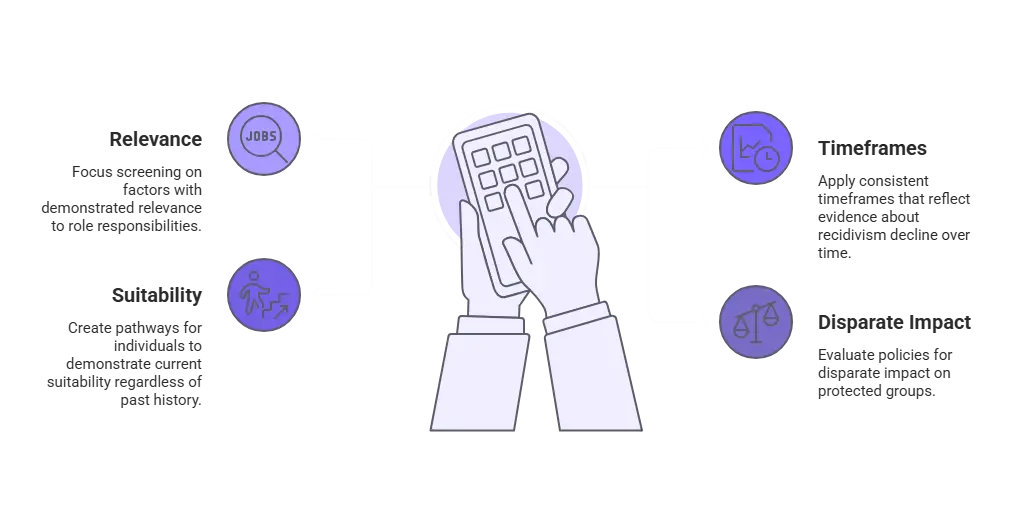
- Focus screening on factors with demonstrated relevance to role responsibilities
- Apply consistent timeframes that reflect evidence about recidivism decline over time
- Create pathways for individuals to demonstrate current suitability regardless of past history
- Evaluate policies for disparate impact on protected groups
This approach recognizes that effective risk management and inclusive practices are compatible when policies are grounded in evidence rather than assumptions.
Screening Volunteers from Diverse Backgrounds
International volunteers, individuals with limited documentation, or people from communities with different naming conventions may face challenges in standard screening processes. Flexible verification approaches that accept alternative documentation or supplementary verification methods can improve accessibility while maintaining safety standards.
Organizations should train screening coordinators to recognize when standard processes may not work for specific individuals and to identify appropriate alternative verification approaches that provide equivalent assurance. This might include accepting foreign identification documents, using alternative reference sources, or implementing supplementary verification methods.
Transparency in Screening Processes
Clear communication about screening requirements, procedures, and timelines improves volunteer experience and reduces anxiety. Organizations should provide written screening policies, explain what information will be requested and why, and set realistic expectations about timeframes. Transparency builds trust and demonstrates respect for candidates.
When potentially disqualifying information is discovered, fairness requires giving individuals the opportunity to provide context, correct inaccuracies, or demonstrate mitigating factors before final decisions are made. This procedural fairness protects both organizational interests and individual dignity.
Creating and Maintaining Screening Policies
Documented policies provide consistency, support compliance, and establish accountability for screening decisions. Well-crafted policies serve as both operational guidance and legal protection. Good policies are useful for both day-to-day running and legal protection. They also assist in ensuring that decisions are made consistently for all positions. It is essential to update policies regularly to ensure they are aligned with current regulations and changing needs.
Essential Policy Components
Comprehensive volunteer screening policies should define the organization’s purpose and scope for screening, categorize volunteer roles by risk level, specify required screening components for each category, and establish decision-making authorities and procedures. Policies should be specific enough to guide consistent implementation but flexible enough to accommodate individualized assessment.
Policies should document how information will be evaluated, what constitutes potentially disqualifying information, how individualized assessment will be conducted, and what appeal or reconsideration processes exist. These provisions ensure fairness and reduce the likelihood of arbitrary or inconsistent decisions.
Data handling provisions should specify who has access to screening information, how it will be stored and protected, retention periods, and disposal procedures. These elements address both legal compliance requirements and ethical obligations to protect volunteer privacy.
Policy Review and Updates
Screening policies should be reviewed regularly to ensure continued alignment with legal requirements, insurance conditions, best practice evolution, and operational realities. Annual review is appropriate for most organizations, with immediate review triggered by significant regulatory changes or incidents that reveal policy gaps.
| Review Trigger | Timeline | Focus Areas |
| Scheduled review | Annual | Legal updates, operational efficiency, technology changes |
| Regulatory change | Immediate | Compliance requirements, procedural updates |
| Incident or near-miss | Within 30 days | Policy adequacy, implementation gaps, training needs |
| Insurance requirement change | Upon notification | Coverage conditions, required procedures |
Policy updates should be documented, communicated to relevant personnel, and implemented consistently. Organizations should maintain version histories to demonstrate evolution of practices over time and to provide context for decisions made under earlier policy versions.
Training Volunteer Coordinators
Individuals responsible for implementing screening must understand both procedural requirements and underlying principles. Training should cover applicable legal requirements, organizational policies, proper use of screening tools, documentation standards, confidentiality requirements, and how to conduct individualized assessments.
Ongoing training should address new regulations, emerging risks, technology updates, and lessons learned from screening challenges or incidents. Coordinators should understand not just what procedures to follow but why those procedures matter for organizational protection and volunteer fairness.
Integrating Screening with Broader Volunteer Management
Screening is most effective when integrated with comprehensive volunteer management practices that include clear role descriptions, supervision protocols, and ongoing monitoring. No screening system can eliminate all risk, making ongoing management essential.
Role Descriptions and Expectations
Well-defined volunteer roles clarify responsibilities, establish boundaries, and provide the foundation for determining appropriate screening intensity. Role descriptions should specify required qualifications, supervision arrangements, access to vulnerable populations or sensitive resources, and expected time commitments.
Clear expectations help volunteers understand their responsibilities and make it easier to identify concerning behavior that might emerge after initial screening. Role descriptions also provide the basis for individualized assessment by clarifying what skills, experience, and characteristics are actually relevant to successful performance.
Supervision and Oversight
Even thorough screening cannot eliminate all risk. Appropriate supervision, particularly for roles involving vulnerable populations, provides ongoing protection beyond initial verification. Supervision intensity should reflect role risk, volunteer experience, and the specific context in which services are provided.
Organizations should establish supervision standards for each risk category, train volunteer supervisors on their responsibilities, and create reporting mechanisms for concerns that arise during volunteer service. Supervisors should understand both what to watch for and how to respond when concerns emerge.
Ongoing Monitoring and Periodic Reverification
Some organizations implement periodic reverification for long-term volunteers in high-risk positions. This might include updated criminal history checks on a defined schedule, periodic reference updates, or formal performance reviews that assess continued suitability.
Ongoing monitoring also includes attention to behavioral warning signs, policy violations, or boundary issues that might indicate emerging risk:
- Changes in behavior or reliability patterns
- Boundary violations with vulnerable populations
- Resistance to supervision or policy compliance
- Conflicts with other volunteers or staff
- Reports of concerning conduct from program participants
Organizations should establish clear reporting channels and response protocols for concerns. Early intervention can prevent escalation and protect both the organization and the populations served.
Responding to Post-Placement Issues
When concerning information emerges after a volunteer has been placed, organizations must respond promptly and appropriately. Response protocols should balance fairness to the volunteer with protection of organizational interests and vulnerable populations.
Procedures should specify who makes decisions about suspension or termination, what investigation procedures apply, how information is documented, and what communication occurs with affected parties. Having clear protocols reduces the likelihood of legally problematic responses made under pressure.
Common Challenges in Nonprofit Volunteer Screening
Resource limitations, legal complexity, and volunteer recruitment pressure create practical challenges for many organizations. Understanding common obstacles helps organizations develop realistic solutions.
Budget Constraints and Screening Costs
Many nonprofits struggle with screening costs when volunteer turnover is high or budgets are limited. Organizations should evaluate screening expenses against potential liability exposure and consider whether risk-based approaches could focus resources on positions with greatest concern.
Some states offer free or reduced-cost criminal history checks for qualifying nonprofit organizations working with vulnerable populations. Organizations should investigate whether such programs exist in their jurisdiction, what qualifying criteria apply, and what procedural requirements govern their use, as these may differ from commercial screening services.
Balancing Thoroughness with Volunteer Experience
Extensive screening can deter volunteers, particularly for low-risk positions or short-term opportunities. Organizations should calibrate screening intensity to actual risk, streamline administrative processes, and communicate clearly about expectations and timelines.
Volunteer experience matters for recruitment and retention. Processes that feel invasive, unnecessarily burdensome, or poorly explained can discourage participation. Organizations should regularly evaluate whether screening procedures are proportionate to risk and whether they could be made more efficient without compromising safety.
Managing Screening for High-Volume, Short-Term Volunteers
Organizations hosting large events or seasonal programs face challenges screening many volunteers quickly. Advance planning, clear risk categorization, streamlined processes for low-risk positions, and potentially simplified procedures for supervised, time-limited roles can help manage volume while maintaining appropriate safety standards.
Some organizations maintain pools of pre-screened volunteers who can be activated quickly for events or short-term needs. This approach requires systems for tracking screening currency and managing volunteer availability but can significantly reduce last-minute screening pressure.
Addressing Incomplete or Unclear Background Check Results
Information returned from screening may be incomplete, unclear, or contain apparent inaccuracies. Organizations should have procedures for seeking clarification, allowing individuals to provide additional context or documentation, and making decisions when information remains ambiguous.
Common scenarios include common names that generate multiple potential matches, records that lack sufficient detail to determine relevance, or information that conflicts with candidate disclosures. Procedures should specify how these situations are investigated and resolved before final decisions are made.
International Volunteers and Complex Screening Scenarios
Volunteers with substantial history in other countries present screening challenges, as criminal history information may be difficult or impossible to obtain from foreign jurisdictions. Organizations must determine what alternative verification provides reasonable assurance or whether role limitations are necessary when comprehensive screening is not feasible.
Alternative approaches might include extended reference checking, requiring self-disclosure with verification through available channels, limiting initial placement to supervised roles with progression contingent on demonstrated trustworthiness, or accepting the screening limitation while implementing enhanced supervision. The appropriate approach depends on role risk and the extent of verifiable U.S. history.
Conclusion
Nonprofit volunteer screening best practices in 2026 reflect evolving legal standards, technological capabilities, and growing recognition that safety and inclusion can be mutually reinforcing rather than competing goals. Organizations that implement risk-based, legally compliant, and thoughtfully designed screening programs protect their missions while welcoming diverse volunteers who strengthen communities through service.
Frequently Asked Questions
What is the minimum screening required for nonprofit volunteers?
No universal minimum exists, as requirements depend on your state, local ordinances, and the populations you serve. Organizations working with children, elderly individuals, or people with disabilities may face specific mandated checks. At a minimum, most nonprofits should verify identity and conduct reference checks for all volunteers, with additional verification based on role risk and legal requirements in their jurisdiction.
Do Fair Credit Reporting Act requirements apply to volunteer screening?
Yes, when background checks are obtained through consumer reporting agencies for volunteer purposes, FCRA requirements for disclosure, authorization, and adverse action procedures generally apply. Organizations must provide required notices, obtain written consent, and follow specific procedures if information in a report leads to a decision not to accept a volunteer, even though no employment relationship is involved.
How far back should criminal history checks go for volunteers?
Some states have established lookback limitations ranging from seven to ten years for certain types of offenses, while others impose no time limits or have different periods for different offense categories. Serious violent crimes or offenses against vulnerable populations may have longer or unlimited lookback periods in many jurisdictions. Organizations must verify the specific limitations applicable in their location.
Can we automatically disqualify volunteers based on criminal history?
Automatic or blanket disqualification policies carry increasing legal risk. Many jurisdictions now require individualized assessment that considers the nature and severity of offenses, time elapsed, evidence of rehabilitation, and relevance to specific volunteer responsibilities. Individualized assessment reduces legal exposure while allowing nuanced decisions about volunteer suitability.
What screening is appropriate for volunteers who work with children?
Many states mandate specific checks for individuals in positions involving contact with minors, though requirements vary by organizational type, employment status, and supervision arrangements. These typically include criminal history verification and checks against sex offender registries. Some jurisdictions require fingerprint-based checks that search national databases rather than single-state records. Organizations should verify requirements specific to their location and organizational type.
How should nonprofits handle screening for international volunteers?
Obtaining criminal history from foreign jurisdictions is often difficult or impossible. Organizations should request self-disclosure of any international criminal history, check available domestic records if the individual has U.S. history, verify references that can speak to character and suitability, and consider whether role limitations or additional supervision are appropriate when comprehensive screening cannot be completed.
Do we need to rescreen long-term volunteers periodically?
No universal requirement exists, but many organizations implement periodic rescreening for volunteers in high-risk positions who serve for extended periods. Rescreening intervals typically range from two to five years. Organizations should establish clear policies about what triggers rescreening, apply standards consistently, and ensure that reverification procedures comply with applicable legal requirements.
What documentation should we keep from volunteer screening?
Organizations should maintain records demonstrating that required screening was completed, what information was obtained, who reviewed it, what decision was made and why, and that proper procedures were followed. However, retention of actual consumer reports or sensitive personal information should be limited to what is legally required or operationally necessary, with appropriate security and disposal procedures.
Additional Resources
- Fair Credit Reporting Act: What You Need to Know
https://www.ftc.gov/business-guidance/resources/fair-credit-reporting-act-what-you-need-know - Using Consumer Reports for Employment Decisions
https://www.ftc.gov/business-guidance/resources/using-consumer-reports-what-employers-need-know - Volunteer Protection Act of 1997
https://www.justice.gov/jmd/volunteer-protection-act-1997 - National Council of Nonprofits: Liability and Risk Management
https://www.councilofnonprofits.org/running-nonprofit/risk-management - Volunteer Management: Screening and Selection
https://www.nationalservice.gov/resources/engaging-volunteers/screening-volunteers

ABOUT THE CREATOR
GCheck Editorial Team
Meet the GCheck Editorial Team, your trusted source for insightful and up-to-date information in the world of employment background checks. Committed to delivering the latest trends, best practices, and industry insights, our team is dedicated to keeping you informed.
With a passion for ensuring accuracy, compliance, and efficiency in background screening, we are your go-to experts in the field. Stay tuned for our comprehensive articles, guides, and analysis, designed to empower businesses and individuals with the knowledge they need to make informed decisions.
At GCheck, we're here to guide you through the complexities of background checks, every step of the way.