



Background check costs in 2026 typically range from $20 to $500+ per screening, depending on check type, comprehensiveness, turnaround speed, and provider service level. Employers seeking transparent pricing must understand that background screening costs reflect multiple variables including database access fees, court researcher costs, compliance infrastructure, technology platforms, and the depth of verification required for their specific hiring risk profile.
Key Takeaways
- Background check costs vary widely based on check type, with basic criminal searches starting around $20-$40, while comprehensive packages including employment verification, education checks, and multi-jurisdictional criminal records can exceed $100-$200 per candidate.
- Employers typically pay between $30-$100 per background check for standard pre-employment screening, though costs increase significantly when adding specialized checks like federal records, professional license verification, or international screenings.
- Volume-based pricing structures reward high-volume employers, with per-check costs decreasing substantially when organizations process hundreds or thousands of background checks annually compared to occasional one-off screenings.
- Turnaround time directly impacts cost, as expedited background checks requiring manual court research or priority processing typically command premium fees of 25-100% above standard service levels.
- Hidden costs beyond the base screening fee include compliance management, candidate experience platforms, applicant tracking system integrations, adverse action processing, and ongoing monitoring services that can add 15-40% to total screening expenditures.
- Provider service tier significantly affects pricing, with self-service platforms offering lower per-check costs but minimal support, while full-service providers include dedicated account management, compliance consulting, and dispute resolution assistance at higher price points.
- Geographic scope dramatically influences background check costs, as county-level criminal searches in jurisdictions without electronic databases require courthouse researchers charging $15-$40 per county, while statewide repository searches may cost $10-$25 per state.
- Regulatory compliance infrastructure represents a substantial but necessary cost component, as FCRA-compliant background check providers invest heavily in adverse action workflows, data security certifications, dispute resolution systems, and legal counsel that budget providers often neglect.
The Real Cost of Background Checks: Beyond the Price Tag
When evaluating background check costs in 2026, employers encounter a pricing landscape far more complex than simple per-screening fees. The employment background check cost reflects a sophisticated ecosystem of data access, human verification, compliance infrastructure, and technology platforms working together to deliver accurate, legally defensible hiring information. Understanding background screening costs requires examining not just what you pay, but what you receive in return—and more importantly, what risks you avoid through proper vetting.
Organizations making hiring decisions based solely on the lowest advertised price often discover hidden costs through compliance violations, missed critical information, or candidate experience failures that damage the employer brand. The question “how much does a background check cost” has no single answer because screening needs vary dramatically across industries, positions, and risk tolerance levels. A retail associate screening differs fundamentally from executive vetting, healthcare credentialing, or financial services compliance checks—each carrying distinct cost structures reflecting their unique requirements.
What Drives Background Check Pricing in 2026
Background check costs stem from several foundational components that providers must cover to deliver compliant, accurate screening services. Data access fees represent the largest single cost driver, as screening companies pay courts, government agencies, and database vendors for record access. Criminal record repositories, motor vehicle departments, educational institutions, and professional licensing boards all charge fees for information access.
Labor costs constitute the second major expense, particularly for checks requiring human verification rather than automated database queries. County criminal searches in jurisdictions without electronic records require courthouse researchers to physically visit facilities, search paper records, and document findings—a process commanding premium fees. Employment verification, education confirmation, and professional reference checks all require trained specialists to contact institutions, navigate bureaucratic processes, and verify candidate-provided information.
Compliance infrastructure represents a substantial but often invisible cost component. FCRA-compliant background screening requires sophisticated adverse action workflows, candidate dispute resolution systems, data security certifications, regular legal counsel, and continuous policy updates reflecting evolving regulations. Providers cutting corners on compliance infrastructure can offer lower prices but expose employers to significant legal and financial risks. Technology platform investment separates modern screening providers from legacy services, as applicant tracking system integrations, mobile-optimized candidate experiences, real-time status tracking, automated compliance workflows, and secure document handling require ongoing development and maintenance costs reflected in per-check pricing.
As a human resources practitioner, I have come to understand that the price of a background screen never simply goes to the amount reflected on an invoice. Rather, the price of a background screen represents the efforts involved in securing people, reputations, and trust, while being mindful of the treatment of job applicants. I have come to understand that taking the cheap route simply to save a buck or two may result in paying a much greater price related to compliance, risk, and a lack of trust both in the hire and the staff. �
Breaking Down Background Check Costs by Screening Type
Criminal Record Searches: The Foundation of Most Screenings
Criminal background checks form the cornerstone of most pre-employment screening programs, with costs varying based on geographic scope and database availability. Understanding the price differences among criminal search types helps employers budget accurately while ensuring adequate coverage for their risk profile.
| Criminal Search Type | Typical Cost Range | Coverage Scope |
| County Criminal Search | $15-$40 per county | Single county jurisdiction with most complete records |
| Statewide Criminal Database | $10-$25 per state | State-level repository with varying completeness |
| National Criminal Database | $15-$30 per search | Aggregated multi-state records requiring verification |
| Federal Criminal Search | $20-$35 per search | U.S. District Court records for federal offenses |
Multi-county searches quickly accumulate costs, as thorough screening often requires checking multiple jurisdictions where candidates have lived, worked, or attended school. State repositories vary significantly in completeness, update frequency, and record detail—some states maintain comprehensive criminal databases updated daily, while others provide limited information requiring county-level verification for serious findings.
National criminal database searches offer broad coverage but carry limitations requiring understanding. These databases aggregate records from various sources but lack comprehensive coverage, suffer from update delays, and often contain incomplete or inaccurate identifying information. The FCRA prohibits using national database records alone for adverse employment decisions, requiring county-level verification of any disqualifying findings. Federal criminal record searches access U.S. District Court records for crimes prosecuted at the federal level, proving essential for positions involving government contracting, financial services, or roles where federal crimes like fraud, embezzlement, or interstate offenses represent relevant risk factors.
Employment and Education Verification Costs
Employment verification services typically cost $15-$40 per position verified, with pricing reflecting the labor-intensive process of contacting former employers. Verification complexity increases when candidates work for companies no longer in business, international employers, or organizations with restrictive information disclosure policies. Verification specialists navigate corporate verification policies and document dates of employment, job titles, and eligibility for rehire through direct institutional contact.
Education verification generally ranges from $15-$30 per degree or credential verified. Verification specialists contact educational institutions directly, confirm attendance dates, verify degrees awarded, and document graduation status. International education verification costs significantly more—often $50-$150 per institution—due to language barriers, time zone differences, and varying institutional verification processes.
Professional license verification costs $10-$25 per license checked, with pricing varying based on licensing board cooperation and database availability. Some professional boards maintain online verification systems allowing instant confirmation, while others require written requests and manual processing, increasing costs and turnaround times.
Specialized Screening Services and Premium Costs
Specialized background checks address specific risk factors beyond standard criminal and verification searches. These screening components add costs but provide essential information for positions with unique requirements or elevate Organizations should evaluate which specialized checks align with legitimate business needs and position-specific risk factors.
Motor vehicle record checks typically cost $10-$20 per state, accessing driving history for positions involving vehicle operation:

- License status verification: Current validity and any restrictions or suspensions
- Traffic violation history: Moving violations and patterns of unsafe driving
- DUI/DWI convictions: Alcohol or drug-related driving offenses
- At-fault accident records: Documented collision history indicating risk
Credit report checks for employment purposes cost $15-$30 per report, subject to state-specific restrictions on permissible use. Credit checks prove most relevant for financial positions, roles with expense account access, or positions involving significant financial responsibility. Employers must demonstrate legitimate business necessity for credit checks and comply with heightened adverse action requirements when credit information influences hiring decisions.
Drug screening costs vary from $30-$80 for basic panel tests to $100-$200 for comprehensive testing with medical review officer services. While often bundled with background checks, drug testing represents a separate service with distinct collection, laboratory, and compliance requirements. International background checks command premium pricing from $100-$500+ per country, reflecting the complexity of accessing foreign records, navigating varying legal systems, engaging local researchers, and overcoming language barriers.
How Volume, Speed, and Service Level Affect Pricing
Volume-Based Pricing Structures
Background check providers typically structure pricing based on annual screening volume, with per-check costs decreasing as volume increases. Understanding volume discount tiers helps organizations negotiate favorable pricing while accurately projecting annual screening expenditures based on hiring plans.
| Annual Screening Volume | Typical Per-Check Cost Range | Service Characteristics |
| 1-50 checks | $50-$150 | Premium rates with minimal volume leverage |
| 100-500 checks | $40-$80 | Mid-tier pricing with moderate discounts |
| 1,000-5,000 checks | $30-$60 | Volume discounts with account management |
| 10,000+ checks | Custom pricing | Enterprise rates with dedicated support |
Small businesses processing fewer than 50 background checks annually often pay premium per-check rates for comprehensive screenings. Organizations processing 100-500 checks yearly typically negotiate mid-tier pricing for comparable packages. High-volume employers screening 1,000+ candidates annually access volume discount pricing with more favorable per-screening costs.
Volume commitments sometimes reduce costs but require careful evaluation. Minimum purchase agreements may lower per-check pricing but create financial exposure if hiring plans change. Conversely, pay-as-you-go models offer flexibility but command higher per-screening rates without volume commitment benefits.
Turnaround Time and Expedited Service Premiums
Standard background checks typically complete within 3-7 business days at base pricing, with timelines varying based on check components and record availability. Criminal searches in counties with electronic access return within 1-2 days, while jurisdictions requiring manual research may take 5-10 business days. Understanding realistic turnaround expectations prevents paying unnecessary expedite fees that cannot overcome certain processing delays.
Expedited background check services promising 24-48 hour turnaround typically add 25-50% to base costs. Premium rush services completing within 24 hours command 50-100% surcharges above standard pricing. Expedited services prioritize processing, deploy additional resources for manual searches, and utilize premium courier services for courthouse research.
Many screening delays stem from candidate information errors, unresponsive former employers, or court backlogs—factors that premium fees cannot always overcome. Clear candidate communication and accurate information collection often prove more effective than expensive rush services. Employers should evaluate whether expedited turnaround genuinely serves business needs or merely reflects poor hiring timeline planning.
Service Level and Support Tier Pricing Differences
Self-service background check platforms offer the lowest per-check costs, typically $20-$50 for basic screenings, by minimizing human support. These platforms require employers to navigate compliance requirements independently and suit organizations with dedicated HR compliance expertise. Technical comfort with online platforms and regulatory knowledge prove essential for success with self-service models.
Mid-tier providers charging $40-$80 per check offer balanced service including customer support, basic compliance guidance, and account management for larger clients:
- Phone and email support: Access to customer service representatives during business hours
- Compliance resources: Educational materials and policy templates
- Basic reporting tools: Standard dashboards and screening status tracking
- Volume account management: Dedicated contacts for organizations exceeding specified thresholds
Full-service premium providers commanding $60-$150+ per check include comprehensive support justifying higher costs. Organizations lacking internal HR expertise, operating in highly regulated industries, or managing complex multi-state hiring benefit from comprehensive service despite premium pricing. These providers offer dedicated account management, comprehensive compliance consulting, adverse action support, candidate dispute management, and custom reporting tailored to organizational needs.
Understanding Hidden Costs and Total Cost of Ownership
Compliance Management and Adverse Action Processing
Background check base pricing rarely includes the full compliance infrastructure required for FCRA-compliant screening programs. Adverse action processing—the legally mandated process when background check information may lead to adverse employment decisions—requires coordinated disclosure delivery, waiting period management, final notice distribution, and dispute resolution handling. Organizations must factor these compliance costs into total screening expenditures.
Some providers include adverse action processing in base pricing, while others charge $5-$15 per adverse action case. Organizations processing significant volumes of candidates with disqualifying records should factor these costs into total screening expenses. The expense of proper adverse action processing proves minimal compared to potential FCRA violation penalties ranging from $100-$1,000 per violation, plus attorney fees and damages in class action litigation.
Ongoing compliance consulting, policy review, and regulatory update services add value for organizations lacking dedicated compliance expertise. These services may cost $500-$5,000 annually depending on organization size and complexity but prevent costly compliance failures. Regulatory landscapes continuously evolve, making expert guidance valuable for maintaining compliant screening programs.
Technology Integration and Platform Costs
Modern background screening requires integration with applicant tracking systems, human resource information systems, and onboarding platforms. API integration development, maintenance, and support add costs either through per-check fees, monthly platform charges, or one-time setup fees. Organizations should clarify integration costs before committing to screening providers.
Some providers charge $500-$5,000 for initial ATS integration setup, while others include integration in their service model:
- One-time setup fees: Initial API development and testing costs
- Monthly platform fees: Ongoing access to screening technology and dashboards ($50-$500)
- Per-transaction API costs: Small fees added to each screening for integration usage
- Custom integration development: Higher costs for non-standard system connections
Candidate experience platforms providing mobile-optimized application flows, real-time status updates, and streamlined information collection improve completion rates. These enhanced platforms reduce candidate abandonment but may command premium pricing. The cost of superior candidate experience must be weighed against the expense of losing qualified candidates to cumbersome screening processes that frustrate applicants.
Dispute Management and Adjudication Support
The FCRA grants candidates the right to dispute background check accuracy, requiring providers to conduct reasonable reinvestigations within 30 days. Dispute management costs vary by provider, with some including dispute handling in base pricing while others charge $25-$100 per dispute case. Organizations should understand dispute processing fees and whether they fall within base pricing or represent additional charges.
Adjudication support services helping employers interpret background check results and apply company policies consistently add value but increase costs. These services assist with criminal record interpretation, consideration of offense relevance to position duties, evaluation of time since conviction, and documentation of individualized assessment processes. Some providers offer complimentary adjudication guidance, while others charge for detailed case consultation. Organizations lacking experienced HR staff benefit from professional adjudication support despite additional expenses.
How to Evaluate Background Check Costs Against Value

Assessing Cost Versus Risk in Your Industry
Background check cost evaluation must consider the potential expense of bad hires in your specific industry and role types. Healthcare organizations face licensing verification requirements, patient safety obligations, and regulatory sanctions for inadequate screening. Financial services companies manage fraud risk, regulatory compliance, and fiduciary responsibilities justifying comprehensive background checks. Industry-specific risk profiles should drive screening investment decisions.
Retail and hospitality businesses balance customer safety, theft prevention, and workplace violence risks against screening costs:
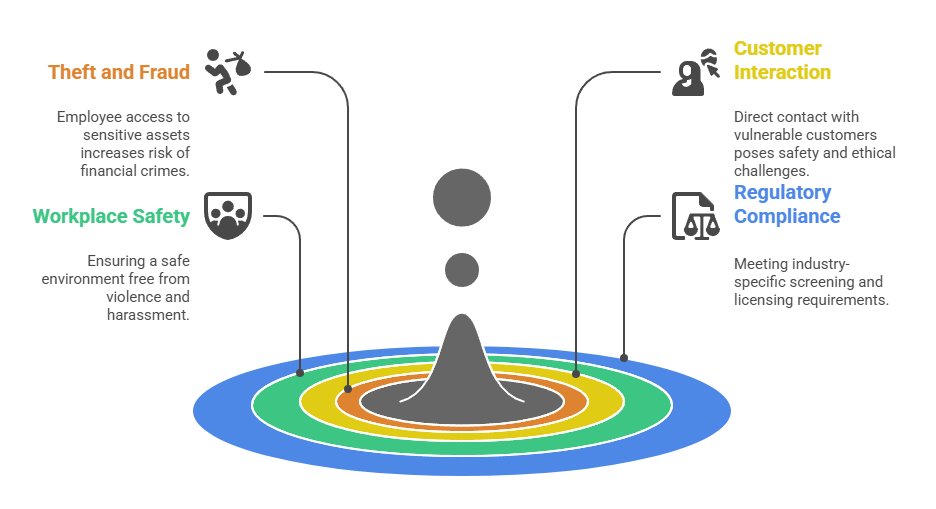
- Theft and fraud exposure: Employee access to cash, inventory, and customer payment information
- Customer interaction risks: Direct contact with vulnerable populations or unsupervised service delivery
- Workplace safety concerns: Prevention of violence, harassment, and other staff safety threats
- Regulatory requirements: Industry-specific screening mandates or licensing board expectations
Positions with access to vulnerable populations—children, elderly individuals, or disabled persons—demand comprehensive screening despite higher costs. The moral obligation and legal exposure associated with these roles far exceeds any screening expense considerations. Negligent hiring liability for inadequate vetting can result in substantial damages, reputational harm, and regulatory sanctions that dwarf background check investments.
Comparing Provider Pricing Transparency and Value
Legitimate background check providers offer clear, transparent pricing structures explaining what each fee includes. Beware of providers advertising unrealistically low prices, as they often generate revenue through hidden fees, upsells, or compliance shortcuts creating legal exposure. Comprehensive pricing proposals should itemize screening components, specify turnaround times, detail included services, explain volume discount structures, and clarify compliance support included in base fees.
Vague pricing or reluctance to provide detailed cost breakdowns signals potential problems. Request written proposals specifying all potential fees, conditions triggering additional charges, dispute resolution costs, and services included at each pricing tier. Compare proposals across multiple providers to identify pricing outliers suggesting either inadequate service or hidden fee structures.
Value assessment extends beyond per-check costs to examine accuracy rates, compliance infrastructure, customer support quality, technology platforms, and dispute resolution efficiency. Providers with 98%+ accuracy rates, comprehensive compliance programs, and responsive support justify premium pricing compared to budget services with frequent errors and minimal support. Total cost of ownership calculations should incorporate potential costs of compliance failures, inaccurate screening results, and poor candidate experiences damaging the employer brand.
Understanding When Premium Pricing Delivers Value
Premium-priced background check services deliver value through superior accuracy, comprehensive compliance support, dedicated account management, and sophisticated technology platforms. Organizations in highly regulated industries benefit from full-service providers despite higher costs. Companies with limited internal HR expertise rely on provider guidance for navigating complex compliance requirements and making sound adjudication decisions.
Conversely, established organizations with experienced compliance teams, straightforward screening needs, and high technical capability may find mid-tier or self-service platforms adequately meet requirements at lower costs:
- Internal compliance expertise: Dedicated HR or legal staff knowledgeable about FCRA requirements
- Simple screening needs: Standardized checks without specialized components or complex adjudication
- Technical capabilities: IT resources supporting platform management and integration maintenance
- Established processes: Mature adverse action workflows and candidate communication systems
The lowest-cost background check provider rarely delivers the best overall value when factoring accuracy, compliance, support, and risk mitigation into total cost of ownership calculations. Matching provider service level to organizational needs and capabilities optimizes value. Organizations should honestly assess internal capabilities and screening complexity before selecting providers based primarily on price considerations.
State-Specific Considerations Affecting Background Check Costs
Geographic Variations in Record Access and Pricing
Background screening costs vary significantly across states due to differing court systems, record accessibility, and database availability. States with centralized criminal record repositories offering electronic access enable lower-cost comprehensive searches. Jurisdictions requiring individual county searches substantially increase screening expenses, particularly for candidates with residential history spanning multiple counties.
| State | Record Access Characteristics | Cost Impact |
| California | Decentralized courts, multiple county searches often required | Higher costs due to county-level research needs |
| Texas | Relatively accessible state repositories and county databases | Moderate costs with good electronic access |
| New York | Complex court system with limited electronic access | Higher costs due to manual research requirements |
| Florida | Comparatively accessible public records | Lower costs with comprehensive electronic access |
Understanding your candidate population’s geographic history helps estimate realistic background check costs. Applicants who frequently relocated require multi-jurisdiction searches increasing expenses substantially. Positions drawing local candidates with limited residential mobility incur lower geographic screening costs than roles attracting nationally mobile talent.
Regional cost variations also reflect local courthouse researcher availability and competition. Metropolitan areas with numerous screening providers typically offer competitive courthouse research fees, while rural jurisdictions with limited researcher availability may command premium pricing. These geographic cost factors prove largely unavoidable but should inform budget projections.
State-Specific Restrictions Affecting Screening Scope and Cost
State ban-the-box laws, fair chance hiring ordinances, and criminal record consideration restrictions affect background check scope and costs. Some jurisdictions prohibit considering arrests not resulting in conviction, limit criminal history lookback periods, or restrict credit check usage—all affecting screening comprehensiveness and associated costs. Navigating these varying requirements increases compliance complexity for multi-state employers.
States limiting salary history inquiries, restricting social media screening, or prohibiting certain pre-employment questions create compliance complexity requiring provider expertise:
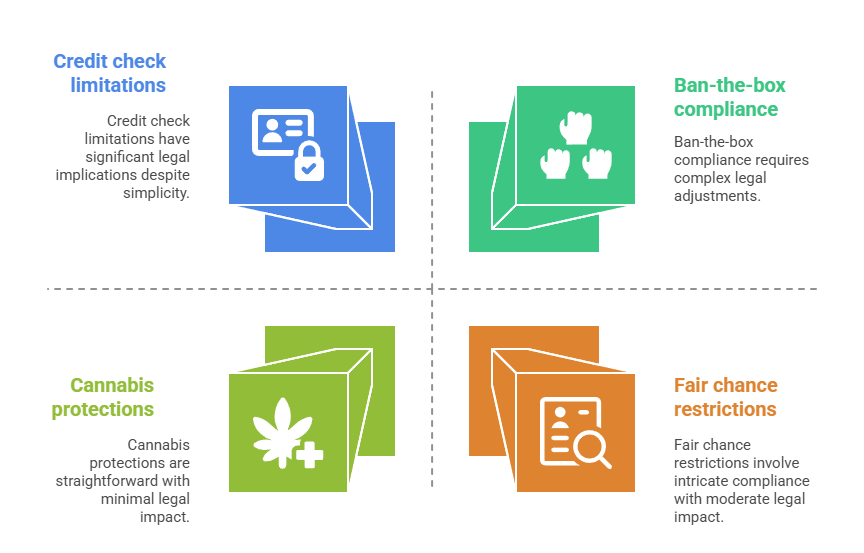
- Ban-the-box compliance: Delayed criminal history inquiries until conditional offer stages
- Fair chance restrictions: Individualized assessment requirements for criminal record consideration
- Credit check limitations: State laws prohibiting or restricting employment credit reports
- Cannabis protections: Prohibitions against discrimination for lawful marijuana use
Providers with robust multi-state compliance capabilities charge premium fees but deliver essential legal protection for multi-state employers. Organizations operating across numerous jurisdictions benefit from compliance expertise despite higher costs. Single-state employers may find less expensive providers adequate if those providers maintain deep expertise in the relevant jurisdiction’s requirements.
Conclusion
Background check costs in 2026 reflect a complex interplay of screening depth, compliance infrastructure, service quality, and organizational volume. While per-check prices provide initial comparison points, total cost of ownership including compliance support, technology platforms, and risk mitigation delivers more accurate value assessment. Employers should match screening investments to position risk profiles, industry requirements, and internal compliance capabilities rather than selecting providers based solely on advertised pricing. In practice, the right investment often prevents costly missteps that surface later as legal exposure, safety concerns, or damaged trust. By being responsible and cautious in creating screenings, organizations are able to shield their budgets as well as the individuals who rely on their hiring policies.
Frequently Asked Questions
What is the average cost of a background check for employment purposes?
Most employers pay between $30-$100 per candidate for standard pre-employment background checks including criminal record searches, employment verification, and education confirmation. Costs vary based on screening depth, provider service level, and organizational volume. Comprehensive packages including specialized checks like professional license verification or multi-state criminal searches may exceed $150-$200 per screening.
Why do background check costs vary so much between providers?
Background check pricing differences reflect variations in compliance infrastructure, service quality, technology platforms, accuracy rates, and support levels. Full-service providers offering comprehensive compliance consulting, dedicated account management, and sophisticated candidate experience platforms charge premium fees. Self-service platforms with minimal support offer lower per-check costs requiring employers to manage compliance independently.
Are cheaper background checks less thorough or accurate?
Budget background check services may cut costs by limiting database access, reducing verification efforts, minimizing compliance infrastructure, or providing minimal quality control. However, price alone does not determine quality, as some providers leverage technology and efficiency to offer competitive pricing with strong accuracy. Employers should evaluate provider accuracy rates, compliance certifications, and service reviews rather than selecting based solely on lowest price.
Do background check costs include compliance with the FCRA?
Reputable background check providers build FCRA compliance infrastructure into their pricing, including adverse action workflows, candidate dispute resolution, disclosure management, and authorization documentation. However, compliance scope varies by provider, with some offering comprehensive support while others provide minimal guidance. Clarify what compliance services are included in quoted pricing before selecting a provider.
How much do expedited or rush background checks cost?
Expedited background check services typically add 25-50% to standard pricing for 24-48 hour turnaround, while premium rush services completing within 24 hours may command 50-100% surcharges. Expedited pricing reflects priority processing, additional resources for manual research, and premium courier services for courthouse record access. Many screening delays stem from factors that rush fees cannot overcome, including candidate information errors or unresponsive verification sources.
What hidden costs should employers watch for with background checks?
Common hidden background check costs include adverse action processing fees, dispute resolution charges, ATS integration setup costs, monthly platform fees, expedite surcharges, and per-county criminal search fees. Employers should request itemized pricing proposals specifying all potential fees and clarifying what services are included in base costs. Understanding volume discount structures and contract minimum commitments prevents budget surprises.
Do high-volume employers get discounts on background check pricing?
Most background check providers offer volume-based pricing with per-check costs decreasing as annual screening volume increases. Organizations processing 1,000+ background checks annually typically access significant discounts compared to small businesses conducting occasional screenings. Volume commitments may reduce costs further but require careful evaluation of minimum purchase agreements against hiring plan uncertainties.
How much do international background checks cost compared to domestic screening?
International background checks typically cost $100-$500+ per country screened, substantially exceeding domestic screening expenses due to foreign record access complexity, local researcher engagement, and language translation requirements. International screening scope and availability vary dramatically across countries, with some jurisdictions offering limited background check options. Organizations hiring internationally should budget accordingly and understand that comprehensive global screening significantly increases per-candidate costs.
Additional Resources
- Federal Trade Commission: Using Consumer Reports for Employment Purposes
https://www.ftc.gov/business-guidance/resources/using-consumer-reports-what-employers-need-know - U.S. Equal Employment Opportunity Commission: Background Checks and Employment
https://www.eeoc.gov/laws/guidance/arrest-and-conviction-records - Society for Human Resource Management: Background Checking Resources
https://www.shrm.org/topics-tools/tools/toolkits/background-checking - Consumer Financial Protection Bureau: Background Screening Reports
https://www.consumerfinance.gov/ask-cfpb/what-is-a-background-screening-report-en-2077/

ABOUT THE CREATOR
GCheck Editorial Team
Meet the GCheck Editorial Team, your trusted source for insightful and up-to-date information in the world of employment background checks. Committed to delivering the latest trends, best practices, and industry insights, our team is dedicated to keeping you informed.
With a passion for ensuring accuracy, compliance, and efficiency in background screening, we are your go-to experts in the field. Stay tuned for our comprehensive articles, guides, and analysis, designed to empower businesses and individuals with the knowledge they need to make informed decisions.
At GCheck, we're here to guide you through the complexities of background checks, every step of the way.