



A 10 panel drug test screens for ten specific substance categories commonly used in employment contexts, including amphetamines, cocaine, marijuana, opiates, and phencyclidine, among others. Understanding what a 10 panel test detects helps organizations select appropriate screening protocols aligned with workplace safety requirements, industry standards, and legal compliance obligations.
Key Takeaways
- A 10 panel drug screen typically detects amphetamines, cocaine, marijuana, opiates, phencyclidine (PCP), benzodiazepines, barbiturates, methadone, methaqualone, and propoxyphene.
- The 10 panel drug test represents a middle ground between basic 5 panel tests and more comprehensive screening options.
- Detection windows vary by substance, ranging from hours to weeks depending on usage patterns and individual metabolism.
- Pre-employment drug screening panel selection should align with industry risk profiles, regulatory requirements, and organizational policies.
- The 10 panel vs 5 panel drug test comparison involves balancing detection breadth against cost and procedural considerations.
- Substance categories tested may include multiple related compounds within each panel component.
- Legal considerations include state-specific cannabis policies, prescription medication protections, and federal workplace drug-free requirements.
- Implementing any drug testing program requires clear policies, consistent application, and appropriate procedural safeguards.
Understanding the 10 Panel Drug Test Framework
What Is a 10 Panel Drug Test and How Does It Function
A 10 panel drug test is a screening method that examines biological specimens, typically urine, for the presence of ten distinct substance categories or their metabolites. The term "panel" refers to the number of separate substance groups included in a single test. Each panel component targets specific drug classes rather than individual compounds. Organizations use these tests as part of pre-employment screening, random workplace testing, post-incident investigations, or reasonable suspicion protocols.
The screening process involves immunoassay technology that detects drug metabolites above specified threshold concentrations. When initial screening results indicate the presence of substances, confirmation testing using more precise methods may follow. Gas chromatography-mass spectrometry is one such method. This two-step approach balances efficiency with accuracy. It reduces false positive results while maintaining reasonable testing costs.
“In HR, drug testing is never just about a result on paper.” I have seen firsthand the impact that one drug screening decision can have on safety, trust, and a person’s livelihood all at once. The true challenge is creating drug testing programs that protect people without sacrificing dignity and fairness. When we approach drug screening with clear policies, medical review safeguards, and genuine care for context, we create workplaces that are both safer and more human.
Why Organizations Choose 10 Panel Testing
The 10 panel configuration emerged as a practical compromise between comprehensive detection and operational feasibility. It extends beyond the federally mandated 5 panel test while remaining more accessible than extensive panels. This middle position makes the format appealing to employers seeking broader detection capabilities. Organizations avoid the complexity of exhaustive screening protocols while gaining more coverage than basic tests provide.
The Ten Substance Categories Included in Standard Panels
Standard configurations typically include the following components:
| Core Substances (5 Panel Base) | Expanded Substances (Additional 5) |
| Amphetamines | Benzodiazepines |
| Cocaine metabolites | Barbiturates |
| Marijuana metabolites (THC) | Methadone |
| Opiates | Methaqualone |
| Phencyclidine (PCP) | Propoxyphene |
Amphetamines encompass both amphetamine and methamphetamine. Some panels distinguish between these compounds. This category may also detect certain prescription medications used for attention deficit disorders or weight management. Careful interpretation is required when positive results occur.
Benzodiazepines represent a therapeutic drug class including medications such as diazepam, alprazolam, and lorazepam. These are commonly prescribed for anxiety and sleep disorders. Methadone detection serves dual purposes. It identifies both illicit opioid use and participation in medication-assisted treatment programs for opioid use disorder. This creates interpretive complexity for employers who must navigate legal protections for individuals in recovery programs.
Understanding Detection Windows for Each Substance
Detection windows vary significantly across substance categories. Pharmacokinetic properties, usage frequency, and individual metabolic factors all influence detection. The following table illustrates typical detection timeframes:
| Substance Category | Single Use Detection | Chronic Use Detection |
| Cocaine metabolites | 2–4 days | Up to 1 week |
| Marijuana (THC) | 3–7 days | Several weeks |
| Amphetamines | 1–3 days | 3–5 days |
| Opiates | 2–4 days | Up to 1 week |
| Phencyclidine (PCP) | ~8 days | Several weeks |
| Benzodiazepines | 1–2 days (short-acting) | Several weeks (long-acting) |
| Barbiturates | 2–4 days (short-acting) | Several weeks (long-acting) |
These timeframes represent general parameters. Individual variation in metabolism, hydration status, body composition, and other factors significantly influence actual detection capabilities.
Important Limitations of Standard Opiate Panels
Synthetic opioids and semi-synthetic derivatives may require specific testing configurations. Standard opiate panels historically focused on morphine and codeine detection. Newer prescription opioids like oxycodone, hydrocodone, and fentanyl often require separate testing. This is an important consideration for organizations concerned about prescription opioid abuse.
Comparing Screening Panel Options for Workplace Applications
The 10 Panel vs 5 Panel Drug Test Decision Framework
Organizations evaluating the 10 panel vs 5 panel drug test options face questions about scope, cost, and practical utility. The federally mandated 5 panel test screens for amphetamines, cocaine, marijuana, opiates, and phencyclidine. This represents minimum requirements for certain regulated industries. This configuration addresses the most commonly abused substances. It maintains straightforward administration and interpretation.
The expanded 10 panel adds prescription medications and additional controlled substances to the screening scope. However, several considerations emerge:
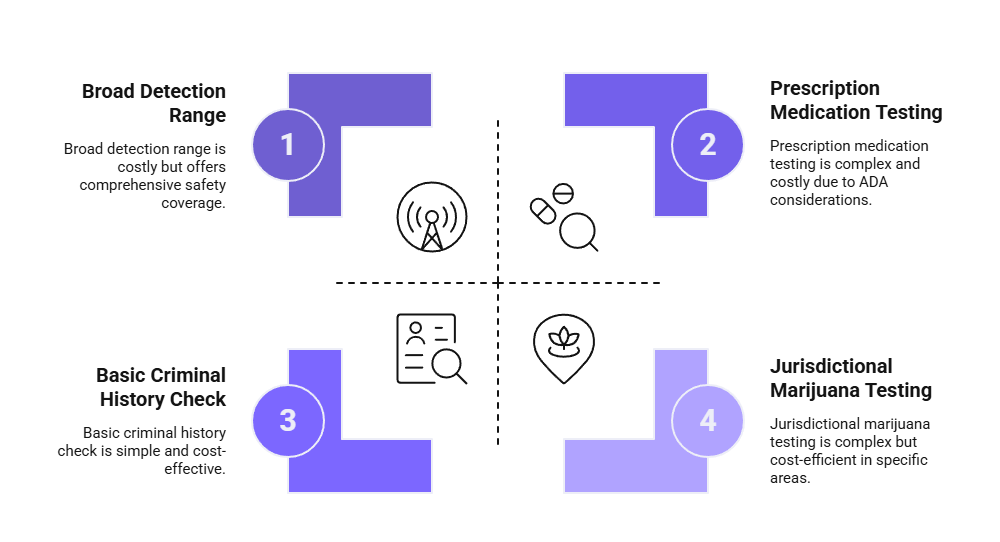
- Scope trade-offs: Broader detection range may suit organizations with specific safety concerns but introduces complexity regarding prescription medication use
- Cost implications: Per-test expenses increase with panel breadth, requiring analysis of safety benefits against financial investment
- Legal complexity: Some jurisdictions restrict pre-employment marijuana testing or impose limitations on employer use of positive cannabis results
- Administrative burden: Prescription medication detection raises Americans with Disabilities Act considerations when substances relate to disclosed disabilities
The calculus depends on industry risk profiles, workforce characteristics, incident history, and organizational risk tolerance. Legal and policy considerations affect panel selection significantly.
Key Cost and Benefit Considerations
These factors may influence whether broader panel options create more compliance complexity than operational benefit. Organizations must weigh the value of additional detection against increased administrative demands. Budget constraints play a significant role in panel selection decisions.
Alternative Panel Configurations and Specialized Testing Options
Beyond standard 5 and 10 panel configurations, organizations may encounter various alternatives. Seven panel tests typically add oxycodone and hydrocodone to the basic 5 panel. This reflects the prevalence of prescription opioid medications. Nine panel configurations may include these prescription opioids plus benzodiazepines. This addresses common prescription medications with abuse potential.
Twelve panel and more extensive configurations add substances such as tricyclic antidepressants, MDMA (ecstasy), synthetic cannabinoids, or other emerging substances of concern. These broader panels suit specialized contexts but introduce higher costs. More complex interpretation requirements accompany expanded testing. Specialized testing for specific substances beyond standard panels requires separate test orders and often higher costs.
Exploring Alternative Specimen Types
Oral fluid testing, hair follicle analysis, and other specimen types present alternatives to urine-based screening. Each method offers distinct detection windows and operational characteristics. Each approach involves tradeoffs in detection capabilities, collection procedures, costs, and legal considerations. These factors affect suitability for specific organizational needs.
When Expanded Panel Testing May Benefit Organizations
Certain industries face elevated substance abuse risks or regulatory expectations that make expanded panel testing appropriate. Transportation, construction, healthcare, and manufacturing sectors with significant safety-sensitive positions may benefit from broader detection capabilities. Work environments involving heavy machinery, hazardous materials, or public safety responsibilities create contexts where comprehensive screening aligns with duty of care obligations.
Organizations with documented substance abuse incidents or workers compensation claims related to impairment may find expanded panels valuable. Many states include drug-free workplace provisions in workers' compensation statutes. These may affect claim outcomes when injuries involve substance use. However, these provisions typically require compliance with specific statutory testing procedures. Timing requirements and evidentiary standards vary by jurisdiction.
Using Historical Data to Inform Panel Selection
Historical data showing particular substances involved in incidents can inform panel selection decisions. Geographic factors also influence substance abuse patterns and appropriate testing strategies. Regional variations in opioid abuse prevalence, methamphetamine use, or other substance trends may warrant panel configurations addressing locally relevant concerns.
Practical Constraints on Testing Programs
Budget constraints and administrative capacity represent practical limitations on panel selection. Organizations with limited resources may prioritize core testing capabilities over comprehensive panels. They accept narrower detection scope in exchange for sustainable program implementation. Smaller employers particularly face these challenges.
Implementing 10 Panel Drug Testing Programs
Policy Development and Legal Compliance Foundations
Implementing a 10 panel drug screen program requires comprehensive written policies. These policies must clearly articulate several key elements:
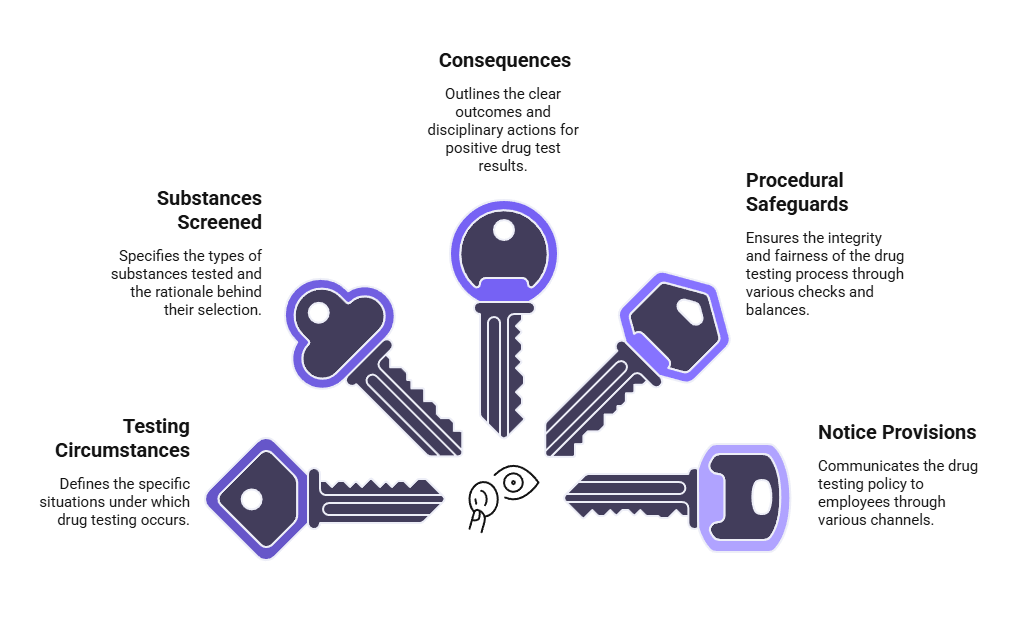
- Testing circumstances: Pre-employment, random, post-incident, reasonable suspicion, or other defined situations
- Substances screened: Specific panel configuration and rationale
- Consequences: Clear outcomes for positive results, including any progressive discipline procedures
- Procedural safeguards: Chain of custody, confirmation testing, medical review, and appeal processes
- Notice provisions: Communication through employee handbooks, job postings, and signed acknowledgments
Federal law generally does not prohibit private employer drug testing. However, federal contractors and certain regulated industries face specific requirements. State and local regulations impose varying restrictions and procedural requirements. These may limit testing circumstances, require specific notice provisions, mandate laboratory certifications, or restrict how employers may use certain test results.
Understanding Ban-the-Box and Pre-Offer Testing Restrictions
Multi-state employers face complexity ensuring policies comply with the most restrictive applicable laws. They must maintain operational consistency across locations. Some jurisdictions regulate the timing of drug testing in the hiring process. States and localities with Ban-the-Box or fair chance hiring laws may restrict when employers may conduct drug tests. This particularly affects the distinction between pre-offer and post-offer stages.
Some state laws classify drug testing as a medical examination. This may be prohibited before making a conditional offer of employment. Employers should verify that their testing timing complies with applicable state and local hiring sequence requirements.
Navigating Disability Discrimination and ADA Requirements
The Americans with Disabilities Act prohibits discrimination based on past substance abuse disorders. It may require accommodations for individuals in recovery programs. However, current illegal drug use, as defined by federal law, receives no ADA protection. Employers may prohibit workplace substance use and intoxication.
This means substances that are legal under state law but remain federally prohibited, such as marijuana, are generally not protected under federal disability discrimination laws. However, state law protections may differ. When drug testing involves consumer reporting agencies, employers must also follow Fair Credit Reporting Act requirements for adverse action procedures. This includes providing pre-adverse action notices, copies of reports, and summaries of rights before taking final action.
Privacy Law Compliance for Drug Testing Programs
Privacy considerations affect specimen collection procedures, results handling, and data retention practices. State constitutions and statutes in some jurisdictions provide privacy protections beyond federal law. These potentially restrict employer testing authority or impose procedural requirements. Federal laws including the Genetic Information Nondiscrimination Act and state data breach notification requirements may also apply. Compliance depends on information collected and security practices.
Laboratory Selection and Testing Methodology Standards
Selecting laboratories certified by the Substance Abuse and Mental Health Services Administration helps ensure reliable results. Meeting equivalent accreditation standards is also acceptable. SAMHSA certification requires adherence to strict chain of custody protocols, quality control measures, and personnel qualifications.
Federal law does not mandate SAMHSA certification for most private employers. However, using certified laboratories provides important quality assurances. When laboratories provide drug test reports used for employment decisions, they may function as consumer reporting agencies. This subjects them to Fair Credit Reporting Act accuracy and procedural requirements. Employers should verify laboratory compliance with applicable federal and state standards.
Understanding the Two-Step Testing Process
The testing process involves multiple quality checkpoints:
| Testing Stage | Methodology | Purpose |
| Initial screening | Immunoassay | Rapid, cost-effective presumptive identification |
| Confirmation testing | GC-MS or LC-MS/MS | Definitive identification and quantification |
| Cut-off application | SAMHSA standards or custom thresholds | Distinguish intentional use from incidental exposure |
| Chain of custody | Documentation tracking | Maintain specimen integrity and legal defensibility |
Immunoassays provide rapid initial screening. However, they may produce false positives from cross-reactive substances. These include some over-the-counter medications and foods. Confirmation testing using gas chromatography-mass spectrometry or liquid chromatography-tandem mass spectrometry provides definitive identification. This distinguishes true positives from initial screening artifacts.
Chain of Custody Requirements and Legal Implications
Chain of custody documentation tracks specimens from collection through analysis. This creates auditable records essential for defending test integrity. Proper collection procedures require trained collectors, tamper-evident seals, specimen temperature verification, and donor identification confirmation.
Some state laws mandate specific chain of custody protocols as legal prerequisites for valid testing. Lapses in chain of custody create opportunities to challenge test validity. Results may become inadmissible in unemployment hearings, wrongful termination litigation, discrimination claims, and workers' compensation proceedings.
Medical Review Officer Involvement and Result Interpretation
Medical review officers are licensed physicians with specialized training in substance abuse disorders and drug testing interpretation. They review positive results before employers receive notification. MROs contact individuals who test positive to determine whether legitimate medical explanations such as prescribed medications account for results. This process protects privacy regarding specific medical conditions. It verifies that positive results indicate prohibited substance use.
How MROs Evaluate Prescription Medication Use
MRO review distinguishes prescribed medications from illicit use of controlled substances. This particularly applies to opioids, benzodiazepines, and amphetamines commonly available by prescription. Individuals testing positive may provide prescription documentation to the MRO. The MRO verifies legitimacy and determines whether the prescription explains the positive result.
Valid prescriptions often result in the MRO reporting a negative test result to the employer. This protects medical privacy. However, even with legitimate prescriptions, employers may need to conduct individualized assessments regarding safety-sensitive duties. This potentially includes fitness-for-duty evaluations or reasonable accommodation discussions under disability discrimination laws.
Complex Interpretation Scenarios
Interpretation challenges arise when substances detected have both legitimate medical uses and abuse potential. MROs must assess whether detected levels and patterns align with prescribed use or suggest misuse. They consider dosing, timing, and multiple substance detection. These judgments require medical expertise and familiarity with pharmacology. This underscores the value of qualified MRO involvement.
Addressing Contemporary Drug Testing Challenges
Cannabis Legalization and Evolving Workplace Policies
State-level cannabis legalization for medical or recreational purposes creates complexity for workplace drug testing policies. Marijuana remains federally prohibited as a Schedule I controlled substance. However, numerous states permit medical use, recreational consumption, or both.
Key considerations include:
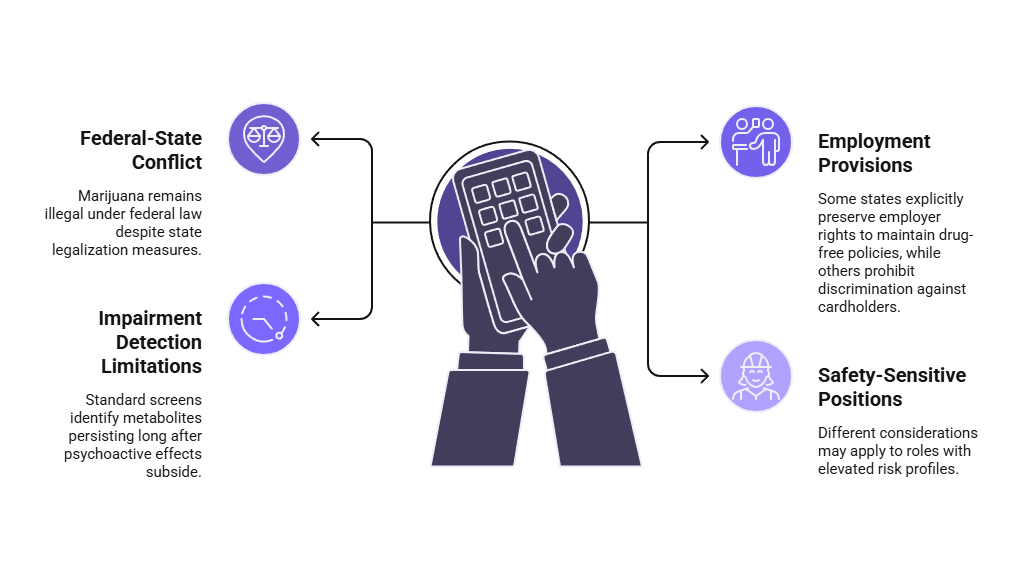
- Federal-state conflict: Marijuana remains illegal under federal law despite state legalization measures
- Employment provisions: Some states explicitly preserve employer rights to maintain drug-free policies, while others prohibit discrimination against cardholders
- Impairment detection limitations: Standard screens identify metabolites persisting long after psychoactive effects subside
- Safety-sensitive positions: Different considerations may apply to roles with elevated risk profiles
Understanding State-Specific Cannabis Employment Laws
State cannabis laws vary significantly in their employment provisions. Some legalization statutes explicitly preserve employer rights to maintain drug-free workplace policies. They allow action based on positive marijuana tests. Other state laws, particularly medical marijuana provisions, prohibit discrimination against cardholders. Some distinguish between off-duty and on-duty use. Others impose restrictions that vary by job classification and safety sensitivity.
Some jurisdictions regulate whether employers may test for marijuana separately from whether they may take adverse action based on results. Employers must review specific state and local laws applicable to their locations. Consulting legal counsel for jurisdiction-specific guidance is advisable.
The Challenge of Marijuana Impairment Testing
Court decisions interpreting cannabis statutes produce jurisdiction-specific precedents. Employers must navigate these carefully. Organizations reassessing marijuana testing policies must balance multiple considerations. These include federal contractor obligations, safety-sensitive position requirements, workers compensation insurance provisions, and state law restrictions.
Prescription Opioid Medications and Pain Management Considerations
The opioid epidemic created heightened awareness of prescription medication abuse. Simultaneously, it expanded the population legitimately using opioid pain medications for chronic conditions. This situation complicates workplace drug testing. Positive results for opioids may reflect either appropriate medical care or substance misuse.
Synthetic and semi-synthetic opioids such as oxycodone, hydrocodone, fentanyl, and buprenorphine may not appear on standard opiate panels. These panels were historically designed to detect morphine and codeine. Employers concerned about prescription opioid abuse must specify expanded opioid testing. This should include these specific compounds. Testing panels should align with substances of concern in particular work environments and regions experiencing specific drug abuse patterns.
ADA Protections for Legitimate Opioid Use
The Americans with Disabilities Act potentially protects individuals prescribed opioid medications for underlying conditions that qualify as disabilities. Employers cannot automatically reject applicants or disqualify employees based on lawful prescription medication use. They must show an inability to perform essential functions or a direct threat to safety. Safety-sensitive positions present particular challenges. Employees may use prescription opioids legitimately but face potential impairment affecting workplace safety.
Emerging Substances and Testing Technology Limitations
Synthetic drugs including designer stimulants, synthetic cannabinoids, and novel psychoactive substances create detection challenges. Manufacturers continuously modify chemical structures to evade existing screening methods. Standard immunoassay panels target specific molecular structures. They may not detect compounds with altered configurations.
Several detection gaps exist in current testing frameworks:
- Kratom: Botanical substance with opioid-like effects not included in standard panels
- Synthetic cannabinoids: Designer compounds marketed as "K2" or "Spice" requiring specific testing
- Novel stimulants: Emerging substances falling outside traditional controlled substance categories
- Prescription variations: New formulations or delivery mechanisms requiring updated testing protocols
Innovations in Testing Technology
Technology-assisted testing innovations include point-of-collection testing devices, oral fluid screening systems, and digital chain of custody platforms. These developments offer advantages in collection convenience, reduced adulteration opportunities, and administrative efficiency.
However, newer methodologies require validation. They need establishment of performance standards and legal precedent development. This must occur before achieving the same reliability as traditional laboratory testing.
Practical Selection Criteria for Drug Testing Panels
The process of selecting the right panel for drug testing is not a one-size-fits-all approach. It requires employers to consider the risks, legal, and operational factors to determine what substances are relevant to their business and the nature of the work being performed. The practical approach to panel selection is to focus on the actual risks and needs, rather than the most comprehensive or most familiar panel. The following is a discussion on the essential factors to consider when developing a drug testing program.
Aligning Testing Scope with Organizational Risk Assessment
Organizations should conduct formal risk assessments examining workplace hazards, incident history, job classifications, regulatory requirements, and workforce characteristics. This should occur before selecting drug testing panel configurations. Positions involving operation of vehicles, heavy equipment, or dangerous processes clearly present elevated risk. These warrant careful screening. Administrative roles with minimal safety implications may justify different testing approaches.
Using Industry Benchmarking to Inform Decisions
Industry benchmarking provides useful context for panel selection decisions. Trade associations, insurance carriers, and professional networks often share information about testing practices in specific sectors. Understanding peer approaches helps organizations make informed decisions. This avoids both under-screening that creates preventable risks and over-testing that wastes resources.
Leveraging Incident Data Analysis
Incident data analysis identifies substances actually implicated in workplace accidents, near-misses, or performance problems. Organizations with sufficient history should review which substances appear in post-incident testing. They should assess whether particular job classifications show higher detection rates. They should determine whether testing investments yield meaningful safety improvements.
Conducting Cost-Benefit Analysis
Cost-benefit analysis should compare testing expenses against potential risk reduction benefits. Relevant measures include accident rates, workers compensation claims, absenteeism, turnover, and productivity metrics. While quantifying prevention is inherently difficult, organizations should consider whether expanded panel testing provides value proportionate to costs.
Balancing Detection Breadth Against Operational Complexity
Administrative burden increases with panel scope. Additional substances create more potential positive results requiring evaluation, medical review, and decision-making. Each substance added to a testing panel introduces new scenarios. Prescription use, over-the-counter products, or other legitimate explanations must be considered.
Key complexity factors include:
| Complexity Area | Impact on Operations |
| Result interpretation | Multiple substances require nuanced evaluation of prescription legitimacy |
| Policy communication | Broader panels demand more extensive documentation and stakeholder education |
| Vendor capabilities | Service provider expertise varies in supporting different panel configurations |
| Administrative capacity | HR resources must manage increased decision scenarios and medical reviews |
Managing HR Capacity Constraints
Organizations with limited HR capacity may find narrow panels more manageable. Broader testing may offer theoretical advantages but prove impractical. Communication challenges accompany expanded testing. Employers must explain broader panels to applicants and employees. They must address concerns about prescription medication privacy. They must respond to questions about specific substances included.
Considering Alternative and Complementary Screening Approaches
Behavioral observation and supervisor training in recognizing impairment indicators complement drug testing. They identify potential workplace substance use regardless of whether formal testing detects recent consumption. Reasonable suspicion testing based on observable signs allows targeted testing when concerns arise. Signs include coordination problems, speech changes, or unusual behavior.
Integrating Multiple Screening Methods
Background investigations examining criminal history, reference checks, and employment verification provide complementary information. Drug testing alone cannot address all aspects of candidate suitability. Comprehensive screening combining multiple methodologies offers broader risk assessment than any single approach. Organizations should consider how drug testing fits within overall hiring and workplace safety strategies.
The Role of Employee Assistance Programs
Employee assistance programs offering confidential assessment, counseling, and treatment referral create pathways for individuals struggling with substance abuse. These individuals can seek help without automatic termination. While maintaining clear prohibitions on workplace use and impairment, employers may determine that offering assistance alongside enforcement produces better outcomes. This approach may prove more effective than purely punitive measures.
Conclusion
Selecting what drugs a 10 panel test should detect requires balancing comprehensive screening against practical implementation considerations. These include costs, legal compliance, and operational complexity. Organizations benefit from aligning panel selection with specific risk assessments, industry standards, and workforce characteristics. This approach proves more effective than defaulting to standard configurations without strategic analysis.
Frequently Asked Questions
What is the main difference between a 10 panel and 5 panel drug test?
A 5 panel drug test screens for five substance categories required in federally mandated testing. These include amphetamines, cocaine, marijuana, opiates, and phencyclidine. The 10 panel drug screen adds five additional categories. These typically include benzodiazepines, barbiturates, methadone, methaqualone, and propoxyphene. This broader scope detects additional prescription medications and controlled substances but involves higher costs and more complex interpretation.
Can a 10 panel drug test detect all prescription medications?
No, a 10 panel drug test detects only specific substance categories included in the panel configuration. Many prescription medications fall outside these categories. They will not appear in standard testing. Drugs such as antidepressants, antipsychotics, most antibiotics, and numerous other therapeutic medications are not screened. These require separate testing if detection is desired.
How long do substances remain detectable in a 10 panel drug screen?
Detection windows vary by substance and individual factors. Most drugs remain detectable for one to four days in urine testing. Marijuana metabolites may remain detectable longer, particularly with chronic use. Benzodiazepines show variable detection based on specific compounds and their half-lives. These timeframes represent general parameters. Metabolism, hydration, and usage patterns significantly affect actual detection periods.
Do employers have to use medical review officers when conducting drug testing?
Federal regulations require medical review officer involvement for Department of Transportation regulated testing. Most private employers face no legal mandate to use MROs for non-regulated testing. However, MRO review provides important protections. It identifies legitimate medication use before reporting results to employers. This reduces risks of disability discrimination claims and medical privacy violations.
Can employers test for marijuana in states where cannabis is legal?
Most state cannabis legalization laws preserve employer rights to maintain drug-free workplace policies. They allow adverse action based on positive marijuana tests, even where recreational use is legal. However, some jurisdictions restrict pre-employment marijuana testing or protect off-duty medical cannabis use. Employers must review specific state and local laws applicable to their locations. Legal frameworks vary significantly across jurisdictions with cannabis legalization.
What happens if someone tests positive due to prescribed medication?
When initial screening indicates presence of a substance that may be prescribed legitimately, a medical review officer contacts the individual. The MRO discusses potential medical explanations. If the person provides valid prescription documentation, the MRO typically reports a negative result to the employer. This occurs without disclosing specific medication information. This process protects medical privacy while ensuring appropriate medication use does not result in adverse employment actions.
Are there alternatives to urine testing for drug screening?
Yes, alternative specimen types include oral fluid, hair follicle, and blood testing. Each has distinct detection windows and characteristics. Oral fluid testing offers shorter detection windows and observed collection with less privacy invasion. Hair testing provides extended retrospective detection spanning months. Blood testing measures current intoxication but is more invasive and expensive.
How should organizations decide which drug testing panel to use?
Panel selection should reflect formal risk assessment. Organizations should consider workplace hazards, job classifications, regulatory requirements, incident history, industry standards, and cost-benefit analysis. Safety-sensitive positions may justify broader panels. Roles with minimal risk implications may warrant focused testing of the most common substances. Organizations benefit from evidence-based decisions aligned with specific operational contexts.
Additional Resources
- Drug-Free Workplace Toolkit
https://www.samhsa.gov/workplace - Fair Credit Reporting Act Overview
https://www.ftc.gov/legal-library/browse/statutes/fair-credit-reporting-act - Department of Labor Drug-Free Workplace Policy Builder
https://www.dol.gov/agencies/odep/program-areas/mental-health/drug-free-workplace - National Institute on Drug Abuse Research and Statistics
https://nida.nih.gov/ - Equal Employment Opportunity Commission ADA Guidance
https://www.eeoc.gov/laws/guidance

ABOUT THE CREATOR
GCheck Editorial Team
Meet the GCheck Editorial Team, your trusted source for insightful and up-to-date information in the world of employment background checks. Committed to delivering the latest trends, best practices, and industry insights, our team is dedicated to keeping you informed.
With a passion for ensuring accuracy, compliance, and efficiency in background screening, we are your go-to experts in the field. Stay tuned for our comprehensive articles, guides, and analysis, designed to empower businesses and individuals with the knowledge they need to make informed decisions.
At GCheck, we're here to guide you through the complexities of background checks, every step of the way.