

An SSN trace is a database search that reveals address history, name variations, and other identifiers associated with a social security number, serving as a foundational step in employment background screening rather than a verification of employment authorization or credit history. Understanding what an SSN trace shows helps employers design compliant hiring processes while enabling job seekers to prepare accurate application materials and anticipate screening procedures.
Key Takeaways
- An SSN trace generates a report of addresses, aliases, and names linked to a social security number over time.
- The trace does not directly verify immigration status, work authorization, or validate the SSN itself with the Social Security Administration.
- Employers use SSN traces primarily to identify jurisdictions for criminal record searches during pre-employment screening.
- The Fair Credit Reporting Act governs how employers must handle SSN trace information and subsequent background checks.
- Address discrepancies revealed by an SSN trace require employers to search additional county and state criminal databases.
- Name variations discovered through the trace help ensure comprehensive screening across all identities a candidate may have used.
- Job seekers should review their own address history before applying to explain any gaps or inconsistencies proactively.
- SSN traces typically return results within seconds but do not include credit scores, employment records, or education verification.
Understanding SSN Traces in Employment Screening
What Is an SSN Trace?
An SSN trace, also called a social security number trace or SSN search, is a database query that compiles publicly available records associated with a particular social security number. When a screening process includes this component, specialized databases aggregate information from credit file headers (identifying information only, not financial data), utility records, phone directories, and other non-credit data sources to create a comprehensive report. The trace functions as an investigative starting point rather than a standalone verification tool.
The system reveals patterns in an applicant's residential history and identifies additional names that may appear on official records. This enables employers to conduct more thorough and geographically appropriate background investigations. Unlike a credit check, an SSN trace does not pull credit scores, payment histories, or financial account information.
How SSN Verification for Employment Differs from SSN Validation
SSN verification for employment encompasses several distinct processes that serve different compliance and investigative purposes. An SSN trace represents just one component of this broader verification framework. True SSN validation confirms that a social security number was legitimately issued by the Social Security Administration and matches the name provided by the applicant.
Employers typically accomplish validation through the Social Security Administration's Number Verification Service, a free system available to registered employers. In contrast, an SSN trace does not communicate with SSA databases and cannot confirm whether a number is valid. The trace simply reveals what commercial databases have associated with that number over time.
| Verification Type | What It Confirms | Data Source | Primary Purpose |
| SSN Trace | Address history and name variations | Commercial databases | Identify criminal search jurisdictions |
| SSN Validation | Number authenticity and name match | Social Security Administration | Confirm legitimate SSN issuance |
| Work Authorization | Employment eligibility | E-Verify/DHS systems | Verify legal right to work |
Many organizations conduct both an SSN trace and proper SSN validation through official channels. This ensures comprehensive verification while gathering the geographic intelligence needed for criminal background searches.
The Role of SSN Traces in Pre-Employment Screening
SSN trace for pre-employment screening serves as the foundational research step that informs all subsequent background check components. When an employer initiates a background screening process, the SSN trace typically runs first. The results provide the roadmap for where to search criminal records, verify previous employment, and confirm educational credentials.
The address history revealed by the trace determines which county courthouses, state repositories, and federal districts require criminal record searches. Since criminal records are maintained at local levels across thousands of jurisdictions, knowing where an applicant has lived is essential. Employers who skip the SSN trace step risk conducting geographically incomplete background checks that miss entire jurisdictions where an applicant lived and potentially acquired criminal records.
What Information Appears on an SSN Trace Report
Address History and Geographic Data
The most valuable component of an SSN trace is the comprehensive address history it generates. The report typically includes every address associated with the social security number in commercial databases. Most traces extend back 10 to 15 years or more depending on data availability.
Each address entry usually includes the full street address, city, state, ZIP code, and approximate dates when the individual resided at that location. The date ranges come from timestamps when various data furnishers reported that address in connection with the SSN. These may not perfectly align with actual move-in and move-out dates but provide reasonable approximations. This geographic data serves multiple screening purposes beyond criminal record searching.
Employers may use address history to compare against addresses listed on employment applications. They can identify unexplained gaps in residential history that warrant clarification. Additionally, they assess whether the candidate's stated work history aligns geographically with their residential patterns.
Name Variations and Aliases
SSN trace reports reveal all name variations that commercial databases have linked to the social security number being searched. These variations emerge from several sources:

- Credit applications and financial account openings
- Utility accounts and phone service registrations
- Change of address filings with postal services
- Lease agreements and property records
- Consumer transactions requiring identification
The report may show maiden names, married names, hyphenated name combinations, and names with or without middle initials. Common nicknames used on official documents may also appear. In some cases, the trace may reveal names associated with the SSN through data errors, identity theft, or fraudulent use.
For screening purposes, employers generally search criminal records under all name variations revealed by the trace to help ensure more comprehensive results and reduce the risk of incomplete screening. Job seekers should anticipate that all name variations they have used on any official documentation may appear on the SSN trace.
Dates Associated with the SSN
SSN trace reports often include the approximate date when the social security number was issued, though this information may not always be available or accurate. The issuance date helps employers identify potential red flags, such as an SSN issued after the applicant's stated date of birth. Recently issued numbers for candidates claiming long work histories may also warrant additional review.
The report also shows date ranges when specific addresses and name variations appeared in connection with the SSN. These timestamps help employers assess the recency and relevance of different names and addresses. However, the dates appearing on SSN trace reports represent when data furnishers reported information to databases rather than definitive records of when events occurred.
What an SSN Trace Does Not Show
Employment Authorization and Work Eligibility
A critical limitation exists that both employers and job seekers must understand. SSN traces do not verify work authorization or confirm eligibility to work in the United States. The trace simply reports what commercial databases have associated with a number.
| What SSN Trace Shows | What It Doesn't Show |
| Address history from commercial databases | Immigration or work authorization status |
| Name variations used on consumer accounts | Validation from Social Security Administration |
| Approximate dates of residence | Confirmation of legal right to work |
| Geographic patterns over time | E-Verify employment eligibility results |
Employers seeking to verify work authorization must use the federal E-Verify system. This system cross-references information from Form I-9 against Social Security Administration and Department of Homeland Security databases. E-Verify represents the proper mechanism for confirming that an employee is authorized to work in the United States.
Confusing an SSN trace with work authorization verification can lead to serious compliance violations. The Fair Credit Reporting Act prohibits using consumer report information for purposes other than those disclosed to the applicant.
Credit History and Financial Information
Despite drawing data from some of the same sources used by credit reporting agencies, SSN traces do not include credit scores or payment histories. Account balances and other financial information that appears on credit reports are also excluded. The trace uses only the identifying information from credit header files.
Credit header files contain names, addresses, and other demographic data but exclude the financial transaction details. Employers who wish to review credit history as part of the hiring decision must obtain a separate credit report. This requires additional FCRA compliance steps including specific disclosure and authorization forms.
For job seekers, this distinction means that an SSN trace will not reveal financial difficulties or debt levels. Bankruptcies and credit problems remain hidden unless the employer separately requests a credit report. Such requests are typically limited to positions with financial responsibilities or access to sensitive financial information.
Criminal Records and Court Documents
SSN traces do not include criminal history, arrest records, court judgments, or any other legal records. The trace simply identifies where to search for such records by revealing the jurisdictions where an individual has lived. After completing the SSN trace, employers must conduct separate criminal record searches in each relevant jurisdiction.
These searches involve querying county courthouse databases, state criminal repositories, and federal court systems. Records must match the names and demographic information provided. The two-step process is standard practice in employment screening. Employers who attempt to shortcut this process by searching only current addresses risk missing relevant criminal history.
Job seekers sometimes mistakenly believe that the SSN trace itself will reveal criminal history. They may also think criminal records automatically attach to their social security number in a centralized database. In reality, criminal records remain stored in the jurisdictions where charges were filed.
Education and Employment Verification
An SSN trace does not verify educational credentials, confirm previous employment, or validate professional licenses. The trace may reveal addresses near educational institutions or in cities where previous employers are located. However, it does not confirm attendance, graduation, job titles, employment dates, or reasons for leaving previous positions.
Employers seeking to verify education and employment history must contact schools and previous employers directly. Alternatively, they may use specialized verification services that communicate with these institutions. These verification processes operate independently from the SSN trace and require separate authorization from the candidate.
Legal Framework Governing SSN Traces
Fair Credit Reporting Act Requirements
The Fair Credit Reporting Act establishes strict requirements for how employers must conduct SSN traces and use the resulting information in hiring decisions. SSN traces qualify as consumer reports under the FCRA when obtained from third-party screening firms for employment purposes. This classification triggers multiple compliance obligations.
Before obtaining an SSN trace, the Fair Credit Reporting Act requires employers to provide applicants with a clear disclosure stating that a background check will be conducted and to obtain written authorization. The FCRA specifies that this disclosure should be a standalone document that does not include liability waivers or other extraneous information.
If information from the SSN trace contributes to an adverse hiring decision, the employer must follow the adverse action process. Key steps include:
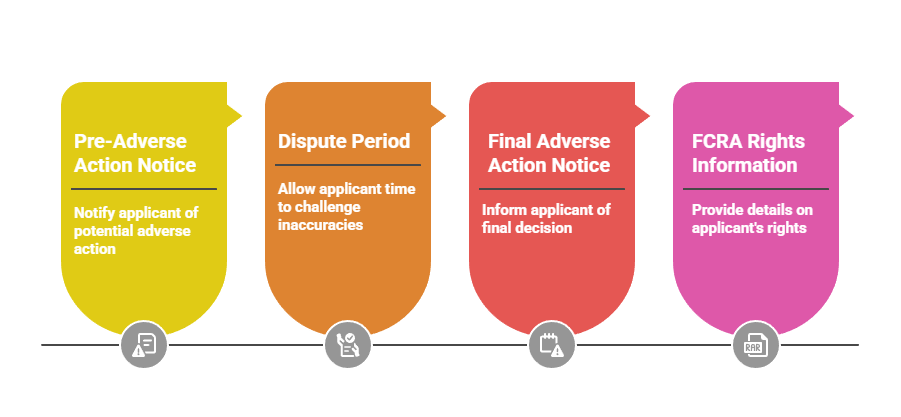
- Providing a pre-adverse action notice with a copy of the report
- Allowing reasonable time for the applicant to dispute inaccuracies
- Providing a final adverse action notice if the decision stands
- Including information about the applicant's rights under the FCRA
Employers must also ensure that any third-party firm conducting SSN traces maintains reasonable procedures for ensuring maximum possible accuracy. Using non-compliant data sources or vendors can create liability for employers even if they did not directly cause the compliance violations.
Permissible Purposes for Employer Social Security Number Verification
The FCRA limits the purposes for which employers may obtain SSN traces and other consumer reports. Employment screening represents a permissible purpose, but employers must have a legitimate business need. They must also have the applicant's authorization before conducting the trace.
Employer social security number verification through SSN traces must relate to actual hiring decisions. It may also relate to evaluations of current employees for promotion, reassignment, or retention. Employers cannot conduct SSN traces on individuals who are not genuinely under consideration for employment. They also cannot conduct traces on current employees without proper business justification and appropriate authorization.
The permissible purpose requirement also restricts how employers may use SSN trace information. The data must inform employment decisions through appropriate channels, such as determining where to search criminal records. It should not serve as the basis for discriminatory screening practices or decisions unrelated to job qualifications.
Under the FCRA, job seekers have the right to dispute inaccurate information on SSN trace reports and to receive copies of reports when those reports contribute to adverse employment decisions, following the adverse action notice process.
State-Level Regulations and Restrictions
While the FCRA provides the federal framework for SSN traces in employment screening, numerous states have enacted additional requirements. These state laws often impose stricter limitations on background screening. They may require additional disclosures or restrict how certain types of information may be used.
Some states require employers to provide applicants with copies of background check reports before taking adverse action. Other states mandate specific language in disclosure and authorization forms. Several states require notifications to state agencies when background checks are conducted.
| State Requirement Type | Common Variations | Compliance Impact |
| Disclosure timing | Before vs. simultaneous with authorization | Documentation workflow changes |
| Report copy provision | Before vs. with adverse action notice | Process timeline adjustments |
| Mandatory language | Specific state-required wording | Form customization by state |
| Agency notification | Reporting to labor departments | Additional administrative steps |
Employers conducting SSN traces on applicants in multiple states should consult with legal counsel to determine which state laws apply, as jurisdictional rules can be complex. Compliance typically requires adhering to both federal FCRA requirements and applicable state regulations.
How Employers Use SSN Trace Results
Determining Criminal Search Jurisdictions
The primary purpose of conducting an SSN trace in pre-employment screening is identifying which jurisdictions require criminal record searches. Criminal records are maintained at county, state, and federal levels rather than in a national database. Therefore, knowing where an applicant has lived is essential for comprehensive screening.
After receiving the SSN trace report with address history, employers typically search criminal records in each county where the applicant resided during the screening period. This period often covers seven to ten years. For addresses in states with robust statewide criminal databases, a state repository search may supplement or replace county searches.
The completeness of criminal screening directly depends on the accuracy and comprehensiveness of the SSN trace. If the trace fails to reveal an address where the applicant lived, criminal records from that jurisdiction will likely be missed. This occurs unless the applicant voluntarily disclosed the address on their application.
Identifying Name Discrepancies for Investigation
When an SSN trace reveals names or name variations that the applicant did not disclose on their application, employers must determine whether these discrepancies warrant further investigation. Alternatively, they assess if the variations simply reflect common name-use patterns that require no additional scrutiny.
Legitimate name variations require no investigation beyond ensuring criminal searches cover all variations. These include:
- Middle name usage: Using a middle name versus a middle initial on different documents
- Hyphenation variations: Hyphenating married names differently on various documents
- Surname adoption: Adopting a spouse's surname with or without legal name change documentation
- Cultural naming patterns: Using different name orders or components based on cultural traditions
However, completely different names or unexpected variations may indicate clerical errors in commercial databases. They could also suggest identity theft affecting the applicant or deliberate omissions that require clarification. Employers should provide applicants with opportunities to explain name discrepancies before drawing negative inferences.
The FCRA requires employers to maintain reasonable procedures for ensuring accuracy when name discrepancies might affect hiring decisions. This includes allowing applicants to review trace results and provide documentation of name changes.
Reconciling Address History with Application Information
Comparing the address history from an SSN trace against the residential information provided on the employment application helps employers identify incomplete or inaccurate application data. Significant discrepancies may indicate careless application completion or misunderstanding of what information was requested. In some cases, they may suggest deliberate omission of addresses associated with unfavorable records.
Minor discrepancies typically require no follow-up. These include slightly different date ranges, missing apartment numbers, or addresses where the applicant lived for very brief periods. However, completely missing addresses spanning significant time periods warrant clarification. Addresses in states the applicant did not mention also require explanation.
Employers should approach address discrepancies with appropriate context. People may forget short-term addresses or may interpret questions about residential history differently than intended. Complex living situations involving multiple simultaneous addresses are also common. For addresses that the applicant omitted but that appear on the SSN trace, thorough screening practices typically include conducting criminal searches in those jurisdictions to help ensure comprehensive results.
SSN Trace Accuracy and Limitations
Database Errors and Outdated Information
Commercial databases that supply SSN trace information aggregate data from numerous sources with varying levels of accuracy and currency. Errors can enter these databases through multiple pathways:
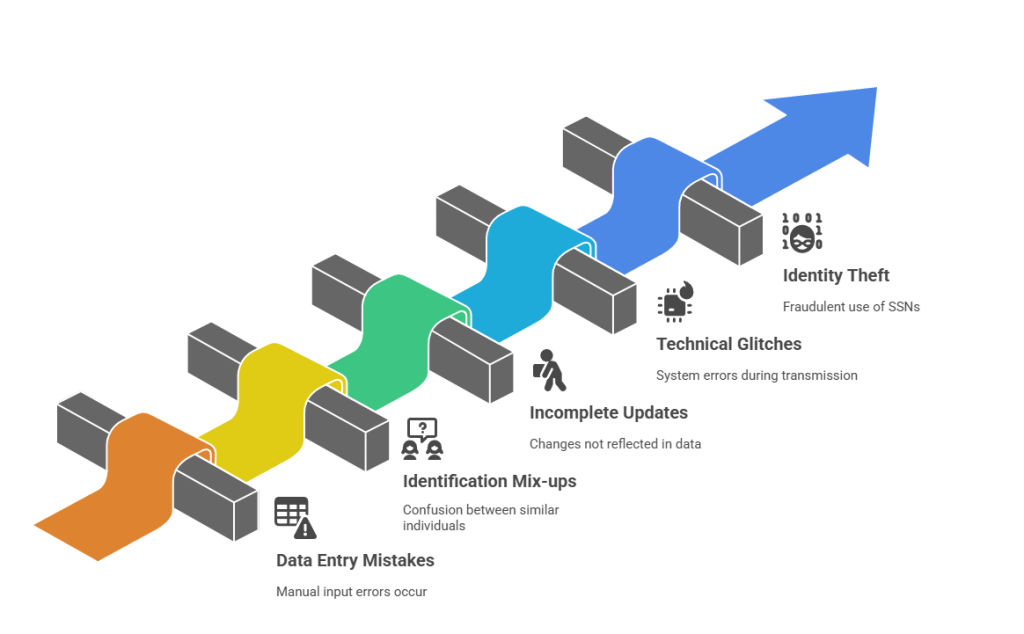
- Data entry mistakes: Manual input errors when information is initially recorded
- Identification mix-ups: Confusion between individuals with similar names or numbers
- Incomplete updates: Failure to reflect changes when people move or change names
- Technical glitches: System errors during data transmission between platforms
- Identity theft: Fraudulent use associating incorrect information with legitimate SSNs
Common accuracy issues include addresses where the individual never lived. Name variations may include misspellings, data entry errors, or names of family members incorrectly linked to the SSN. Outdated information represents another limitation, particularly when individuals have moved recently or changed names.
Databases may not reflect changes for weeks or months after they occur. SSN traces conducted shortly after a move may miss the new address. Alternatively, they may continue showing old addresses as current.
Identity Theft and Fraudulent Use Indicators
SSN traces may reveal indicators of identity theft or fraudulent SSN use, though interpreting these indicators requires care. Employers must avoid unfairly disadvantaging identity theft victims. Red flags include multiple different names associated with the SSN or addresses in numerous distant locations during overlapping time periods.
However, these same patterns can have innocent explanations. Multiple names may reflect marriage, divorce, cultural naming practices, or database errors. Addresses in multiple locations may indicate a spouse's military deployment. They could also reflect frequent business travel or maintaining homes in different states for family reasons.
| Potential Red Flag | Innocent Explanation |
| Multiple unrelated names on one SSN | Marriage, divorce, legal name change, or database error |
| Simultaneous addresses in distant locations | Spouse's military deployment, business travel, or maintaining multiple residences |
| Very recent address changes | Normal residential mobility or relocation for employment |
| Inconsistent date patterns | Database reporting delays or data aggregation timing issues |
Under the FCRA, employers who base adverse action decisions on information from consumer reports must follow specific procedures, including providing notice and opportunity to dispute inaccuracies, rather than relying solely on unverified patterns. Identity theft victims have legal protections against discrimination based on the fraudulent use of their identifying information by others. When an SSN trace reveals potential identity theft indicators, the appropriate employer response is to provide the applicant with the trace results and an opportunity to explain the findings.
Incomplete Address History Challenges
No SSN trace captures every address where an individual has lived, particularly for addresses where the person maintained no utilities or credit accounts. Short-term addresses and situations where the individual lived with family or friends without official residency may not appear. Housing arrangements without formal lease agreements are often missing as well.
This incompleteness creates challenges for employment screening because criminal searches may miss jurisdictions where the applicant lived. These gaps explain why thorough application forms request comprehensive address history. They also explain why employers should search criminal records in all jurisdictions identified by either the SSN trace or the application.
Job seekers can address this limitation by providing complete and accurate address history on applications. Including short-term addresses and situations without formal lease agreements ensures appropriate screening. Disclosing addresses proactively also demonstrates transparency that reflects well on the candidate.
Preparing for SSN Traces as a Job Seeker
Reviewing Your Own Address History
Job seekers preparing for employment screening should compile their own comprehensive address history before completing applications or authorizing background checks. This preparation enables accurate application completion. It also helps identify potential discrepancies that may appear on SSN trace reports.
Creating a personal timeline of addresses with approximate move-in and move-out dates ensures consistency across applications. This timeline should include all addresses where you maintained residence. Even short-term or transitional housing should be documented to match the comprehensive nature of SSN trace results.
Consider obtaining your own consumer disclosure from major credit reporting agencies. This disclosure will include the credit header information that feeds many SSN trace databases. The information reveals what addresses and name variations appear in commercial databases associated with your SSN.
Understanding Name Variations That May Appear
Review all name variations you have used on official documents throughout your adult life. Consider applications for credit, utilities, phone service, leases, and government documents. These variations will likely appear on SSN trace results. Being prepared to acknowledge and explain them demonstrates preparedness and honesty.
Common name variations include:
- Marital name changes: Maiden names, married names, and hyphenated combinations
- Middle name usage: Full middle names versus middle initials or no middle designation
- Nicknames: Common shortened versions or nicknames appearing on official documents
- Legal name changes: Court-ordered name changes from divorce or personal preference
- Cultural variations: Different name orders or components based on heritage
If you have been a victim of identity theft that resulted in incorrect names being associated with your SSN, gather documentation. Include the identity theft report, steps you took to resolve the issue, and communications with credit bureaus. Having this documentation readily available enables you to address concerns quickly if they arise during screening.
Addressing Potential Discrepancies Proactively
When you identify potential discrepancies between your actual history and what might appear on an SSN trace, consider addressing these issues proactively. Mention them in your application materials or during interviews rather than waiting for questions to arise during background screening.
For example, if databases incorrectly show an address where you never lived, mentioning this when initially providing address history makes the screening process smoother. Providing documentation of efforts to correct the error shows diligence. However, avoid providing excessive unsolicited information that might raise concerns that would not otherwise have emerged.
Conclusion
SSN traces serve as essential investigative tools in employment screening by revealing address histories and name variations that guide comprehensive background checks. Both employers and job seekers benefit from understanding exactly what SSN traces show, what limitations they have, and how trace results properly fit within FCRA-compliant hiring processes. Accurate application completion and transparent communication about residential and name history ensure that SSN traces fulfill their intended purpose of enabling thorough screening without creating unnecessary complications.
Frequently Asked Questions
Can an employer verify my SSN without my permission?
No, the Fair Credit Reporting Act requires employers to provide a clear disclosure and obtain your written authorization before conducting an SSN trace or any other consumer report as part of employment screening. Conducting SSN traces without proper authorization can result in FCRA violations, which may lead to legal consequences including regulatory penalties and private litigation.
Will an SSN trace show if my social security number is stolen?
An SSN trace may reveal indicators suggesting identity theft, such as unfamiliar addresses or names associated with your social security number. However, it does not definitively confirm identity theft or provide comprehensive identity theft detection. If you discover unfamiliar information, review your credit reports and consider filing an identity theft report with the Federal Trade Commission.
How far back does an SSN trace search?
Most SSN traces return address history extending 10 to 15 years or more, depending on how long commercial databases have maintained records. The practical screening period for employment purposes typically covers seven to ten years, which is the timeframe most employers use for criminal background checks. Older addresses may appear but often receive less screening attention.
Does an SSN trace affect my credit score?
No, SSN traces do not impact credit scores because they are not credit inquiries. While SSN traces draw information from credit header files, they access only identifying information such as names and addresses rather than financial data. The trace will not appear on your credit report and will not be visible to lenders.
Can I see the results of my SSN trace before my employer does?
Under the Fair Credit Reporting Act, you have the right to receive a copy of any background check report if it contributes to an adverse employment decision. However, employers are not required to provide you with a copy if they decide to proceed with your application. Some screening firms offer applicants the option to obtain their own consumer disclosure before or during the employment screening process.
What should I do if my SSN trace shows incorrect addresses?
Contact the screening firm that generated the report to initiate a dispute, providing documentation that supports your position. Under the FCRA, the screening firm is required to investigate your dispute and correct verified inaccuracies within specified timeframes. You should also contact the underlying data furnishers, such as credit reporting agencies, to correct the errors in their databases.
Do all employers conduct SSN traces during background checks?
Most employers who conduct formal background checks through third-party screening firms include SSN traces as a standard component. However, smaller employers who conduct limited background checks internally may not use formal SSN trace services. The comprehensiveness of background screening varies significantly across employers and industries.
How long does it take to complete an SSN trace?
SSN traces typically return results within seconds to a few minutes because they involve querying existing commercial databases. However, the overall background check process takes longer because employers must use the SSN trace results to conduct criminal searches in multiple jurisdictions. Most complete background checks take between three days and two weeks.
Additional Resources
- Fair Credit Reporting Act - Full Text and Official Summary
https://www.ftc.gov/legal-library/browse/statutes/fair-credit-reporting-act - Using Consumer Reports for Employment Purposes - Federal Trade Commission
https://www.ftc.gov/business-guidance/resources/using-consumer-reports-what-employers-need-know - Social Security Number Verification Service - Social Security Administration
https://www.ssa.gov/employer/ssnv.htm - Identity Theft and Background Checks - Federal Trade Commission Consumer Information
https://consumer.ftc.gov/articles/identity-theft - Employment Eligibility Verification (E-Verify) - U.S. Citizenship and Immigration Services
https://www.e-verify.gov/

ABOUT THE CREATOR
GCheck Editorial Team
Meet the GCheck Editorial Team, your trusted source for insightful and up-to-date information in the world of employment background checks. Committed to delivering the latest trends, best practices, and industry insights, our team is dedicated to keeping you informed.
With a passion for ensuring accuracy, compliance, and efficiency in background screening, we are your go-to experts in the field. Stay tuned for our comprehensive articles, guides, and analysis, designed to empower businesses and individuals with the knowledge they need to make informed decisions.
At GCheck, we're here to guide you through the complexities of background checks, every step of the way.