

Volunteer background check laws have evolved through 2025, with states refining screening requirements for organizations serving vulnerable populations. Organizations should verify current requirements in their jurisdictions. Understanding jurisdiction-specific mandates, emerging risk-tiered screening approaches, and compliant implementation strategies helps organizations balance regulatory obligations with volunteer accessibility.
Key Takeaways
- Volunteer background check laws vary significantly by state, with multiple jurisdictions enacting or refining screening requirements in recent years.
- Federal law does not mandate universal background checks for volunteers, but specific sectors and funding sources may impose requirements.
- Organizations serving children, elderly individuals, or other vulnerable populations face heightened scrutiny and potential liability exposure.
- Risk-tiered screening approaches allow organizations to calibrate check depth based on volunteer role, access level, and interaction frequency.
- State laws may dictate which records can be reviewed, lookback periods, disclosure requirements, and adverse action procedures.
- Consent, authorization, and notice requirements apply even in volunteer contexts when checks are conducted through consumer reporting agencies.
- Organizations must verify current requirements in all jurisdictions where they operate or recruit volunteers.
- Balancing compliance with volunteer pipeline health requires clear policies, efficient processes, and respectful communication.
Understanding the Legal Framework for Volunteer Screening
Volunteer background check laws operate within a complex regulatory environment that spans federal statutes, state legislation, and sector-specific requirements. Unlike employment screening, which is governed primarily by the Fair Credit Reporting Act (FCRA) and Title VII, volunteer screening involves additional considerations related to organizational type, funding sources, and the populations served.
At the federal level, no single law mandates background checks for all volunteers across all contexts. However, specific programs and funding mechanisms impose screening requirements as conditions of participation or grant receipt. Organizations receiving federal funds for youth programs, elderly care, or disability services may encounter screening mandates within program guidelines or grant agreements.
The FCRA applies when organizations use third-party consumer reporting agencies to obtain background information for volunteer screening purposes. This triggers obligations related to disclosure, authorization, adverse action procedures, and record handling. Organizations that conduct checks internally using public records may face different regulatory frameworks, though state laws often impose parallel requirements.
State Legislative Variations
State volunteer background check laws differ substantially in scope, mandatory populations, check components, and enforcement mechanisms. Some states require checks only for volunteers working directly with children in specific settings such as schools or youth sports. Other jurisdictions extend requirements to volunteers serving elderly populations, individuals with disabilities, or other vulnerable groups.
States periodically enact or amend volunteer screening legislation, reflecting evolving approaches to volunteer-related risk management. Organizations should monitor legislative developments in their jurisdictions. State legislative approaches to volunteer screening may address topics including:
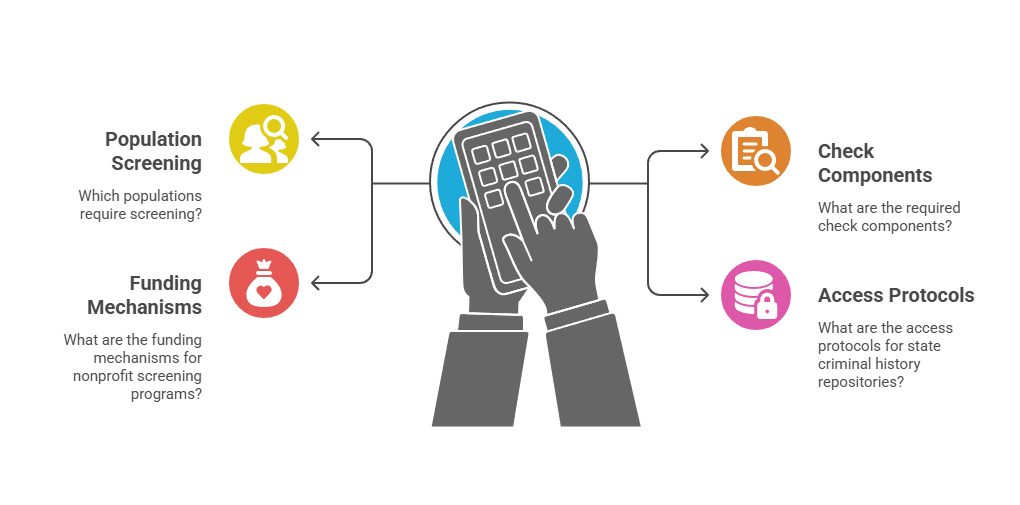
- Which populations require screening
- Required check components
- Funding mechanisms for nonprofit screening programs
- Access protocols for state criminal history repositories
Organizations operating in multiple states must identify and comply with requirements in each jurisdiction. State laws may specify which records must be reviewed, establish lookback period limitations, define disqualifying offenses, and prescribe procedural requirements for disclosure and consent.
Sector-Specific Requirements
Certain organizational types and service sectors face heightened volunteer screening obligations regardless of state law. Youth-serving organizations, including schools, childcare programs, sports leagues, scouting organizations, and religious youth groups, commonly encounter mandatory or strongly recommended screening protocols.
Healthcare and eldercare settings that use volunteers may be subject to screening requirements under state health facility regulations or federal Medicare and Medicaid provider standards. Organizations serving individuals with developmental disabilities or other vulnerable populations may face similar obligations. Educational institutions using volunteers in classroom or mentoring roles often must comply with state education codes that mandate background checks for any individual with unsupervised access to students.
Components of Compliant Volunteer Screening Programs
Developing volunteer background check policies that satisfy legal requirements while maintaining organizational effectiveness requires attention to multiple operational and compliance dimensions.
Check Scope and Depth Determination
Organizations must determine which records and databases to search based on legal requirements, risk assessment, and resource availability. Common components of volunteer background checks include criminal history searches at county, state, and potentially federal levels, sex offender registry checks, and verification of identity.
Some jurisdictions or organizational policies may incorporate additional searches such as motor vehicle records for volunteers who will transport program participants, abuse and neglect registries for volunteers working with vulnerable populations, or professional license verification for volunteers providing specialized services. The depth and breadth of screening should correspond to the volunteer role's risk profile.
Risk-Tiered Screening Approaches
Risk-tiered screening frameworks allow organizations to calibrate check intensity based on factors including volunteer duties, access levels, supervision arrangements, and interaction frequency with vulnerable populations.
| Risk Level | Position Characteristics | Typical Screening Components |
| High | Unsupervised, regular, direct contact with vulnerable populations | Multi-jurisdictional criminal history, sex offender registry, reference verification |
| Moderate | Supervised contact, limited interaction frequency, indirect service delivery | State criminal history, sex offender registry |
| Low | Administrative support, event setup, minimal vulnerable population contact | Identity verification, sex offender registry, plus any additional searches required by applicable law |
This approach balances thoroughness with efficiency and accessibility.
Geographic Scope Considerations
Determining the appropriate geographic scope for criminal history searches involves balancing legal requirements, risk management objectives, and practical constraints. Organizations must identify jurisdictions where volunteers have lived, worked, or maintained significant presence during relevant lookback periods.
State laws may specify required search jurisdictions or establish minimum geographic scopes. In the absence of specific mandates, organizations should consider searching at minimum the volunteer's current state of residence and any states where the individual resided during the applicable lookback period. County-level searches provide the most detailed and current information but require identifying specific counties and coordinating searches across multiple jurisdictions.
Navigating Consent, Disclosure, and Authorization Requirements
Volunteer screening programs must comply with legal requirements related to informing volunteers about checks, obtaining proper authorization, and handling results appropriately.
FCRA Compliance in Volunteer Contexts
When organizations use consumer reporting agencies to obtain background check information for volunteer screening purposes that constitute a permissible purpose under the FCRA, the Act's obligations apply regarding disclosure, authorization, and adverse action procedures. Organizations must:
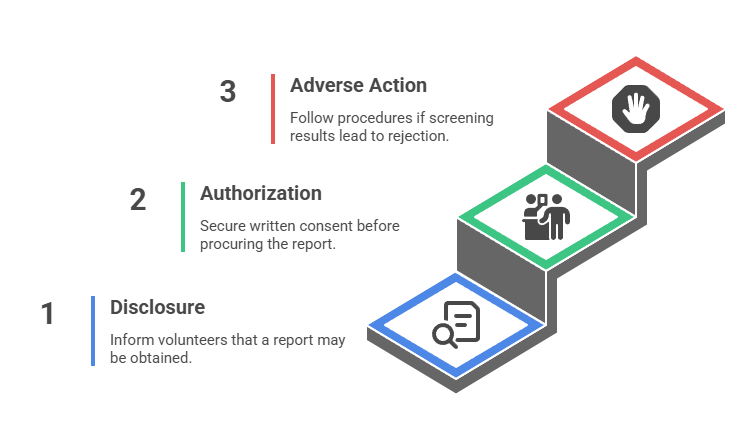
- Provide clear disclosure that a consumer report may be obtained
- Secure written authorization before procuring the report
- Follow adverse action procedures if screening results lead to volunteer application rejection
The disclosure must be in a standalone document, not buried within general volunteer applications or handbooks. Authorization should be obtained separately and include any required state-specific language or disclosures. Organizations conducting checks internally without consumer reporting agency involvement may not trigger FCRA requirements but should still implement transparent consent processes.
State-Specific Disclosure and Consent Rules
Some states impose disclosure and consent requirements that parallel or exceed FCRA mandates, applying regardless of whether consumer reporting agencies are used. These requirements may specify disclosure language, authorization format, timing of notifications, and volunteer rights during the screening process.
States may prohibit certain inquiry types, limit the use of specific record categories, or require individualized assessments rather than blanket disqualification rules. Organizations must identify applicable state requirements in all jurisdictions where they recruit or screen volunteers.
Handling Sensitive Information
Background check information, particularly criminal history records, constitutes sensitive data subject to confidentiality and security requirements. Organizations must limit access to screening results, store records securely, and restrict information sharing to individuals with legitimate need to know.
State laws may impose specific requirements related to retention periods, disposal methods, and prohibited disclosures. Organizations should establish clear protocols for who may access screening information, how long records are retained, and secure destruction procedures.
Evaluating Screening Results and Making Decisions
Translating background check findings into volunteer acceptance or rejection decisions requires structured evaluation processes that comply with legal constraints and reflect organizational risk tolerance.
Disqualifying Offenses and Individualized Assessment
Some state laws specify offenses that automatically disqualify individuals from volunteer positions with particular populations or in specific settings. Common mandatory disqualifications include:
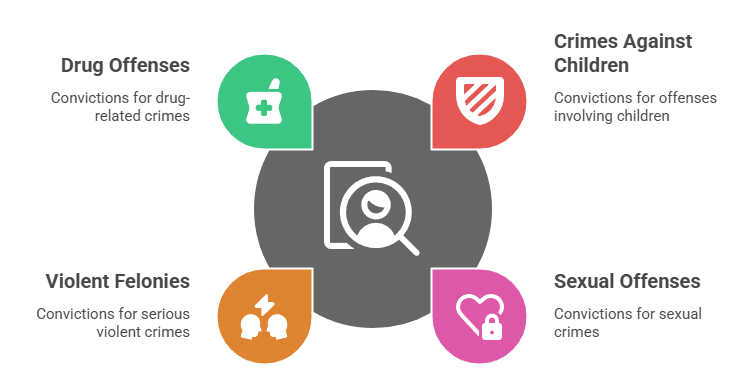
- Convictions for crimes against children
- Sexual offenses
- Violent felonies
- Certain drug-related offenses within defined lookback periods
In the absence of mandatory disqualification provisions, organizations should conduct individualized assessments that consider the nature and severity of offenses, time elapsed since conviction, evidence of rehabilitation, and relationship between the offense and volunteer duties. Some jurisdictions affirmatively require such individualized evaluation and prohibit blanket exclusion policies. Blanket policies that automatically exclude individuals based on any criminal history, regardless of offense type or relevance, may create legal risks under state fair hiring laws or anti-discrimination provisions.
Adverse Action Procedures
When screening results lead to volunteer application denial, organizations using consumer reporting agencies must follow FCRA adverse action procedures. This includes providing pre-adverse action notice with a copy of the consumer report and summary of rights, allowing reasonable time for the volunteer to review and dispute information, and issuing final adverse action notice if the decision stands.
Organizations conducting internal checks should implement comparable procedures that afford volunteers the opportunity to review findings, provide context or explanation, and present evidence of rehabilitation or mitigating circumstances before final decisions are made.
Record Accuracy and Dispute Resolution
Background check records may contain errors, incomplete information, or outdated entries. Organizations should establish processes for volunteers to dispute inaccurate information and should independently verify critical adverse findings when feasible.
Criminal history records may fail to reflect case dispositions, expungements, or sealed records. Organizations should not assume all reported arrests resulted in convictions and should verify final dispositions for offenses that appear relevant to disqualification criteria.
Building Sustainable Volunteer Screening Operations

Implementing volunteer background check programs that satisfy legal requirements while supporting organizational mission and volunteer recruitment requires attention to operational efficiency, cost management, and volunteer experience.
Policy Development and Documentation
Written volunteer screening policies provide clarity for staff, volunteers, and oversight bodies while demonstrating good-faith compliance efforts. Policies should specify:
- Which volunteer positions require screening
- What check components are included
- Disqualification criteria
- Decision-making processes
- Procedures for information security and retention
Policies should be reviewed and updated regularly to reflect changes in applicable laws, organizational risk profile, and operational experience. Legal counsel with expertise in nonprofit governance and volunteer screening can provide guidance on policy development and compliance verification.
Volunteer Communication and Experience
The way organizations communicate about background checks affects volunteer recruitment, retention, and overall program perception. Clear, respectful communication about screening rationale, process, and timelines helps volunteers understand requirements and reduces anxiety or resistance.
Organizations should explain that screening protects both the populations served and volunteers themselves by creating safer environments and reducing liability exposure. Transparency about what checks involve, how long they take, and what happens with information builds trust and cooperation. Efficient screening processes that minimize delays between volunteer application and approval support recruitment goals and demonstrate respect for volunteer time and interest.
Cost Considerations and Resource Allocation
Background check costs can strain nonprofit budgets, particularly for organizations relying heavily on volunteer workforces. Organizations should explore options including state-sponsored programs that provide free or reduced-cost checks for qualifying nonprofits, bulk pricing arrangements with screening providers, and grant funding designated for screening expenses.
Some states have enacted legislation providing funding mechanisms or fee waivers for volunteer background checks conducted by organizations serving children or vulnerable populations. Organizations should verify whether such programs exist in their jurisdictions and meet eligibility requirements. Resource allocation decisions should reflect risk-tiered approaches, focusing more comprehensive and costly screening on highest-risk positions while using less expensive options for lower-risk roles within legal constraints.
Technology and Emerging Screening Approaches
Volunteer screening processes increasingly incorporate technology solutions that enhance efficiency, accuracy, and compliance management.
Digital Screening Platforms
Online background check platforms allow volunteers to complete authorization and submission processes remotely, reducing administrative burden and accelerating turnaround. These systems may offer integrated workflows for consent management, result review, and decision documentation. Organizations evaluating technology solutions should verify that platforms support compliance with FCRA requirements and applicable state laws, provide appropriate security for sensitive information, and offer features supporting risk-tiered screening approaches.
Ongoing Monitoring Considerations
Some organizations implement ongoing monitoring programs that provide alerts if volunteers incur new criminal charges or convictions after initial screening. These programs raise questions about:
- Legal authority
- Consent requirements
- Notice obligations
- Appropriate response protocols
Organizations considering ongoing monitoring should verify legal permissibility in their jurisdictions, ensure proper consent and disclosure, establish clear policies about what triggers re-evaluation, and implement procedures that respect due process and allow volunteers to provide context. Ongoing monitoring may not be necessary or appropriate for all volunteer positions.
Artificial Intelligence and Automated Decision Tools
Emerging technologies incorporate artificial intelligence or algorithmic tools to assess screening results and flag potential concerns. Organizations using such tools must ensure they do not produce discriminatory outcomes, comply with applicable laws governing automated decision-making, and allow for human review and individualized assessment.
Technology should support, not replace, thoughtful evaluation that considers context, rehabilitation, and relevance. Organizations remain responsible for screening decisions and their legal compliance regardless of what tools are used.
Special Considerations for Faith-Based and Community Organizations
Religious institutions and community organizations using volunteers face unique considerations related to volunteer screening implementation.
Religious Organization Exemptions and Considerations
Some state volunteer screening laws include exemptions or modified requirements for religious organizations, recognizing First Amendment considerations and the distinct nature of religious community volunteer service. However, exemptions are typically narrow and may not apply to secular activities conducted by religious organizations, such as schools or childcare programs open to the general public.
Exemption scope varies significantly by jurisdiction. Religious worship and ministry activities may have broader exemptions in some states, while religious schools, childcare programs, and community service initiatives typically face standard screening requirements. Organizations must verify specific exemptions and requirements in their jurisdictions rather than relying on generalized categories.
Religious organizations should not assume blanket exemptions apply and should verify specific requirements in their jurisdictions. Even where legal exemptions exist, implementing appropriate screening may be advisable for risk management and liability protection.
Community-Based Screening Alternatives
Smaller organizations with limited resources may explore alternative screening approaches that provide meaningful risk management within budget constraints. Options may include structured reference checking, in-person interviews focused on relevant background topics, and requiring volunteer observation or probationary periods before unsupervised access is granted.
While alternative approaches can provide value, organizations must ensure they satisfy minimum legal requirements where applicable. Reference checks and interviews may supplement but generally cannot replace mandatory criminal history checks prescribed by law.
Interstate and Multi-Jurisdictional Challenges
Organizations operating in multiple states or accepting volunteers who relocate across state lines face complexity in maintaining compliance with varying requirements. National organizations may need jurisdiction-specific screening protocols while maintaining consistent baseline standards across all locations. Multi-state organizations should identify the most stringent requirements among jurisdictions where they operate and consider whether adopting uniform policies meeting the highest standards simplifies compliance management.
Liability, Risk Management, and Negligent Supervision
Volunteer screening connects directly to organizational liability exposure and risk management objectives beyond pure regulatory compliance.
Negligent Selection and Supervision Claims
Organizations may face liability exposure for negligent selection if volunteers cause harm to program participants and the organization failed to conduct reasonable screening that would have revealed disqualifying history. Similarly, negligent supervision claims may arise when inadequate oversight allows volunteers with known risk factors to engage in harmful conduct.
Implementing documented screening programs, making informed decisions based on relevant information, and providing appropriate supervision and training may help support a demonstration of reasonable care in volunteer selection and management, though they do not eliminate liability exposure.
Insurance Requirements and Recommendations
Liability insurance policies covering volunteer programs may include requirements or recommendations related to background screening. Organizations should review policy terms and coordinate with insurance carriers to ensure screening practices align with coverage requirements.
Some insurers offer premium reductions for organizations implementing comprehensive screening programs, recognizing that such practices reduce claim likelihood and severity. Organizations should inquire about potential cost savings or coverage enhancements associated with screening initiatives.
Documentation and Compliance Demonstration
Thorough documentation of screening policies, procedures, and decisions provides evidence of good-faith compliance efforts and reasonable care in volunteer selection. Records should demonstrate that:
- Required checks were conducted
- Results were evaluated appropriately
- Decisions reflected relevant considerations
Documentation practices should balance competing interests in record retention for liability protection and limiting retention periods to reduce data security and privacy risks. Legal counsel can provide guidance on appropriate retention schedules.
Conclusion
Volunteer background check laws reflect evolving standards for protecting vulnerable populations while maintaining volunteer accessibility. Organizations must navigate jurisdiction-specific requirements, implement risk-appropriate screening protocols, and balance compliance obligations with mission effectiveness. Verification of current legal requirements, consultation with qualified legal counsel, and commitment to continuous policy refinement support sustainable screening programs.
Frequently Asked Questions
Are background checks legally required for all volunteers?
No federal law mandates background checks for all volunteers universally. Requirements depend on state law, the populations served, organizational type, and funding sources. Many states require checks for volunteers working with children or vulnerable populations in specific settings. Organizations should verify requirements in their jurisdictions.
What records can be included in volunteer background checks?
Common components include criminal history searches, sex offender registry checks, and identity verification. State laws may limit which records can be considered, establish lookback periods, or prohibit use of certain information such as arrest records without convictions. Organizations should ensure check components comply with applicable restrictions.
Do FCRA requirements apply to volunteer screening?
The FCRA applies when organizations use consumer reporting agencies to obtain background information for volunteer screening purposes. This triggers disclosure, authorization, adverse action, and record-handling requirements. Organizations conducting internal checks may face different regulatory frameworks but should implement comparable procedural protections.
How should organizations handle volunteers with criminal records?
State laws may specify automatically disqualifying offenses for certain volunteer roles. Otherwise, organizations should conduct individualized assessments considering offense nature, time elapsed, rehabilitation evidence, and relevance to volunteer duties. Blanket exclusion policies may create legal risks under fair hiring and anti-discrimination provisions.
What is risk-tiered volunteer screening?
Risk-tiered screening calibrates check depth based on volunteer role characteristics including supervision level, interaction frequency with vulnerable populations, and access to sensitive information or locations. This approach balances thorough protection of high-risk positions with efficiency and accessibility for lower-risk roles.
How often should volunteer background checks be updated?
State laws may specify re-screening intervals for certain volunteer populations or settings. In the absence of specific requirements, organizations should establish policies based on risk assessment, considering factors such as volunteer activity frequency, role risk level, and organizational resources. Re-screening practices vary widely among organizations.
Can religious organizations be exempt from volunteer screening requirements?
Some states include narrow exemptions or modified requirements for religious organizations, but these typically do not extend to secular activities such as schools or childcare programs open to the public. Religious organizations should verify specific requirements in their jurisdictions and consider implementing screening regardless of exemptions for liability protection.
What should volunteers be told about background screening?
Organizations should clearly explain screening rationale, process, timeline, and record handling. When using consumer reporting agencies, FCRA-compliant disclosure and authorization are required. Transparent communication about how information is used, who has access, and decision-making criteria builds trust and cooperation while supporting legal compliance.
Additional Resources
- Fair Credit Reporting Act Overview
https://www.ftc.gov/legal-library/browse/statutes/fair-credit-reporting-act - FBI National Criminal History Background Check
https://www.fbi.gov/how-we-can-help-you/more-fbi-services-and-information/nics - National Sex Offender Public Website
https://www.nsopw.gov/ - U.S. Department of Justice Background Check Resources
https://www.justice.gov/archive/olp/background_checks.htm - National Council of Nonprofits Volunteer Management Resources
https://www.councilofnonprofits.org/running-nonprofit/human-resources/volunteers

ABOUT THE CREATOR
GCheck Editorial Team
Meet the GCheck Editorial Team, your trusted source for insightful and up-to-date information in the world of employment background checks. Committed to delivering the latest trends, best practices, and industry insights, our team is dedicated to keeping you informed.
With a passion for ensuring accuracy, compliance, and efficiency in background screening, we are your go-to experts in the field. Stay tuned for our comprehensive articles, guides, and analysis, designed to empower businesses and individuals with the knowledge they need to make informed decisions.
At GCheck, we're here to guide you through the complexities of background checks, every step of the way.