

Professional reference validation is a structured due diligence process used to verify a candidate's work history, performance patterns, and behavioral fit through direct contact with former supervisors or colleagues. When you execute it with proper consent protocols, documentation discipline, and fraud awareness, it becomes a legally defensible tool for reducing hiring risk in roles where past performance strongly predicts future outcomes.
Key Takeaways
- Professional reference validation differs fundamentally from employment verification and consumer reporting activities governed by the Fair Credit Reporting Act.
- Consent requirements, defamation liability, and state-specific restrictions create compliance obligations that vary significantly by jurisdiction and hiring context.
- Reference verification delivers greatest value in senior roles, fiduciary positions, and regulated industries where behavioral patterns and judgment failures carry elevated risk.
- A defensible protocol includes documented consent, standardized question frameworks, consistent documentation practices, and contact legitimacy verification steps.
- Red flags such as scripted responses, unavailable references, contact information mismatches, and evasive answers warrant additional scrutiny or alternative validation methods.
- Common mistakes include failing to verify reference authenticity, inconsistent application across candidates, inadequate recordkeeping, and misunderstanding legal boundaries around questions.
- Fraud sophistication has evolved significantly, with candidates increasingly using paid services, fake websites, and voice impersonation to circumvent validation efforts.
- Third-party verification may become appropriate when hiring volume increases, legal complexity exceeds internal expertise, or liability concerns justify delegating execution to specialized vendors.
What Professional Reference Validation Is (and Isn't)
Professional reference validation involves contacting individuals identified by a job candidate to gather qualitative information about past work performance, behavioral tendencies, interpersonal dynamics, and re-hire eligibility. The practice serves as a predictive tool. It operates on the premise that documented patterns of behavior, judgment, and competence in prior roles offer meaningful insight into likely future performance.
This process is distinct from employment verification, which focuses on confirming factual data such as job titles, dates of employment, and salary history. Employment verification typically relies on HR departments or third-party services. It produces binary, verifiable outputs. Professional reference validation, by contrast, seeks subjective assessments and contextual narratives that cannot be reduced to simple confirmation.
| Validation Type | Primary Focus | Information Type | Typical Sources |
| Professional Reference Validation | Performance patterns, behavioral tendencies, work quality | Qualitative, subjective assessments | Former supervisors, colleagues |
| Employment Verification | Job titles, employment dates, salary history | Factual, objective data | HR departments, verification services |
| Background Checks (CRA) | Criminal history, credit reports, driving records | Regulated consumer reports | Consumer reporting agencies |
How Reference Validation Differs From Background Checks
Professional reference validation also differs from background checks that consumer reporting agencies conduct under the Fair Credit Reporting Act. When an employer directly contacts references provided by the candidate, the activity generally falls outside FCRA regulation. This assumes the employer does not use a third-party reporting agency to conduct the outreach.
However, FCRA compliance obligations typically apply in certain vendor scenarios. If a company engages a vendor to perform reference checks and compile results into a report for employment decisions, you must consider FCRA requirements. Whether FCRA obligations attach depends on several factors. These include whether the vendor assembles information from multiple sources, whether it provides reports to third parties, and whether the service constitutes a consumer report under the statutory definition. Organizations should consult legal counsel before engaging reference verification vendors to determine applicable compliance requirements.
Common Misconceptions About Reference Validation
Confusion between these categories creates legal and operational risk. Treating a reference call as informal due diligence while simultaneously using it to justify adverse employment actions without proper consent documentation can trigger disputes. Understanding these distinctions allows you to design processes that match the legal framework governing each activity type.
You should not confuse reference validation with social media research, online reputation monitoring, or informal inquiries conducted without candidate knowledge. Ethically sound and legally defensible reference validation requires transparency, candidate-provided contact information, and documented consent processes that align with jurisdictional requirements.
Legal and Consent Requirements by Jurisdiction
Professional reference validation intersects with multiple areas of law. These include defamation, privacy, discrimination, and in some cases consumer protection statutes. The legal landscape is fragmented. Federal law provides limited direct regulation, and state laws fill gaps inconsistently.
Federal Considerations
At the federal level, the Fair Credit Reporting Act does not typically govern reference checks that employers conduct directly using candidate-provided contacts. However, if an employer uses a third-party service that aggregates, formats, or substantively processes reference information into a report used for employment decisions, the arrangement may trigger FCRA obligations. These include disclosure, authorization, adverse action notices, and dispute rights.
Title VII of the Civil Rights Act prohibits discrimination based on protected characteristics. Reference questions that directly or indirectly elicit information about race, religion, gender, age, disability, or other protected categories create liability risk. Even facially neutral questions can produce problematic disclosures if references volunteer protected information without prompting. This requires interviewers to redirect conversations and document the deviation.
State-Specific Laws
Many states impose requirements on reference check processes that exceed federal minimums. Compliance complexity increases when organizations operate across multiple jurisdictions:
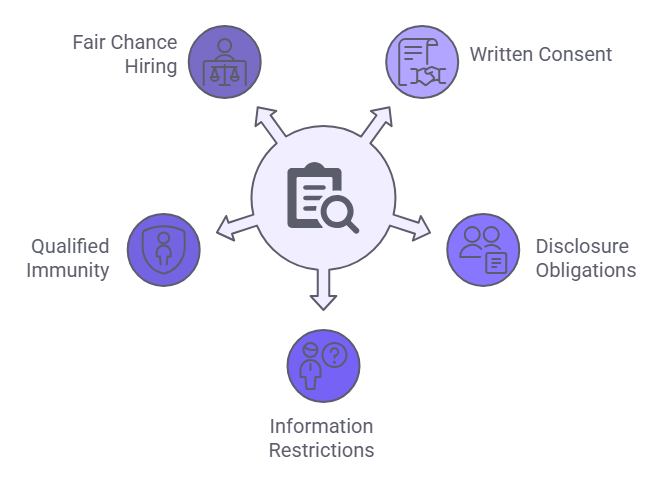
- Written consent mandates: Some jurisdictions require explicit written consent before contacting references, even when candidates provide the contact information voluntarily.
- Disclosure obligations: Others mandate that candidates receive copies of reference check notes or summaries if the information influences hiring decisions.
- Information type restrictions: Certain states limit the type of information that may be requested or shared. Examples include prohibiting questions about salary history or restricting inquiries into arrest records not resulting in conviction.
- Qualified immunity provisions: Some states have enacted qualified immunity statutes that may provide legal protections to former employers who provide reference information. However, the scope, definitions, and applicability of these protections vary significantly by jurisdiction.
- Fair chance hiring ordinances: A small but growing number of municipalities have enacted "ban-the-box" and fair chance hiring ordinances. These restrict when and how criminal history may be considered.
While these laws primarily govern background checks, they can influence the timing and framing of reference validation. This becomes relevant when references might disclose criminal history information without prompting.
Researching Your Jurisdiction's Requirements
State and local requirements vary significantly and change periodically. Organizations should consult legal counsel or review current requirements through reliable resources. These include the National Conference of State Legislatures, state labor departments, or the Society for Human Resource Management. Use these resources to determine obligations applicable to your specific hiring locations.
Consent Documentation Best Practices
Legally defensible consent documentation should specify the nature of the reference validation process. It should identify who may be contacted, describe how information will be used, and clarify whether findings might influence hiring decisions. Consent forms should be separate from general employment applications to ensure visibility. This helps you avoid claims of hidden authorizations buried in fine print.
You should retain signed consent forms and document when and how you obtained consent. If you conduct reference checks after extending an offer, conditional offer letters should explicitly reserve the right to validate references. They should also clarify that offer finalization depends on satisfactory completion of this process.
Organizations operating in multiple states must identify the most restrictive requirements applicable to their candidate pool. You should then design processes that meet the highest compliance standard unless jurisdiction-specific protocols are administratively feasible.
When Professional Reference Validation Is Required or Recommended
Not all hiring scenarios justify the time, cost, and legal complexity associated with professional reference validation. Strategic deployment focuses resources on roles where past performance patterns carry predictive value. It also targets positions where hiring errors impose significant consequences.
Regulated Industries and Fiduciary Roles
Industries subject to regulatory oversight often face explicit or implicit expectations regarding reference validation:
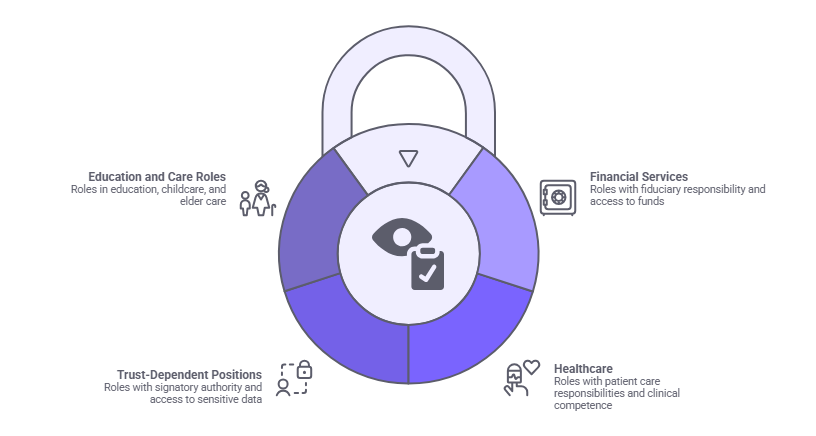
- Financial services: Roles involving fiduciary responsibility, access to customer funds, or investment decision-making authority benefit from validation. This validation should explore judgment, ethical conduct, and prior disciplinary actions.
- Healthcare: Roles with patient care responsibilities warrant validation focused on clinical competence, adherence to protocols, and interpersonal dynamics affecting care quality.
- Trust-dependent positions: Positions with signatory authority, access to sensitive data, or responsibility for vulnerable populations justify enhanced validation efforts.
- Education and care roles: Education roles, childcare positions, and elder care responsibilities typically require validation. This validation should address behavior patterns, boundary maintenance, and prior performance in trust-dependent contexts.
Senior Leadership and High-Impact Roles
Executive roles, senior management positions, and leadership appointments carry elevated hiring risk. This stems from their influence on organizational culture, strategic direction, and operational execution. Reference validation for these roles should extend beyond performance metrics. You should explore leadership style, decision-making under pressure, team development capabilities, and behavioral patterns during conflict or organizational stress.
High-impact individual contributor roles also merit thorough validation. These include lead engineers, senior researchers, or principal designers. Validation becomes critical when the position requires independent judgment, collaboration across teams, or responsibility for critical systems or projects.
Volume Hiring and Entry-Level Roles
Professional reference validation typically provides limited value in high-volume, entry-level hiring. This occurs when work history is sparse, references lack meaningful context, or the cost per hire makes intensive validation economically impractical. In these scenarios, structured interviews, skills assessments, and probationary periods often deliver better risk mitigation per dollar invested.
However, even in volume hiring contexts, selective validation may be appropriate when candidates advance to final rounds. This is particularly true if early-stage screening revealed inconsistencies, gaps, or concerns requiring clarification.
Designing a Professional Reference Validation Protocol
Effective validation protocols balance thoroughness with efficiency. They ensure consistency across candidates while remaining flexible enough to adapt to role-specific requirements and unexpected findings.
Timing Within the Hiring Process
Reference validation typically occurs after initial interviews have narrowed the candidate pool but before you extend final offers. Conducting validation too early wastes resources on candidates unlikely to advance. Delaying until after candidates accept offers creates awkward scenarios if findings raise concerns.
Conditional offer structures allow organizations to extend offers contingent upon satisfactory reference validation, background checks, and other final steps. This approach provides candidates with clarity about their status. It also preserves employer flexibility to withdraw offers if validation reveals disqualifying information.
Determining Appropriate Reference Count
Most protocols require two to three professional references with direct supervisory experience or close collaboration with the candidate. Requesting more than three references rarely yields additional insight. It also increases burden on both candidates and reference contacts.
References should ideally represent recent roles, typically within the past five to seven years. Exceptions apply when the candidate's work history is sparse or prior roles are particularly relevant to the position. Peer references and subordinate references may supplement supervisory references but should not replace them entirely. Supervisory references typically offer the most comprehensive performance assessments.
Internal vs. External Handling
Organizations must decide whether hiring managers, HR personnel, or external vendors will conduct reference validation:
| Approach | Advantages | Disadvantages |
| Internal handling | Greater control, reduced cost, contextual probing | Requires training, time-intensive, consistency challenges |
| External handling | Expertise, liability mitigation, efficiency at scale | Higher cost, reduced contextual flexibility, potential FCRA triggers |
| Hybrid model | Balanced risk and resource allocation | Requires coordination protocols |
Hybrid approaches are common. HR conducts initial validation and escalates complex scenarios or executive searches to external specialists.
Contact Validation Steps
Before conducting reference interviews, you should validate contact information provided by candidates. This includes verifying that phone numbers and email addresses correspond to legitimate organizations. You should also check that references hold or held the positions claimed and confirm that reference relationships align with candidate representations.
Warning signs include personal email addresses for purported supervisors and phone numbers that lack organizational voicemail greetings. You should also be alert to references who claim titles or affiliations inconsistent with publicly available information about the organization.
Question Framework and Interview Techniques
Structured question frameworks ensure consistency, legal compliance, and meaningful data collection. Effective frameworks organize questions into categories addressing distinct validation objectives.
Employment Relationship Confirmation
Initial questions should confirm basic facts about the employment relationship. These include job title, employment dates, reporting structure, and departure circumstances. Discrepancies between candidate representations and reference responses warrant documentation and follow-up.
Sample questions include asking references to confirm the candidate's job title. You should also ask them to describe the reporting relationship, verify employment dates, and explain the reason for separation if known.
Performance Assessment
Performance questions explore work quality, reliability, productivity, and achievement of objectives. Effective questions encourage references to provide specific examples rather than generalized endorsements.
You might ask for references to describe the candidate's primary responsibilities. You can also ask them to assess performance relative to peers, identify the candidate's greatest strengths and areas for development, and provide examples of significant contributions or projects.
Behavioral and Interpersonal Dynamics
Behavioral questions explore how candidates interact with colleagues, respond to feedback, handle conflict, and adapt to change:
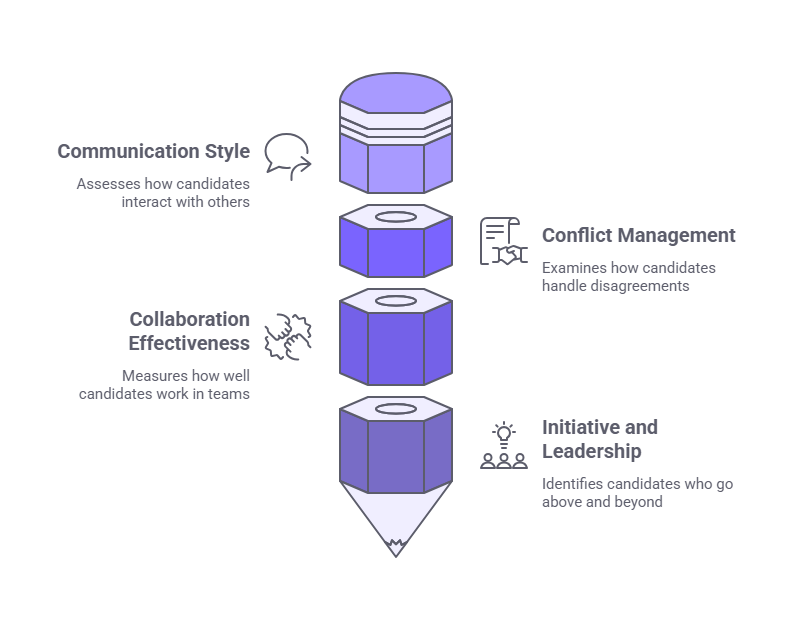
- Communication style: How did the candidate communicate with team members, supervisors, and external stakeholders?
- Conflict management: How did the candidate handle disagreement or criticism?
- Collaboration effectiveness: How well did the candidate work with others toward shared objectives?
- Initiative and leadership: In what situations did the candidate demonstrate leadership or take initiative beyond assigned responsibilities?
These areas often predict cultural fit and team dynamics more reliably than technical competency assessments.
Re-Hire Eligibility
The re-hire question is widely considered a valuable data point in reference validation. It may reveal concerns not fully disclosed in prior responses. References who hesitate, equivocate, or decline to answer often signal concerns not fully disclosed in earlier responses.
Phrasing should be direct. Ask whether the reference would re-hire the candidate if given the opportunity. If not, ask why.
Prohibited and High-Risk Questions
Questions that seek information about protected characteristics create legal risk in most contexts. These include medical conditions, disability, pregnancy, religion, age, or other characteristics protected under federal or state discrimination laws. Even neutrally-phrased questions can be problematic if they are likely to elicit protected information.
The permissibility of specific questions may vary. This depends on the timing in the hiring process, the nature of the role, and applicable legal frameworks. Interviewers should receive training on legally compliant questioning techniques. You should also consult legal counsel when designing reference validation protocols.
Even when references volunteer such information without prompting, interviewers should redirect the conversation. They must document that the disclosure was unsolicited.
Documenting and Storing Reference Check Results
Consistent documentation practices serve multiple purposes. These include supporting hiring decisions, defending against discrimination claims, and ensuring continuity when multiple stakeholders participate in hiring processes.
Standardized Documentation Templates
Templates should capture reference contact information, the date and time of the conversation, the interviewer's identity, and structured summaries of responses to each question:
- Reference identification: Name, title, organization, relationship to candidate
- Contact details: Phone number, email address, date and time of conversation
- Interviewer information: Name and role of person conducting validation
- Structured responses: Summary of answers to standardized questions
- Open-ended observations: Space for unexpected information or context not captured by structured fields
You should complete templates immediately after reference conversations to ensure accuracy and completeness. Delayed documentation increases the risk of memory errors, omissions, and inconsistencies.
Retention Periods and Storage Security
Reference check documentation is part of the candidate's hiring record. You must retain it according to applicable recordkeeping requirements. The Equal Employment Opportunity Commission recommends retaining hiring records for at least one year from the date of the hiring decision. Some states impose longer retention periods.
You should store records securely, with access limited to individuals with legitimate business needs. Keep physical records in locked files. Password-protect and encrypt electronic records.
Consistency Across Candidates
All candidates for the same position should undergo comparable reference validation processes. Selectively validating references for some candidates but not others creates disparate treatment risk. This is particularly true if the distinction correlates with protected characteristics.
If circumstances require deviation from standard protocols, document deviations along with the rationale. Examples include when a reference becomes unavailable or a candidate provides insufficient references.
Red Flags and Fraud Detection Indicators
Reference fraud has become increasingly sophisticated. Candidates use paid services, fabricated employment histories, and impersonation schemes to circumvent validation efforts. Recognizing warning signs allows you to escalate scrutiny or pursue alternative validation methods.
Contact Information Anomalies
References provided with personal email addresses, mobile numbers lacking professional voicemail greetings, or contact information that cannot be independently verified through organizational directories warrant additional scrutiny. Legitimate references typically provide work contact information. If no longer with the organization, you can verify them through LinkedIn profiles or professional networks showing organizational affiliations.
Mismatches between area codes and claimed work locations suggest potential fraud. Phone numbers registered to voice-over-IP services commonly used for anonymization or email domains recently registered all indicate possible issues.
Scripted or Rehearsed Responses
References who provide overly polished, generic, or suspiciously consistent responses across multiple questions may be reading from scripts. They may also be participating in fraudulent schemes:
- Lack of spontaneity: Legitimate references typically provide uneven levels of detail. They pause to recall specifics and offer spontaneous observations that vary in relevance and coherence.
- Generic endorsements: References who avoid providing specific examples, dates, or contextual details may lack genuine knowledge of the candidate's work.
- Deflection patterns: References who deflect, provide evasive non-answers, or claim inability to recall basic details about recent employment relationships should raise concerns.
Probing follow-up questions that require references to provide context, examples, or elaboration can differentiate genuine references from fraudulent ones.
Unavailable References or Persistent Obstacles
Candidates who provide references that are consistently unavailable may be providing fraudulent contacts. This includes references who do not respond to multiple contact attempts or claim ignorance of the candidate despite purported close working relationships.
While legitimate references are sometimes difficult to reach due to schedule constraints or job changes, patterns of persistent unavailability across multiple references suggest problems. Implausible explanations for non-responsiveness also warrant concern.
Inconsistencies With Other Information Sources
Reference responses that contradict information provided by the candidate warrant clarification. This includes conflicts with employment verification findings or divergences from patterns evident in publicly available professional profiles. Discrepancies regarding employment dates, job titles, responsibilities, or departure circumstances require follow-up with both the candidate and the reference.
Common Mistakes and How to Avoid Them
Even well-intentioned validation efforts can create legal risk or operational inefficiency when common mistakes undermine process integrity.
Failing to Verify Reference Legitimacy
Accepting candidate-provided references at face value without independent verification is among the most common and consequential mistakes. You should cross-check reference contact information against organizational directories, professional networking profiles, and publicly available information before conducting interviews.
Inconsistent Application Across Candidates
Conducting thorough reference validation for some candidates while skipping or abbreviating the process for others creates disparate treatment risk. Consistency requirements apply both within a single hiring process and across time for similar roles.
Inadequate Training for Interviewers
Untrained interviewers may ask legally problematic questions. They may fail to recognize evasive responses, document findings inconsistently, or misinterpret reference feedback:
- Legal compliance gaps: Without training on prohibited questions and protected characteristics, interviewers risk eliciting information that creates liability.
- Documentation inconsistencies: Varying documentation quality across interviewers undermines process defensibility.
- Missed red flags: Inexperienced interviewers may not recognize scripted responses, evasive patterns, or fraud indicators.
Organizations should provide training covering legal boundaries, effective questioning techniques, red flag recognition, and documentation requirements.
Over-Reliance on Reference Validation Alone
Reference validation is one component of a comprehensive hiring process, not a standalone risk mitigation tool. Candidates who provide fraudulent references may perform well in interviews. They may hold legitimate credentials and possess verifiable skills.
Conversely, weak reference responses may reflect interpersonal conflicts, mismatched expectations, or reference bias rather than candidate deficiencies. You should integrate validation findings with interview assessments, skills testing, credential verification, and other evaluation methods. This creates a holistic view of candidate suitability.
Misunderstanding Legal Limitations on Reference Inquiries
Employers sometimes assume that because it references volunteer information, all disclosed details may be used in hiring decisions. However, using information about protected characteristics, even when unsolicited, can create liability. Interviewers must document when references provide such information without prompting. They must also clarify that it did not influence decision-making.
When to Consider Third-Party Verification
Certain organizational contexts, hiring volumes, or role complexities make third-party reference verification services worth evaluating. These services range from basic phone-based validation to comprehensive assessments. They incorporate multiple contacts, behavioral analysis, and fraud detection protocols.
Volume and Resource Constraints
Organizations hiring at scale may lack internal capacity to conduct consistent, high-quality reference validation across all candidates. Third-party services provide scalability and efficiency, though at a cost. You must justify this cost against alternative uses of hiring budgets.
Small organizations without dedicated HR staff may find that third-party services deliver better outcomes. This is preferable to inconsistent internal efforts conducted by hiring managers juggling multiple responsibilities.
Legal and Liability Concerns
Organizations operating across multiple jurisdictions face complex compliance requirements that vary by state and municipality:
| Concern Type | Third-Party Advantage | Employer Responsibility |
| Multi-state compliance | Vendor expertise in jurisdictional variations | Verify vendor practices align with requirements |
| Defamation risk | Professional liability insurance coverage | Ensure contract includes indemnification terms |
| Privacy violations | Established legal protocols and training | Audit vendor data handling and retention practices |
| Discrimination claims | Standardized, documented processes | Confirm consistent application across candidates |
Liability concerns related to defamation, privacy violations, or discrimination claims may justify delegating execution to vendors with professional liability insurance and established legal protocols. However, you remain ultimately responsible for ensuring that vendor practices align with applicable requirements.
Specialized Roles Requiring Deep Validation
Executive searches, senior leadership appointments, and roles requiring security clearances often benefit from validation efforts that exceed typical internal capabilities. Specialized vendors offering in-depth assessments, multiple reference contacts, and behavioral analysis can provide value proportionate to the hiring stakes.
Fraud Detection Requirements
Organizations experiencing reference fraud patterns or hiring for roles with elevated fraud risk may benefit from vendors offering advanced verification services. These include contact legitimacy checks, voice analysis, and cross-referencing with independent data sources.
However, you should evaluate vendor methodologies carefully. Ensure that services comply with legal requirements and avoid practices that could trigger FCRA obligations or violate privacy laws.
Conclusion
Professional reference validation serves as a structured due diligence mechanism when you execute it with appropriate consent protocols, fraud awareness, and documentation discipline. Its value is greatest in roles where past performance strongly predicts future outcomes and hiring errors impose significant costs. You must balance thoroughness with legal compliance, recognizing that validation is one component of comprehensive hiring risk management rather than a standalone solution.
Frequently Asked Questions
What is the difference between professional reference validation and employment verification?
Professional reference validation seeks qualitative assessments of past performance, behavioral tendencies, and work patterns. You gather this through conversations with former supervisors or colleagues. Employment verification confirms objective facts such as job titles, employment dates, and sometimes salary history, typically through HR departments. Validation is subjective and exploratory, while verification is factual and binary.
Do I need a candidate's permission to contact their references?
Best practice and many state laws require explicit candidate consent before contacting references. This applies even when candidates provide the contact information voluntarily. You should document consent in writing, clearly describe the process, and specify how findings will be used. Some jurisdictions impose additional requirements such as providing candidates with copies of reference notes.
How many references should I check for each candidate?
Most organizations request two to three professional references with direct supervisory experience or close collaboration with the candidate. This number balances thoroughness with efficiency. More than three references rarely yields additional insight. Fewer than two provides insufficient data points to identify patterns or verify consistency.
What questions are illegal to ask during reference checks?
Questions that seek information about protected characteristics create legal risk in most contexts. These include medical conditions, disability, pregnancy, religion, age, or other characteristics protected under federal or state discrimination laws. Even neutrally-phrased questions can be problematic if they are likely to elicit protected information. The permissibility of specific questions may vary depending on timing, role nature, and applicable legal frameworks.
What should I do if a reference provides inconsistent information compared to the candidate?
Document the discrepancy precisely, noting the specific conflict and the reference's exact statements. Follow up with the candidate to provide an opportunity to explain the inconsistency. If the discrepancy involves material facts such as employment dates, job titles, or responsibilities, consider seeking additional verification. You can do this through employment verification services or alternative references.
How long should I keep reference check documentation?
Federal guidance recommends retaining hiring records, including reference check documentation, for at least one year from the hiring decision date. Some states require longer retention periods. You should store records securely with access limited to individuals with legitimate business needs. Retention schedules should comply with the most restrictive applicable requirement.
Can a former employer be sued for giving a bad reference?
Former employers may face defamation claims if reference statements are false and harm the individual's reputation. They must also not fall within legal protections such as qualified privilege. Defamation law varies significantly by state, including differences in what must be proven and what defenses are available. Some states have enacted statutes that may provide certain legal protections to employers who provide reference information under specific conditions. However, the scope and applicability of these protections differ by jurisdiction. Organizations and individuals providing references should consult legal counsel regarding their specific obligations and potential liability exposure.
What are the warning signs of fake references?
Red flags include personal email addresses for purported supervisors and phone numbers lacking professional voicemail greetings. Watch for unavailability across multiple contact attempts, scripted or rehearsed responses, and evasiveness when asked for specific examples. Contact information that cannot be independently verified and inconsistencies with other information sources also suggest fraud. Persistent obstacles reaching references or implausible explanations for non-responsiveness warrant scrutiny.
Additional Resources
- Employment and Training Administration – U.S. Department of Labor
https://www.dol.gov/agencies/eta - EEOC Prohibited Employment Policies/Practices
https://www.eeoc.gov/prohibited-employment-policiespractices - Federal Trade Commission – Fair Credit Reporting Act
https://www.ftc.gov/legal-library/browse/statutes/fair-credit-reporting-act - Society for Human Resource Management – Reference Checking Resources
https://www.shrm.org/topics-tools/tools/toolkits/reference-checking - National Conference of State Legislatures – Employment and Labor Laws
https://www.ncsl.org/labor-and-employment

ABOUT THE CREATOR
Charm Paz, CHRP
Recruiter & Editor
Charm Paz is an HR and compliance professional at GCheck, working at the intersection of background screening, fair hiring, and regulatory compliance. She holds both FCRA Core and FCRA Advanced certifications through the Professional Background Screening Association (PBSA) and supports organizations in navigating complex employment regulations with clarity and confidence.
With a background in Industrial and Organizational Psychology and hands-on experience translating policy into practice, Charm focuses on building ethical, compliant, and human-centered hiring systems that strengthen decision-making and support long-term organizational health.