

International background check laws vary significantly across jurisdictions, requiring employers to navigate distinct consent frameworks, permissible check types, and data handling obligations when screening candidates in multiple countries. This guide provides a jurisdiction-by-jurisdiction compliance reference for HR teams translating legal requirements into operational hiring workflows.
Key Takeaways
- Background check definitions differ by country, with some jurisdictions distinguishing between employment verification, criminal records, and credit checks under separate legal frameworks.
- Consent requirements operate on permission-based, consent-based, or hybrid models, with varying rules on timing, withdrawal rights, and documentation standards.
- Permissible check types are jurisdiction-specific, with explicit prohibitions on spent convictions, bankruptcy records, and certain social media screening in multiple countries.
- Data localization laws in the EU, China, Russia, and other regions mandate in-country storage and processing of background check information.
- Cross-border data transfers require adequacy decisions, Standard Contractual Clauses, or Binding Corporate Rules when screening providers process data offshore.
- Enforcement intensity varies by region, with APAC and Latin American regulators increasing audit activity and penalty assessments in 2025-2026.
- Compliant background checks in certain jurisdictions require waiting periods, candidate notification steps, and structured dispute resolution processes that extend hiring timelines.
- Common misconceptions include beliefs that GDPR prohibits background checks entirely or that candidate consent alone establishes a lawful basis for processing.
Understanding Definitional Variance in International Background Check Laws
The term "background check" lacks universal legal definition, creating compliance complexity when hiring across borders. Employment verification in one jurisdiction may fall under labor law, while criminal record checks operate under data protection statutes and credit checks under financial regulation.
Statutory Classification Systems
Countries employ different classification systems for background screening activities. The United Kingdom separates Standard and Enhanced DBS checks under criminal records legislation, while employment reference verification remains unregulated. France distinguishes between vérifications administratives subject to CNIL oversight and informal reference checks with minimal legal constraint.
| Jurisdiction | Classification Approach | Regulatory Framework |
| Germany | Separate frameworks for employment history vs. criminal records | Federal Data Protection Act (employment), Führungszeugnis statute (criminal) |
| Canada | Provincial policing frameworks vs. privacy commissioner oversight | Provincial police acts (criminal), PIPEDA (employment verification) |
| Australia | Privacy Act coverage with employee records exemptions | Privacy Act 1988 with context-specific applications |
| Singapore | Unified personal data protection approach | Personal Data Protection Act (uniform application) |
| India | Component-specific regulation | Separate frameworks for police verification, court records, employment confirmation |
Operational Implications of Definitional Ambiguity
Misclassifying a screening activity can trigger incorrect legal analysis. An employer treating education verification as a simple reference check may overlook data protection obligations in jurisdictions classifying academic credential checks as personal data processing requiring consent and limited retention.
International background check laws often regulate the same activity under multiple statutes simultaneously. For example, a credit check in the Netherlands may implicate GDPR, Dutch implementation law, and financial services regulation. Employers must identify all applicable frameworks rather than assuming a single compliance pathway.
Component vs. Comprehensive Approaches
Some jurisdictions regulate background checks as integrated processes, while others govern each component separately:
- Comprehensive regulation: Singapore's Personal Data Protection Act applies uniformly across check types
- Component regulation: India maintains separate frameworks for police verification, court record access, and employment confirmation
This distinction affects vendor selection, process documentation, and audit preparation. Employers operating in component-regulation jurisdictions need screening workflows that accommodate varying legal bases, consent requirements, and retention rules for each check type within a single hiring process.
Consent Architecture Across Jurisdictions
International background check laws establish different consent models that determine when, how, and under what conditions employers may obtain authorization for screening. These models create operational constraints on hiring timelines and offer processes.
Permission-Based vs. Consent-Based Models
Permission-based systems allow background checks when legally authorized, regardless of explicit candidate agreement. Consent-based systems require affirmative candidate authorization as a prerequisite. Hybrid models combine statutory permission with consent requirements for specific check types.
The United States generally operates on a permission-based model for non-FCRA checks, while requiring written authorization for consumer reports. EU member states must identify an appropriate legal basis under GDPR Article 6, which recognizes consent, legal obligation, contract necessity, legitimate interest, vital interests, and public task as equal bases. Employment background checks typically rely on legal obligation (for regulated positions), contract necessity, or legitimate interest rather than consent due to power imbalance concerns in the employment relationship. Japan requires explicit consent for most background checks absent specific statutory authority.
Timing Requirements
Pre-offer consent collection is prohibited in some jurisdictions with ban-the-box laws or discrimination prevention statutes. Post-offer consent may be required to ensure voluntariness and avoid coercive consent dynamics.
Jurisdiction-specific timing variations:
- Quebec mandates pre-screening disclosure of what checks will occur
- California restricts timing of criminal history inquiries
- Singapore permits consent collection at application stage for most check types
Employers hiring across multiple countries may need jurisdiction-specific consent timing protocols. A candidate interviewed for roles in both California and Singapore may require different consent collection sequences to satisfy each jurisdiction's requirements.
Withdrawal and Revocation Rights
GDPR grants data subjects the right to withdraw consent at any time, though withdrawal does not affect processing lawfulness before revocation. Employers must establish withdrawal mechanisms and halt further processing upon revocation when consent is the legal basis.
Some jurisdictions permit continued processing after consent withdrawal if an alternative legal basis exists. Others require immediate cessation regardless of other justifications. International background check laws in South Korea allow employers to complete in-progress checks despite withdrawal if employment contract execution provides a separate legal basis.
Documentation Standards
Consent validity depends on demonstrable compliance with jurisdiction-specific requirements. GDPR requires freely given, specific, informed, and unambiguous consent through clear affirmative action. Generic hiring process consent forms often fail these standards.
Employers need separately documented consent for background checks that specifies:
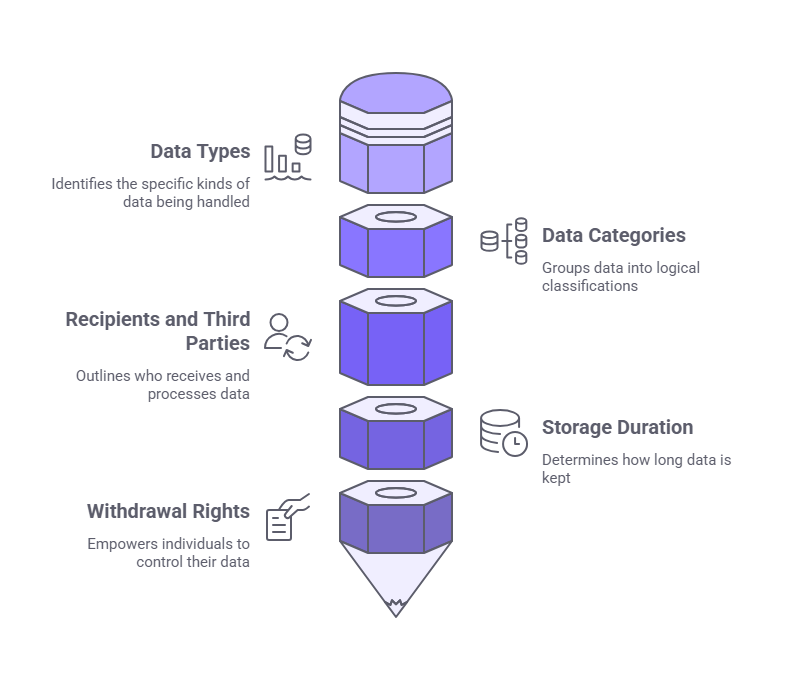
- Check types covered
- Data categories collected
- Recipients and third parties
- Storage duration
- Withdrawal rights and procedures
Bundled consent within employment applications creates enforceability risks in jurisdictions requiring unbundled, granular authorization.
Permissible Check Types by Region
What employers may legally verify varies significantly across countries. International background check laws establish explicit prohibitions, qualified permissions, and check-type-specific regulations that determine screening scope.
Criminal Record Checks
The United Kingdom permits DBS checks for regulated activities and positions involving vulnerable populations, with Standard checks limited to unspent convictions and Enhanced checks including police intelligence. Criminal record data constitutes special category data under UK GDPR Article 9, requiring both an Article 6 lawful basis and an Article 9 condition (typically processing necessary for employment law compliance, substantial public interest, or explicit consent with appropriate safeguards).
| Country | Permissibility | Key Restrictions |
| Germany | Führungszeugnis permitted | Prohibits general criminal inquiries unrelated to job requirements |
| France | Bulletin No. 3 checks | Limited to positions involving security, minors, or public trust |
| Canada | Vulnerable sector checks allowed | Prohibits blanket criminal screening without position-specific justification |
| Australia | State-dependent spent conviction schemes | Disclosure permitted only when directly relevant to inherent job requirements |
| Japan | Generally prohibited | Limited exceptions for financial services roles |
Australia's spent conviction schemes vary significantly by state, with Queensland, Tasmania, Victoria, New South Wales, and other jurisdictions maintaining distinct frameworks. Some jurisdictions allow disclosure of prior convictions only when directly relevant to inherent job requirements, while others apply different relevance tests or waiting periods. Employers must verify requirements in each specific state where candidates are located or positions are based.
Credit and Financial Checks
GDPR's principle of data minimization restricts credit checks to positions involving financial responsibility or fiduciary duties. Several EU member states prohibit credit checks for general employment purposes, limiting them to roles with budget authority or financial oversight.
The United Kingdom's ICO guidance permits credit checks only when financial probity is an inherent job requirement. South Africa's National Credit Act restricts employment-related credit checks to positions involving cash handling or financial management. Mexico generally prohibits employment-based credit screening absent specific legal authorization.
Education and Credential Verification
Most jurisdictions permit education verification but regulate how verification occurs:
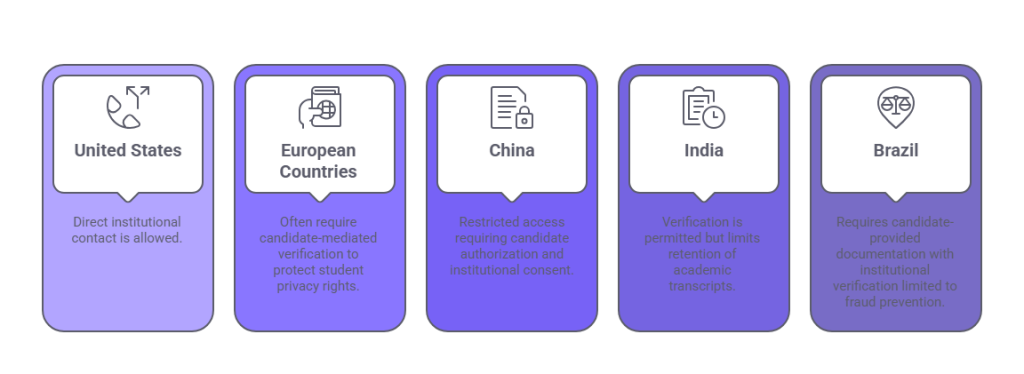
- United States: Direct institutional contact allowed
- European countries: Often require candidate-mediated verification to protect student privacy rights
- China: Restricted access requiring candidate authorization and institutional consent
- India: Verification permitted but limits retention of academic transcripts
- Brazil: Requires candidate-provided documentation with institutional verification limited to fraud prevention
Employment History
Reference checks face varying restrictions. Germany's Federal Labor Court limits former employer disclosures to factual employment dates and positions, prohibiting subjective performance assessments without consent. France permits employment verification but restricts opinion-based references.
The Netherlands allows employment confirmation but regulates what former employers may disclose regarding termination circumstances. Singapore permits employment verification but prohibits coercive reference requirements that force candidates to provide references they cannot obtain.
Social Media and Digital Footprint
GDPR requires social media screening to satisfy lawful basis, necessity, and data minimization requirements. Processing publicly available social media information requires demonstration that data is directly relevant to professional qualifications or inherent job requirements and that processing satisfies a lawful basis under Article 6. Systematic social media screening without position-specific justification creates compliance risk even when information is publicly accessible.
Germany's data protection authorities have issued guidance prohibiting systematic social media screening absent specific justification. California's labor code prohibits requiring social media passwords or private account access. Illinois restricts social media screening to publicly available information. China's Personal Information Protection Law limits employment-related social media checks to information directly related to job duties.
Data Handling and Retention Requirements
Where and how long background check information may be stored varies by jurisdiction. Data localization laws and retention limitations create operational constraints for employers and screening vendors.
Storage Location Mandates
GDPR does not mandate EU storage but restricts transfers to third countries without adequacy decisions or appropriate safeguards. China's Personal Information Protection Law requires critical information infrastructure operators to store personal data within China.
Key localization requirements:
- Russia: Federal Law 242-FZ mandates initial recording and storage of Russian citizens' personal data on Russian territory
- Vietnam: Requires domestic storage of personal data, with limited exceptions
- Indonesia: Government Regulation 71 establishes data localization for electronic system operators
- India: Draft data protection framework proposes localization for sensitive personal data
Employers using screening vendors that process data in offshore locations must verify compliance with applicable localization requirements. Vendor representations of "global compliance" often lack jurisdiction-specific verification.
Retention Timeline Requirements
GDPR's storage limitation principle requires retention no longer than necessary for processing purposes. Many EU data protection authorities interpret this as requiring deletion after hiring decisions conclude, with limited exceptions for discrimination claim defense.
| Jurisdiction | Retention Guidance | Typical Permitted Duration |
| United Kingdom | Discrimination defense exception | Six months post-hire |
| Germany | Deletion when hiring process ends | Immediate for unsuccessful candidates |
| France | Limited retention for future roles | Only with explicit consent |
| Singapore | Reasonable duration required | No specific mandate, business justification needed |
| Australia | Privacy Principles standard | Destruction or de-identification when no longer needed |
| Canada | Privacy commissioner guidance | One year absent specific legal requirements |
Subject Access and Erasure Rights
GDPR grants data subjects the right to access background check information and request erasure when processing lacks legal justification. Employers must establish processes to respond to access requests within one month and evaluate erasure requests based on applicable exemptions.
The UK GDPR maintains these rights post-Brexit with similar timelines and exemption structures. Brazil's LGPD provides comparable access and deletion rights. California's CPRA grants access and deletion rights for employment data with specific exemptions.
International background check laws in South Korea require employers to provide access to collected personal information and correct inaccuracies. Japan's APPI establishes disclosure and correction rights for retained personal data. These obligations require systems to locate, compile, and produce background check information on request.
Cross-Border Data Transfer Mechanisms
When background checks involve processing data outside the country where it was collected, international background check laws require specific transfer mechanisms to ensure adequate protection.
EU Adequacy Decisions
The European Commission issues adequacy decisions recognizing certain countries as providing essentially equivalent data protection, permitting free data transfer. Countries with current adequacy decisions include Canada (commercial organizations under PIPEDA), Japan, South Korea, Switzerland, and the United Kingdom, among others. Adequacy status can change through revocation, suspension, or new grants, and employers should verify current adequacy decisions before relying on them for transfer justification.
Transfer to non-adequate countries requires alternative mechanisms. Most background screening vendors processing EU data in the United States, India, or the Philippines must implement Standard Contractual Clauses or Binding Corporate Rules absent other legal bases.
Standard Contractual Clauses
Standard Contractual Clauses are European Commission-approved contract templates establishing data protection obligations for transferring parties. The 2021 SCCs replaced prior versions and required controllers and processors to conduct Transfer Impact Assessments (TIAs) evaluating whether destination country laws or practices undermine transfer safeguards. Regulatory guidance on TIA requirements continues to evolve, and employers should verify current supervisory authority expectations when implementing cross-border screening arrangements.
Employers transferring background check data to screening vendors in third countries need:
- Executed SCCs compliant with 2021 templates
- Documented transfer impact assessments
- Verification that destination country laws permit adequate protection
Generic vendor privacy policies do not constitute valid SCCs, and pre-2021 clause versions require updating.
Binding Corporate Rules
Multinational organizations may establish Binding Corporate Rules, internal codes of conduct approved by EU data protection authorities that permit intra-group data transfers. BCRs require significant documentation, approval processes, and ongoing compliance obligations.
International background check laws under GDPR recognize BCRs as valid transfer mechanisms, but few screening vendors have obtained BCR approval. Employers relying on vendor BCRs should verify approval status with relevant supervisory authorities.
Destination Country Assessment
Transfer mechanisms require assessing whether destination country laws and practices provide adequate protection. EU data protection authorities require documented assessments covering:
- Government access laws
- Surveillance frameworks
- Due process protections
- Rule of law standards
Screening vendors processing data in countries with broad government access authority or weak rule-of-law protections may create untenable transfer risks. Employers bear responsibility for transfer legality despite vendor contractual representations.
Derogations for Specific Situations
GDPR permits transfers based on specific derogations, including explicit consent, contract necessity, and important public interest. However, these derogations apply narrowly and cannot serve as routine transfer mechanisms for ongoing background check operations.
Enforcement Landscape and Penalty Structures
Regulatory oversight of international background check laws varies in intensity, resources, and enforcement philosophy across jurisdictions. Understanding enforcement probability helps calibrate compliance investment.
European Data Protection Authorities
EU member state data protection authorities actively enforce GDPR with significant penalty authority. Fines may reach 20 million euros or four percent of global annual turnover, whichever is higher.
Common enforcement priorities:
- Lawful basis deficiencies
- Consent failures
- Inadequate cross-border transfer safeguards
- Excessive data retention
- Insufficient security measures
The French CNIL, German data protection authorities, and Irish DPC have issued employment-related enforcement actions addressing background check practices. These actions often result from employee complaints rather than proactive audits, emphasizing the importance of individual rights awareness.
UK Information Commissioner's Office
The ICO maintains GDPR-equivalent enforcement authority post-Brexit. Background check enforcement focuses on necessity, proportionality, and retention compliance. The ICO has issued guidance on employment practices and conducts investigations following data breach notifications and complaints.
Asia-Pacific Regulators
| Regulator | Jurisdiction | Penalty Authority | Enforcement Focus |
| Personal Data Protection Commission | Singapore | Up to 10% of annual turnover (for qualifying organizations) | Consent deficiencies, breach notification |
| Personal Information Protection Commission | South Korea | Administrative fines, proactive audits | Cross-border transfers, consent documentation |
| Personal Information Protection Commission | Japan | Administrative guidance and fines | Transfer compliance, security safeguards |
Latin American Enforcement
Brazil's ANPD became operational in 2021 and is establishing enforcement precedents under LGPD. Penalty authority permits fines up to fifty million reais per infringement or two percent of revenue (whichever is higher), though actual penalties depend on violation severity, harm caused, and mitigating factors under ANPD enforcement discretion. Early enforcement addresses consent, legal basis documentation, and subject rights responses.
Mexico's INAI enforces privacy obligations through administrative sanctions and corrective orders. Argentina's data protection authority maintains active enforcement, particularly regarding cross-border transfers. Chile's proposed data protection framework includes significant penalty structures.
Private Rights of Action
GDPR grants individuals the right to lodge complaints with supervisory authorities and pursue judicial remedies for violations. This creates enforcement risk beyond regulatory action. Employees and candidates may initiate complaints regarding background check practices, triggering investigations.
Some jurisdictions provide statutory damages or penalty provisions in employment privacy statutes, creating settlement pressure regardless of actual harm. International background check laws in Illinois include biometric privacy penalties of one thousand to five thousand dollars per violation, generating significant class action activity.
Timeline and Process Implications
Compliant background checks often require longer timelines than non-compliant approaches. International background check laws establish notification periods, waiting requirements, and dispute resolution steps that affect hiring schedules.
Candidate Notification Requirements
Some jurisdictions require advance notification before initiating background checks:
- Quebec: Act Respecting the Protection of Personal Information requires employers to inform candidates about background checks before collection
- California: Requires disclosure of consumer report use before taking adverse action
- EU jurisdictions: GDPR transparency obligations mandate information about processing purposes, legal bases, and data recipients
Notification requirements affect offer letter timing and hiring process sequencing. Employers may need to notify candidates of screening intent at application, delay check initiation until post-offer, or provide multi-stage notifications as different check types proceed.
Waiting Periods
Ban-the-box laws in various jurisdictions prohibit criminal background inquiries until specified hiring stages, which vary by location. Some jurisdictions restrict inquiries until after conditional offer, others until post-interview, and timing requirements differ at state, county, and municipal levels. Many ban-the-box laws also require individualized assessments considering offense nature, time elapsed, and job relevance before adverse action. Employers must verify specific requirements for each hiring location.
| Requirement Type | Typical Duration | Operational Impact |
| Ban-the-box compliance | Varies by jurisdiction (application to conditional offer) | Delayed criminal screening initiation |
| Pre-adverse action notice (FCRA) | Minimum 5-7 days for candidate response | Extended decision timelines |
| Dispute investigation period | 2-4 weeks depending on complexity | Potential offer delay or interim status |
International background check laws in jurisdictions with statutory waiting periods for adverse action extend hiring timelines. For example, FCRA requires pre-adverse action notice and reasonable time for candidates to dispute report accuracy before final adverse action, with common industry practice allowing five to seven days, though no specific minimum period is statutorily mandated and employers should permit sufficient time for meaningful dispute.
Dispute Resolution Processes
When candidates dispute background check accuracy, employers must establish investigation and correction processes. FCRA requires reinvestigation of disputed information. GDPR requires accuracy verification and correction of inaccurate data.
Dispute investigation can extend timelines by two to four weeks depending on dispute complexity and information source responsiveness. Employers should communicate potential delays to hiring managers and establish interim employment status protocols for candidates in dispute resolution.
Multi-Jurisdiction Coordination
Candidates hired for roles spanning multiple countries may require jurisdiction-specific checks with varying timelines. A regional director role covering EU and APAC markets might need DBS checks (UK), Führungszeugnis (Germany), and Singapore police clearance, each with different processing times.
Coordinating parallel check processes while maintaining jurisdiction-specific compliance requires workflow systems that track:
- Check status by jurisdiction
- Legal basis documentation
- Consent records
- Timeline milestones
- Regulatory deadline compliance
Common Misconceptions and Gray Areas
International background check laws are often misunderstood or oversimplified, leading to either excessive caution or inappropriate practices.
GDPR Does Not Prohibit Background Checks
A persistent misconception holds that GDPR prohibits or severely restricts employment background checks. GDPR regulates how checks occur but does not ban them. Lawful basis, necessity, proportionality, and data minimization requirements constrain scope but permit checks relevant to employment decisions.
Employers may conduct background checks under:
- Legal obligation: For regulated positions with statutory screening requirements
- Contract necessity: When screening is essential to the employment relationship
- Legitimate interest: When employer interests outweigh candidate rights and freedoms
The lawful basis determines processing constraints, but screening remains permissible.
Consent Alone Is Insufficient
Obtaining candidate consent does not automatically legitimize background checks under international background check laws. GDPR questions whether employment context consent is freely given due to power imbalances. Relying on consent as the sole legal basis creates revocation risks and enforceability questions.
Better practice establishes legitimate interest or contract necessity as the primary legal basis, using consent only for processing beyond those justifications. This approach provides stable legal footing and reduces dependency on revocable authorization.
Vendor Liability Transfer Myths
Most international background check laws impose obligations on data controllers that cannot be delegated. Employers making hiring decisions typically act as controllers for background check purposes. Screening vendors may act as processors when following employer instructions, or as independent controllers when they determine what data to collect and verification methods. Controller vs. processor classification affects liability, contractual requirements, and obligations, requiring case-by-case analysis based on actual decision-making authority.
Employer controller responsibilities that cannot be delegated:
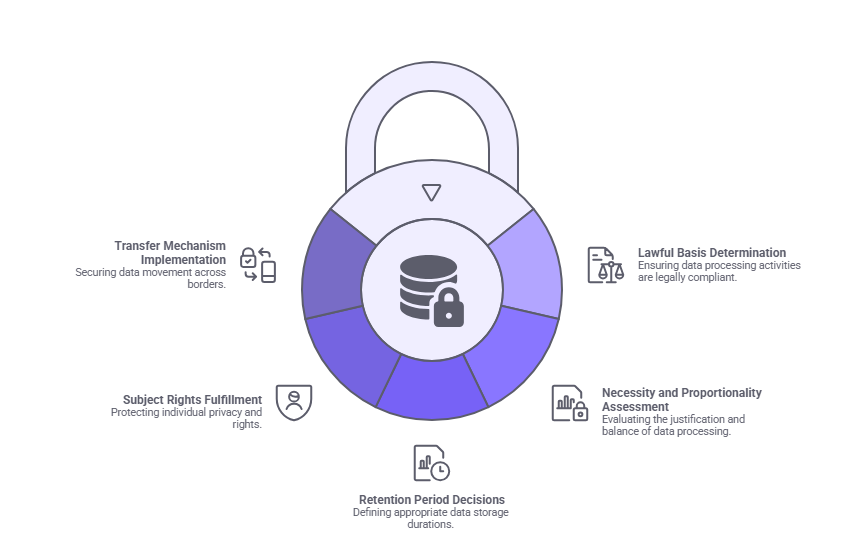
- Lawful basis determination
- Necessity and proportionality assessment
- Retention period decisions
- Subject rights fulfillment
- Transfer mechanism implementation
While vendors bear processor obligations for security and processing restrictions, employers remain responsible for controller duties. Vendor contracts should allocate specific obligations but cannot eliminate employer controller liability.
"Standard" Global Background Checks
No genuinely standard global background check exists due to jurisdictional variation in permissible check types, processes, and data handling requirements. Vendors offering "global screening packages" typically provide jurisdiction-specific workflows disguised as uniform products.
Employers should evaluate what checks vendors actually conduct in each jurisdiction, what legal bases support those checks, and how vendor processes comply with local requirements rather than accepting global standardization claims.
Safe Harbor in Vendor Representations
Vendor representations of compliance, certification, or adherence to international background check laws do not constitute verified legal analysis. Employers bear independent responsibility for confirming vendor compliance with applicable requirements.
Verification requires reviewing:
- Vendor data processing agreements
- Transfer mechanisms and supporting documentation
- Sub-processor locations and arrangements
- Security documentation and certifications
- Jurisdiction-specific process descriptions
Generic compliance warranties in vendor contracts provide limited protection during regulatory investigations.
Operational Decision Framework
Translating international background check laws into operational hiring processes requires evaluating in-house vs. vendor approaches, vendor compliance verification, and documentation systems.
In-House vs. Vendor Screening
In-house screening provides direct control over data handling, processing locations, and retention but requires legal expertise in each jurisdiction where checks occur. Organizations hiring in multiple countries face significant complexity developing compliant in-house protocols.
Vendor screening delegates operational execution but requires careful vendor selection and ongoing oversight. Employers remain data controllers with non-delegable compliance obligations. Vendor selection should evaluate jurisdiction-specific capability, not just global coverage claims.
Hybrid approaches conducting some check types in-house while outsourcing others may optimize cost and control but increase coordination complexity. Organizations should document which entity performs each processing activity and how responsibilities divide.
Vendor Compliance Evaluation
Vendor evaluation should address specific compliance capabilities rather than accepting general representations.
| Evaluation Area | Required Documentation | Verification Method |
| Lawful basis | Jurisdiction-specific legal analysis | Review processing documentation for each country |
| Data transfers | Executed SCCs, BCRs, or adequacy reliance | Request copies of transfer mechanisms |
| Storage locations | Data center specifications | Verify against localization requirements |
| Retention protocols | Deletion schedules by jurisdiction | Compare against local retention limits |
| Subject rights | Request fulfillment procedures | Test with sample requests |
Vendors should provide jurisdiction-specific process documentation showing how they comply with international background check laws in each country where they operate. Generic global privacy policies are insufficient for compliance verification.
Documentation Requirements
Regulatory audits and employee complaints require documented justification for background check practices.
Essential documentation categories:
- Lawful basis selection and analysis
- Necessity and proportionality assessments
- Data minimization efforts
- Retention period justifications
- Transfer mechanism implementation records
Organizations should maintain records of processing activities as required by GDPR and similar frameworks, covering background check purposes, data categories, recipients, transfer details, and security measures. This documentation supports supervisory authority inquiries and demonstrates compliance efforts.
Audit Defense Preparation
Enforcement investigations often begin with document requests for policies, consent forms, vendor contracts, data processing agreements, and transfer impact assessments. Organizations that cannot produce requested documentation face adverse credibility inferences.
Proactive audit preparation includes maintaining:
- Current privacy notices specific to background checks
- Documented lawful basis determinations
- Executed data processing agreements with vendors
- Transfer mechanism records and impact assessments
- Subject rights response procedures and logs
- Training documentation for HR personnel
These materials demonstrate systematic compliance rather than reactive justification.
Conclusion
International background check laws require jurisdiction-specific compliance approaches that address consent timing, permissible check types, data handling obligations, and transfer mechanisms. Organizations hiring across borders should develop operational workflows that incorporate legal requirements into hiring processes, evaluate vendor capabilities against specific jurisdictional standards, and maintain documentation supporting compliance determinations.
Frequently Asked Questions
What is the legal basis for conducting background checks under GDPR?
GDPR permits background checks based on legal obligation for regulated positions, contract necessity when screening is essential to employment, or legitimate interest when employer needs outweigh candidate rights. Consent is generally considered insufficient as the sole basis due to employment power imbalances. The appropriate legal basis depends on position requirements, check types, and jurisdiction-specific factors requiring individual assessment.
Can employers conduct criminal background checks in all countries?
No. International background check laws vary significantly regarding criminal record access. Some countries permit employer-initiated checks only for specific sectors or vulnerable populations, while others prohibit general criminal screening. Spent conviction laws in many jurisdictions restrict consideration of older or minor offenses. Employers must verify permissibility in each jurisdiction rather than applying uniform global practices.
What are data localization requirements for background checks?
Data localization laws in China, Russia, Vietnam, and other countries require personal data storage within national borders. EU GDPR does not mandate EU storage but restricts third-country transfers. Employers using screening vendors that process data offshore must verify compliance with applicable localization requirements and implement valid transfer mechanisms where cross-border processing occurs.
How long can employers retain background check information?
Retention periods vary by jurisdiction. GDPR requires retention no longer than necessary, generally interpreted as deletion after hiring decisions conclude absent specific justification. Some jurisdictions permit limited retention for discrimination defense, typically six months to one year. Employers need jurisdiction-specific retention schedules aligned with legal requirements rather than uniform global policies.
Are Standard Contractual Clauses required for all international background checks?
Standard Contractual Clauses are required when transferring personal data from the EU to countries without adequacy decisions, unless alternative mechanisms like Binding Corporate Rules apply. Not all international background checks involve cross-border transfers requiring SCCs. When screening occurs entirely within the candidate's country using local providers, transfer mechanisms may be unnecessary. Transfer requirements depend on data flow architecture.
What happens if a candidate withdraws consent during a background check?
Withdrawal effects depend on the legal basis for processing. When consent is the legal basis, employers must cease processing upon withdrawal, though prior processing remains lawful. When checks rely on legal obligation or legitimate interest, consent withdrawal does not require cessation if the alternative legal basis remains valid. Employers should establish legal bases that do not depend solely on revocable consent.
Do ban-the-box laws apply to international positions?
Ban-the-box laws typically apply based on work location rather than employer location. A U.S. employer hiring for a California position must comply with California ban-the-box requirements regardless of corporate headquarters location. International background check laws applicable to the position location govern timing and permissibility, requiring jurisdiction-specific compliance for each hiring location.
How do employers verify vendor compliance with international background check laws?
Vendor compliance verification requires reviewing jurisdiction-specific process documentation, executed data processing agreements, transfer mechanism records including impact assessments, storage location specifications, and retention protocols. Employers should request documentation demonstrating how vendors comply with requirements in each jurisdiction rather than accepting general compliance representations. Regular audits and oversight maintain ongoing verification.
Additional Resources
- General Data Protection Regulation (GDPR) Official Text
https://gdpr-info.eu/ - UK Information Commissioner's Office: Employment Practices and Data Protection
https://ico.org.uk/for-organisations/guide-to-data-protection/guide-to-the-general-data-protection-regulation-gdpr/lawful-basis-for-processing/employment/ - European Commission: Adequacy Decisions
https://ec.europa.eu/info/law/law-topic/data-protection/international-dimension-data-protection/adequacy-decisions_en - Personal Data Protection Commission Singapore: Advisory Guidelines for Selected Topics
https://www.pdpc.gov.sg/help-and-resources/2017/11/advisory-guidelines-for-selected-topics - Federal Trade Commission: Fair Credit Reporting Act
https://www.ftc.gov/enforcement/statutes/fair-credit-reporting-act - CNIL (France): Recruitment and Management of Personnel
https://www.cnil.fr/en/recruitment-and-management-personnel

ABOUT THE CREATOR
Charm Paz, CHRP
Recruiter & Editor
Charm Paz is an HR and compliance professional at GCheck, working at the intersection of background screening, fair hiring, and regulatory compliance. She holds both FCRA Core and FCRA Advanced certifications through the Professional Background Screening Association (PBSA) and supports organizations in navigating complex employment regulations with clarity and confidence.
With a background in Industrial and Organizational Psychology and hands-on experience translating policy into practice, Charm focuses on building ethical, compliant, and human-centered hiring systems that strengthen decision-making and support long-term organizational health.