

Child abuse clearance requirements have evolved into a complex, multi-jurisdictional compliance challenge for organizations managing distributed workforces, remote employees, and multi-state volunteers. Understanding how to get child abuse clearance now requires navigating state-specific registry checks, fingerprint protocols, and documentation standards that vary significantly across jurisdictions while maintaining audit-ready systems that satisfy regulators, insurers, and accreditation bodies.
Key Takeaways
- Child abuse clearances are separate from criminal background checks and query state-maintained registries of substantiated abuse and neglect findings.
- Requirements vary significantly by state, with some mandating clearances only for specific roles while others require them for any position involving minor contact.
- Multi-state operations must identify which jurisdictions require clearances based on work location, not just where the organization is headquartered.
- Clearance processing times range from 48 hours to several weeks depending on method (online registry checks versus fingerprint-based systems) and state infrastructure.
- Renewal cycles differ by state, with some requiring annual updates and others allowing clearances to remain valid for multiple years.
- Volunteers and contractors often face the same clearance requirements as employees, creating compliance obligations that extend beyond traditional payroll populations.
- Documentation retention practices must account for both employment records requirements and child protection audit trails that may extend beyond worker tenure.
- Organizations operating in multiple states need systematic tracking to ensure each worker holds valid clearances for all applicable jurisdictions throughout their employment or service period.
Understanding Child Abuse Clearance in Workforce Screening Systems
Child abuse clearances function as a specialized component within comprehensive workforce screening frameworks, querying databases that traditional criminal background checks may not access. These clearances check state-maintained registries that document substantiated findings from child protective services investigations, creating a screening layer distinct from arrest records, conviction histories, or sex offender registries.
The distinction matters because criminal background checks typically reveal only charges and convictions processed through law enforcement and court systems. Child protective services investigations follow separate administrative processes, and substantiated findings may appear only in child abuse registries even when no criminal charges resulted. The definition and evidentiary standard for substantiated findings vary by state. Organizations relying solely on criminal background checks may miss disqualifying information available only through child abuse clearance channels.
State legislatures established mandatory clearance requirements following high-profile cases where individuals with child welfare investigation histories gained employment in youth-serving settings through screening gaps. By requiring direct registry checks, lawmakers created a mechanism to surface information that might otherwise remain invisible to employers conducting standard criminal background checks.
State-Specific Requirements and Variations
Child abuse clearance mandates exist in most states but take different forms. Some states require clearances only for specific licensed professions like teachers or childcare workers. Other states mandate clearances for any position involving regular contact with minors, regardless of licensing status. A few states maintain voluntary registry check systems that employers may access but are not required to use.
Identifying Applicable Jurisdictions
Determining which state clearances an organization needs requires analyzing several factors:
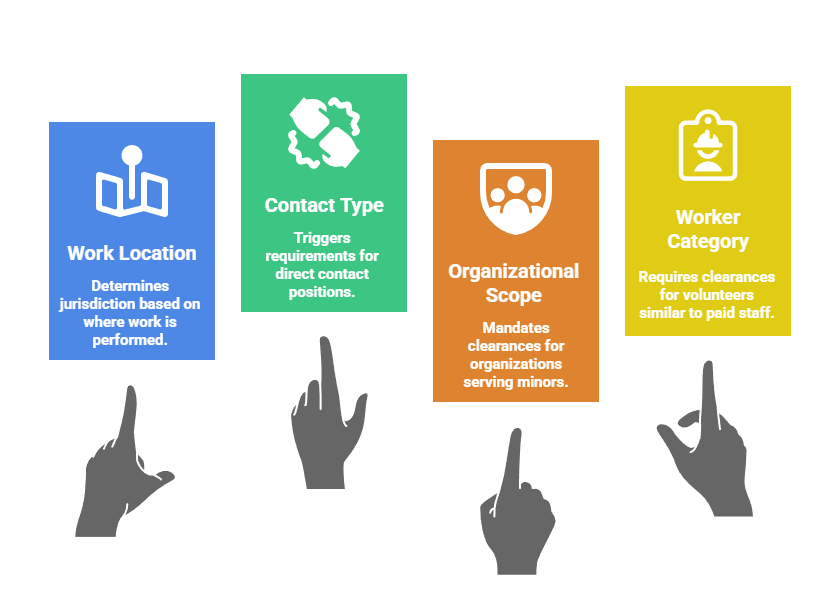
- Work location: The physical location where work occurs typically determines jurisdiction, not where the organization is incorporated or headquartered.
- Contact type: Direct contact positions generally trigger clearance requirements in states where that contact occurs.
- Organizational scope: Some states mandate clearances for all employees of organizations serving minors, regardless of individual role.
- Worker category: Volunteer positions often carry the same clearance requirements as paid positions.
An employee working remotely from Pennsylvania for a California-based nonprofit serving Texas children may need clearances from multiple states depending on the nature of their role and which states' laws apply to their activities. When jurisdictional questions arise, organizations should consult legal counsel to determine applicable requirements. Administrative staff working remotely with no direct child contact may not require clearances in some states while others mandate them for any employee of organizations serving minors.
Processing Methods and Infrastructure
States use varying systems to process child abuse clearances. The table below illustrates common processing approaches:
| Processing Method | Typical Timeline | Identity Verification | Common Use Cases |
| Online registry check | 48 hours to 5 days | Name, DOB, SSN | States with digital infrastructure |
| Fingerprint-based | 2 to 6 weeks | Biometric verification | High-security positions, licensed professionals |
| Hybrid system | 1 to 3 weeks | Initial fingerprint, subsequent online | Renewals in states with established clearance holders |
| Manual review | 4 to 8 weeks | Case-by-case verification | Complex cases, name matches requiring resolution |
Some states offer online registry checks that provide near-immediate results. Applicants complete a web form, pay a processing fee, and receive clearance documentation within hours or days. Other states require fingerprint-based clearances processed through law enforcement channels, which typically take longer but provide higher identity verification confidence.
Validity Periods and Renewal Requirements
Clearance validity periods typically range from one year to five years depending on state law, though some jurisdictions use alternative timeframes or event-based expiration triggers. Some states require annual renewals regardless of whether an individual remains in the same position. Other states issue clearances valid for multiple years but may require new clearances if someone changes employers, even within the same state.
Organizations should track these varying cycles to ensure workforce compliance. A teacher holding clearances from three states may face renewal deadlines that fall in different months across different years. Missing a renewal deadline can result in immediate ineligibility to work until a new clearance is obtained, creating operational disruption and potential regulatory violations.
How to Get Child Abuse Clearance: Process Framework
Obtaining child abuse clearances involves distinct steps that vary by state but generally follow a consistent pattern. Understanding this framework helps organizations develop standardized procedures that can accommodate state-specific variations while maintaining compliance across all jurisdictions where they operate.
Initial Requirement Identification
The first step requires determining which clearances a specific position requires. Organizations should review state laws where work will be performed, examining both general child protection statutes and any profession-specific licensing requirements. States often publish guidance documents or maintain FAQ resources that explain which positions trigger clearance mandates. Organizations should also verify whether local fair chance hiring laws affect the timing of when clearances may be requested, as some jurisdictions regulate the sequence of background screening steps even for positions working with minors.
Professional licensing boards may impose clearance requirements independent of general state law. Teachers might need clearances to satisfy both education department licensing rules and general child protection statutes.
Application Submission
Once requirements are identified, applicants typically must complete state-specific application forms. These forms generally request personal identifying information including:
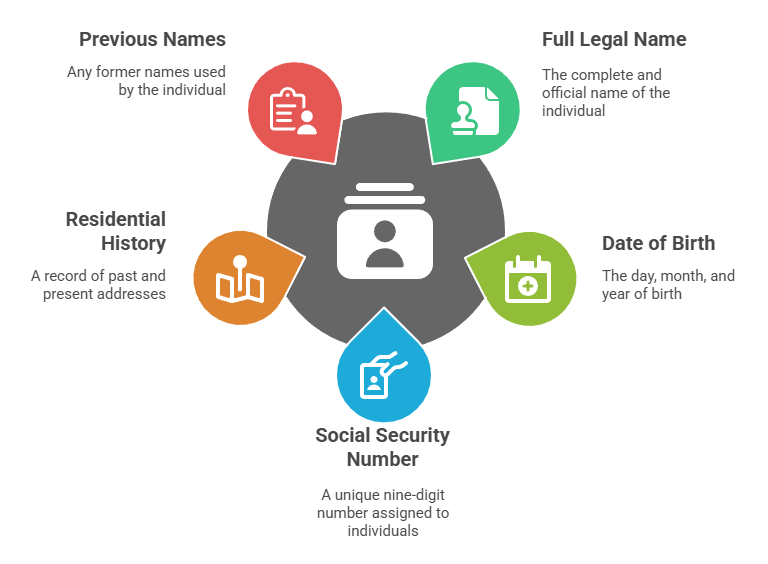
- Full legal name
- Date of birth
- Social Security number
- Residential history
- Previous names used
Application submission methods vary. States with online systems allow electronic submission through web portals. Others require paper applications mailed or delivered in person to designated agencies. Some states allow employers to submit applications on behalf of employees or volunteers, while others require individuals to initiate their own applications.
Identity Verification and Fingerprinting
States using fingerprint-based systems require applicants to visit approved collection sites. These may include law enforcement agencies, school district offices, or private fingerprinting services contracted by the state. Applicants typically are required to present government-issued photo identification and may need to provide the application confirmation or reference number.
Fingerprinting technology has evolved, with many states now using electronic fingerprint scanners rather than ink-based methods. Electronic systems generally provide faster processing and reduce rejections due to poor print quality.
Registry Review and Processing
After receiving applications and identity verification, state agencies query their child abuse and neglect registries, which contain administrative findings from child protective investigations rather than criminal adjudications. This process searches for any records matching the applicant's identifying information. Registry systems vary in sophistication, with some using advanced matching algorithms while others rely on simpler name and date-of-birth matching.
Processing timeframes depend on multiple factors including application volume, staffing levels at reviewing agencies, and whether any potential matches require manual review. Applications with no registry matches typically process faster than those requiring human review.
Clearance Issuance or Denial
Applicants with no disqualifying registry findings receive clearance documentation. This may take the form of a letter, certificate, or electronic notification depending on the state. Clearance documents typically include the applicant's name, a clearance number or identifier, the issuance date, and the expiration date if applicable.
Applicants with registry matches receive notification that includes information about the finding and, in most states, an opportunity to challenge the accuracy of the record. Challenge processes allow individuals to dispute mistaken identity situations or argue that the underlying finding was incorrect, though the scope, timeline, and standards for these proceedings vary significantly by state.
Documentation and Tracking
Organizations receiving clearance documentation should implement systematic tracking to monitor validity periods and upcoming renewals. Many organizations maintain centralized databases or use human resources information systems with clearance tracking modules.
Tracking systems should flag approaching expiration dates with sufficient lead time to complete renewals before clearances lapse. Documentation retention requirements vary but generally align with employment records retention schedules. Information obtained through child abuse clearance processes is subject to confidentiality requirements and use limitations. Organizations should limit access to clearance information to personnel with legitimate need to know and should not use or disclose such information except as authorized by law.
Special Considerations for Different Worker Categories

Child abuse clearance requirements often apply differently across worker categories, creating compliance obligations that extend beyond traditional employee populations. The following table summarizes typical requirements by worker type:
| Worker Category | Clearance Requirements | Timing Considerations | Cost Responsibility |
| Direct care employees | Required in all jurisdictions | Must be obtained before work begins | Varies by employer policy |
| Administrative staff | Varies by state law | May allow conditional employment | Typically employee responsibility |
| Contractors | Same as employees in most states | Required before facility access | Generally contractor responsibility |
| Volunteers | Same as paid staff | Must be completed before service begins | Often absorbed by organization |
Employees in Direct Care Roles
Employees with regular, direct contact with minors typically face the most stringent clearance requirements. Teachers, childcare workers, coaches, counselors, and healthcare providers working with pediatric populations generally must obtain clearances in every state where they provide services. Direct care employees may need clearances before beginning work, with no provisional or conditional employment periods allowed.
Administrative and Support Staff
Requirements for employees without direct child contact vary widely by state. Some states require clearances only for positions involving direct interaction with minors. Other states mandate clearances for all employees of organizations serving children, regardless of role. Organizations should review state-specific guidance to determine whether support positions trigger clearance requirements.
Contractors and Volunteers
Independent contractors, vendors, and service providers who work in facilities where minors are present often must meet the same clearance requirements as employees. Organizations typically address contractor clearances through contractual requirements, making the contractor responsible for obtaining and maintaining necessary clearances. When receiving contractor clearance documentation, organizations should implement the same data protection measures used for employee clearance records.
Volunteers face the same clearance requirements as paid staff in most jurisdictions. Organizations relying on volunteer workforces must implement the same clearance processes for volunteers as for employees, including tracking validity periods and managing renewals.
Processing Timelines and Documentation Systems
Understanding realistic processing timelines helps organizations plan hiring, onboarding, and operational scheduling. States with online registry check systems often process clearances within 48 to 72 hours. Fingerprint-based systems typically require two to six weeks for processing. During peak hiring seasons, processing times may extend beyond typical ranges due to application volume.
Some states offer expedited processing for additional fees. These options may reduce processing times significantly, providing faster clearance turnaround for organizations with urgent needs. However, expedited processing is not universally available, and states that offer it may restrict eligibility to specific circumstances.
Maintaining appropriate documentation of child abuse clearances is essential for regulatory compliance, licensing reviews, and potential investigations. Organizations should maintain copies of all clearance certificates or letters received from state agencies. Documentation should be stored in a manner that protects confidential information while remaining accessible to authorized personnel, in compliance with applicable data security and privacy laws governing sensitive personal information. Tracking systems should record clearance numbers, issuance dates, expiration dates, and applicable jurisdictions.
State laws and regulations may specify retention periods for child abuse clearance documentation. Even absent specific legal requirements, organizations should maintain clearance documentation for reasonable periods after worker separation. Many organizations adopt retention periods of seven to ten years after separation as a risk management practice.
Technology and Multi-State Compliance Strategies
As clearance requirements have grown more complex, organizations have increasingly adopted technological solutions and systematic processes to manage compliance obligations efficiently. Dedicated clearance tracking systems, whether standalone applications or modules within broader human resources information systems, centralize clearance data and automate compliance monitoring.
Automated alert functionality represents a key benefit of tracking systems. Organizations can configure systems to generate alerts when clearances are approaching expiration. Reporting capabilities allow organizations to quickly identify compliance gaps or upcoming obligations.
Many multi-state organizations establish centralized compliance functions responsible for understanding requirements across all operating jurisdictions and ensuring consistent implementation. Centralized teams develop expertise in each state's specific requirements and maintain relationships with state agencies that can help resolve processing issues.
Effective multi-state compliance requires documenting state-specific variations in a readily accessible format. Organizations might maintain matrices or comparison charts showing processing methods, timelines, fees, validity periods, and renewal requirements for each state. Documentation of state-specific requirements should be reviewed periodically to identify changes, as state legislatures regularly modify clearance requirements.
Common Challenges and Solutions
Organizations implementing child abuse clearance processes encounter recurring challenges. Individuals who have used multiple names throughout their lives may face complications during clearance processing. Organizations should collect complete name history during hiring processes and ensure this information is included in clearance applications.
Extended processing delays can disrupt operational planning, particularly when organizations cannot allow individuals to work until clearances are received. Organizations should build realistic timelines into hiring and onboarding processes, communicate expected delays to candidates, and maintain candidate engagement during processing periods.
Most states do not accept clearances issued by other states, requiring individuals working in multiple states to obtain separate clearances from each jurisdiction. This lack of reciprocity creates administrative burden and cost for both workers and organizations. Organizations can support workers by clearly communicating which clearances are required and building sufficient time into assignment timelines.
Remote work and distributed teams create challenges for tracking which workers need clearances from which states. Organizations need clear policies defining how work location is determined for clearance purposes and systematic methods for identifying when workers' locations or responsibilities change.
Conclusion
Child abuse clearance requirements have evolved into a complex, multi-jurisdictional compliance framework requiring systematic approaches to navigate effectively. Organizations must understand state-specific requirements, implement robust tracking systems, and maintain audit-ready documentation that demonstrates continuous compliance across all applicable jurisdictions and worker categories.
Frequently Asked Questions
What is the difference between a child abuse clearance and a criminal background check?
Child abuse clearances query state-maintained registries of substantiated abuse and neglect findings from child protective services investigations. Criminal background checks reveal arrests and convictions processed through law enforcement systems. Many abuse findings appear only in child abuse registries because investigations follow administrative processes, making clearances a distinct screening component.
Do volunteers need child abuse clearances?
Volunteers typically must meet the same clearance requirements as paid employees in most states. Laws generally do not distinguish between volunteer and employee status. Organizations using volunteers should implement the same clearance processes for volunteer populations as for employees.
How long does child abuse clearance processing take?
Processing timelines vary from 48 hours to several weeks depending on state systems. States with electronic registry systems often process clearances within days, while fingerprint-based systems typically require two to six weeks. Organizations should verify typical processing times for specific states where they operate.
Can child abuse clearances from one state be used in another state?
Most states do not accept clearances issued by other jurisdictions, requiring separate clearances from each state where an individual will work with minors. Workers operating in multiple states typically must obtain and maintain valid clearances from all applicable jurisdictions.
How often do child abuse clearances need to be renewed?
Renewal requirements vary by state, with validity periods typically ranging from one year to five years, though some jurisdictions use alternative timeframes. Some states require annual renewals, while others issue multi-year clearances. Organizations should track state-specific renewal cycles and initiate renewals with sufficient lead time.
Who pays for child abuse clearances?
State laws vary regarding whether employers or organizations must pay clearance fees. Some states require organizations to cover costs for volunteers, while others allow fees to be passed to applicants. Organizations should verify state-specific rules and establish clear policies about cost responsibility and communicate these policies during hiring.
What happens if someone is denied a child abuse clearance?
Individuals denied clearances due to registry matches typically receive information about the finding and an opportunity to challenge its accuracy. Challenge processes allow individuals to dispute mistaken identity or argue that underlying findings were incorrect. Organizations cannot employ individuals in positions requiring clearances until valid clearances are obtained.
Do clearances transfer between employers within the same state?
Transferability varies by state. Some maintain individual clearance systems where clearances remain valid across employers, while others require new clearances when individuals change employers. Workers should verify whether their state allows clearance transfers.
Additional Resources
- U.S. Department of Health and Human Services, Administration for Children and Families: Child Welfare Information Gateway
https://www.childwelfare.gov - National Conference of State Legislatures: Background Checks for Child Care and Other Child-Serving Agencies
https://www.ncsl.org - U.S. Department of Justice, Office of Justice Programs: National Criminal History Improvement Program
https://www.ojp.gov - National Center for Missing and Exploited Children: Screening Practices
https://www.missingkids.org - Child Care Aware of America: State Child Care Regulations
https://www.childcareaware.org

ABOUT THE CREATOR
GCheck Editorial Team
Meet the GCheck Editorial Team, your trusted source for insightful and up-to-date information in the world of employment background checks. Committed to delivering the latest trends, best practices, and industry insights, our team is dedicated to keeping you informed.
With a passion for ensuring accuracy, compliance, and efficiency in background screening, we are your go-to experts in the field. Stay tuned for our comprehensive articles, guides, and analysis, designed to empower businesses and individuals with the knowledge they need to make informed decisions.
At GCheck, we're here to guide you through the complexities of background checks, every step of the way.