

Food delivery driver background checks require careful navigation of federal FCRA requirements, state-specific hiring laws, and industry-standard screening protocols that protect both customers and business operations. Independent restaurants and regional delivery platforms must implement compliant screening frameworks that address vehicle safety, criminal history, and identity verification while respecting applicant rights and avoiding common legal pitfalls.
Key Takeaways
- Food delivery driver screening must comply with the Fair Credit Reporting Act (FCRA), which requires written authorization, pre-adverse action notices, and individualized assessment before disqualification based on background check findings.
- Motor vehicle record (MVR) checks are essential for delivery driver positions because they verify license validity, assess driving history, and help predict potential liability risks related to customer deliveries.
- Criminal background screening for food delivery positions should focus on offenses directly related to job responsibilities, such as theft, assault, identity fraud, and crimes involving vulnerable populations, rather than applying blanket disqualification policies.
- State and local "ban-the-box" laws in jurisdictions like California, New York, and Philadelphia restrict when and how employers can inquire about criminal history, requiring restaurants to adjust their screening timelines accordingly.
- Independent restaurants can achieve screening quality comparable to major platforms by establishing clear screening criteria, working with FCRA-compliant consumer reporting agencies, and documenting individualized hiring decisions.
- Delivery driver screening costs typically range from $25 to $75 per applicant depending on search depth, with comprehensive packages including criminal records, MVR checks, and identity verification providing the best risk mitigation value.
- Employers must provide applicants with pre-adverse action notices, copies of consumer reports, summaries of FCRA rights, and reasonable time to dispute findings before making final hiring decisions based on background check results.
- Regular policy reviews and staff training on FCRA compliance, state-specific restrictions, and fair hiring practices help restaurant operators avoid costly discrimination claims and regulatory penalties.
Understanding Food Delivery Driver Background Check Requirements
Food delivery driver screening presents unique compliance challenges that differ significantly from standard employment background checks. Restaurant operators must balance customer safety expectations, liability concerns, and legal hiring requirements while competing for qualified drivers. The screening process involves multiple legal frameworks that work together to protect both applicants and businesses.
Federal Baseline: FCRA Compliance for Consumer Reports
The Fair Credit Reporting Act establishes the minimum legal framework for any employer using third-party background screening services. When restaurants obtain background check information from consumer reporting agencies (CRAs), they must comply with specific procedural requirements that protect applicant rights.
Before requesting a consumer report, employers must provide clear written disclosure that a background check will be conducted and obtain the applicant's written authorization. This authorization must be a standalone document—not buried within employment applications. FCRA mandates a specific notice process when employers decide to take adverse action based on information in a consumer report. Employers must first provide a pre-adverse action notice that includes a copy of the consumer report, a summary of rights under FCRA, and reasonable time for the applicant to review and dispute any inaccuracies.
Industry-Specific Risk Factors in Food Delivery
Food delivery positions involve several risk categories that inform appropriate screening components:
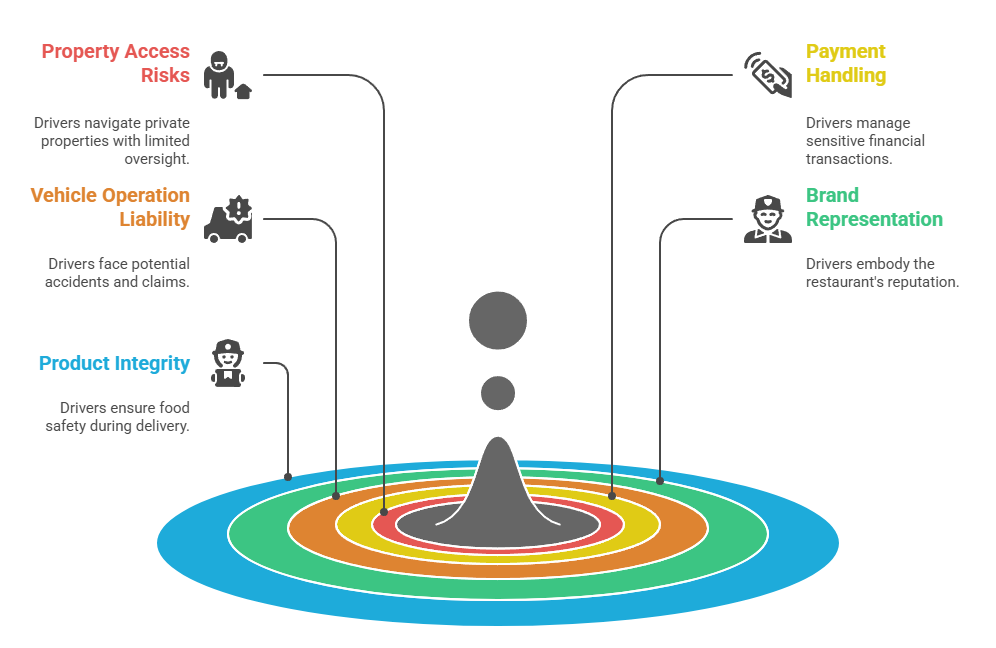
- Property Access Risks: Drivers access customer homes and private property, often during evening hours or in residential areas with limited oversight.
- Payment Handling: Direct customer interaction includes processing payments and handling sensitive financial information at point of delivery.
- Vehicle Operation Liability: Commercial use of vehicles creates potential for accidents, property damage, and injury claims.
- Brand Representation: Drivers serve as the primary customer touchpoint, representing restaurant reputation during direct interactions.
- Product Integrity: Limited food handling responsibilities still involve maintaining consumable product safety.
These factors justify screening protocols that address driving safety, criminal history related to property crimes or violence, and identity verification. However, screening must remain job-related and proportional to actual risks rather than implementing unnecessarily restrictive criteria.
Permissible Purposes Under Federal Law
FCRA restricts the purposes for which employers may obtain consumer reports to specific "permissible purposes." Employment screening qualifies as a permissible purpose when conducted in accordance with FCRA requirements, but employers cannot use background check information beyond the stated employment decision.
Restaurants cannot share driver background information with third parties, use screening data for marketing purposes, or retain information longer than necessary for legitimate business needs. Background check data must be stored securely with access limited to personnel directly involved in hiring decisions.
Motor Vehicle Record Checks for Delivery Drivers
Motor vehicle record (MVR) verification represents the most critical screening component for food delivery positions given the primary job function involves operating a vehicle for commercial purposes. MVR checks provide essential information about driving competency, license status, and patterns of behavior that predict future risk.
What MVR Checks Reveal About Driver Safety
MVR checks provide official driving history records maintained by state motor vehicle departments. These reports deliver comprehensive information about driver qualifications and historical behavior patterns.
| MVR Information Category | What It Reveals |
| License Status | Valid, suspended, revoked, expired, or restricted |
| License Class & Endorsements | Authorization for specific vehicle types and commercial operation |
| Traffic Violations | Speeding, reckless driving, failure to obey signals, improper lane changes |
| Accident History | At-fault accidents, property damage incidents, injury-causing collisions |
| Serious Offenses | DUI/DWI, driving with suspended license, vehicular crimes, hit-and-run |
| Point Accumulation | Total points under state licensing systems indicating violation severity |
A single minor traffic violation differs significantly from patterns of reckless driving, multiple at-fault accidents, or serious offenses like driving under the influence. Employers should evaluate the totality of driving history rather than focusing on isolated incidents.
State Variations in MVR Access and Reporting
States maintain their own motor vehicle records and establish different rules regarding employer access, reporting formats, and information retention periods. Some states provide instant online access to MVR information, while others require written authorization and manual processing that can take several days.
The Driver's Privacy Protection Act (DPPA) regulates the disclosure of personal information contained in state motor vehicle records. Employers have permissible use access under DPPA for employment screening purposes, but must comply with state-specific procedures. Certain states limit how far back MVR violations appear on reports or restrict reporting of specific violation types after designated time periods.
Establishing Defensible MVR Criteria
Rather than implementing automatic disqualification rules, employers should establish clear criteria that relate specific MVR findings to job requirements:
- License Validity: Current, valid license appropriate for vehicle type required for position.
- Serious Offense Lookback: DUI/DWI convictions within 5-7 years typically warrant disqualification.
- At-Fault Accidents: Multiple at-fault accidents within 3 years indicate a pattern of unsafe driving.
- Moving Violations: Pattern of speeding, reckless driving, or aggressive behavior violations.
- Point Thresholds: State point system totals exceeding defined limits correlate with higher accident risk.
The criteria should be documented, applied consistently, and reviewed periodically to ensure they remain job-related and legally defensible.
Criminal Background Screening Considerations
Criminal history screening for food delivery drivers must balance legitimate safety concerns with fair hiring practices and compliance with increasingly restrictive state and local laws. The legal landscape has shifted significantly toward limiting how employers can use criminal records in hiring decisions.
Job-Related Criminal History Assessment
The Equal Employment Opportunity Commission (EEOC) guidance emphasizes that criminal history screening should focus on offenses directly related to job responsibilities. For delivery positions, certain offense categories present clear job-related concerns:
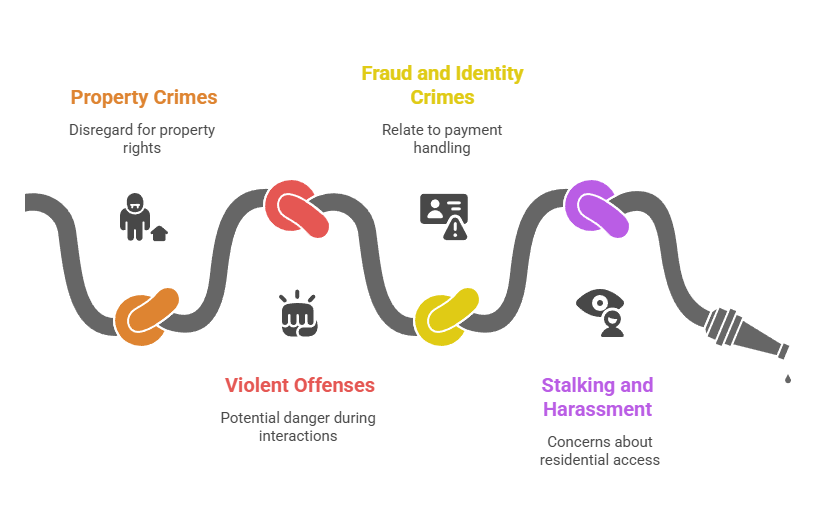
- Property Crimes: Theft, burglary, robbery, and trespassing demonstrate disregard for property rights and pose direct customer safety risks.
- Violent Offenses: Assault, battery, domestic violence, and threatening behavior indicate potential danger during customer interactions.
- Fraud and Identity Crimes: Identity theft, credit card fraud, and forgery relate directly to payment handling and customer trust.
- Stalking and Harassment: Offenses involving unwanted contact or surveillance create concerns about residential delivery access.
Employers should consider the nature and gravity of the offense, time elapsed since the conviction, and the relationship between the criminal conduct and the specific job duties. A 15-year-old minor drug possession conviction has little predictive value for current delivery driver performance. Arrest records without convictions generally should not form the basis for adverse hiring decisions.
State and Local Ban-the-Box Requirements
Numerous states and municipalities have enacted "ban-the-box" laws that restrict when employers can inquire about criminal history and how they can use that information in hiring decisions.
| Jurisdiction | Key Requirement | Timing Restriction |
| California | Fair Chance Act | No inquiries before conditional offer; individualized assessment required |
| New York | Article 23-A | Eight-factor analysis for criminal history; documented consideration required |
| Philadelphia | Fair Criminal Record Standards | No inquiries until after first interview; seven-year lookback limits |
| Seattle | Fair Chance Employment | No inquiries before conditional offer; individualized assessment with notice |
Restaurant operators hiring across multiple jurisdictions must understand and comply with the most restrictive requirements applicable to their hiring locations.
Lookback Period Limitations
The Fair Credit Reporting Act restricts reporting of most civil suits, civil judgments, and arrest records to seven years, though felony convictions can be reported indefinitely under federal law. However, state laws may impose stricter limitations.
California generally limits reporting of most criminal history to seven years from disposition date. New York restricts consideration of convictions beyond seven years except for specific serious offenses. Massachusetts prohibits consideration of sealed records and first-time misdemeanor convictions. Other states have similar provisions that employers must honor regardless of more permissive federal standards.
Identity and Eligibility Verification
Confirming driver identity and work authorization forms the foundation of any legitimate screening program. Identity verification protects both employers and customers by ensuring drivers are who they claim to be.
Social Security Number Validation
Social Security number (SSN) verification confirms that the number provided belongs to the applicant and was issued by the Social Security Administration:
- SSN Validity: Confirms the number exists in Social Security Administration databases and was legitimately issued.
- Name Matching: Verifies the applicant's name matches records associated with the number.
- Address History: SSN traces reveal current and previous addresses, helping identify location history.
- Alias Discovery: Additional names linked to the SSN may indicate legal name changes or potential identity confusion.
- Death Master File Check: Ensures the SSN has not been reported as belonging to a deceased individual.
SSN information must be handled with extreme care. Employers should collect SSNs only when necessary for background checks or tax reporting and store them securely using encryption.
Employment Eligibility Documentation
The Immigration Reform and Control Act requires employers to verify that all employees are legally authorized to work in the United States using Form I-9. Employers must examine original documents establishing identity and work authorization within three business days of hire.
While Form I-9 verification is separate from background screening, identity documents examined during the I-9 process should align with information provided in background check authorization forms. E-Verify, the federal electronic employment eligibility verification system, allows employers to compare Form I-9 information against Social Security Administration and Department of Homeland Security records.
Building Compliant Screening Programs for Independent Restaurants
Independent restaurant operators can implement screening programs comparable to major delivery platforms by establishing clear procedures, selecting appropriate service providers, and training staff on compliance requirements.
Selecting FCRA-Compliant Screening Partners
Restaurants using third-party background screening services must work with consumer reporting agencies that comply with FCRA requirements. When evaluating CRA options, restaurants should ask:
- Data Sources: Which databases, court systems, and official records does the CRA search, and how often are they updated?
- Accuracy Measures: What quality control processes ensure report accuracy, and what is the error rate?
- Turnaround Times: What are typical completion timeframes for different report types?
- Compliance Support: Does the CRA provide adverse action letter templates and FCRA training?
- Pricing Structure: Are there volume discounts or package pricing for bundled screening components?
Avoid consumer reporting agencies that promise guaranteed outcomes, offer to screen applicants without proper authorization, or suggest blanket disqualification policies.
Documenting Screening Policies and Criteria
Written background check policies establish consistent, defensible screening practices:
| Policy Component | Purpose | Key Elements |
| Position Coverage | Define which roles require screening | Delivery drivers, management with cash handling |
| Screening Components | Specify required checks | MVR, criminal history, identity verification |
| Disqualifying Criteria | Establish clear standards | Specific offense categories, lookback periods |
| Individualized Assessment | Document consideration factors | Offense relevance, time elapsed, rehabilitation evidence |
| Adverse Action Process | Detail procedural steps | Pre-adverse notice timing, waiting periods |
| Record Retention | Define storage and disposal | Retention periods, security measures |
Documentation demonstrates that adverse hiring decisions were based on clear, pre-established criteria rather than arbitrary judgments or potentially discriminatory factors.
Training Staff on Compliant Screening Practices
Restaurant managers and hiring personnel should understand FCRA requirements including authorization and adverse action procedures, state and local hiring restrictions, fair hiring principles, proper handling of sensitive information, and when to consult legal counsel.
Training should emphasize that background checks provide information for consideration—not automatic disqualification triggers. Decision-makers need guidance on weighing multiple factors, considering rehabilitation, and documenting their reasoning when background check findings influence hiring decisions.
Cost-Benefit Analysis of Comprehensive Screening

Implementing thorough background screening programs involves direct costs and administrative time, but provides significant risk mitigation value and potential competitive advantages.
Typical Screening Package Costs
Background screening costs vary based on search components and service provider:
- Basic Criminal Search (County Level): $15-25 per search
- Multi-Jurisdictional Criminal Search: $20-40 depending on coverage
- Motor Vehicle Record Check: $10-20 per report
- SSN Verification and Identity Trace: $5-15 per search
- Comprehensive Delivery Driver Package: $50-75 including criminal, MVR, and identity components
Volume pricing may reduce per-check costs for restaurants with high hiring needs. Additional costs include staff time for administering the screening process, conducting individualized assessments, and completing adverse action procedures.
Liability Reduction Value
The risk mitigation value of appropriate screening often exceeds direct program costs:
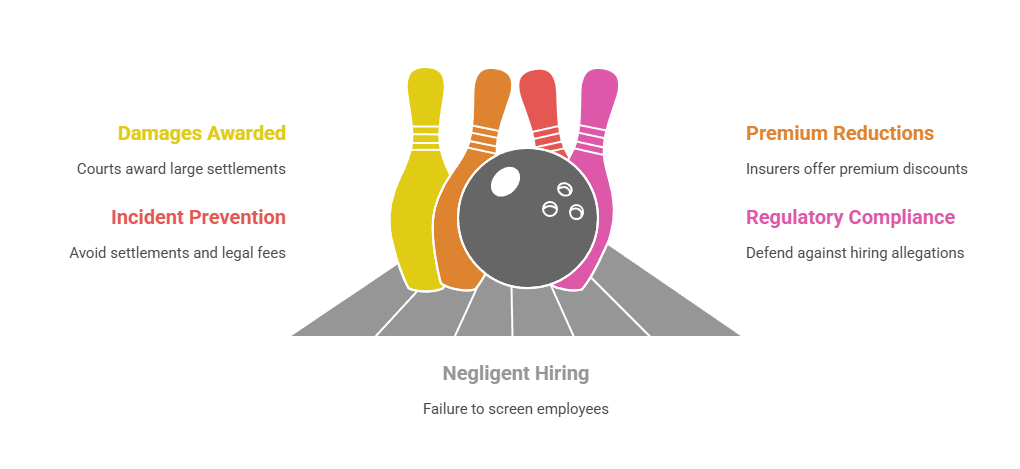
- Negligent Hiring Claims: Courts award damages ranging from $100,000 to several million dollars when employers failed to conduct reasonable screening.
- Insurance Premium Reductions: Some commercial liability insurers offer premium discounts for businesses with documented screening programs.
- Incident Prevention: Each avoided incident prevents potential settlements, legal fees, and reputation damage.
- Regulatory Compliance: Proper screening demonstrates reasonable care and helps defend against allegations of inadequate hiring practices.
Beyond litigation costs, screening helps prevent incidents that damage customer relationships, brand reputation, and operational continuity.
Competitive Advantages of Quality Screening
Restaurants that implement thorough screening programs can differentiate themselves in competitive delivery markets. Customer safety concerns make background screening a potential marketing advantage when communicated appropriately. However, promotional claims must be accurate and not overstate protections.
Quality screening also improves driver quality and retention by creating a more professional workforce and reducing problematic hires. Better hiring decisions reduce turnover costs and day-to-day management problems.
Adverse Action Procedures and Applicant Rights
When background check findings lead employers to consider not hiring applicants, specific procedures protect applicant rights and ensure fair process.
Pre-Adverse Action Notice Requirements
Before taking adverse action based on consumer report information, FCRA requires employers to provide applicants with pre-adverse action notices:
- Consumer Report Copy: Complete copy of the report that influenced the potential adverse decision.
- Summary of Rights: The Summary of Your Rights Under the Fair Credit Reporting Act document.
- Contact Information: Name, address, and phone number for the consumer reporting agency.
- CRA Limitation Statement: Notice that the CRA did not make the employment decision.
Employers must allow reasonable time—typically 5-7 business days minimum—for applicants to respond before proceeding to final adverse action. During this waiting period, some applicants will identify report errors requiring investigation.
Individualized Assessment Considerations
Rather than automatically disqualifying applicants, employers should conduct individualized assessments:
| Assessment Factor | Relevant Considerations |
| Offense Nature | Severity, violence involved, property vs. person crime |
| Time Elapsed | Years since occurrence, sentence completion |
| Rehabilitation Evidence | Treatment completion, education, stable employment |
| Offense Relevance | Direct relationship to job duties, customer interaction |
| Mitigating Circumstances | Age at offense, mental health, substance abuse treatment |
This individualized approach reduces discrimination risk because blanket policies may have disparate impact on protected groups while excluding candidates who present minimal actual risk.
Final Adverse Action Notice
If the employer decides to proceed with adverse action after the pre-adverse action waiting period, FCRA requires a final adverse action notice including decision communication, CRA identification, dispute rights, and free report rights. This notice completes the adverse action process and allows the employer to move forward with hiring alternative candidates.
Ongoing Compliance and Program Maintenance
Background screening programs require periodic review and updates to maintain compliance with evolving legal requirements.
Policy Review and Update Schedules
Employment law continues evolving through new legislation, court decisions, and regulatory guidance:
- Annual Policy Reviews: Comprehensive evaluation of all screening policies and procedures at least once per year.
- Quarterly Legal Updates: Monitor new legislation and regulatory guidance affecting background screening.
- Geographic Expansion Reviews: Assess new state and local requirements before hiring in new jurisdictions.
- Vendor Performance Reviews: Assess consumer reporting agency accuracy and turnaround times annually.
Reviews should assess whether screening criteria remain job-related, identify new laws affecting hiring practices, and analyze screening program costs and outcomes.
Record Retention and Data Security
FCRA requires employers to properly dispose of consumer report information when no longer needed:
- Electronic Records: Securely delete files using methods that prevent reconstruction.
- Paper Records: Shred, pulverize, or incinerate documents to prevent legibility.
- Access Restrictions: Limit access based on job responsibilities and legitimate need.
- Encryption Requirements: Use industry-standard encryption for storage and transmission.
Reasonable retention policies typically maintain summary hiring decision documentation while disposing of detailed background report information after defined periods—often 3-5 years.
Staying Current with Legal Developments
Restaurants can monitor background screening legal developments through industry associations, employment law newsletters, consumer reporting agency updates, and periodic consultation with employment law counsel. When significant legal changes occur, restaurants should assess how requirements affect their practices and implement necessary procedural adjustments promptly.
Frequently Asked Questions
What background checks are legally required for food delivery drivers?
No federal law specifically requires background checks for food delivery drivers working for private employers. Businesses that choose to conduct screening must comply with the Fair Credit Reporting Act when using consumer reporting agencies. Motor vehicle record checks are essential for establishing reasonable care and helping defend against negligent hiring claims.
How much do delivery driver background checks typically cost?
Delivery driver background check costs range from $25-75 per applicant depending on screening components included. Basic packages cost approximately $30-40, while comprehensive screenings adding multi-jurisdictional criminal searches and identity verification typically cost $50-75.
Can restaurants automatically reject delivery driver applicants with any criminal record?
No, blanket disqualification policies violate Fair Credit Reporting Act expectations and create significant discrimination liability. Employers must conduct individualized assessments considering the offense nature, time elapsed, evidence of rehabilitation, and relationship to job duties.
How long does the delivery driver background check process take?
Standard background check turnaround times range from 2-5 business days for most components. Employers must add 5-7 days for pre-adverse action notice response periods if needed. Total timeline averages 7-14 days when adverse action procedures are necessary.
What driving record issues disqualify delivery driver applicants?
Defensible criteria include suspended or revoked licenses, DUI/DWI offenses within 3-7 years, multiple at-fault accidents within recent periods, and patterns of reckless driving. Criteria should be documented, consistently applied, and subject to individualized assessment.
Do ban-the-box laws apply to delivery driver positions?
Yes, state and local ban-the-box laws apply to delivery driver hiring unless specific exemptions exist. These laws typically prohibit questions on initial applications and sometimes require delays until after conditional offers or first interviews.
Can restaurants conduct their own background checks without using screening companies?
While technically possible, self-conducted background checks create significant compliance risks. Consumer reporting agencies provide structured compliance processes, accurate data aggregation, and adverse action support that self-conducted searches lack.
What information must restaurants provide before conducting background checks?
FCRA requires employers to provide applicants with clear written disclosure that background checks will be conducted as standalone documents. Employers must obtain written authorization before requesting reports and provide pre-adverse and final adverse action notices if findings lead to non-hiring decisions.
How should restaurants handle applicants who dispute background check findings?
Employers should delay final hiring decisions while consumer reporting agencies investigate disputes—typically within 30 days. Proceeding with adverse action based on disputed information later proven inaccurate creates FCRA liability.
Are ongoing background checks required after hiring delivery drivers?
No federal law requires periodic re-screening of existing employees, though some state laws permit it with proper authorization. Restaurants implementing re-screening programs must comply with FCRA requirements including new authorization and adverse action procedures.
Additional Resources
- Fair Credit Reporting Act (FCRA) Full Text and Summary
https://www.ftc.gov/legal-library/browse/statutes/fair-credit-reporting-act - EEOC Guidance on Consideration of Arrest and Conviction Records
https://www.eeoc.gov/laws/guidance/enforcement-guidance-consideration-arrest-and-conviction-records-employment-decisions - Federal Trade Commission: Using Consumer Reports for Employment Purposes
https://www.ftc.gov/business-guidance/resources/using-consumer-reports-what-employers-need-know - Driver's Privacy Protection Act (DPPA) Overview
https://www.justice.gov/opcl/driver-privacy-protection-act-dppa - National Conference of State Legislatures: Fair Chance and Ban-the-Box Laws
https://www.ncsl.org/labor-and-employment/fair-chance-and-ban-the-box-laws

ABOUT THE CREATOR
GCheck Editorial Team
Meet the GCheck Editorial Team, your trusted source for insightful and up-to-date information in the world of employment background checks. Committed to delivering the latest trends, best practices, and industry insights, our team is dedicated to keeping you informed.
With a passion for ensuring accuracy, compliance, and efficiency in background screening, we are your go-to experts in the field. Stay tuned for our comprehensive articles, guides, and analysis, designed to empower businesses and individuals with the knowledge they need to make informed decisions.
At GCheck, we're here to guide you through the complexities of background checks, every step of the way.