

Employment verification screening serves as a critical component of comprehensive background check workflows, yet many HR professionals struggle to navigate legal compliance boundaries while extracting meaningful insights about candidate suitability. Effective reference questioning requires understanding prohibited inquiry areas, structuring questions by position level, recognizing red-flag indicators warranting enhanced screening, and documenting conversations to support defensible hiring decisions.
Key Takeaways
- Employment screening guidelines require strict adherence to federal and state anti-discrimination laws prohibiting questions about protected characteristics including age, disability, religion, national origin, marital status, and genetic information during reference verification conversations.
- Screening employment references legally involves obtaining candidate authorization before contacting references, limiting inquiries to job-related qualifications and performance, and applying consistent questioning frameworks across all candidates for similar positions to avoid disparate treatment claims.
- Background check screening questions should vary by position level, with entry-level verification focusing on attendance and basic competency while executive screening addresses strategic decision-making, financial stewardship, and leadership effectiveness through structured inquiry protocols.
- Red flag indicators during reference conversations—including evasive responses, qualified rehire recommendations, unexplained employment gaps, or discrepancies with candidate-provided information—may warrant enhanced inquiry through additional reference contacts, candidate conversations about concerns, or specialized verification services depending on indicator severity and position requirements.
- Documentation of employment verification screening conversations provides legal protection during discrimination claims or negligent hiring litigation, requiring standardized forms capturing questions asked, responses received, reference contact information, and follow-up actions taken.
Understanding Employment Verification Screening in Background Check Workflows
Employment verification screening encompasses the processes organizations use to confirm candidate work history accuracy and gather performance insights from previous employers. This verification serves distinct purposes within comprehensive background screening programs while operating under specific legal constraints.
The Role of Reference Checks in Comprehensive Background Screening
Background screening programs typically include multiple verification components addressing criminal history, education credentials, professional licenses, and employment history. Employment verification screening specifically addresses work experience claims through direct contact with previous employers, providing qualitative performance data that criminal background checks and credential verification cannot capture.
The integration of employment verification with other screening components creates comprehensive candidate evaluation. Organizations may identify concerning patterns when reference feedback about reliability conflicts with criminal records showing theft convictions, or when former supervisors describe performance issues that credential verification reveals accompanied academic struggles. This holistic approach provides richer risk assessment than isolated verification components.
Legal Framework Governing Employment Screening Guidelines
Federal employment law establishes baseline anti-discrimination protections applicable nationwide, while state statutes may impose additional restrictions on permissible reference questions and information sharing. Title VII of the Civil Rights Act prohibits employment discrimination based on race, color, religion, sex, and national origin, while the Age Discrimination in Employment Act protects workers over 40 from age-based discrimination. Reference questions exploring these protected characteristics—either directly or through proxies—create discrimination claim risk and should be strictly avoided, with legal counsel reviewing question frameworks before implementation.
The Americans with Disabilities Act restricts disability-related inquiries and medical examinations during pre-employment screening. Organizations cannot ask references whether candidates have disabilities, take medications, or utilize workplace accommodations before conditional employment offers. State laws create additional complexity through varying approaches to reference immunity, defamation liability, and permissible disclosures. Organizations should consult legal counsel regarding applicable state requirements in both the reference-providing state and hiring organization's jurisdiction.
Distinguishing Verification from Reference Assessment
Employment verification and reference checking serve related but distinct functions requiring different questioning approaches. Verification confirms factual accuracy of candidate-provided employment information including dates of employment, job titles, salary history where legally permissible, and reason for separation, typically occurring through HR departments or third-party verification services using standardized protocols.
Reference assessment explores qualitative performance factors including work quality, interpersonal skills, reliability, and growth potential through contact with former supervisors, colleagues, or other individuals with direct performance knowledge. Organizations should implement both verification and assessment processes, using verification to confirm resume accuracy and reference assessment to evaluate fit and performance potential.
Employment Screening Guidelines: Legal Compliance Framework
Compliant employment verification screening requires understanding prohibited question categories, appropriate inquiry boundaries, and documentation practices supporting defensible hiring decisions. Organizations implementing these guidelines reduce legal exposure while maintaining screening effectiveness.
Prohibited Questions and Protected Categories
Federal anti-discrimination law prohibits considering protected characteristics in hiring decisions absent narrow exceptions such as bona fide occupational qualifications. Organizations should consult legal counsel before making any hiring decisions involving protected characteristic information, even if voluntarily disclosed.
Prohibited inquiry categories include:
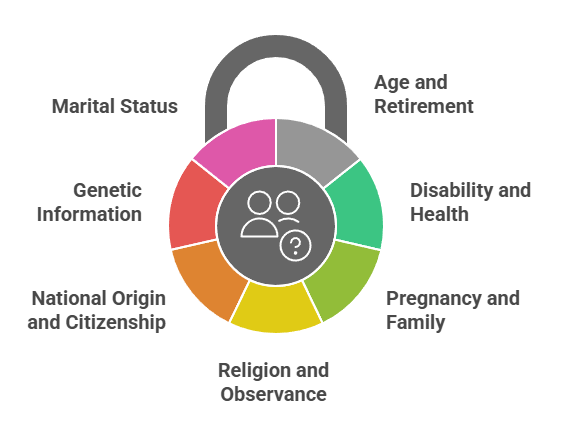
- Age and retirement: Questions about candidate age, retirement plans, or physical capabilities framed to suggest age bias rather than assess ability to perform essential job functions
- Disability and health: Inquiries about medical conditions, medications, disability accommodations (before conditional offer), or workers' compensation history
- Pregnancy and family: Questions about pregnancy status, childcare arrangements, family planning, or parental leave utilization
- Religion and observance: Inquiries about religious affiliation, worship practices, or accommodation needs (before conditional offer)
- National origin and citizenship: Questions about birthplace, native language, accent, or citizenship status unrelated to work authorization verification
- Genetic information: Inquiries about family medical history, genetic testing, or inherited conditions
- Marital status: Questions about spouse employment, marriage plans, or relationship status
Organizations should develop prohibited question lists distributed to personnel conducting reference checks, with regular training reinforcing compliance expectations.
Obtaining Candidate Authorization
Organizations should obtain written candidate authorization before contacting references as both legal best practice and professional courtesy. Authorization requirements may vary based on state law and whether third-party screening services are used, making legal counsel consultation advisable. Authorization documents should specify which references organizations may contact, acknowledge candidate understanding that reference feedback may influence hiring decisions, and release references from liability for honest performance assessments.
Candidates may request organizations avoid contacting current employers to maintain employment confidentiality. Organizations should develop policies balancing candidate privacy interests against screening thoroughness needs, with approaches varying based on position requirements and organizational risk tolerance.
State-Specific Requirements and Variations
State employment laws create varying requirements affecting permissible reference questions, salary history inquiries, and disclosure obligations. Salary history ban states prohibit employers from asking candidates or references about prior compensation to prevent pay discrimination perpetuation. Reference immunity statutes in some states protect employers providing honest reference information from defamation liability absent actual malice, though many organizations limit HR responses to dates and titles due to defamation concerns. Most states provide qualified immunity for truthful performance information shared in good faith, though organizations should consult legal counsel regarding appropriate reference disclosure practices under applicable state law.
Documentation Requirements and Retention
Comprehensive documentation of employment verification screening conversations provides legal protection during discrimination claims, negligent hiring litigation, and unemployment compensation disputes. Documentation should capture reference contact information including name, title, organization, and contact details, along with recorded questions and responses enabling reconstruction of conversations during investigations or litigation.
Equal Employment Opportunity Commission regulations require maintaining employment records including reference documentation for one year from record creation or personnel action, whichever is later. Storage security protects confidential reference information from unauthorized access through electronic documentation systems implementing access controls limiting review to personnel with legitimate business needs.
Employment Verification Screening Questions by Position Level

Effective reference questioning varies based on position responsibilities, required competencies, and organizational impact. Structuring questions by role level ensures appropriate inquiry depth while maintaining legal compliance and reference provider engagement.
Entry-Level Position Reference Questions
Entry-level screening focuses on foundational work behaviors including reliability, coachability, basic competency, and cultural fit.
Attendance and reliability:
- How would you describe [Candidate]'s attendance and punctuality?
- Did [Candidate] consistently meet scheduled work hours and deadlines?
- Were there patterns of absenteeism or schedule adherence challenges?
Learning and development:
- How quickly did [Candidate] learn new tasks and procedures?
- How did [Candidate] respond to feedback and coaching?
- Can you provide an example of how [Candidate] developed a new skill during employment?
Team interaction:
- How would you characterize [Candidate]'s working relationships with colleagues?
- Did [Candidate] contribute positively to team projects and group efforts?
- How did [Candidate] handle disagreements or conflicts with team members?
Work quality and supervision:
- What level of supervision did [Candidate] require compared to peers at similar experience levels?
- How would you describe the accuracy and completeness of [Candidate]'s work product?
- Were there quality concerns or error patterns requiring additional oversight?
Growth potential:
- What recommendations would you offer [Candidate] for professional development?
- Would you describe [Candidate] as ready for increased responsibility?
- If you had an appropriate opening, would you rehire [Candidate]?
Mid-Level and Specialist Position Reference Questions
Mid-career professionals require assessment of technical expertise, independent judgment, project management, and mentorship capabilities.
Technical competency and expertise:
- How would you assess [Candidate]'s technical knowledge and skill level in [specific area]?
- Can you describe a challenging technical problem [Candidate] solved and their approach?
- How did [Candidate]'s technical abilities compare to others in similar roles?
Independent judgment and initiative:
- How effectively did [Candidate] work independently with minimal supervision?
- Can you provide examples of [Candidate] identifying problems and proposing solutions proactively?
- How did [Candidate] handle situations requiring decisions without immediate supervisor input?
Project management and execution:
- How would you describe [Candidate]'s ability to manage projects from planning through completion?
- Did [Candidate] consistently deliver projects on time and within scope?
- How did [Candidate] handle competing priorities and resource constraints?
Collaboration and influence:
- How effectively did [Candidate] work with cross-functional teams?
- Can you describe [Candidate]'s communication style with technical and non-technical stakeholders?
- Did [Candidate] demonstrate ability to influence without direct authority?
Mentorship and development:
- Did [Candidate] mentor or train less experienced team members?
- How would you describe [Candidate]'s patience and effectiveness when teaching others?
- Did [Candidate] contribute to team skill development beyond formal responsibilities?
Advancement readiness:
- What do you see as [Candidate]'s greatest strengths and development opportunities?
- Is [Candidate] ready for increased leadership responsibility?
- What type of role or environment would enable [Candidate]'s continued growth?
Management and Supervisory Position Reference Questions
Management roles require assessment of leadership effectiveness, team development, performance management, strategic thinking, and business acumen.
Leadership style and effectiveness:
- How would you characterize [Candidate]'s leadership approach and style?
- Can you describe how [Candidate] motivated and engaged their team?
- How did [Candidate] balance results achievement with team member development?
Performance management:
- How effectively did [Candidate] address performance issues and underperforming team members?
- Can you provide an example of [Candidate] delivering difficult feedback or managing terminations?
- Did [Candidate] follow organizational policies and procedures when addressing performance concerns?
Team development and retention:
- What was team turnover like during [Candidate]'s leadership?
- How did [Candidate] develop team member skills and career growth?
- Did team members express satisfaction with [Candidate]'s management?
Strategic thinking and execution:
- How effectively did [Candidate] translate organizational strategy into team objectives?
- Can you describe [Candidate]'s approach to planning and goal-setting?
- Did [Candidate] anticipate challenges and adjust plans proactively?
Stakeholder management:
- How did [Candidate] manage relationships with senior leadership?
- Can you describe [Candidate]'s effectiveness communicating with peers in other departments?
- How did [Candidate] handle disagreements or competing priorities with stakeholders?
Change leadership:
- Can you describe how [Candidate] led their team through organizational change?
- How did [Candidate] address resistance and maintain morale during transitions?
- Did [Candidate] demonstrate adaptability when strategies or priorities shifted?
Decision-making and judgment:
- How would you characterize the quality of [Candidate]'s business decisions?
- Can you provide an example of a difficult decision [Candidate] made and the outcome?
- Did [Candidate] involve appropriate stakeholders in significant decisions?
Executive and Senior Leadership Position Reference Questions
Executive screening requires assessment of strategic vision, organizational impact, board relations, financial stewardship, and enterprise leadership.
Strategic vision and execution:
- How would you describe [Candidate]'s strategic thinking ability and vision development?
- Can you provide examples of strategies [Candidate] developed and their outcomes?
- How effectively did [Candidate] balance short-term performance with long-term strategic positioning?
Organizational transformation:
- What significant organizational changes did [Candidate] lead or influence?
- How did [Candidate] address cultural challenges during transformation?
- Can you describe [Candidate]'s approach to change management at an enterprise level?
Financial acumen and stewardship:
- How would you assess [Candidate]'s financial management capabilities?
- Did [Candidate] demonstrate strong budget discipline and resource allocation judgment?
- How did [Candidate] balance investment needs with financial performance expectations?
Board and governance relations:
- How effectively did [Candidate] work with the board of directors?
- Can you describe [Candidate]'s communication approach with board members?
- Did [Candidate] appropriately escalate issues and manage board expectations?
External representation:
- How did [Candidate] represent the organization with customers, partners, and industry stakeholders?
- Can you describe [Candidate]'s effectiveness in external negotiations or partnership development?
- Did [Candidate] enhance organizational reputation through external engagement?
Crisis management and judgment:
- Can you describe how [Candidate] handled a significant organizational crisis or challenge?
- How did [Candidate] balance transparency with appropriate confidentiality during difficulties?
- Did [Candidate] demonstrate composure and sound judgment under pressure?
Succession and talent development:
- How effectively did [Candidate] develop leadership bench strength?
- Did [Candidate] promote from within and create succession pathways?
- How did [Candidate] balance talent retention with necessary organizational changes?
Integrity and ethical leadership:
- How would you characterize [Candidate]'s business ethics and professional integrity in workplace decisions?
- Did [Candidate] create an organizational culture emphasizing compliance and ethical behavior?
- Can you describe [Candidate]'s approach to ethical dilemmas or conflicts of interest?
Red-Flag Indicators Warranting Enhanced Background Screening

Reference conversations occasionally reveal concerning patterns requiring additional verification or specialized screening components. Recognizing these indicators enables appropriate risk assessment and informed hiring decisions.
Evasive or Inconsistent Responses
References providing vague responses, declining to answer specific questions, or offering inconsistent information may signal undisclosed performance issues. Evasive response examples include refusing to confirm basic employment information despite candidate authorization, providing only positive generalities without specific examples when pressed for details, or contradicting information from other references or candidate-provided data.
Organizations encountering evasive references should contact additional references seeking clearer performance insights. If multiple references demonstrate reluctance to provide substantive feedback, enhanced background screening through specialized verification services or extended reference networks may clarify underlying concerns.
Qualified or Negative Rehire Recommendations
The rehire question provides powerful insight into overall reference impression. Qualified responses including "It would depend on the position," "I'd have to think about it," or "We'd need to discuss performance expectations first" may warrant additional inquiry and careful evaluation. Negative rehire recommendations warrant careful evaluation to understand underlying concerns, which may range from serious performance or conduct issues to personality conflicts or cultural mismatches. Organizations should seek specific examples and context before drawing conclusions about candidate suitability.
Employment Date or Title Discrepancies
Discrepancies between candidate-provided employment information and reference verification may reflect inaccurate information, memory errors, or differing interpretations of job duties. Organizations should provide candidates opportunity to explain discrepancies before making adverse hiring decisions based on verification inconsistencies. Date discrepancies of weeks or months may reflect imprecise memory, while multi-month or year-level discrepancies warrant explanation. Title discrepancies require evaluation of whether candidates supervised others, held budget responsibility, and exercised decision-making authority matching claimed title level.
Unexplained Employment Gaps
Employment history gaps may reflect legitimate circumstances including education, caregiving responsibilities, health issues, or job market challenges. However, gaps combined with evasive explanations or reference feedback about reliability warrant investigation. Organizations should ask candidates directly about employment gaps during interviews, and candidates providing reasonable gap explanations whose references contradict those explanations create credibility concerns requiring additional inquiry.
Patterns Across Multiple References
Individual reference concerns may reflect personality conflicts or isolated incidents, while patterns across multiple references indicating similar issues should be considered as part of holistic candidate assessment. Consistent themes about missed deadlines, quality issues, interpersonal conflicts, or judgment problems emerging from independent references warrant evaluation of whether described concerns relate to target position requirements and organizational culture.
Concerning Separation Circumstances
References describing involuntary terminations, resignations under pressure, or departures during investigations warrant careful evaluation. Performance-based terminations require evaluation of improvement opportunity provision, documentation procedures, and whether similar struggles might emerge in the target role. Policy violation terminations create greater concern, particularly for integrity issues including theft, fraud, harassment, or safety violations, requiring understanding of violation specifics, whether criminal charges resulted, and candidate accountability and rehabilitation evidence.
Best Practices for Reference Screening Programs
Effective employment verification screening requires organizational commitment to training, quality assurance, and continuous improvement. Implementing these best practices enhances screening effectiveness while maintaining legal compliance.
Training Reference Checkers
Personnel conducting reference checks require formal training on prohibited questions, appropriate inquiry techniques, and documentation requirements. Training should include review of protected characteristic categories, practice with structured question frameworks, role-playing exercises addressing difficult conversations, and guidance on recognizing evasive responses requiring follow-up.
Organizations should provide refresher training annually addressing legal developments, emerging screening challenges, and lessons learned from quality assurance reviews. Training documentation proves valuable during discrimination claims or negligent hiring litigation, demonstrating organizational commitment to compliant screening practices.
Handling Candidate Disputes About References
Candidates occasionally dispute reference feedback accuracy or claim references provided misleading information due to personal conflicts. Organizations should establish procedures for investigating disputes including contacting additional references to verify or contradict disputed information, providing candidates opportunities to address specific concerns raised by references, and documenting dispute investigation and resolution.
Serious disputes involving allegations of defamation, discrimination, or reference provider misconduct warrant legal counsel involvement. Organizations should balance candidate due process rights against reference provider relationships and confidentiality expectations, avoiding disclosure of specific reference statements that could create reference provider liability concerns.
Continuous Program Improvement
Reference screening programs benefit from periodic evaluation addressing effectiveness, efficiency, and legal compliance. Organizations should track time required to complete reference screening, analyzing whether delays create competitive hiring disadvantages. Correlation analysis between reference feedback and subsequent employee performance reveals whether screening predicts job success or identifies patterns suggesting question framework refinement.
Legal counsel should review reference screening practices annually, ensuring continued compliance with evolving federal and state requirements. Organizations operating in multiple jurisdictions require particular attention to state law variations affecting permissible questions, authorization requirements, and disclosure obligations. Documentation practices should undergo periodic audit verifying consistent information capture and appropriate retention.
Integrating Reference Screening with Comprehensive Background Checks
Employment verification screening operates most effectively when integrated with other background check components including criminal history, education verification, and professional license confirmation. Strategic integration creates holistic candidate assessment.
Sequencing Reference Checks with Other Screening Components
Organizations should determine optimal reference screening timing relative to other background check elements based on position requirements, hiring volume, and legal compliance considerations. Common approaches include parallel processing where all background components occur simultaneously after conditional offers, and sequential screening where reference checks precede other verification to assess culture fit before investing in comprehensive screening.
Reference feedback occasionally identifies concerns warranting enhanced background screening components. Candidates whose references describe terminations for policy violations may justify specialized verification addressing those specific concerns, while references noting credential concerns warrant enhanced education and license verification.
Red-Flag Escalation Protocols
Organizations should establish clear protocols determining when reference screening concerns trigger additional verification, specialized screening services, or hiring process termination. Escalation triggers should address reference-verified resume inaccuracies, multiple qualified or negative rehire recommendations, undisclosed terminations for policy violations, patterns of performance issues across references, and significant discrepancies between candidate representations and reference feedback requiring investigation and resolution.
Communicating with Background Screening Vendors
Organizations utilizing third-party background screening services must coordinate reference verification with vendor-conducted screening components. Service agreements should specify whether organizations conduct internal reference screening or vendors include employment verification in screening packages, with many organizations conducting reference assessment internally while vendors verify employment through HR departments. Vendors should receive concerning reference information relevant to other screening components, enabling responsive screening addressing identified risks.
Documentation Best Practices
Comprehensive documentation of employment verification screening provides legal protection and supports informed hiring decisions. Organizations should develop standardized documentation capturing essential information consistently across all reference conversations.
Essential Documentation Elements
Reference documentation should include reference provider contact information with name, title, organization, relationship to candidate, and contact details. Employment verification data should confirm dates of employment, position title, final salary where legally permissible to ask, reason for separation, and rehire eligibility. Conversation records should document specific questions asked and responses received, identified strengths and development areas, red flags or concerning information, and overall reference assessment.
Organizations should distinguish between factual statements and opinions in documentation, clearly indicating when references expressed subjective impressions versus reporting objective performance data. This distinction proves valuable if hiring decisions face legal challenges requiring demonstration of job-related, evidence-based decision making.
Retention and Security Requirements
EEOC regulations require retaining employment records including reference documentation for at least one year from record creation or personnel action date. Organizations should implement secure storage with access controls limiting review to personnel with legitimate business needs. Electronic systems should track who accessed reference documentation and when, creating audit trails for compliance verification.
Legal counsel should review retention policies ensuring compliance with applicable federal, state, and industry-specific requirements that may exceed baseline one-year minimums. Organizations facing discrimination claims or negligent hiring litigation must preserve relevant documentation until legal proceedings conclude, potentially extending retention obligations for years beyond standard schedules.
Conclusion
Employment verification screening requires balancing comprehensive candidate assessment against legal compliance boundaries, documentation requirements, and practical constraints. Organizations implementing structured questioning frameworks by position level, training reference checkers on prohibited inquiries, recognizing red-flag indicators warranting enhanced screening, and maintaining thorough documentation create defensible hiring processes while extracting meaningful insights supporting informed selection decisions.
Frequently Asked Questions
What questions are illegal to ask during employment reference checks?
Federal anti-discrimination law prohibits questions exploring protected characteristics including age, disability, pregnancy, religion, national origin, genetic information, and in many contexts, marital or family status. State laws may impose additional restrictions including salary history bans in certain jurisdictions. Organizations should focus reference questions on job-related performance, skills, attendance, work quality, and professional conduct rather than personal characteristics. Legal counsel should review reference question templates ensuring compliance with applicable federal and state requirements.
Do I need candidate permission before contacting employment references?
Organizations should obtain written candidate authorization before contacting references as both legal best practice and professional courtesy. Authorization documents should specify which references may be contacted and explain how reference information will be used in hiring decisions. Some states impose specific authorization requirements, and Fair Credit Reporting Act obligations may apply when third-party screening services conduct employment verification. Candidates occasionally request that organizations avoid contacting current employers until final hiring stages to maintain confidentiality, which organizations should accommodate where feasible based on position requirements and screening needs.
How many references should organizations contact for thorough employment screening?
Reference quantity depends on position level and organizational risk tolerance. Entry-level positions typically warrant 2-3 references from direct supervisors or team leads. Mid-level and specialist roles benefit from 3-4 references including supervisors and project collaborators. Management positions should include 4-5 references representing supervisor, peer, and direct report perspectives. Executive screening often involves 5-7 references including board members, C-suite peers, and direct reports. Organizations should prioritize reference quality over quantity, seeking individuals with direct performance observation rather than accumulating numerous contacts with limited candidate interaction.
What should organizations do when references provide negative or concerning information?
Organizations receiving negative reference information should document specific concerns, seek concrete examples and context, contact additional references to determine whether concerns represent patterns or isolated incidents, and provide candidates opportunities to address concerns when appropriate. Negative information should be evaluated for relevance to target position requirements and consistency with other background screening results. Organizations must ensure that negative reference information influences hiring decisions only when job-related and supported by documented evidence. Legal counsel should review processes for handling negative references to ensure compliance with anti-discrimination requirements.
Can organizations contact references beyond those provided by candidates?
Candidate authorization language determines whether organizations may contact references beyond provided lists. Authorization forms may include provisions permitting contact with any individuals having relevant employment information, or may limit contact to specifically listed references. Organizations contacting undisclosed references without authorization risk privacy violations and candidate relationship damage. When authorization permits broader contact, organizations should focus on individuals in supervisory or collaborative relationships with documented performance knowledge rather than general acquaintances.
How should organizations document employment reference conversations?
Comprehensive documentation should capture reference contact information, employment verification data, specific questions asked and responses received, identified strengths and development areas, any red flags or concerns, and overall reference assessment. Documentation should reflect actual reference statements rather than screener interpretations, distinguishing between factual information and opinions. Organizations should retain reference documentation for at least one year per EEOC requirements, though longer retention may be advisable. Electronic documentation systems should implement access controls protecting confidential reference information from unauthorized disclosure.
What are the biggest mistakes organizations make during employment reference screening?
Common reference screening errors include asking prohibited questions about protected characteristics creating discrimination claim risk, failing to obtain candidate authorization before reference contact, inconsistent questioning across candidates enabling disparate treatment allegations, accepting vague or evasive responses without follow-up probing, neglecting documentation of reference conversations and screening rationale, contacting only candidate-provided references without seeking supervisor perspectives, and ignoring red-flag indicators warranting enhanced background screening. Organizations should implement standardized reference processes, train personnel conducting screening, and maintain quality control through periodic documentation review identifying process improvements and compliance gaps.
Additional References
- Equal Employment Opportunity Commission - Pre-Employment Inquiries and Discrimination
https://www.eeoc.gov/prohibited-employment-policiespractices - SHRM - How to Conduct Employment Reference Checks
https://www.shrm.org/topics-tools/tools/how-to-guides/how-to-conduct-employment-reference-checks - Department of Labor - Employment Law Guide
https://www.dol.gov/agencies/odep/publications/fact-sheets/employment-laws-overview - Professional Background Screening Association - Reference Checking Best Practices
https://www.pbsa.org - National Conference of State Legislatures - Employment Background Checks State Laws
https://www.ncsl.org/labor-and-employment/background-checks-and-employment

ABOUT THE CREATOR
GCheck Editorial Team
Meet the GCheck Editorial Team, your trusted source for insightful and up-to-date information in the world of employment background checks. Committed to delivering the latest trends, best practices, and industry insights, our team is dedicated to keeping you informed.
With a passion for ensuring accuracy, compliance, and efficiency in background screening, we are your go-to experts in the field. Stay tuned for our comprehensive articles, guides, and analysis, designed to empower businesses and individuals with the knowledge they need to make informed decisions.
At GCheck, we're here to guide you through the complexities of background checks, every step of the way.