


Background check for volunteers vs employees requires understanding distinct regulatory frameworks, liability considerations, and implementation strategies as organizations navigate Fair Credit Reporting Act obligations for paid staff alongside state volunteer protection statutes affecting unpaid personnel. HR professionals managing both workforce categories face compliance complexity stemming from different legal standards, cost constraints affecting volunteer program sustainability, and risk assessment challenges requiring position-specific screening protocols balancing organizational protection against volunteer recruitment barriers.
Key Takeaways
- Volunteer vs employee screening standards operate under different legal frameworks, with employee background checks generally subject to Fair Credit Reporting Act requirements mandating specific disclosure, authorization, and adverse action procedures, while volunteer screening faces legal ambiguity regarding FCRA applicability depending on jurisdiction and screening methods.
- Nonprofit volunteer screening guidelines vary significantly by state, with some jurisdictions mandating background checks for volunteers working with vulnerable populations while others imposing no statutory screening requirements, requiring organizations to develop state-specific compliance strategies addressing applicable mandates and liability exposure.
- Employment background check differences extend beyond legal compliance to practical implementation factors including cost per check, processing timelines, candidate expectations regarding screening rigor, and organizational resources available for verification administration and documentation.
- Volunteer screening compliance standards require balancing child and vulnerable adult protection against volunteer recruitment impacts, as screening requirements must support protection while organizations address process efficiency, communication clarity, and resource sustainability.
- Risk-based screening frameworks enable organizations to calibrate verification depth to position responsibilities, with high-contact roles involving unsupervised access to vulnerable populations warranting comprehensive criminal history checks while administrative volunteers may require baseline verification addressing minimum safety standards.
Understanding Regulatory Frameworks: FCRA and Volunteer Screening Laws
The legal landscape governing background screening varies fundamentally between employees and volunteers, creating distinct compliance obligations affecting screening protocol design, documentation requirements, and organizational liability exposure.
Fair Credit Reporting Act Application to Employment Screening
FCRA applicability to volunteer screening remains legally unresolved, as the statute defines 'employment purposes' without explicitly addressing unpaid volunteer relationships. The Federal Trade Commission has provided limited guidance on this issue, and appellate courts have not definitively resolved whether FCRA requirements extend to volunteer background checks conducted through consumer reporting agencies.
Given this legal uncertainty, organizations face three primary approaches:
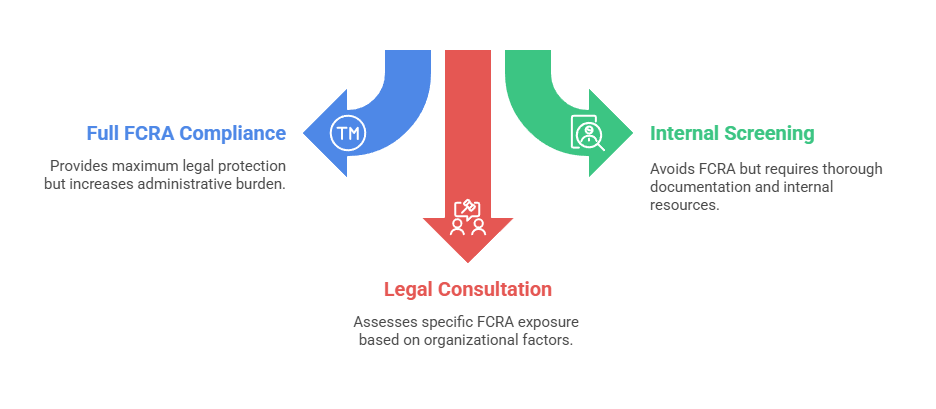
- Full FCRA compliance approach: Apply all FCRA requirements (disclosure, authorization, adverse action procedures) to volunteer screening when using consumer reporting agencies. This approach provides maximum legal protection but creates administrative burden potentially affecting volunteer program efficiency.
- Internal screening approach: Conduct volunteer verification through internal processes rather than consumer reporting agencies, potentially avoiding FCRA triggering. Organizations adopting this approach should document that screening occurs through organizational staff review of public records and direct reference contacts rather than third-party reporting services.
- Legal counsel consultation approach: Engage employment law attorneys to assess organization-specific FCRA exposure based on jurisdiction, screening methods, volunteer role characteristics, and risk tolerance.
Organizations should not assume FCRA definitively applies or does not apply to volunteer screening without legal counsel guidance specific to their circumstances and jurisdiction. Organizations that trigger FCRA requirements but fail to comply face significant penalties including actual damages, statutory damages of $100-$1,000 per violation, punitive damages, and attorney's fees. Given these consequences, organizations uncertain about FCRA applicability should consult legal counsel rather than assuming exemption.
EXPERT INSIGHT: Each time I analyze a screening policy, I am reminded that the issue at hand is more than mere compliance: it rests on the shoulders of the people who would be hurt when we make a mistake. I have witnessed the power of effective hiring procedures operating in the background, protecting employees, customers, and communities well before the crisis occurs. The Human Resources arena is one that celebrates such behind-the-scenes work. - Charm Paz, CHRP
State Volunteer Protection Acts and Screening Mandates
Some states maintain volunteer protection statutes limiting civil liability for volunteer actions under specified conditions. These statutes vary significantly, with some providing limited immunity to individual volunteers (not organizations) for simple negligence while excepting gross negligence, willful misconduct, or harm involving motor vehicles. Organizational liability typically continues even where individual volunteer immunity exists.
Where volunteer protection statutes exist, immunity provisions may reference reasonable volunteer selection practices, though 'reasonable' remains undefined. Organizations should not assume that conducting background screening automatically satisfies statutory reasonableness standards or guarantees immunity from liability. Legal counsel should review applicable state volunteer protection statutes to determine actual immunity scope, conditions, and organizational applicability.
Mandatory screening states typically specify verification components including state criminal history checks, sex offender registry searches, and in some jurisdictions, child abuse registry verification. Compliance deadlines vary from immediate screening before volunteer placement to grace periods permitting conditional service while background checks process.
This article cannot comprehensively address all state-specific volunteer screening requirements given 50-state variability and frequent legislative changes. Organizations should research current statutes in each state where volunteers serve, consult legal counsel familiar with state-specific requirements, monitor legislative updates, and verify that screening vendors understand applicable requirements.
Organizations operating in multiple states must comply with screening requirements in each jurisdiction where volunteers serve. Multi-state organizations may develop state-specific protocols, apply uniform enhanced standards across all locations, or maintain baseline screening supplemented by state-specific components. Legal counsel should guide multi-state screening strategy selection.
Negligent Hiring and Supervision Liability Differences
While employee and volunteer relationships differ legally, organizations face substantial negligent hiring and supervision liability for both workforce categories when screening failures enable harm to vulnerable populations. High-profile litigation involving volunteer misconduct in youth-serving, religious, and educational organizations demonstrates significant organizational liability exposure despite volunteer status of perpetrators.
Organizations should not assume volunteer status meaningfully reduces liability requiring less rigorous screening. Courts evaluate whether organizations exercised reasonable care in volunteer selection and supervision based on position responsibilities, vulnerable population access, and foreseeable harm risks.
Cost-Benefit Analysis for Volunteer vs Employee Screening
Resource allocation for background screening requires balancing verification costs, organizational risk exposure, program sustainability, and recruitment impacts.
Direct Costs: Screening Expenses and Processing Fees
Employee background screening costs vary based on verification components. Organizations should obtain current pricing from multiple vendors given market variability and volume discount opportunities. Organizations conducting thousands of annual hires face significant aggregate screening costs requiring budget allocation.
Volunteer screening costs create different considerations given nonprofit budget constraints. Organizations recruiting hundreds of volunteers annually may face screening costs potentially exceeding tens of thousands of dollars, straining nonprofit budgets or necessitating program scaling reductions.
Some organizations implement tiered screening based on volunteer risk levels, conducting comprehensive checks for high-contact positions while utilizing baseline verification for administrative roles. This risk-based approach optimizes resource allocation, focusing screening investments on positions creating greatest organizational exposure.
Volunteer screening grants and subsidies exist in some jurisdictions helping organizations offset verification costs. Organizations should research available funding sources and incorporate grant applications into program planning.
Indirect Costs: Administrative Burden and Processing Time
Background screening administrative costs extend beyond vendor fees to include HR personnel time conducting verification, maintaining documentation, and ensuring compliance. Employee screening integrates into established hiring workflows with dedicated recruitment staff managing verification processes.
Volunteer screening administrative burden may disproportionately impact nonprofit operations given limited administrative staffing. Small to mid-sized nonprofits may lack dedicated volunteer coordinators, requiring program managers to handle screening alongside other responsibilities.
Organizations should evaluate administrative efficiency opportunities including screening vendor technology integration, standardized documentation templates, volunteer management software with integrated background check modules, and process automation reducing manual coordination.
Recruitment Impact Assessment
Screening requirements affect recruitment effectiveness differently for employees versus volunteers. Employee candidates expect background screening as standard practice. Reasonable screening requirements rarely deter qualified employee candidates except in cases involving problematic criminal history.
Volunteer screening creates different recruitment dynamics given absence of compensation and alternative service opportunities lacking screening requirements. Extensive background checks, fingerprinting requirements, or multi-week processing timelines may deter casual volunteers or those uncomfortable with criminal history inquiry.
Organizations experiencing recruitment challenges should explore screening process improvements rather than eliminating necessary verification. Process enhancements may include clearer initial communication, faster processing through technology investment, enhanced applicant support, and tiered screening matching verification depth to statutory requirements and position risk.
Organizations should not reduce or eliminate screening for positions involving vulnerable population access based solely on recruitment impacts. Legal duties to exercise reasonable care in volunteer selection continue regardless of screening's effect on volunteer availability.
Developing Position-Specific Screening Protocols
Effective screening strategies tailor verification depth to position responsibilities, organizational exposure, and legal requirements rather than applying uniform protocols across all worker categories.
Risk Assessment Matrix for Position Classification
Organizations should develop systematic frameworks categorizing positions by risk level. High-risk positions typically involve unsupervised contact with vulnerable populations; access to financial systems, confidential information, or valuable assets; representation of organization in external-facing roles; or operation of vehicles transporting individuals.
Organizations should carefully evaluate whether any positions genuinely qualify as requiring no formal background screening, as even administrative volunteers may encounter vulnerable individuals, access confidential information, or represent the organization in ways creating liability exposure.
Position risk classification should address:
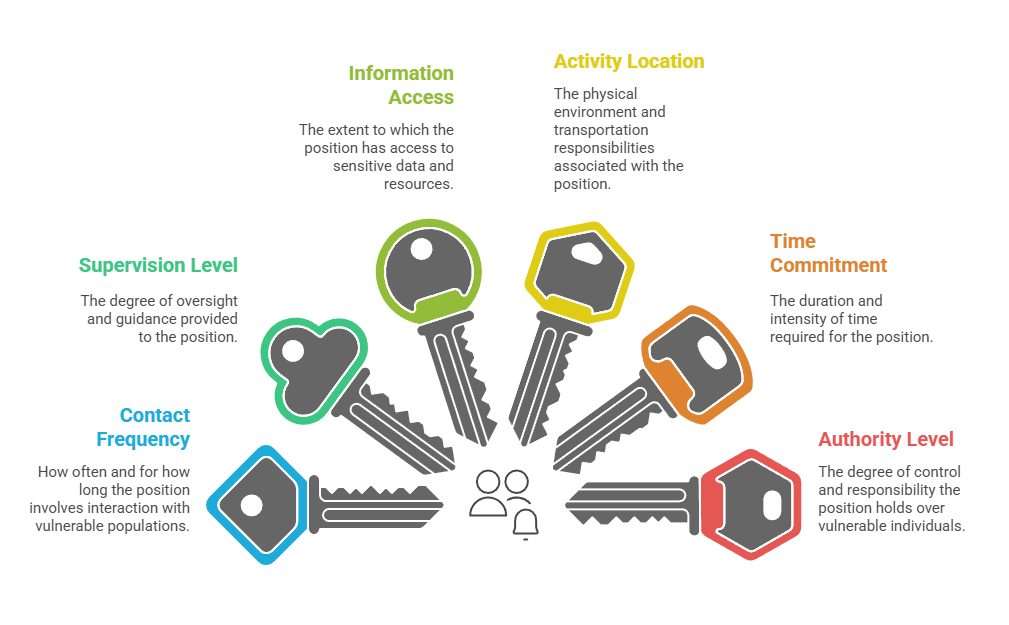
- Frequency and duration of vulnerable population contact
- Supervision level and oversight availability
- Access to confidential information, financial systems, or physical assets
- Location of activities and transportation responsibilities
- Overnight supervision or extended time commitments
- Authority over vulnerable individuals' care or well-being
Organizations should document risk classification rationales establishing defensible screening decisions. Legal counsel should review classification frameworks ensuring consistency with statutory requirements and liability mitigation objectives.
Screening Component Matching to Risk Levels
High-risk position screening should include:
- Comprehensive criminal history checks including county, state, and national databases covering 7-10 year periods
- Sex offender registry verification at state and national levels
- Child abuse and neglect registry checks where applicable
- Employment verification and reference checks
- Education and credential verification for positions requiring specific qualifications
- Motor vehicle record checks for roles involving driving
Moderate-risk position screening should include:
- State criminal history database checks covering 5-7 year periods
- Sex offender registry verification
- Selective reference checks for positions with significant responsibility
- Employment verification for roles requiring relevant experience
Where organizations determine that certain positions warrant minimal screening, baseline verification should include identity verification, sex offender registry searches at minimum, self-disclosure forms requesting criminal history information (supplemented by verification if any concerning information disclosed), and reference checks when position involves independent responsibilities.
Organizations should document rationale for minimal screening decisions and consult legal counsel regarding whether statutory mandates, organizational policies, or liability considerations require more comprehensive verification.
Volunteer-Specific Screening Considerations
Volunteer screening protocols should account for volunteer relationship informality, absence of compensation, and organizational desire to encourage volunteerism while managing risk.
Volunteer screening adaptations may include:

- Tiered screening based on service duration: Comprehensive checks for ongoing volunteers versus baseline verification for one-time event volunteers under constant supervision
- Conditional service with safeguards: Limited participation under strict supervision while checks complete, requiring completed baseline screening before any service, direct constant supervision, prohibition on independent access, clear documentation, and time limits (typically 30-60 days maximum)
- Self-disclosure approaches: Requesting criminal history disclosure supplemented by verification for high-risk positions
- Group volunteering considerations: Evaluating whether continuous supervision warrants modified screening
- Youth volunteer considerations: Age-appropriate verification and parental involvement
Organizations should consult legal counsel regarding volunteer-specific screening approaches ensuring compliance with applicable state mandates.
Decision Trees for Screening Protocol Development
Systematic decision frameworks guide organizations through screening protocol development, ensuring consistent evaluation and appropriate verification.
Initial Screening Threshold Determination
Organizations should first determine whether positions require formal background screening. This threshold decision considers statutory requirements, organizational risk tolerance, insurance coverage conditions, and position characteristics.
Decision factors include:
- Statutory mandates: Legal counsel should confirm requirements for positions serving specific populations.
- Vulnerable population access: Does the position involve contact with vulnerable groups? Access generally warrants screening given liability exposure.
- Supervision availability: Will the volunteer work under constant supervision or independently? Unsupervised access typically requires screening.
- Organizational assets exposure: Does the position involve handling funds, operating vehicles, or controlling organizational resources?
- Stakeholder expectations: Do funding sources, insurance carriers, or community stakeholders expect screening?
Positions meeting high-risk criteria generally warrant formal background screening, while roles not triggering risk factors should receive baseline verification addressing minimum safety standards.
Adverse Finding Response Framework
Organizations require systematic processes addressing concerning background check information, ensuring consistent evaluation and defensible decisions.
FCRA-compliant adverse action for employees: Organizations using consumer reporting agencies for employee screening should follow federal adverse action procedures including pre-adverse action notice, reasonable waiting period, and final adverse action notice if employment denial proceeds.
Volunteer screening adverse finding responses: Organizations maintain flexibility in volunteer adverse finding procedures though best practices suggest similar fairness protocols. Organizations should provide volunteers an opportunity to address concerning information, explain circumstances, or correct record errors.
Equal Employment Opportunity Commission guidance requires individualized assessment of criminal history in employment decisions. EEOC guidance applies only to employees, not volunteers. However, organizations may voluntarily adopt similar principles for volunteer screening as fairness best practice. Organizations should consult legal counsel regarding whether state discrimination laws extend to volunteer selection.
Compliance Monitoring and Program Evaluation

Effective screening programs require ongoing monitoring ensuring continued compliance and identifying improvement opportunities.
Regulatory Compliance Auditing
Organizations should conduct periodic internal audits verifying screening protocol compliance, complete documentation, and appropriate procedure application. Audit scope should address authorization and disclosure form completeness, adverse action procedure compliance, screening component completion, documentation retention, and consistent screening application.
Audit findings should generate corrective action plans addressing identified deficiencies, implementation timelines, and verification procedures ensuring remediation effectiveness.
Cost-Effectiveness Analysis
Organizations should periodically evaluate screening program costs relative to benefits including risk mitigation, liability reduction, and stakeholder confidence enhancement. Analysis should address per-check costs, volume pricing opportunities, administrative time requirements, screening outcome patterns, and program effectiveness indicators.
Volunteer Recruitment Impact Tracking
Organizations should monitor volunteer screening impact on recruitment success, application completion rates, and volunteer retention. Tracking metrics include application completion rates, time-to-placement duration, screening-related withdrawal patterns, and volunteer satisfaction.
Organizations experiencing recruitment challenges may explore process improvements including clearer communication, faster processing, enhanced applicant support, and process refinement addressing identified barriers.
Conclusion
Background check for volunteers vs employees requires organizations navigate distinct regulatory frameworks, cost considerations, and risk management objectives while developing position-specific screening protocols. Effective implementation balances Fair Credit Reporting Act compliance uncertainty for volunteer screening, state volunteer protection statute requirements, and organizational liability mitigation against volunteer program accessibility and resource constraints. By ensuring that these differences are well-articulated, a company can avoid confusion and be more consistent in their screening practices. This is because well-thought-out programming demonstrates that community engagement will not be discouraged by improved safety and compliance.
Frequently Asked Questions
Does the Fair Credit Reporting Act apply to volunteer background checks?
FCRA applicability to volunteer screening remains legally unresolved. Organizations face three approaches: applying full FCRA compliance when using consumer reporting agencies; conducting verification through internal processes; or engaging legal counsel to assess organization-specific exposure. Organizations should consult legal counsel to determine appropriate procedures based on jurisdiction-specific requirements.
What are the main differences between employee and volunteer screening requirements?
Employee screening generally operates under FCRA requirements when using consumer reporting agencies, while volunteer screening faces legal ambiguity. State laws create mandatory requirements for volunteers in some jurisdictions while imposing no obligations in others. Cost considerations affect depth differently, with employee verification representing standard expenses while volunteer costs may strain nonprofit budgets.
How should organizations determine appropriate screening levels for different volunteer positions?
Organizations should develop risk assessment frameworks evaluating vulnerable population contact frequency, supervision availability, access to confidential information, and transportation responsibilities. High-risk positions warrant comprehensive checks. Organizations should carefully evaluate whether positions genuinely qualify as requiring only minimal screening.
Can organizations conduct different levels of screening for employees and volunteers in similar roles?
Organizations may implement different protocols based on relationship characteristics, regulatory requirements, and cost considerations, though differential treatment requires thoughtful justification. Organizations should document rationales based on regulatory applicability, compensation, liability differences, and resource constraints. Legal counsel should review protocols ensuring defensible distinctions.
What should organizations include in volunteer screening policies?
Policies should specify which positions require checks; authorization and disclosure procedures; processing timelines; disqualifying offenses and evaluation factors; appeals procedures; confidentiality protections; documentation requirements; and compliance monitoring provisions. Policies should undergo legal counsel review ensuring compliance and consistency with liability management objectives.
How do state volunteer protection acts affect background screening requirements?
Some states maintain protection statutes limiting liability under specified conditions, with some providing limited immunity to individual volunteers (not organizations). Where statutes exist, immunity may reference reasonable selection practices. Organizations should not assume screening automatically satisfies standards or guarantees immunity. Legal counsel should review statutes to determine scope and applicability.
What are best practices for communicating background check requirements to volunteers?
Organizations should communicate requirements early in recruitment in initial descriptions or applications. Explanations should address why screening occurs, what it involves, how information will be used, and what happens if concerning information emerges. Organizations should emphasize consistent application and provide information transparently before volunteers invest substantial effort.
Additional References
- Federal Trade Commission - Fair Credit Reporting Act Guidance
https://www.ftc.gov/legal-library/browse/statutes/fair-credit-reporting-act - National Council of Nonprofits - Volunteer Screening Resources
https://www.councilofnonprofits.org/running-nonprofit/governance-leadership/volunteer-screening - SHRM - Background Checks: What Employers Need to Know
https://www.shrm.org/topics-tools/employment-law-compliance/conducting-background-checks - National Conference of State Legislatures - Volunteer Protection Laws
https://www.ncsl.org/human-services/volunteer-protection-laws - Nonprofit Risk Management Center - Screening Volunteers
https://www.nonprofitrisk.org/resources/articles/screening-volunteers/

ABOUT THE CREATOR
GCheck Editorial Team
Meet the GCheck Editorial Team, your trusted source for insightful and up-to-date information in the world of employment background checks. Committed to delivering the latest trends, best practices, and industry insights, our team is dedicated to keeping you informed.
With a passion for ensuring accuracy, compliance, and efficiency in background screening, we are your go-to experts in the field. Stay tuned for our comprehensive articles, guides, and analysis, designed to empower businesses and individuals with the knowledge they need to make informed decisions.
At GCheck, we're here to guide you through the complexities of background checks, every step of the way.