


Background checks have become a routine part of the hiring process in many industries. They're essential tools for employers to ensure they are making informed hiring decisions. But the big question on many job seekers' minds is: Can you fail a background check and still get hired?
In this article, we'll dive deep into this topic, shedding light on what employers look for in a background check, what constitutes a "failure," and how a problematic result might still lead to employment. We'll also provide tips for job seekers on how to navigate this aspect of the hiring process.
Key Takeaways
- A background check is a comprehensive review of a candidate's historical data, including commercial, criminal, employment, and financial records.
- Employers use background checks to verify the accuracy of a candidate’s resume and uncover any potential red flags.
- Common components of background checks include criminal history, employment verification, credit history, education verification, drug screening, and reference checks.
- Failing a background check isn't an automatic barrier to employment, as employers often consider the context and severity of any flagged issues.
- Job seekers can enhance their prospects by being proactive, understanding their rights, and utilizing resources to address potential background check concerns.
What Is a Background Check?
A background check is essentially a thorough review of a candidate's historical data to verify their suitability for a job. It's like opening a chapter from your past to ensure you've been honest and transparent. Employers use these checks to confirm the information a candidate has provided and to uncover any potential red flags that might surface later.
EXPERT INSIGHT: Every candidate brings more than just a resume—they have a story and each story is unique. Background checks are essential for ensuring workplace safety and trust. It should leave a positive impression on both the candidates and the employer and not close the door on opportunity. Each flagged issue is a chance to understand the context. Each auditable finding is a chance to provide guidance. It’s not just about who someone was, but who they have the potential to become. - Charm Paz, CHRP
Understanding Background Checks
Background checks are comprehensive reviews of a candidate's commercial, criminal, employment, and financial records. Employers use them to verify the accuracy of a candidate's resume and to ensure there are no hidden issues that could pose risks if the candidate were hired.
The goal here is straightforward: make sure the person you're about to bring into the team is who they say they are. It's not about digging up every little mistake a person has made, but about creating a safe and secure workplace. The scope of these checks varies based on the job role and the responsibilities involved.
But what's actually in a background check?
- Criminal History: Employers check past convictions and criminal records. This can range from minor infractions to serious offenses, depending on the nature of the job.
- Employment Verification: Digging into previous job titles, roles, and the dates you're claimed to have worked can validate your work history—or reveal discrepancies.
- Credit History: More relevant for roles in financial sectors, a credit check shows how you've managed debt and financial responsibilities.
- Education Verification: Confirming your claimed educational credentials ensures that you have the training or expertise needed for the position.
- Drug Screening: Critical for positions requiring high safety standards, drug tests check for illegal substance use.
- References: Speaking with previous employers or colleagues can give insight into your past job performance and work ethic.
Employers use this data to gauge risk, confirming that you won't be a liability down the road. Understanding these components helps you anticipate what employers are scrutinizing and prepare accordingly. Learn more about the background check process.
Failing a Background Check: What Does It Mean?
What Constitutes a Failure?
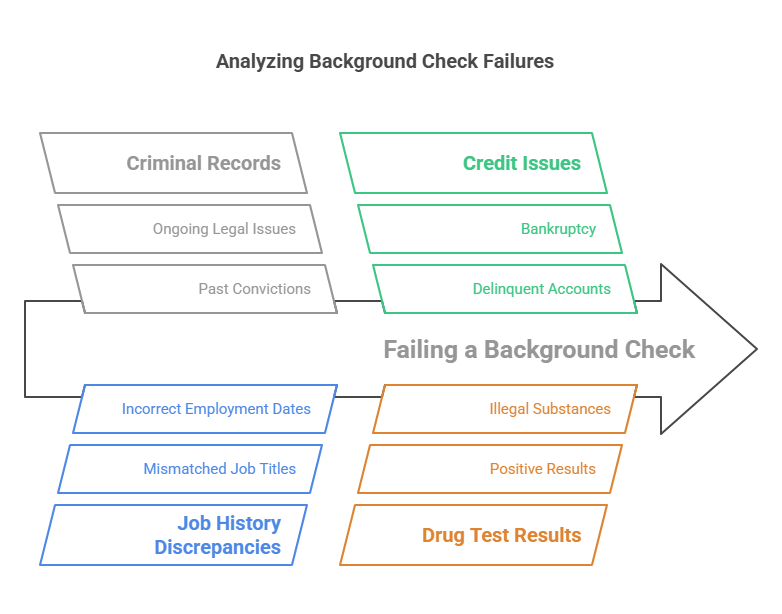
Failing a background check typically means discrepancies were found between your records and what you provided to the employer. It could be due to several factors:
- Criminal Records: Any past convictions or ongoing legal issues that you didn’t disclose.
- Inaccurate Job History: Mismatches in your previous job titles, roles, or dates of employment.
- Poor Credit History: Financial issues like bankruptcy or delinquent accounts, which might be particularly relevant for positions in finance.
- Failed Drug Tests: Positive results for illegal substances during pre-employment drug screening.
Context Matters
The impact of failing a background check is not black and white; numerous factors play into how these findings affect your job prospects:
- Nature of the Job: Positions requiring high levels of trust or security (like those in finance, law enforcement, or child care) often have stricter background check requirements.
- Nature of the Offense: A minor discrepancy might not weigh as heavily as a serious criminal record. For example, a misdemeanor from years ago might be viewed more leniently than a felony.
- Time Frame: The age of the offense matters. Incidents from a decade ago might be less concerning than those that happened recently. Employers may also consider any evidence of rehabilitation or positive behavior change over time.
Legal Protections
Employers must comply with regulations such as the Fair Credit Reporting Act (FCRA) and Equal Employment Opportunity Commission (EEOC) guidelines when conducting background checks. These rules are designed to protect job seekers from unjust discrimination based on their past.
The FCRA, for instance, mandates that employers get your consent before running a background check and notify you if any adverse action is taken based on the results. You have the right to challenge the findings if they're incorrect or misleading. For more guidelines about what employers need to know, refer to FTC guidelines.
The EEOC, on the other hand, seeks to ensure that any negative findings are considered in the context of the job and the individual's circumstances. Employers are urged to assess the nature of any criminal offense, its relation to the job, and the elapsed time since it occurred, aiming to balance workplace safety and fairness in hiring practices.
For more guidelines about what employers need to know, refer to FTC guidelines.
Can You Still Get Hired?
Employer Discretion
In many cases, employers will evaluate the context and severity of any issues found:
- Open Dialogue: Some employers might give you an opportunity to explain any red flags on your record. Being upfront about your background and willing to discuss it can work in your favor. Employers appreciate honesty and are often open to considering your side of the story.
- Relevance to Job: If the issue is irrelevant to the job's core responsibilities, employers might overlook it. For example, a minor misdemeanor from several years ago may not affect your ability to perform well in a technical role. Employers often weigh how closely the red flag intersects with job duties and responsibilities.
- Corrective Actions: Demonstrating that you've taken steps to rectify past mistakes can also sway an employer's decision. Whether it’s completing a rehabilitation program or gaining additional certifications, showing that you’ve made an effort to improve can be a significant positive.
Case-by-Case Basis
Every employer's level of tolerance for background check discrepancies will differ. Small businesses might offer more leeway, while large corporations could stick strictly to their policies. The ultimate decision often comes down to the hiring manager's perception and company culture.
Imagine a scenario where a marketing firm needs a creative director. If an applicant's background check reveals a minor criminal offense from a decade ago, the hiring manager might weigh the relevance and timing of this incident. They might consider the candidate's experience, creativity, and fit for the team before making a final judgment. In contrast, a multinational financial institution might have less flexibility, especially if their industry demands rigorous compliance and risk management.
Different industries also have specific standards. For example, a warehouse that requires physical labor might overlook a decade-old misdemeanor, while a daycare facility would be much more stringent due to the nature of its work.
In essence, the decision to hire someone despite a problematic background check is multifaceted. It involves considering the role's requirements, the offense's relevance, and how much risk the employer is willing to take.
Tips for Job Seekers
Be Proactive
- Disclose Issues: If you know there might be a red flag, address it upfront during your interview. Transparency can build trust and may mitigate concerns before they arise.
- Correct Errors: Ensure your records are accurate and fix any mistakes in your background report. An error-free report removes unnecessary hurdles.
- Provide Context: Offer honest explanations and demonstrate how you've changed or grown since past incidents. Providing context can humanize your story and show your potential for growth.
Understand Your Rights
- Get a Copy: If a background check results in adverse action, you're entitled to a copy of the report. This allows you to review and understand what was flagged.
- Dispute Errors: You have the right to dispute incorrect information found in your background report. Addressing inaccuracies promptly can prevent lost opportunities.
- Legal Aid: If you believe your rights were violated, consider consulting with a legal expert. Legal guidance can help you navigate complex situations and protect your interests.
Leverage Resources
When you know there might be bumps on your background check, utilizing available resources can give you a leg up:
- Pre-Check Services: Platforms like GCheck allow you to run a background check on yourself. This can help you identify potential issues before an employer does, giving you time to address them proactively.
- Career Advisors: Most universities and job placement services offer career counseling, which includes advice on background checks. These advisors can also provide personalized guidance on how to frame your narrative.
- Employment Specialists: Non-profit organizations and career centers often have specialists who can coach you on how to handle background check discussions. They can help refine your approach, clarifying that you’ve learned and grown from past mistakes.
- Legal Resources: If you find inaccuracies or discriminatory practices related to your background check, legal resources like the National Employment Law Project (NELP) can be a valuable ally. They offer advice and sometimes funding for legal challenges.
By leveraging these resources, you present yourself as prepared, responsible, and proactive, qualities any employer appreciates.
Frequently Asked Questions (FAQ)
Can you get hired if you fail a background check?
Yes, you can still get hired if you fail a background check, depending on the employer's policies and the nature of the discrepancy. Some employers may consider the severity and context of the findings, while others may have strict regulations that lead to disqualification.
What disqualifies you from passing a background check?
Several factors may disqualify you from passing a background check, including:
- Criminal history
- Inaccurate resume information
- Employment gaps
- Poor credit history
- Drug offenses
- Previous job terminations for misconduct
Can you appeal a failed background check?
Yes, you can appeal a failed background check. First, request a copy of the report to review the discrepancies. Dispute any inaccuracies with the background check company and provide supporting documentation to your prospective employer.
What happens if I fail a background check for a job?
If you fail a background check for a job, the employer may rescind the job offer. Some employers might provide an opportunity to explain or clarify the findings. It’s important to address the issue and possibly seek legal advice if needed.
Will employers tell me if I fail a background check?
Yes, most employers will inform you if you fail a background check, often providing a written explanation of the findings. They must legally share this information under the Fair Credit Reporting Act (FCRA) if based on a third-party report.
Can a failed background check affect future job prospects?
Yes, failing a background check can impact future job prospects, primarily if the reason is related to severe issues like criminal activity or falsified information. It’s crucial to address any problems before applying for new positions.
Conclusion
While failing a background check can be daunting, it's not always a deal-breaker. Employers weigh various factors when hiring, and many are open to discussions. By being proactive, understanding your rights, and addressing concerns head-on, you can improve your chances of getting hired, even if there are issues in your background check.
Remember that your professional identity is more than just your background check. Employers, who understand that past errors do not define one's future, are increasingly valuing character, growth, and perseverance. What matters most is your ability to approach the process with clarity, honesty, and a willingness to have open and honest conversations.
Ultimately, transparency and honesty go a long way. Stay informed and take advantage of available resources for more insights into the hiring process and employment screenings

ABOUT THE CREATOR
GCheck Editorial Team
Meet the GCheck Editorial Team, your trusted source for insightful and up-to-date information in the world of employment background checks. Committed to delivering the latest trends, best practices, and industry insights, our team is dedicated to keeping you informed.
With a passion for ensuring accuracy, compliance, and efficiency in background screening, we are your go-to experts in the field. Stay tuned for our comprehensive articles, guides, and analysis, designed to empower businesses and individuals with the knowledge they need to make informed decisions.
At GCheck, we're here to guide you through the complexities of background checks, every step of the way.