



Hybrid workforce background screening has evolved from a temporary adaptation into a permanent strategic function requiring multi-jurisdictional compliance frameworks and continuous verification protocols. Organizations managing distributed teams face complex challenges balancing risk mitigation with operational efficiency across physical and digital work environments.
Key Takeaways
- Hybrid workforce background screening requires jurisdiction-specific compliance strategies that address employment laws across multiple states and municipalities where workers physically reside.
- Continuous monitoring considerations have become central to modern screening programs as hybrid arrangements blur traditional employment verification boundaries and extend organizational exposure.
- Technology infrastructure must integrate screening protocols with distributed HR systems while maintaining data privacy compliance across varied regulatory environments.
- Multi-location verification processes demand coordination between physical and digital credential checks, requiring standardized protocols that account for remote work realities.
- Employment screening for distributed teams introduces liability considerations distinct from centralized workforce models, particularly regarding duty of care and negligent hiring exposure.
- Hybrid work compliance requirements vary significantly by industry, with regulated sectors facing heightened scrutiny for remote worker oversight and ongoing suitability determinations.
- Background checks for hybrid workers must address both traditional criminal and employment history alongside technology access privileges and data handling authorizations.
- Verifying remote worker credentials requires evolved authentication methods that validate identity, qualifications, and authorization to work without in-person document inspection capabilities.
The Maturation of Hybrid Workforce Screening Infrastructure
The operational landscape for hybrid workforce background screening has fundamentally shifted since distributed work models transitioned from emergency measures to permanent organizational structures. Between 2022 and 2026, organizations discovered that hybrid arrangements introduce screening complexities extending well beyond adapting existing processes for remote application.
Organizations managing hybrid teams face a fundamental question: how do you maintain consistent screening standards when your workforce operates across multiple legal jurisdictions, accesses systems from varied locations, and transitions fluidly between physical and remote work environments? The answer requires strategic frameworks that treat screening as an ongoing risk management function rather than a discrete pre-employment event.
Jurisdictional Complexity in Distributed Employment Models
Employment screening for distributed teams introduces immediate jurisdictional challenges that centralized workforce models never confronted. When employees work from locations across multiple states or municipalities, screening programs must comply with the most restrictive applicable laws governing background check processes, adverse action procedures, and use of criminal history information.
State and local ban-the-box legislation, conviction lookback period limitations, and other employment law variations create a compliance patchwork requiring careful navigation. An organization headquartered in one jurisdiction may find its screening policies governed by laws in entirely different states where hybrid workers physically reside and perform their duties.
The complexity intensifies when workers relocate without changing employers, a common occurrence in hybrid arrangements. A screening protocol compliant in one state may violate restrictions in another, requiring continuous monitoring of where workers physically perform duties and adjustment of screening practices accordingly.
As a human resources professional, I think that the process of hybrid workforce screening is a change from a traditional hiring practice to a continuous process. As the workforce moves between different physical spaces, the background screening process must also take into consideration where the actual work is being done, to what extent the person is being granted access, and the varying laws that apply to different jurisdictions. The process is not a barrier to the business if executed correctly. �
Technology Integration and Data Governance Challenges
Hybrid work compliance requirements extend beyond traditional background check elements into technology access and data handling authorization. Distributed workers typically require access to systems, networks, and information that centralized employees might access only from secured physical locations.
Background checks for hybrid workers must address questions that traditional screening programs rarely confronted:
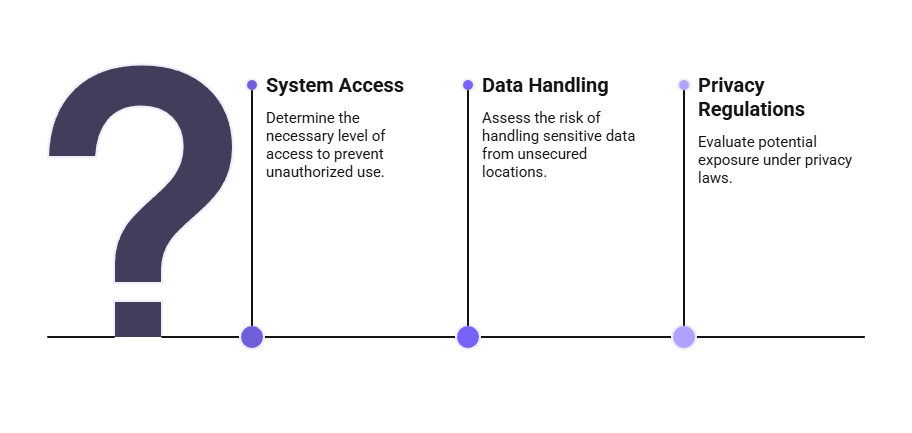
- What level of system access does this role require?
- Will this individual handle regulated data types from unsecured locations?
- Does the work arrangement create exposure under privacy regulations governing specific information categories?
These considerations require screening protocols integrated with information security frameworks rather than operating as standalone HR functions. Technology platforms supporting distributed screening must maintain compliance across varied data protection regimes.
Multi-Jurisdictional Compliance Architecture
Building compliant screening infrastructure for hybrid workforces requires systematic approaches to identifying applicable legal requirements across operational footprints that may span dozens of jurisdictions. Organizations must move beyond generalized compliance checklists toward dynamic frameworks that account for specific combinations of employer location, worker residence, job function, and industry regulatory requirements.
Organizations must ensure they have a permissible purpose under the Fair Credit Reporting Act before obtaining consumer reports. Employment purposes constitute a permissible purpose, but employers must comply with disclosure, authorization, and adverse action requirements when using consumer reports for hiring or employment decisions.
Mapping Regulatory Obligations Across Distributed Operations
| Jurisdiction Factor | Compliance Consideration | Screening Impact |
| Worker physical location | State employment law application | Ban-the-box, lookback periods, arrest vs. conviction rules |
| Employer headquarters | Corporate registration requirements | Disclosure formats, record retention obligations |
| Municipal boundaries | Local fair chance ordinances | Timing of criminal history inquiries, individualized assessment mandates |
| Industry regulation | Federal and state agency oversight | Mandatory screening elements, disqualification criteria, ongoing monitoring |
State-level employment laws often govern based on where work is performed, though jurisdictional rules vary by state and legal issue. Some states may assert jurisdiction based on employer location, where employment relationships were formed, or other connecting factors. Organizations should verify applicable law on a state-by-state basis.
Regulated industries face additional layers of compliance requirements. Financial services, healthcare, and transportation sectors operate under federal and state regulatory frameworks that impose specific screening obligations regardless of work location. Organizations need structured processes for identifying applicable requirements when screening hybrid workers.
Adverse Action Protocols for Distributed Applicants
Verifying remote worker credentials becomes particularly sensitive when screening results require adverse action procedures. The Fair Credit Reporting Act establishes federal baseline requirements when employers use consumer reports as a basis for employment decisions. Before taking adverse action, employers must provide the individual with a pre-adverse action notice, a copy of the consumer report, and a Summary of Rights under the FCRA. The employer must allow reasonable time for the individual to dispute inaccuracies before proceeding with final adverse action, which requires separate written notice.
However, state and local laws frequently impose additional requirements beyond federal minimums:
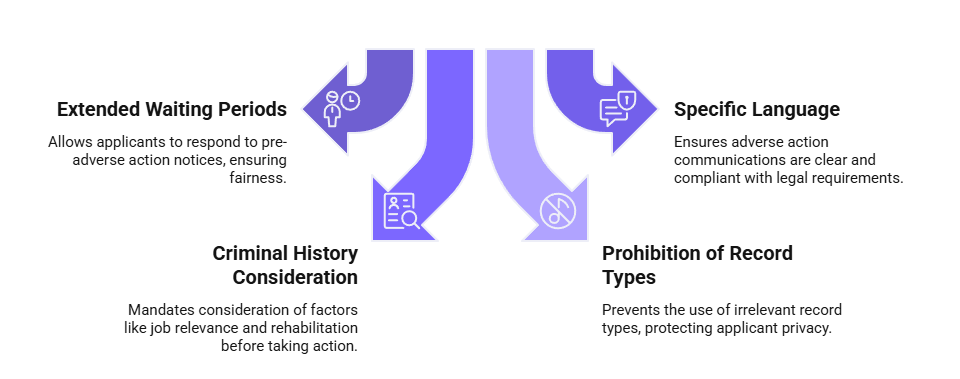
- Extended waiting periods between pre-adverse action notice and final decisions
- Specific language in adverse action communications
- Mandatory consideration of particular factors before taking action based on criminal history
- Prohibition of certain record types regardless of job relevance
State and local laws may prohibit employers from considering certain criminal record categories entirely, regardless of individualized assessment. Some jurisdictions restrict use of marijuana-related convictions, convictions beyond specified lookback periods, or arrests not resulting in conviction. Organizations must identify not only procedural requirements but also substantive prohibitions on record use in applicable jurisdictions.
Managing compliant adverse action processes for distributed applicants requires systems that identify applicable requirements based on applicant location and apply appropriate protocols automatically. Manual processes create unacceptable risk of applying incorrect procedures or failing to meet jurisdiction-specific timing or content requirements.
Continuous Monitoring Considerations for Hybrid Arrangements
The fluid nature of hybrid work has accelerated organizational interest in continuous monitoring approaches that extend screening beyond pre-employment verification. When workers transition between locations, modify their remote work patterns, or change role responsibilities, questions arise about whether initial screening remains sufficient.
Legal and Practical Boundaries of Ongoing Screening
The Fair Credit Reporting Act permits employers to obtain consumer reports on existing employees for employment purposes. However, the initial authorization obtained during hiring typically does not provide ongoing authority for post-hire reports. Employers generally must provide fresh disclosure and obtain separate written authorization each time they procure a consumer report on a current employee, unless a clear and conspicuous standalone authorization explicitly covers ongoing reports. Organizations should consult FCRA guidance or legal counsel to ensure post-hire screening procedures comply with disclosure and authorization requirements.
State laws may impose restrictions on when and how employers may conduct post-hire screening. Organizations must carefully distinguish between monitoring activities that constitute new consumer report procurement, requiring fresh authorization and disclosure, versus internal tracking of publicly available information that may not trigger reporting requirements. The line between these categories is not always clear.
Continuous monitoring programs for hybrid workers should be designed with clear policies governing what triggers post-hire screening, what information sources are accessed, how results are evaluated, and what procedural protections apply before adverse employment actions.
Role-Based Screening Intensity and Work Location Factors
Background checks for hybrid workers need not follow uniform intensity across all positions. Risk-based approaches that calibrate screening scope to role requirements, access levels, and regulatory obligations create more efficient programs that focus resources on areas of genuine organizational exposure.
Screening intensity factors include:

- Financial authority and transaction access
- Sensitive data handling requirements
- Service to vulnerable populations
- System access privileges and network permissions
- Regulatory mandates specific to role function
- Geographic considerations and jurisdictional risk profiles
Work location itself may constitute a relevant screening factor. Workers performing duties from jurisdictions with particular legal requirements, elevated fraud risk profiles, or specific regulatory considerations may warrant additional verification steps.
Credential Verification in Distributed Hiring Processes
Verifying remote worker credentials presents practical challenges distinct from screening applicants who appear for in-person interviews and document inspection. Traditional verification processes often rely on physical document examination, in-person interviews, and visual confirmation of identity, none of which hybrid hiring processes guarantee.
Identity Authentication Without Physical Presence
Remote hiring processes must establish robust identity verification protocols that provide reasonable assurance that applicants are who they claim to be without face-to-face contact. This requirement has driven adoption of various authentication approaches, from document imaging and knowledge-based verification to biometric validation and digital identity platforms.
| Authentication Method | Strength | Compliance Consideration |
| Government ID imaging | Moderate | Document fraud detection limitations |
| Knowledge-based verification | Moderate | Data breach exposure reduces effectiveness |
| Biometric matching | High | State biometric privacy law requirements |
| Multi-factor combinations | High | Implementation complexity and cost |
Organizations should implement multi-factor authentication approaches for remote applicant identity verification rather than relying on single methods. Combining government-issued identification document imaging with knowledge-based verification questions or biometric matching creates layered assurance that reduces identity fraud risk.
However, technology-based verification methods introduce their own compliance considerations. Biometric data collection triggers specific legal requirements in jurisdictions with biometric privacy laws. Illinois’ Biometric Information Privacy Act requires written consent, written retention and destruction policies, and creates a private right of action for violations. Texas and other states impose similar frameworks. Organizations must ensure biometric authentication methods comply with all applicable requirements in jurisdictions where applicants or employees are located.
Educational and Professional Credential Authentication
Hybrid workforce background screening must verify educational qualifications and professional credentials without assuming in-person document presentation. Degree verification, professional license confirmation, and certification validation become critical components of screening programs when remote work removes natural opportunities for credential inspection.
Educational verification presents ongoing challenges as institutions vary in their responsiveness to verification inquiries and their processes for confirming attendance and degree conferral. Organizations should implement direct verification protocols that contact educational institutions independently rather than relying solely on applicant-provided documentation.
Professional license verification has become more straightforward as most licensing bodies now maintain online verification databases. However, organizations should verify that licenses are current, in good standing, and authorized for the specific scope of practice relevant to the role.
International credential verification introduces additional complexity when hybrid workforces include workers educated or credentialed outside the United States. Screening activities involving individuals in other countries may be subject to foreign data protection laws that impose requirements distinct from U.S. frameworks. Organizations should consult legal counsel familiar with applicable international requirements before conducting cross-border screening.
Industry-Specific Considerations for Hybrid Screening
Hybrid work compliance requirements vary significantly across industries, with regulated sectors facing heightened obligations and specialized screening considerations. Organizations must integrate industry-specific requirements into their screening frameworks rather than treating them as separate compliance exercises.
Financial Services and Fiduciary Responsibilities
Financial institutions face regulatory obligations governing employee screening that extend beyond general employment law. Banking, securities, and insurance regulators impose specific background check requirements, ongoing monitoring obligations, and disqualification criteria based on particular record types.
Key regulatory frameworks include:
- Financial Industry Regulatory Authority registration and background requirements
- Banking regulator restrictions on employment based on criminal convictions
- Insurance licensing requirements with background screening components
- Securities professional fingerprint-based criminal background checks
Hybrid work arrangements in financial services create particular challenges around system access and transaction monitoring. Distributed workers may access sensitive financial systems, customer account information, and transaction processing tools from remote locations.
Healthcare and Patient Safety Obligations
Healthcare organizations face complex screening obligations designed to protect patient safety and ensure provider qualifications. State licensing requirements, federal program participation criteria, and accreditation standards all impose background screening components.
Healthcare professionals must maintain current licenses, meet continuing education requirements, and remain in good standing with professional boards. Screening programs must verify these elements initially and monitor for changes that could affect practice authority.
Criminal background checks for healthcare workers often must address specific record types identified by statute or regulation as disqualifying for particular role types. Many states maintain healthcare-specific background check programs that go beyond general employment screening.
Technology and Data-Intensive Industries
Organizations in technology sectors and other data-intensive industries face screening considerations focused on information security, intellectual property protection, and data privacy compliance. While these industries typically face fewer specific regulatory screening mandates than financial services or healthcare, the nature of the work creates distinct risk profiles.
Positions involving access to source code, proprietary algorithms, customer data, or sensitive business information warrant screening protocols that address technology expertise, data handling experience, and information security awareness.
Data Privacy and Information Security Integration
Background checks for hybrid workers intersect with data privacy and information security in ways that centralized employment models rarely encounter. Distributed work arrangements require remote system access, data transmission across varied networks, and information handling outside secured physical environments.
Privacy Law Implications for Screening Data
Verifying remote worker credentials requires collecting, storing, and processing personal information subject to various privacy regulations. The specific requirements depend on where applicants are located, where data is stored, what information types are collected, and how screening data is used after hire decisions.
State privacy laws increasingly regulate employment-related data collection and use:
- California privacy legislation notice, consent, and data minimization requirements
- Virginia Consumer Data Protection Act individual rights provisions
- State biometric privacy laws governing fingerprint and facial geometry collection
- International privacy regulations when screening extends beyond United States borders
International privacy regulations create additional complexity when screening extends beyond United States borders. The European Union’s General Data Protection Regulation generally applies when processing personal data of individuals in the EU, even when processing occurs outside Europe. GDPR requires organizations to establish a legal basis for processing (such as consent or legitimate interest), comply with data transfer restrictions, and meet various transparency and individual rights requirements. Penalties for non-compliance can be substantial. Organizations conducting international screening should consult with legal counsel experienced in applicable international data protection frameworks.
Screening data represents sensitive personal information requiring protection throughout its lifecycle. Social Security numbers, dates of birth, criminal history records, and other screening elements create identity theft and privacy breach risks if not properly secured.
Security Standards for Screening Information Handling
Access to screening information should be limited to individuals with legitimate business needs to view such data. Role-based access controls, audit logging, and periodic access reviews help ensure that screening information is not accessed inappropriately.
Retention of screening records must balance legal defensibility needs against data minimization principles. Organizations should establish clear retention schedules for screening information, distinguishing between records that must be maintained for compliance purposes and information that should be destroyed after hire decisions.
Third-party screening providers must meet appropriate security standards for handling sensitive personal information. Organizations should evaluate provider security practices, contractual protections, and compliance frameworks before engaging screening services.
Building Adaptive Screening Frameworks
Effective hybrid workforce background screening requires frameworks that adapt to changing circumstances rather than static policies applied uniformly across all scenarios. Organizations should design screening programs with flexibility to address new jurisdictions, evolving role requirements, and changing regulatory environments.
Policy Infrastructure for Distributed Workforce Screening
Screening policy documentation should articulate clear principles while providing flexibility for jurisdiction-specific variation:
| Policy Element | Core Requirement | Flexibility Dimension |
| Universal screening components | All positions undergo identity verification and employment history confirmation | Depth and method vary by role risk profile |
| Jurisdiction-specific procedures | Comply with applicable state and local restrictions | Procedures adjust based on worker location |
| Role-based enhancements | Elevated-risk positions receive additional screening | Criteria defined by access, authority, and regulatory mandates |
| Post-hire protocols | Clear triggers for re-screening or continuous monitoring | Frequency and scope calibrated to industry and role |
Organizations should distinguish between screening requirements that reflect legal obligations and discretionary elements chosen for risk management purposes. This distinction helps identify where flexibility exists and where variation could create compliance exposure.
Training programs should ensure that individuals involved in screening decisions understand applicable legal requirements, organizational policies, and appropriate procedures for specific fact patterns.
Technology Platform Selection and Implementation
Organizations implementing or refining screening programs for hybrid workforces should evaluate technology platforms based on their ability to support jurisdiction-specific compliance, integrate with distributed HR systems, and adapt to changing requirements.
Effective platforms identify applicable legal requirements based on applicant location data and trigger appropriate verification workflows automatically. This may include jurisdiction-specific disclosure and authorization forms, modified adverse action procedures, or restricted reporting based on local law limitations.
Integration between screening platforms and other HR systems helps ensure that screening is incorporated appropriately into hiring workflows without creating bottlenecks or process gaps. Reporting and analytics capabilities allow organizations to monitor screening program effectiveness and identify potential compliance gaps.
Conclusion
Hybrid workforce background screening has matured into a strategic organizational function requiring sophisticated compliance frameworks and adaptive approaches. Organizations that treat screening as an evolving risk management discipline will be better positioned to maintain effective programs as workforce models and regulatory environments continue to develop.
Frequently Asked Questions
What specific background check elements are legally required for hybrid workers compared to on-site employees?
Legal requirements for background checks do not typically vary based on whether positions are hybrid or on-site. Requirements depend on industry regulatory obligations, job functions, and jurisdiction-specific employment laws. However, hybrid arrangements may make certain verification elements more practically important, such as identity authentication and credential verification protocols designed for remote processes.
How do state and local ban-the-box laws apply when employees work remotely from different jurisdictions?
Ban-the-box and similar restrictions typically apply based on where workers physically perform their duties rather than employer location. When screening hybrid workers, organizations must comply with restrictions in the jurisdictions where applicants reside and will work. This may require jurisdiction-specific application processes, modified timing for criminal history inquiries, or limitations on how conviction records are considered.
Can employers conduct continuous monitoring of hybrid workers after hire, and what legal restrictions apply?
Employers generally may conduct post-hire screening with appropriate disclosure and authorization under the Fair Credit Reporting Act, but state laws may impose additional restrictions. Organizations implementing continuous monitoring must establish clear policies about what triggers monitoring, how results are evaluated, and what procedural protections apply. Legal authority and practical necessity should both be carefully considered.
What authentication methods are considered sufficient for verifying identity in fully remote hiring processes?
No single authentication method is legally mandated for remote hiring. Organizations should implement multi-factor approaches combining government-issued identification document verification with knowledge-based authentication or biometric validation. The appropriate authentication intensity depends on role risk profile and organizational risk tolerance. Organizations must ensure authentication methods comply with applicable privacy laws.
How should screening protocols address hybrid workers who relocate to different states after hire?
Organizations should implement notification procedures requiring workers to report relocations and establish protocols for evaluating whether relocation triggers compliance obligations. Some jurisdictions may require new screening elements or prohibit consideration of information that was permissible in the prior location. Relocation may also trigger questions about license reciprocity and employment law compliance beyond screening.
What educational and credential verification is necessary when hiring remote workers with international credentials?
Educational credential verification for international degrees should include confirmation of institutional legitimacy and degree equivalency evaluation. Organizations may use credential evaluation services specializing in international education to determine U.S. equivalency of foreign degrees. Professional credentials from other countries may require evaluation of whether U.S. equivalents are necessary or whether foreign credentials suffice.
Do hybrid work arrangements create different adverse action obligations under the Fair Credit Reporting Act?
The Fair Credit Reporting Act’s adverse action requirements apply uniformly regardless of work arrangement. Organizations must provide pre-adverse action notice, a copy of the consumer report, a summary of rights, and final adverse action notice using the same procedures for hybrid and on-site positions. However, state and local laws may impose additional requirements based on where applicants are located.
What ongoing screening or re-verification is appropriate for long-term hybrid employees?
Ongoing screening appropriateness depends on industry regulatory requirements, role risk profiles, and organizational policies. Some regulated industries mandate periodic re-screening at specified intervals. For other positions, organizations should consider whether material changes in responsibilities, access levels, or risk exposure warrant updated verification. Any post-hire screening must comply with applicable consent and disclosure requirements.
Additional Resources
- Federal Trade Commission – Fair Credit Reporting Act Guidance
https://www.ftc.gov/legal-library/browse/statutes/fair-credit-reporting-act - U.S. Equal Employment Opportunity Commission – Background Checks
https://www.eeoc.gov/laws/guidance/enforcement-guidance-consideration-arrest-and-conviction-records-employment-decisions - Consumer Financial Protection Bureau – Background Screening Reports
https://www.consumerfinance.gov/consumer-tools/background-screening-reports/ - National Conference of State Legislatures – Employment Background Checks
https://www.ncsl.org/labor-and-employment/employment-background-checks - U.S. Department of Labor – Employment Law Guide
https://www.dol.gov/agencies/odep/publications/fact-sheets/employing-people-with-criminal-records

ABOUT THE CREATOR
GCheck Editorial Team
Meet the GCheck Editorial Team, your trusted source for insightful and up-to-date information in the world of employment background checks. Committed to delivering the latest trends, best practices, and industry insights, our team is dedicated to keeping you informed.
With a passion for ensuring accuracy, compliance, and efficiency in background screening, we are your go-to experts in the field. Stay tuned for our comprehensive articles, guides, and analysis, designed to empower businesses and individuals with the knowledge they need to make informed decisions.
At GCheck, we're here to guide you through the complexities of background checks, every step of the way.