



Organizations hiring temporary workers face competing pressures to accelerate onboarding while maintaining workforce quality and compliance standards. Strategic screening programs balance speed, risk mitigation, and cost-effectiveness by aligning verification depth with role-specific exposure levels rather than applying uniform protocols across all seasonal positions.
Key Takeaways
- Risk-tiered screening aligns verification intensity with role responsibilities, access levels, and organizational exposure rather than treating all temporary positions identically.
- Multi-state compliance challenges require understanding varying lookback periods, ban-the-box rules, and salary history restrictions when hiring remote or traveling seasonal workers.
- Verification method combinations may include criminal record checks, identity verification, employment history reviews, and specialized searches depending on role requirements.
- Turnaround time optimization depends on jurisdiction, record availability, courthouse operations, and verification method selection rather than provider promises.
- Consent and disclosure requirements under federal and state laws mandate specific documentation, timing, and procedural steps before obtaining consumer reports.
- Adverse action protocols require pre-adverse and final notices, report copies, and rights summaries when screening results influence hiring decisions.
- Cost-benefit analysis frameworks help organizations evaluate screening investment against turnover reduction, liability mitigation, and operational continuity benefits.
- Technology-assisted methods including automated identity verification and continuous monitoring present both efficiency opportunities and compliance considerations that require careful evaluation.
Understanding Temporary Worker Screening as Workforce Strategy
The approach to background checks for seasonal employees has evolved from a compliance-driven afterthought to a strategic workforce quality initiative. Organizations now recognize that screening decisions directly impact customer experience, operational continuity, and talent pipeline development.
Temporary worker populations differ significantly from permanent hires. Duration, training investment, supervision intensity, and organizational integration create distinct screening considerations. A seasonal retail associate working supervised shifts for eight weeks presents different risk factors than a temporary logistics driver operating independently across multiple states for six months.
The strategic screening framework begins with role analysis rather than credential checklists. A temporary warehouse picker accessing secured inventory requires different verification than a seasonal customer service representative handling payment information:
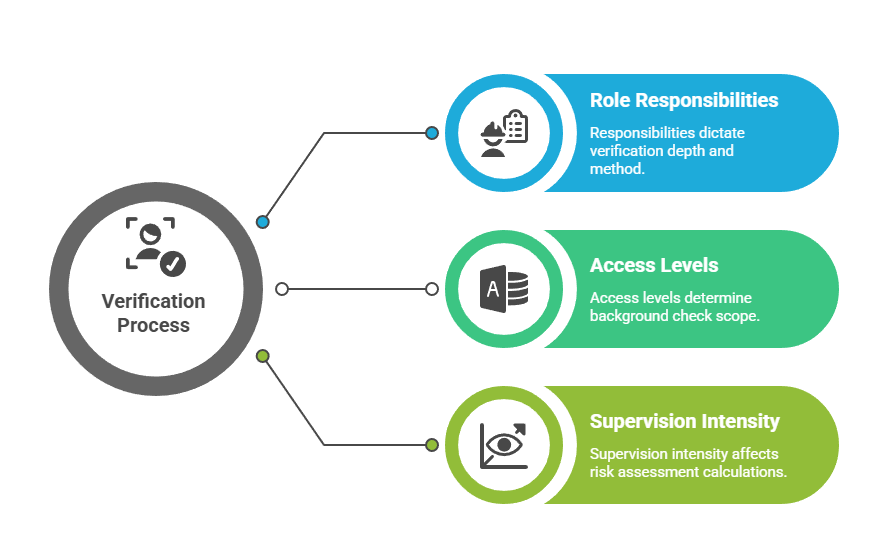
- Role responsibilities directly inform verification depth and method selection
- Access levels determine appropriate background check scope
- Supervision intensity influences risk assessment calculations
The Hidden Costs of Inadequate Screening
Organizations often calculate screening costs narrowly by focusing on per-report fees while overlooking downstream impacts. Inadequate screening may lead to increased theft, workplace safety incidents, regulatory violations, or customer complaints.
Research on temporary workforce management indicates that screening-related quality improvements often manifest in retention metrics. When organizations screen thoughtfully and communicate standards clearly, they attract candidates who understand workplace expectations and are more likely to complete assignments successfully.
| Cost Category | Direct Impacts | Indirect Impacts |
| Inadequate Screening | Theft, safety incidents, regulatory violations | Reputation damage, morale reduction, training disruption |
| Mid-Season Turnover | Replacement recruiting, repeated orientation | Operational gaps, supervision burden, team instability |
| Quality Issues | Product defects, service failures | Customer dissatisfaction, brand erosion |
The cost-benefit calculus shifts when organizations view screening as a workforce quality tool rather than purely a risk filter. Verification investments that reduce first-week voluntary turnover generate positive returns through reduced recruiting cycles and supervision intensity.
I think that seasonal hiring is never just about filling the positions as quickly as possible. Rather, it is about creating a process that is protective of the organization, the candidate, and the compliance process at the same time. I have learned that the process of thoughtful screening based on the specific roles being hired for can actually build better teams and better operations, especially in the midst of seasonal hiring. When we consider the process of background checks as being a part of the overall workforce strategy rather than just a step in the process, we can actually build better quality and trust throughout the process.
Legal Framework Governing Temporary Worker Screening
Federal and state laws establish requirements that apply regardless of employment duration. The Fair Credit Reporting Act governs how organizations obtain and use consumer reports, including the best background checks for temporary workers.
Federal Compliance Requirements
Organizations using consumer reporting agencies to obtain background information must provide written disclosure and obtain written authorization before procuring reports. The disclosure must be clear, conspicuous, and exist as a standalone document.
When screening results may contribute to an adverse employment decision, federal law requires specific procedural steps:
- Pre-adverse action notice including a copy of the consumer report and a summary of consumer rights
- Reasonable waiting period allowing candidates to review information and identify potential inaccuracies
- Final adverse action notice identifying the consumer reporting agency and explaining dispute rights
- Clarification that the agency did not make the employment decision
State and Local Variations
State and municipal laws add jurisdiction-specific requirements that may restrict what information employers can obtain, when they can request it, and how they can use it.
Ban-the-box laws in numerous jurisdictions restrict when employers can inquire about criminal history, with significant variation in scope, timing, and assessment requirements. Some prohibit questions on initial applications, some mandate individualized assessments before disqualification based on conviction records, and requirements differ regarding employer size, position types, and procedural steps. Organizations must research specific requirements in each applicable jurisdiction.
Lookback period limitations restrict how far back certain searches can extend, with variations by state, record type, position, salary level, and whether restrictions apply to consumer reporting agency reporting or employer use of information. Some states impose seven-year limits on certain records, others have different timeframes for convictions versus arrests, and some create exceptions based on position salary thresholds.
Some jurisdictions prohibit salary history inquiries, restrict credit report use for employment purposes, or impose additional disclosure and authorization requirements beyond federal standards. Organizations hiring temporary workers across state lines must navigate this patchwork of requirements, as employee location rather than employer headquarters typically determines applicable law.
Designing Risk-Tiered Screening Programs

Uniform screening protocols applied across all temporary positions often result in either over-screening low-risk roles or under-screening positions with significant responsibility. Risk-tiered frameworks align verification intensity with actual exposure levels.
Role Analysis Methodology
Effective risk tiering begins with systematic role analysis examining multiple factors:
- Access considerations include what physical locations, systems, data, or assets the position can reach
- Authority factors address what decisions the role can make independently
- Interaction patterns examine whether the position involves vulnerable populations or unsupervised contact
- Duration and supervision intensity determine screening depth based on exposure timeframes
| Screening Tier | Position Characteristics | Typical Verification Methods |
| Basic Tier | Highly supervised, short-duration, limited access | Identity verification, single-jurisdiction criminal search |
| Intermediate Tier | Moderate responsibility, longer duration, customer interaction | Identity verification, expanded criminal search, employment verification |
| Enhanced Tier | Vulnerable populations, financial authority, driving, unsupervised access | Multi-jurisdictional criminal search, employment verification, specialized searches, MVR when applicable |
Verification Method Selection
The best background checks for temporary workers combine verification methods addressing role-specific risks rather than applying generic packages:
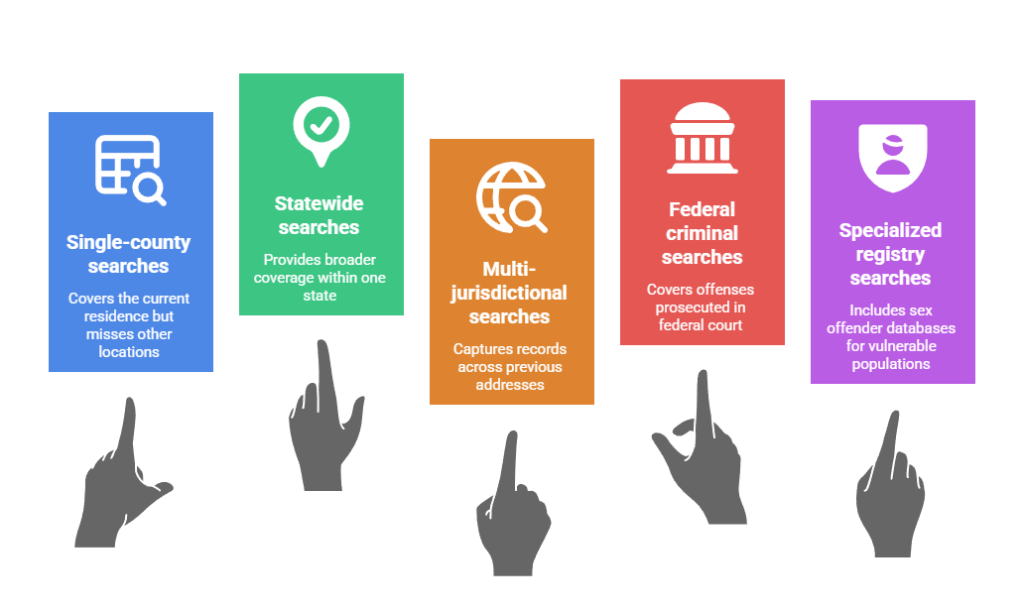
- Single-county searches cover the jurisdiction where the candidate currently resides but miss records from other locations
- Statewide searches provide broader coverage within one state
- Multi-jurisdictional searches based on address history capture records across locations where the candidate previously lived
- Federal criminal searches cover offenses prosecuted in federal court systems
- Specialized registry searches including sex offender databases prove necessary for roles involving vulnerable populations
Identity verification confirms that candidates are who they claim to be, reducing fraud risk. Methods range from document review to database verification to biometric confirmation.
Operational Challenges in Seasonal Hiring Contexts
Temporary worker screening occurs within compressed timelines and high-volume hiring contexts that create operational pressures. Organizations must balance thoroughness with speed while maintaining compliance standards.
Timeline Realities and Constraints
Verification timelines depend on multiple variables outside organizational control:
- Criminal record searches require courthouse access, with timing affected by court operating hours and backlog levels
- Electronic access enables rapid results in some jurisdictions
- Physical courthouse visits with manual record retrieval extend timelines in other locations
- Employment and education verifications depend on third-party responsiveness
Organizations managing these realities often implement staggered screening protocols. Essential verifications blocking initial onboarding complete first, while additional searches continue in parallel.
Volume Management and Quality Maintenance
Seasonal hiring surges create volume pressures that challenge quality maintenance. Organizations processing hundreds or thousands of applications in compressed periods must systematize workflows.
| Volume Challenge | Mitigation Strategy | Quality Safeguard |
| Application surges | Staggered deadlines, batch processing | Standardized forms and tier mappings |
| Staff capacity limits | Temporary HR support, workflow automation | Comprehensive training on compliance |
| Timeline compression | Early recruitment, conditional start protocols | Clear communication of processing timeframes |
Technology platforms that automate workflow routing, deadline tracking, and communication sequencing can help manage volume while supporting procedural consistency, provided the platforms are properly configured to meet legal requirements. Organizations should validate that automated workflows comply with disclosure, authorization, timing, and communication requirements under applicable federal and state laws.
Multi-State and Remote Seasonal Worker Considerations
Organizations increasingly hire temporary workers who operate remotely or across multiple jurisdictions. A remote customer service representative for holiday season support might work from any state, while traveling sales staff cross state lines regularly.
Jurisdictional Determination
Determining which state's laws apply requires analyzing where the employee performs work. Many state laws apply based on work location rather than employer headquarters. For example, jurisdictions with fair chance hiring laws typically apply those requirements when remote workers perform work from within that jurisdiction, regardless of where the hiring company is based. However, jurisdictional triggers vary by state and law type, with some using employee residence, work performance location, or employer operational presence as determining factors.
Multi-state employers often apply the most protective state's requirements across their entire temporary workforce to ensure consistent compliance.
Search Scope for Mobile Workers
Criminal record search scope for workers covering multiple jurisdictions requires strategic planning:
- Address history development identifies where the candidate has lived
- Temporary workers who travel for assignments may spend significant time in locations that don't appear in residential address history
- Organizations employing traveling seasonal staff often implement expanded search protocols covering work location jurisdictions
- Broader scope increases coverage but also extends timelines and costs
Federal database searches provide nationwide scope but carry limitations in accuracy, completeness, and timeliness that may lead to compliance risks. These repositories aggregate data from multiple sources with varying update frequencies and inclusion criteria. Organizations using federal database searches should verify records through direct court searches before taking adverse action, as reliance on unverified database information may lead to decisions based on incomplete or inaccurate data.
Technology Integration and Emerging Screening Methods
Technological advancement continues reshaping how organizations verify temporary worker backgrounds. Automated identity verification, continuous monitoring, and artificial intelligence-assisted analysis present both opportunities and considerations.
Automated Identity Verification
Technology-enabled identity verification methods use database cross-referencing, document authentication, and biometric analysis to confirm candidate identity rapidly. These systems compare provided information against multiple data sources and flag inconsistencies.
For high-volume seasonal hiring, automated identity verification accelerates processing while reducing manual review burden:
- False positive rates occur when systems incorrectly flag legitimate candidates
- Database coverage variations may disproportionately impact certain populations
- Candidate experience suffers when friction increases due to verification challenges
When identity verification serves as part of a consumer report under federal law, disclosure, authorization, and adverse action requirements apply.
Continuous Monitoring Approaches
Continuous monitoring systems alert employers to new criminal records, license changes, or other relevant events occurring after initial hiring. For temporary workers employed across multiple seasons, continuous monitoring potentially reduces the need for complete re-screening.
| Monitoring Aspect | Legal Consideration | Implementation Requirement |
| Permissible Purpose | Ongoing employment relationship must exist | Clear policy defining when monitoring applies |
| Alert Triggers | Not all new records justify employment action | Defined evaluation criteria for alerts |
| Individualized Assessment | Case-by-case analysis required | Documented review process |
Permissible purpose requirements under federal law limit when employers can obtain consumer reports to situations involving current employment relationships or specific applicant screening. For seasonal workers returning in subsequent periods, whether continuous monitoring between seasons satisfies permissible purpose requirements requires careful legal analysis. State laws may impose additional restrictions on continuous monitoring, including notification requirements and limitations on surveillance activities.
Artificial Intelligence and Algorithmic Decision Support
Artificial intelligence systems applied to screening contexts analyze patterns, predict risk, or recommend decisions based on background information. Organizations considering AI-assisted screening methods must evaluate accuracy, bias potential, explainability, and legal compliance.
Algorithmic systems trained on historical data may perpetuate historical discrimination patterns, creating potential liability under federal and state anti-discrimination laws. Organizations should conduct disparate impact analysis, validation studies, and ongoing monitoring to evaluate whether AI-assisted screening produces discriminatory outcomes. Regulatory requirements for AI in employment continue evolving, with proposed and enacted rules in various jurisdictions addressing algorithmic decision systems.
Organizations using these technologies should ensure they can explain how systems function and maintain human oversight of final decisions.
Cost Structures and Return on Investment Analysis
Understanding screening program economics requires examining both direct costs and operational impacts.
Direct and Indirect Cost Components
Direct costs include fees paid for verification services, which vary based on search types and jurisdictions covered. Indirect costs include staff time for program administration, candidate communication, and record review:
- Technology platform subscriptions
- Legal consultation fees
- Compliance training expenses
- Surge capacity costs during peak periods
Organizations often overlook delay costs. Extended verification timelines that postpone start dates may result in lost candidates who accept other offers or operational gaps during critical periods.
Value Measurement Frameworks
Measuring screening program value requires identifying what outcomes improve and quantifying those improvements:
- Voluntary termination rates during the first 30 days
- Inventory accuracy percentages
- Safety incident frequency rates
- Customer satisfaction scores
- Regulatory compliance audit results
| Value Category | Measurement Approach | Data Sources |
| Turnover Reduction | First-30-day voluntary termination rate | HRIS tracking, exit interview data |
| Loss Prevention | Inventory shrinkage percentage | Inventory systems, audit reports |
| Safety Improvement | Incident frequency and severity | Workers' compensation claims |
| Customer Experience | Satisfaction scores, complaint rates | Feedback systems, service metrics |
Establishing baseline metrics before program implementation enables subsequent comparison. Improvements following screening program changes demonstrate value, though isolating screening impact from other variables requires careful analysis.
Candidate Experience and Talent Pipeline Implications
How organizations conduct background checks for seasonal employees affects candidate perceptions, completion rates, and willingness to return for future seasons.
Communication and Transparency
Clear communication about screening requirements, timelines, and processes reduces candidate anxiety and improves cooperation. Organizations should explain what verifications will occur, why they're necessary, and how long they typically take.
Providing regular status updates during processing demonstrates respect for candidates' planning needs. When delays occur, proactive communication explaining the situation and providing revised timelines maintains positive relationships.
Adverse Action Communication Best Practices
When screening results lead to adverse decisions, how organizations communicate those outcomes significantly impacts candidate experience and legal compliance:
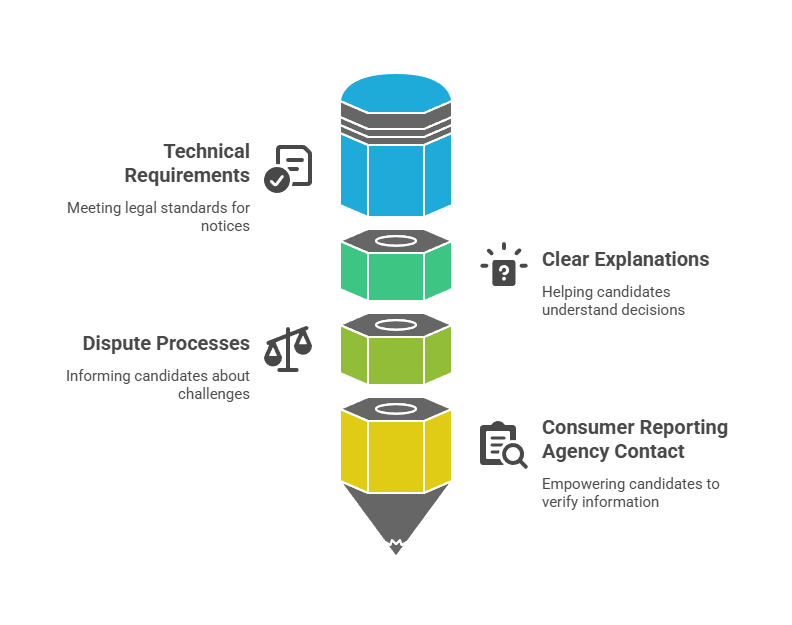
- Beyond meeting technical requirements for pre-adverse and final adverse action notices, thoughtful communication demonstrates professionalism
- Explaining the basis for decisions in clear terms helps candidates understand outcomes
- Providing information about dispute processes fulfills legal obligations while supporting candidates
- Organizations should ensure candidates understand they can contact the consumer reporting agency to challenge information accuracy
For positions where individualized assessment occurred, explaining how specific convictions related to job responsibilities demonstrates fair consideration.
Conclusion
Strategic screening programs for temporary workers balance competing priorities through risk-tiered frameworks that align verification depth with role-specific requirements. Organizations that view background checks as workforce quality initiatives achieve better outcomes across retention, operational effectiveness, and talent pipeline development.
Frequently Asked Questions
What types of background checks do employers typically run on seasonal employees?
Verification types depend on role requirements but commonly include identity confirmation, criminal record searches at appropriate jurisdictional levels, and employment history reviews. Positions involving driving require motor vehicle record checks, while roles with vulnerable populations necessitate specialized registry searches.
How long do background checks for temporary workers usually take?
Timeframes vary significantly based on verification methods selected, jurisdictions involved, and third-party responsiveness. Some verifications complete within one to two business days, while others requiring courthouse access or manual processes may take one to two weeks.
Can employers conduct different background checks for seasonal versus permanent employees?
Organizations may apply different screening protocols based on role requirements, responsibilities, and risk factors rather than employment classification alone. A seasonal warehouse supervisor might require similar screening to a permanent supervisor due to comparable responsibilities.
Do background check requirements differ by state for temporary workers?
State laws create significant variation in what information employers can obtain, when they can request it, and how they can use it. Requirements regarding ban-the-box compliance, lookback period limitations, and individualized assessment mandates differ across jurisdictions.
What should employers do if a seasonal employee's background check reveals concerning information?
Federal law requires organizations to provide pre-adverse action notice including a copy of the consumer report and summary of rights, allow reasonable time for response, and then provide final adverse action notice if the decision stands. Many state and local jurisdictions also require individualized assessment considering offense nature, time elapsed, and relationship to job responsibilities before disqualification based on conviction records.
How can organizations screen seasonal workers quickly without compromising compliance?
Effective approaches include advance planning with early application deadlines, staggered screening protocols prioritizing essential verifications, clear role-to-screening tier mappings, and streamlined authorization processes. Organizations should understand realistic timelines and build hiring calendars accordingly.
Are background checks required by law for temporary employees?
Federal law does not mandate background checks for most private-sector positions, whether temporary or permanent. However, specific industries, roles involving vulnerable populations, or positions requiring certain licenses may face legal screening requirements.
What rights do seasonal job applicants have during the background check process?
Applicants have rights to written disclosure before consumer reports are obtained, to provide written authorization before reports are procured, to receive copies of reports that contribute to adverse decisions, and to dispute inaccuracies with consumer reporting agencies.
Additional Resources
- Fair Credit Reporting Act Overview and Compliance Guidance
https://www.ftc.gov/legal-library/browse/statutes/fair-credit-reporting-act - Equal Employment Opportunity Commission Background Check Guidance
https://www.eeoc.gov/laws/guidance/background-checks-what-employers-need-know - U.S. Department of Labor Employment Law Guide
https://www.dol.gov/general/topics - Federal Trade Commission: Using Consumer Reports for Employment Purposes
https://www.ftc.gov/business-guidance/resources/using-consumer-reports-what-employers-need-know - National Conference of State Legislatures: Employment Background Checks State Laws
https://www.ncsl.org/labor-and-employment/employment-background-checks

ABOUT THE CREATOR
GCheck Editorial Team
Meet the GCheck Editorial Team, your trusted source for insightful and up-to-date information in the world of employment background checks. Committed to delivering the latest trends, best practices, and industry insights, our team is dedicated to keeping you informed.
With a passion for ensuring accuracy, compliance, and efficiency in background screening, we are your go-to experts in the field. Stay tuned for our comprehensive articles, guides, and analysis, designed to empower businesses and individuals with the knowledge they need to make informed decisions.
At GCheck, we're here to guide you through the complexities of background checks, every step of the way.