



The Transportation Worker Identification Credential (TWIC) is a federally mandated biometric security card required for unescorted access to secure areas of maritime facilities and vessels regulated by the Maritime Transportation Security Act. Obtaining a TWIC card involves a multi-step process including online pre-enrollment, in-person biometric capture, and a comprehensive Transportation Security Administration (TSA) background check that evaluates criminal history, immigration status, and security threat assessments against disqualifying criteria established under 49 CFR § 1572.
Key Takeaways
- The TWIC card application process typically takes 3-5 weeks from enrollment to card receipt, though background check complexities can extend timelines to 12 weeks or longer in cases requiring additional review or appeals.
- Applicants must complete online pre-enrollment through the TSA’s official TWIC program website, then visit a designated enrollment center within 120 days to provide biometric data (fingerprints and photograph) and original identity documentation.
- The TSA conducts a Security Threat Assessment examining criminal history databases, terrorist watchlists, immigration records, and mental health adjudications to identify permanent or interim disqualifying offenses as defined in 49 CFR § 1572.103 and § 1572.105.
- Permanent disqualifying offenses include espionage, sedition, treason, federal terrorism crimes, and certain immigration violations, while interim disqualifying offenses (such as felonies involving firearms, explosives, or controlled substances) may result in disqualification for specific lookback periods ranging from 5-7 years.
- Applicants have the right to appeal TSA determinations through the waiver process or by challenging the accuracy of criminal records, with reconsideration requests requiring supporting documentation such as court records, rehabilitation evidence, or corrected FBI identification records.
- TWIC cards remain valid for five years from issuance date, and renewal applications should be initiated 8-12 weeks before expiration to prevent workforce access disruptions, with returning applicants required to undergo the full background screening process again.
- Employers cannot make hiring decisions based solely on anticipated TWIC eligibility without following Fair Credit Reporting Act (FCRA) adverse action procedures if using third-party screening services to evaluate criminal history before the TSA determination.
- Strategic preparation includes obtaining certified copies of court dispositions for all criminal history entries, ensuring name consistency across identity documents, and understanding state-specific record sealing or expungement options that may affect TSA background check outcomes.
Understanding the TWIC Card and Federal Security Requirements
The Transportation Worker Identification Credential represents a critical security measure implemented following the Maritime Transportation Security Act of 2002. This federally issued credential serves as both an identity verification tool and a security clearance indicator for individuals requiring regular access to restricted maritime and port facility areas. Understanding its purpose and legal framework helps employers and workers navigate the application process more effectively.
What Is a TWIC Card and Who Needs One
A TWIC card functions as a tamper-resistant biometric credential containing the cardholder’s name, photograph, fingerprint template, and a unique credential number linked to federal security databases. The card incorporates multiple security features including holographic images, magnetic strips, and integrated circuit chips that enable both visual inspection and electronic verification. These technological safeguards prevent counterfeiting and unauthorized duplication.
The following maritime personnel must obtain valid TWIC credentials:
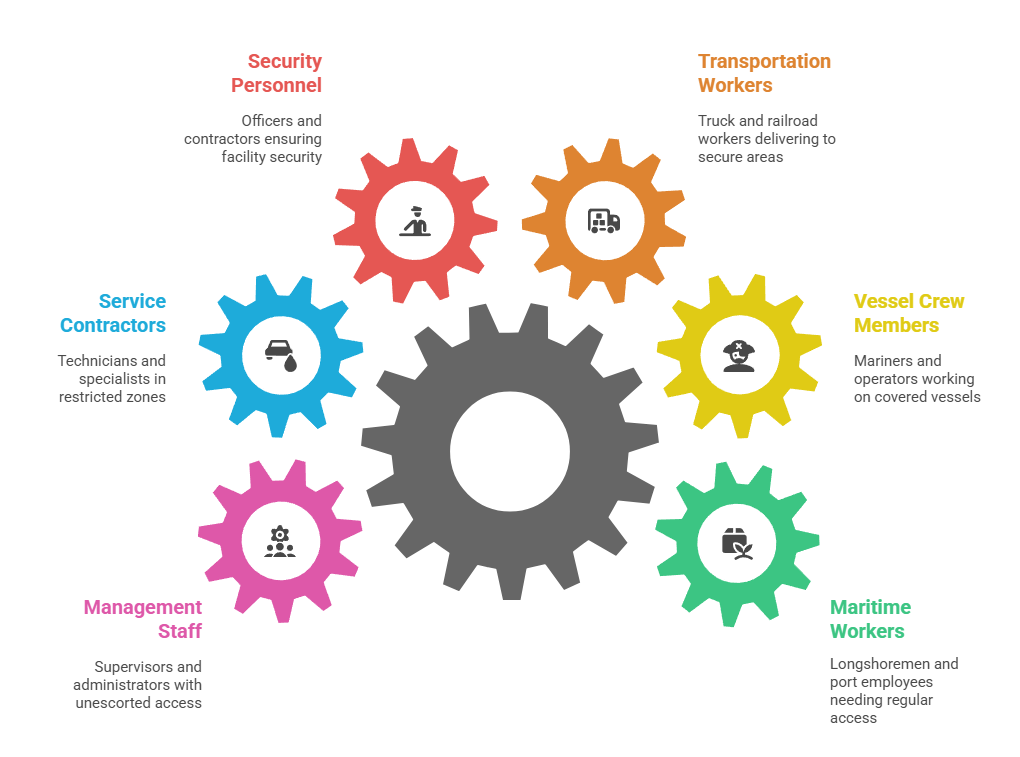
- Maritime workers: Longshoremen, stevedores, port facility employees requiring regular facility access
- Vessel crew members: Merchant mariners, barge operators, tug boat operators working on covered vessels
- Transportation workers: Truck drivers making deliveries to secure port areas, railroad workers accessing facilities
- Security personnel: Facility security officers, access control officers, security contractors
- Service contractors: Maintenance technicians, equipment repair specialists, construction contractors performing services in restricted zones
- Management staff: Terminal managers, supervisors, administrative personnel requiring unescorted access
The requirement extends to U.S. citizens, lawful permanent residents, and certain non-immigrants authorized to work in maritime transportation sectors. Employers operating facilities subject to Maritime Transportation Security Act regulations must verify that all personnel requiring unescorted access maintain current, valid TWIC credentials.
“The success of the hiring process is not simply defined by the candidate who was chosen, but more so by the extent to which the organization stands behind its employees during the journey.” This belief has been with me throughout my career in HR, and one of the most tangible ways in which we can prove this is by helping workers navigate the various credentialing and background checks involved. There are few things more powerful than being led through a federal process, as opposed to being left to fend for yourself. �
The Legal Framework Behind Maritime Security Clearances
The Maritime Transportation Security Act established comprehensive security requirements for port facilities, vessels, and maritime workers following national security assessments. The Department of Homeland Security implements these requirements through the Transportation Security Administration and Coast Guard via regulatory frameworks codified in Title 33 and Title 49 of the Code of Federal Regulations. These regulations create binding legal obligations for facility operators and maritime employers.
Under 33 CFR Part 105, facility owners and operators must implement security plans that restrict access to designated secure areas exclusively to individuals holding valid TWIC credentials or visitors under continuous escort. Regulations also mandate that employers verify credential validity and maintain access control systems that integrate TWIC authentication technology. Coast Guard personnel conduct facility inspections and compliance audits throughout the year.
Civil penalties for violations range from warnings to facility closure orders depending on severity and compliance history. Repeated violations or willful noncompliance may result in criminal referrals to federal prosecutors. Facility operators bear legal responsibility for ensuring all personnel accessing secure areas possess valid, unexpired credentials.
How TWIC Differs from Standard Employment Background Checks
The TSA Security Threat Assessment process operates independently from typical pre-employment background screening conducted by employers or consumer reporting agencies. Standard employment checks focus on suitability determinations based on job-related criminal history, driving records, employment verification, and education credentials. In contrast, the TWIC background investigation specifically evaluates national security and transportation security threats using federal databases.
| Employment Background Check | TSA Security Threat Assessment |
| Conducted by employers or consumer reporting agencies | Performed directly by federal Transportation Security Administration |
| Evaluates job suitability and general criminal history | Assesses specific national security and transportation security threats |
| May rely on commercial databases and public records | Accesses FBI criminal databases, terrorist watchlists, immigration records |
| Subject to FCRA disclosure and authorization requirements | Federal security clearance process with statutory authority |
| Employers make hiring decisions based on findings | TSA makes credential eligibility determinations |
TSA maintains direct access to FBI criminal history databases, terrorist screening databases, immigration and naturalization records, and mental health adjudication records without relying on secondary data aggregators. The disqualifying offense criteria reflect transportation security concerns rather than general employment suitability standards. Consequently, an individual may pass an employer’s background screening but fail the TSA Security Threat Assessment, or vice versa.
The Complete TWIC Application Process Step-by-Step
Navigating the TWIC application requires careful attention to procedural requirements and documentation standards. Understanding each phase prevents common delays and ensures efficient processing. Applicants benefit from methodical preparation before initiating enrollment.
Pre-Enrollment Requirements and Online Registration
The application process begins at the official TSA TWIC program website, where applicants create accounts and complete pre-enrollment forms. This initial phase collects biographical information including full legal name, date of birth, Social Security number, citizenship or immigration status, physical characteristics, and contact information. Applicants must also disclose criminal history, previous names, and any prior credential denials or revocations.
The online system generates a pre-enrollment confirmation with a unique application identifier and instructions for scheduling an enrollment center appointment. Applicants should complete pre-enrollment carefully, as information inconsistencies between the application and supporting documents create processing delays. The pre-enrollment remains valid for 120 days, requiring in-person enrollment completion within that timeframe to avoid restarting the application.
In-Person Enrollment Center Visit and Documentation
Applicants must visit a designated TWIC enrollment center with original or certified copies of identity and citizenship documents. Document verification requires original documents or certified copies bearing official seals—photocopies are not acceptable under TSA standards. Acceptable documentation includes the following options based on citizenship status:
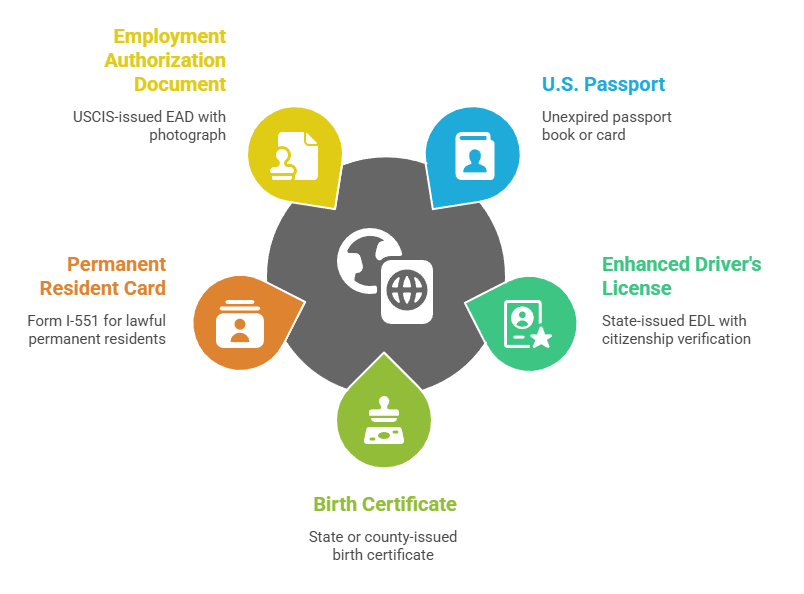
- U.S. passport: Unexpired passport book or passport card serving as both identity and citizenship proof
- Enhanced driver’s license: State-issued EDL from participating states with embedded citizenship verification
- Birth certificate plus photo ID: State or county-issued birth certificate paired with government photo identification
- Permanent Resident Card: Form I-551 for lawful permanent residents with valid status
- Employment authorization document: USCIS-issued EAD with photograph for authorized nonimmigrants
During the enrollment appointment, center personnel verify documents against TSA standards, capture digital fingerprints using biometric scanners, photograph the applicant for card production, and collect the application fee. Applicants should bring multiple forms of documentation when possible to address potential verification issues. The enrollment center provides a receipt document with the application status tracking number and estimated processing timeline.
Biometric Capture and Identity Verification Standards
The biometric enrollment process captures high-resolution fingerprint images from all ten fingers, creating templates stored in federal databases for identity verification and criminal history checks. These biometric identifiers link the credential to the individual, preventing fraudulent card use and enabling authentication at facility access points equipped with biometric readers. TSA maintains strict quality standards for biometric capture, occasionally requiring multiple capture attempts if initial fingerprint images fail quality thresholds.
Individuals with worn fingerprints due to occupational factors or medical conditions may experience enrollment challenges, though alternative identity verification procedures exist for qualifying circumstances. The photograph undergoes similar quality review to ensure facial recognition system compatibility and card production standards. Both biometric elements must meet federal specifications before enrollment centers can complete the application submission.
TSA Security Threat Assessment Timeline and Process
Following enrollment, TSA initiates the Security Threat Assessment, querying criminal justice information systems, terrorist screening databases, immigration records, and mental health adjudication repositories. This process typically completes within 3-5 weeks for applicants without disqualifying factors. Comprehensive checks may extend timelines when records require additional verification or adjudication.
The assessment evaluates each criminal history entry against the disqualifying offense categories, considering offense dates, conviction statuses, sentence completion, and applicable lookback periods:
- Initial database queries: TSA accesses FBI National Crime Information Center, terrorist watchlists, immigration systems, and mental health repositories
- Record verification: Incomplete or ambiguous entries trigger requests for court documents and disposition certificates
- Adjudication review: Designated TSA personnel evaluate findings against regulatory disqualification criteria under 49 CFR § 1572
- Applicant notification: Approved applicants receive card collection instructions; denied applicants receive Initial Determination letters with appeal rights
TSA may contact applicants requesting additional documentation such as court records, disposition certificates, or explanatory statements when database information appears incomplete or ambiguous. Prompt response to these requests prevents extended processing delays. Applicants receive notification when the Security Threat Assessment concludes.
Understanding TWIC Background Check Disqualifying Factors
The TSA Security Threat Assessment applies specific disqualifying criteria established through federal regulation. Understanding these factors enables applicants and employers to anticipate potential obstacles and prepare appropriate responses. Regulations distinguish between permanent and interim disqualifications based on offense severity and transportation security relevance.
Permanent Disqualifying Criminal Offenses
Certain convictions result in permanent TWIC ineligibility without possibility of waiver. Federal regulations under 49 CFR § 1572.103 establish these non-waivable disqualifications to protect critical transportation infrastructure. Permanent disqualifying offenses include espionage, sedition, treason, terrorism-related crimes, murder, federal crimes involving transportation security, and improper transportation of hazardous materials causing death.
Convictions under the Espionage Act, crimes under 18 U.S.C. § 2332b (acts of terrorism transcending national boundaries), and violations of 49 U.S.C. § 46502 (aircraft piracy) fall within this category. Additionally, immigration violations including obtaining entry through fraud or making false statements to obtain immigration benefits permanently disqualify applicants. Mental health adjudications finding individuals not guilty by reason of insanity, incompetent to stand trial, or presenting dangers due to mental illness also create permanent bars.
Individuals adjudicated under state civil commitment proceedings as dangerous or lacking mental capacity face similar permanent disqualifications. These permanent bars apply regardless of rehabilitation evidence, time passage since conviction, or subsequent legal developments such as gubernatorial pardons. TSA maintains no discretionary authority to grant waivers for permanent disqualifying offenses under current regulatory frameworks.
Interim Disqualifying Offenses and Lookback Periods
Interim disqualifying offenses under 49 CFR § 1572.103 result in temporary ineligibility based on specific lookback periods calculated from conviction dates or release from incarceration, whichever occurs later. Understanding these timeframes helps applicants determine current eligibility status and plan application timing accordingly.
| Lookback Period | Offense Categories | Eligibility Restoration |
| 7 years | Unlawful possession, use, sale, or manufacture of explosives or firearms; felony dishonesty, fraud, or misrepresentation; extortion; aggravated assault; immigration violations | Automatic eligibility once 7 years pass from conviction/release |
| 5 years | Conspiracy or attempt to commit disqualifying offenses; unlawful possession of controlled substances; misdemeanor dishonesty or false statements | Automatic eligibility once 5 years pass from conviction/release |
| No lookback limit | Permanent disqualifications (espionage, treason, terrorism, murder) | No eligibility restoration possible |
Applicants with convictions falling outside applicable lookback periods regain eligibility, though TSA evaluates the complete criminal history context during adjudication. Importantly, arrest records without convictions do not constitute disqualifying factors under TSA standards. Dismissed charges, not guilty verdicts, deferred adjudications resulting in case dismissals, and expunged convictions may not appear in TSA database queries or should not form bases for denials when properly documented.
Immigration Status and Authorized Work Considerations
TWIC eligibility extends to U.S. citizens, lawful permanent residents, refugees, asylees, and certain nonimmigrant categories authorized for U.S. employment. Nonimmigrants must possess valid immigration status at application and throughout the credential validity period. Immigration violations including overstay periods, work without authorization, or prior removal proceedings may trigger disqualifications depending on specific circumstances and violation severity.
TSA coordinates with U.S. Citizenship and Immigration Services to verify immigration status, potentially extending processing timelines for noncitizen applicants requiring additional verification. Current immigration status must remain valid throughout the five-year credential period for nonimmigrant holders. Status changes during the credential validity period may necessitate early renewal or credential surrender.
Employers should recognize that TWIC approval does not independently establish work authorization. Separate Form I-9 employment eligibility verification remains mandatory, and employers must maintain compliance with both processes independently. The TWIC card may serve as a List B identity document when paired with appropriate work authorization documentation for I-9 purposes.
Mental Health Adjudications and Security Concerns
Federal law prohibits firearms possession by individuals adjudicated as mental defectives or committed to mental institutions. TSA extends similar disqualifications to TWIC eligibility under transportation security authorities to ensure personnel accessing secure facilities do not pose safety risks. Mental health adjudications creating TWIC disqualifications include formal findings by courts, boards, or authorized officials that individuals lack mental capacity to manage their own affairs, present dangers to themselves or others, or were found not guilty by reason of insanity.
Voluntary mental health treatment, psychiatric hospitalizations without formal adjudications, psychological counseling, or medication management for mental health conditions do not constitute disqualifying factors:
- Disqualifying: Court-ordered involuntary commitment, formal incompetency findings, not guilty by reason of insanity verdicts, civil commitment as dangerous
- Non-disqualifying: Voluntary inpatient treatment, outpatient therapy, psychiatric medication management, counseling services, voluntary hospitalizations
The distinction between voluntary treatment and formal legal adjudication proves critical for applicants with mental health histories. Database reporting of mental health adjudications varies significantly by state, with some jurisdictions maintaining comprehensive reporting to the National Instant Criminal Background Check System while others report minimally or not at all.
Navigating TWIC Denials, Appeals, and Waivers
TSA denials do not necessarily represent final determinations. Understanding appeal rights and waiver options enables applicants to pursue reconsideration when appropriate. The appeals process provides structured pathways for addressing factual errors and demonstrating rehabilitation.
Understanding Your Initial Determination Letter
Denied applicants receive Initial Determination of Threat Assessment letters specifying the disqualifying factor basis, whether permanent or interim offenses, and the regulatory authority under which TSA made the determination. These letters include criminal history information TSA relied upon, typically identifying offense dates, conviction jurisdictions, and offense descriptions from law enforcement database records. Review of this information for accuracy represents the critical first step in any appeal strategy.
The Initial Determination provides critical deadlines for appeal responses, generally allowing 60 days from receipt date to submit waiver requests or record correction challenges. The letter also explains available appeal pathways including demonstrating record inaccuracy, applying for criminal history record corrections through the FBI, or submitting waiver applications with supporting documentation. Applicants should carefully review Initial Determinations for factual accuracy, comparing listed offenses against personal records and court documents.
The Waiver Application Process and Success Factors
For interim disqualifying offenses within lookback periods, applicants may request waivers by demonstrating circumstances warranting favorable discretion despite disqualifying convictions. Waiver applications require comprehensive documentation packages addressing TSA concerns about security risks. Successful waiver applications typically include certified court disposition records showing offense details and sentencing outcomes, evidence of sentence completion including probation or parole discharge documentation, rehabilitation evidence such as employment history and character references, and explanatory statements providing context.
TSA evaluates waiver requests considering multiple factors:
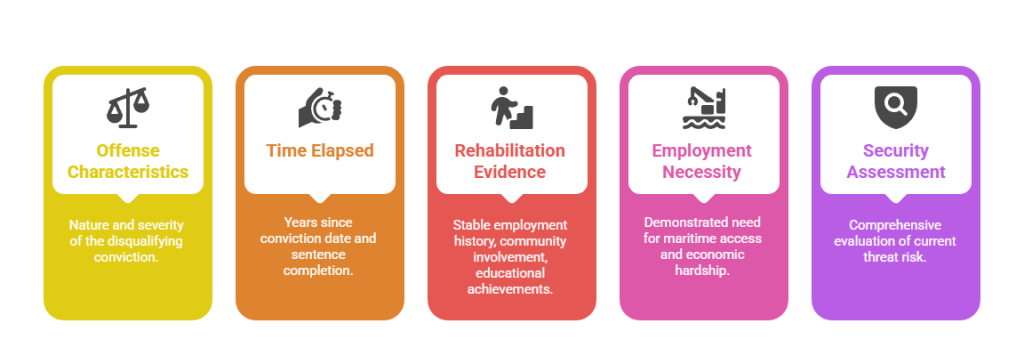
- Offense characteristics: Nature and severity of the disqualifying conviction, violence level, victim impact
- Time elapsed: Years since conviction date and sentence completion, with older offenses receiving more favorable consideration
- Rehabilitation evidence: Stable employment history, community involvement, educational achievements, character references
- Employment necessity: Demonstrated need for maritime access and economic hardship without approval
- Overall security assessment: Comprehensive evaluation of current threat risk based on totality of circumstances
The waiver review process extends application timelines significantly, often requiring 12-16 weeks or longer for adjudication. TSA provides no guarantees regarding waiver approval likelihood, and approval standards remain deliberately discretionary to accommodate individual circumstance evaluations. Applicants should prepare comprehensive documentation packages addressing potential TSA concerns and demonstrating security risk mitigation through rehabilitation evidence.
Correcting Inaccurate Criminal History Records
When Initial Determinations reflect incorrect criminal history information, applicants may challenge denials by obtaining corrected FBI identification records and submitting revised information to TSA. The FBI maintains the Criminal Justice Information Services division that processes requests for personal criminal history record reviews and corrections through the Challenge process. This procedure enables applicants to correct database errors that may have led to wrongful denials.
Common errors include charges that were dismissed, convictions that were expunged, offenses incorrectly attributed to the applicant through name or birthdate similarities, or database entries reflecting incomplete disposition information. Corrections require obtaining certified court documents showing accurate case outcomes and submitting correction requests to the FBI with supporting documentation. Processing times for FBI record corrections typically range from 8-12 weeks depending on case complexity.
Once the FBI updates records, applicants provide TSA with corrected identification record copies and documentation supporting the changes. TSA reviews updated information and reconsiders the initial determination if corrections remove disqualifying factors. This process proves time-intensive but essential when database inaccuracies created wrongful denials.
State Expungement and Record Sealing Impacts
State court expungement orders and record sealing impact TWIC eligibility variably depending on federal database updates and interstate record sharing practices. While state courts may seal or expunge conviction records under state law, FBI databases may retain original arrest and conviction information depending on reporting practices and database update procedures. Federal agencies including TSA generally receive access to sealed or expunged records maintained in FBI databases under national security and transportation security authorities.
| Record Status | State Law Effect | FBI Database | TSA Consideration |
| Active conviction | Full public access | Reported to FBI | Evaluated against disqualification criteria |
| Expunged conviction | State records sealed | May remain in FBI system | Should not disqualify with documentation |
| Dismissed charges | No conviction exists | May appear as arrest only | Not disqualifying absent conviction |
| Pardoned conviction | Legal relief granted | Remains in database with notation | Should not disqualify with pardon documentation |
TSA policy directs adjudicators not to deny credentials based solely on convictions that have been expunged, pardoned, or set aside, provided applicants submit documentation establishing the legal relief obtained. Applicants with expunged convictions should proactively provide certified court orders showing expungement and documentation of case outcomes during the appeal process. This approach enables TSA adjudicators to appropriately credit legal relief rather than relying solely on database entries.
TWIC Card Renewal Requirements and Procedures
TWIC cards expire five years from issuance, requiring timely renewal to maintain facility access authorization. Understanding renewal procedures prevents workforce disruptions and compliance gaps. Employers and workers share responsibility for monitoring expiration dates and initiating renewals with adequate lead time.
When to Begin the Renewal Process
Cardholders should initiate renewal applications 8-12 weeks before card expiration dates to accommodate processing timelines and prevent credential gaps. The TSA permits renewal applications up to one year before expiration, allowing proactive employers and workers to manage renewals during planned workforce downtime or off-peak operational periods. Expired TWIC cards immediately invalidate facility access authorization regardless of pending renewal applications.
Employers cannot permit facility access using expired credentials even when renewal applications are pending TSA review. This strict expiration enforcement creates workforce continuity risks when renewals encounter processing delays or background check complications. Planning renewal timelines requires consideration of potential background check issues that may emerge during the new Security Threat Assessment.
Full vs. Modified Renewal Application Options
The TSA offers modified renewal processes for cardholders whose biographical information remains unchanged and who have maintained continuous TWIC possession. Modified renewals allow online renewal applications with reduced enrollment center visit requirements in some circumstances. Most applicants still complete in-person biometric capture under current program requirements.
All renewal applications require complete Security Threat Assessments identical to initial applications:
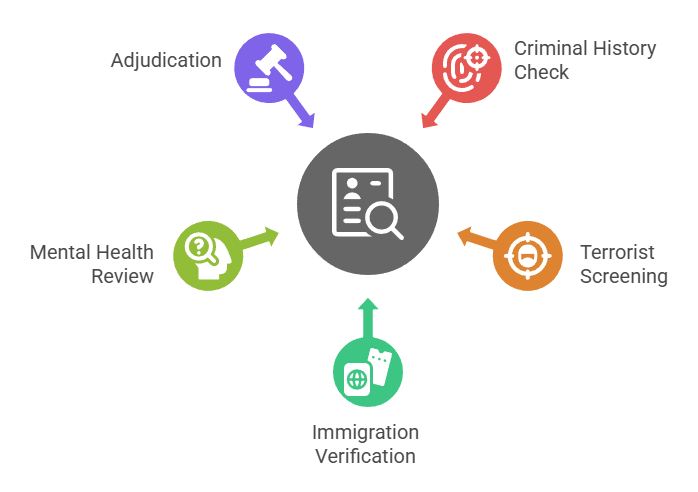
- Criminal history check: Full FBI database queries examining convictions during the five-year credential period
- Terrorist screening: Updated watchlist searches against current databases
- Immigration verification: Status confirmation for noncitizen cardholders
- Mental health review: Queries for new adjudications since initial approval
- Adjudication: Independent evaluation without deference to prior approvals
TSA conducts full criminal history database queries, terrorist screening checks, and immigration verifications regardless of renewal status. Previous TWIC approval provides no presumption of continued eligibility. Cardholders with name changes, address changes, or citizenship status changes must complete standard renewal procedures with full documentation.
Renewal Costs and Processing Expectations
TWIC renewal fees match initial application costs, currently established at $125.25 for standard five-year credentials. Reduced fee options exist for certain populations including merchant mariners holding Transportation Worker Identification Credentials who qualify for reduced rate structures under specific circumstances defined in TSA fee schedules. Processing timelines for renewals generally match initial application standards, requiring 3-5 weeks for uncomplicated applications.
The TSA provides no expedited processing for renewal applications, even when worker credentials expire during pending reviews. Employers managing workforce TWIC compliance should implement tracking systems identifying upcoming expirations and initiating renewal reminders well in advance. Systematic renewal management prevents last-minute applications that risk workforce disruptions when processing extends beyond anticipated timelines or when workers face unexpected background check challenges requiring appeals.
Employer Responsibilities and FCRA Compliance Considerations

Employers navigating TWIC requirements must balance federal security mandates with employment law obligations. Fair Credit Reporting Act compliance becomes particularly critical when evaluating applicant criminal history before TSA determinations. Understanding these intersecting legal frameworks prevents costly violations and discrimination claims.
Pre-Employment TWIC Eligibility Assessments
Employers may conduct preliminary criminal background checks to assess likely TWIC eligibility before extending conditional employment offers to maritime positions requiring credentials. When using consumer reporting agencies to obtain criminal history reports for this purpose, employers must comply with FCRA requirements. These include providing clear and conspicuous disclosure that consumer reports may be obtained, securing written authorization from applicants, and following adverse action procedures if background check information influences hiring decisions.
The FCRA’s adverse action requirements mandate that employers provide applicants with pre-adverse action notices:
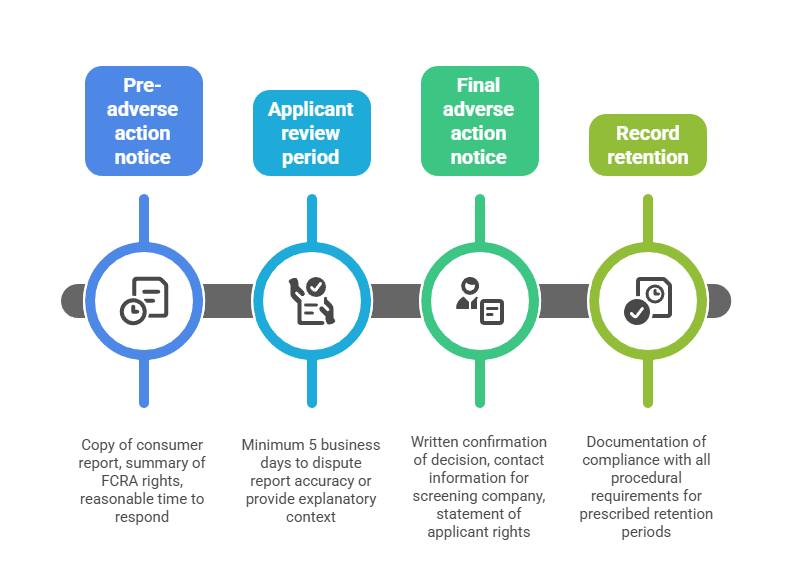
- Pre-adverse action notice: Copy of consumer report, summary of FCRA rights, reasonable time to respond
- Applicant review period: Minimum 5 business days to dispute report accuracy or provide explanatory context
- Final adverse action notice: Written confirmation of decision, contact information for screening company, statement of applicant rights
- Record retention: Documentation of compliance with all procedural requirements for prescribed retention periods
Employers cannot circumvent FCRA obligations by claiming TSA makes the ultimate disqualification determination. If employers use background screening services to evaluate criminal history and make preliminary TWIC eligibility assessments that influence hiring decisions, FCRA compliance remains mandatory regardless of subsequent TSA processes. The determination of whether to advance candidates through hiring processes based on anticipated TWIC outcomes constitutes employment decision-making subject to FCRA procedures.
Conditional Offer Timing and Background Check Strategies
Many employers extend conditional employment offers contingent on successful TWIC obtainment, then support applicants through the credential application process. This approach shifts TWIC processing costs and time investments to the employment relationship phase rather than pre-application screening. However, it creates risks if applicants ultimately receive TSA denials after onboarding investments.
Alternative approaches include requiring applicants to obtain TWIC credentials before application consideration, effectively transferring application costs and risks to job seekers. While this strategy simplifies employer compliance management, it may reduce applicant pool diversity and create barriers for qualified candidates with limited financial resources. Employers should establish clear written policies defining TWIC credential requirements, timing expectations, and cost responsibility allocations.
Ban-the-Box and Fair Chance Hiring Law Interactions
State and local fair chance hiring laws, commonly called ban-the-box ordinances, restrict employer inquiry timing and use of criminal history information in hiring processes. These laws vary significantly by jurisdiction but generally prohibit criminal history inquiries on initial employment applications. They also restrict consideration of certain conviction categories, arrest records, and aged offenses beyond specified lookback periods.
TWIC requirements create potential tensions with fair chance hiring laws when federal security mandates require criminal history evaluations that local ordinances limit:
- Timing restrictions: Many jurisdictions prohibit criminal history questions until conditional offer stage
- Consideration limits: Some laws bar consideration of arrests without convictions, offenses beyond specified lookback periods
- Individualized assessment: Requirements to evaluate offense nature, time elapsed, job-relatedness before adverse actions
- Federal preemption: Courts generally recognize federal security requirements override inconsistent local restrictions
Best practices include delaying criminal history inquiries until conditional offer stages when permissible under local law and clearly communicating that criminal history evaluation serves federal security compliance rather than general suitability determinations. Employers should follow individualized assessment requirements that evaluate offense nature, time elapsed, and job-relatedness even when TSA disqualifications appear likely.
Managing Current Employee TWIC Denials or Revocations
When existing employees lose TWIC credentials through expiration, denial during renewal, or TSA revocation for security reasons, employers face difficult workforce management decisions. Federal regulations prohibit facility access without valid credentials, effectively requiring removal from positions requiring unescorted access to secure areas. Employers must balance operational needs with legal obligations while treating affected employees fairly.
Employers should evaluate whether alternative position assignments not requiring TWIC credentials exist within their organizations. Offering transfers when feasible rather than automatic terminations demonstrates reasonable accommodation efforts and reduces wrongful termination litigation risks. When no alternative positions exist and security requirements mandate credential possession, termination may prove necessary. Careful documentation of business necessity and security mandate compliance remains essential in these circumstances.
Strategic Preparation Tips for Successful Applications
Proactive preparation significantly improves application success rates and reduces processing delays. Strategic approaches address common pitfalls before they create obstacles. Applicants who invest time in thorough documentation gathering and verification experience smoother TSA processing.
Obtaining Court Records and Disposition Certificates
Applicants with criminal history should obtain certified court disposition records for all arrests and convictions before beginning TWIC applications. These documents provide definitive case outcome information that clarifies potentially ambiguous database entries. They also demonstrate case dismissals or expungements and support waiver applications when disqualifying convictions exist.
Court clerks in conviction jurisdictions provide certified disposition certificates showing charges filed, plea or trial outcomes, sentences imposed, and case status:
- In-person requests: Visit courthouse clerk’s office with identification and case information
- Online access: Some jurisdictions offer electronic records portals with certification options
- Mail requests: Submit written request with case numbers, fee payment, return envelope
- Processing time: Ranges from immediate issuance to 2-4 weeks depending on court resources
Obtaining these records proactively prevents delays when TSA requests additional documentation during Security Threat Assessment adjudication. Applicants should verify that disposition records accurately reflect case outcomes, identifying any errors requiring correction before TSA review.
Documentation Consistency and Name Verification Issues
Inconsistencies between names used on TWIC applications and supporting identity documents create processing delays requiring additional verification. Legal name changes through marriage, divorce, or court orders should be clearly documented with supporting certificates or court orders. These establish name change authority and timing for TSA verification purposes.
Applicants who have used multiple names should disclose all previous names on applications even when supporting documents reflect only current legal names. This disclosure enables TSA to accurately link criminal history records and identity information across name variations. Immigration status verification requires similar documentation consistency, with names on immigration documents matching application information and supporting identity verification materials.
Understanding Your FBI Identification Record Before Applying
Applicants with criminal history backgrounds benefit from obtaining personal FBI identification records before TWIC applications to verify database accuracy. The FBI provides personal criminal history record checks through the Identity History Summary process. This involves processing requests submitted with fingerprint cards and applicable fees to the Criminal Justice Information Services division.
Reviewing FBI records before TSA submission enables applicants to identify errors requiring correction, prepare explanatory documentation for accurate but concerning entries, and make informed decisions about waiver likelihood:
- Request FBI record: Submit fingerprint card and fee through approved channelers or directly to FBI
- Review for accuracy: Compare FBI entries against personal records and court documents
- Identify discrepancies: Note incorrect dispositions, missing dismissals, attribution errors
- Initiate corrections: File FBI Challenge requests with supporting court documentation
- Obtain updated record: Receive corrected identification record after FBI processing
This proactive approach prevents surprises during TSA processing and enables strategic preparation of appeal materials simultaneously with initial applications. Correction timelines may extend several months depending on record complexity and court documentation availability.
Conclusion
Successfully obtaining a TWIC card requires understanding federal security requirements, preparing comprehensive documentation, and strategically navigating TSA background check procedures. Employers and maritime workers who invest time in thorough preparation, maintain documentation consistency, and proactively address potential criminal history complications achieve smoother application experiences and reduce processing delays that disrupt workforce access and operational compliance.
Frequently Asked Questions
How long does it take to get a TWIC card from start to finish?
The complete TWIC process typically requires 3-5 weeks from enrollment center visit to card receipt for applicants without complicating factors. Processing timelines extend to 8-12 weeks when background checks require additional review. Applications can reach 16 weeks or longer when applicants pursue appeals or waivers.
Can I work in maritime facilities while my TWIC application is pending?
No federal provision permits facility access in secure areas without valid TWIC credentials, even when applications are pending TSA review. Applicants must wait until receiving approved credentials before beginning work requiring unescorted access to restricted zones. Some facilities may offer escorted visitor access for training purposes, though these arrangements cannot substitute for TWIC requirements.
What crimes permanently disqualify someone from getting a TWIC card?
Permanent disqualifications under 49 CFR § 1572.103 include espionage, sedition, treason, terrorism-related federal crimes, murder, federal crimes involving transportation security, and certain immigration fraud offenses. Mental health adjudications finding individuals not guilty by reason of insanity, incompetent to stand trial, or dangerous also create permanent bars without waiver options.
Will an expunged conviction show up on my TWIC background check?
Expunged convictions may appear in FBI databases accessed during TSA Security Threat Assessments depending on state reporting practices and database update procedures. TSA policy directs that expunged, pardoned, or set-aside convictions should not form bases for denials when applicants provide documentation establishing the legal relief obtained. Applicants should proactively submit certified court expungement orders with applications.
How much does a TWIC card cost and are there fee assistance programs?
The standard TWIC application fee is $125.25 for five-year credentials, paid during enrollment center visits. The TSA offers reduced fees for certain categories including merchant mariners and individuals renewing under specific circumstances. Limited fee assistance programs exist through some maritime industry associations and workforce development organizations, though no federal fee waiver program operates.
Can my employer require me to pay for my own TWIC card application?
Employment law does not generally prohibit employers from requiring applicants or employees to bear TWIC application costs, though some states restrict employers from requiring applicants to pay for employment-related expenses before hiring. Employer payment policies vary widely across the maritime industry. Applicants should clarify cost responsibility expectations before beginning applications.
What happens if I fail the TWIC background check after my employer hired me?
Employees who receive TSA denials after beginning employment cannot access secure facility areas without valid TWIC credentials, effectively preventing performance of job duties. Employers may offer alternative positions not requiring credentials if available, though no legal obligation to do so exists absent collective bargaining agreements. Employees may pursue TSA appeals or waivers, though employment continuation during appeals remains at employer discretion.
Do TWIC cards work in all U.S. ports and maritime facilities?
TWIC credentials function uniformly across all facilities and vessels subject to Maritime Transportation Security Act requirements throughout the United States and territories. Federal standardization ensures that workers can access any covered facility presenting valid credentials without facility-specific application processes. Facility operators may impose additional site-specific security requirements beyond TWIC possession.
Can I renew my TWIC card online without visiting an enrollment center?
Most TWIC renewals require in-person enrollment center visits for biometric capture even when biographical information remains unchanged from initial applications. The TSA has implemented limited online renewal options for certain populations under pilot programs. All renewals require complete Security Threat Assessments identical to initial applications regardless of visit format.
What should I do if my TWIC card is lost, stolen, or damaged?
Cardholders must report lost or stolen TWIC credentials to the TSA immediately through the program hotline to prevent fraudulent use and begin replacement processes. Replacement cards require new applications with associated fees, though some circumstances qualify for reduced replacement fees. Damaged cards that remain readable may continue functioning until expiration.
Additional Resources
- Transportation Security Administration TWIC Program Official Website
https://www.tsa.gov/for-industry/twic - Code of Federal Regulations Title 49 Part 1572 – Credentialing and Security Threat Assessments
https://www.ecfr.gov/current/title-49/subtitle-B/chapter-XII/subchapter-C/part-1572 - U.S. Coast Guard Maritime Transportation Security Act Information
https://www.dco.uscg.mil/Our-Organization/Assistant-Commandant-for-Prevention-Policy-CG-5P/Inspections-Compliance-CG-5PC-/Office-of-Port-Facility-Compliance/MTSA/ - FBI Criminal Justice Information Services – Identity History Summary Checks
https://www.fbi.gov/how-we-can-help-you/need-an-fbi-service-or-more-information/identity-history-summary-checks - Federal Trade Commission – Employment Background Checks and the Fair Credit Reporting Act
https://www.ftc.gov/business-guidance/resources/using-consumer-reports-what-employers-need-know

ABOUT THE CREATOR
GCheck Editorial Team
Meet the GCheck Editorial Team, your trusted source for insightful and up-to-date information in the world of employment background checks. Committed to delivering the latest trends, best practices, and industry insights, our team is dedicated to keeping you informed.
With a passion for ensuring accuracy, compliance, and efficiency in background screening, we are your go-to experts in the field. Stay tuned for our comprehensive articles, guides, and analysis, designed to empower businesses and individuals with the knowledge they need to make informed decisions.
At GCheck, we're here to guide you through the complexities of background checks, every step of the way.