Drug Testing by Industry: What to Expect in Healthcare, Transportation, and More

Industry specific drug screening requirements vary significantly across sectors, with heavily regulated areas like healthcare and transportation implementing stringent workplace drug testing policies while others maintain more flexible approaches. Understanding these pre-employment drug screening protocols and ongoing requirements is crucial for job seekers navigating career transitions and professionals ensuring workplace compliance.
Key Takeaways
- Healthcare worker drug tests are among the most comprehensive, including pre-employment, random, and post-incident testing due to patient safety concerns and regulatory requirements.
- DOT drug testing requirements apply uniformly across transportation sectors, mandating extensive screening for safety-sensitive positions with federal oversight.
- Construction and manufacturing sectors increasingly implement workplace drug testing policies due to safety hazards and workers' compensation considerations.
- Technology and creative industries typically maintain more lenient industry specific drug screening, focusing on performance rather than off-duty behavior.
- Government positions often require extensive pre-employment drug screening and ongoing monitoring for security clearances and public safety roles.
- Testing frequency and methods vary by industry, ranging from one-time screening to comprehensive random testing programs throughout employment.
Healthcare Industry Drug Testing Requirements
Healthcare worker drug tests represent the most comprehensive screening protocols across all medical professions. Healthcare employers prioritize patient safety above all other considerations. This leads to extensive workplace drug testing policies that continue throughout employment. Federal and state regulations mandate strict compliance measures for healthcare facilities receiving government funding.
Most healthcare facilities test for comprehensive panels including opioids and benzodiazepines. They also screen for other controlled substances commonly found in medical settings. The consequences of positive results often include immediate termination and reporting to professional licensing boards. Nurses, doctors, pharmacists, and technicians all face strict pre-employment drug screening requirements. Emergency department staff undergo additional scrutiny due to high-stress environments.
Mental health professionals working with vulnerable populations face enhanced screening protocols. Home healthcare workers require comprehensive background checks and ongoing monitoring. Surgical technicians and anesthesiologists face the strictest oversight due to controlled substance access. Medical assistants and laboratory technicians must comply with facility-wide testing programs.
Healthcare worker drug tests typically include five-panel screens at minimum. Many facilities now use expanded panels testing for prescription medications. Hair follicle testing is becoming more common for pre-employment screening. Saliva tests may be used for reasonable suspicion situations. Blood tests are reserved for post-accident investigations or legal proceedings.
Transportation and DOT-Regulated Industries
DOT drug testing requirements create uniform standards across all transportation sectors under federal mandate. These regulations apply to commercial drivers, pilots, railroad workers, and maritime personnel. DOT drug testing requirements supersede state laws regarding cannabis legalization. The Federal Motor Carrier Safety Administration enforces standards through regular compliance audits.
Transportation companies must maintain detailed records of all testing activities:
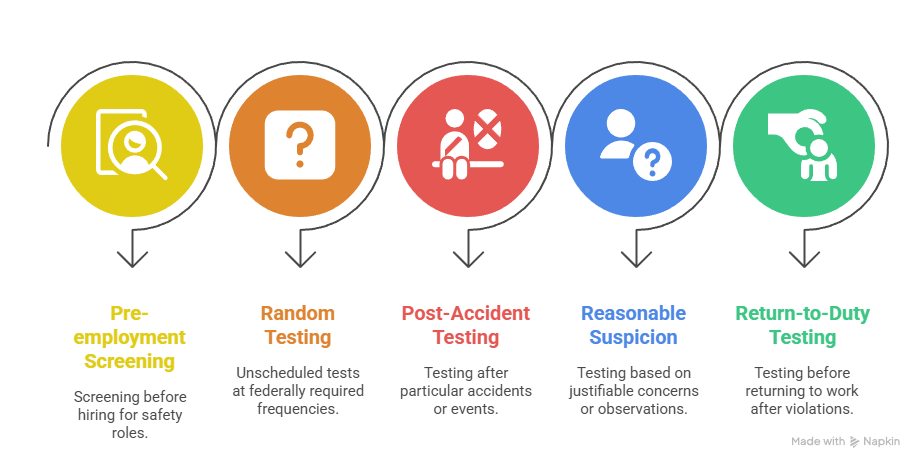
- Pre-employment screening for all safety-sensitive positions
- Random testing at mandated federal rates
- Post-accident testing following specific incidents
- Reasonable suspicion testing when warranted
- Return-to-duty testing after violations
The Federal Motor Carrier Safety Administration maintains a clearinghouse tracking all violations. Employee violations result in immediate removal from safety-sensitive duties until completion of return-to-duty processes.
Commercial Driving Standards
Commercial drivers face the most frequent testing under DOT drug testing requirements. Motor carriers must implement comprehensive programs covering multiple testing scenarios. Random testing occurs for 50% of drivers annually for drugs and 10% for alcohol.
The Drug and Alcohol Clearinghouse creates permanent records following drivers throughout their careers. Positive test results require substance abuse professional evaluations. Return-to-duty processes can take months to complete and cost thousands of dollars.
Aviation Industry Requirements
Aviation professionals undergo rigorous industry specific drug screening protocols due to public safety responsibilities. Flight crew members face random testing rates of 25% annually for drugs and 10% for alcohol. Post-accident testing requirements apply to all incidents involving aircraft damage or personal injury.
Air traffic controllers face similar testing requirements with additional psychological evaluations. Maintenance personnel working on aircraft systems undergo comprehensive screening programs. Ground crew handling fuel and baggage operations may face limited testing requirements depending on their specific duties.
Government and Security Positions
Government employment requires extensive background investigations including comprehensive pre-employment drug screening protocols. Security clearance positions face the most stringent workplace drug testing policies with ongoing monitoring throughout employment. Federal agencies maintain zero-tolerance policies for illegal drug use regardless of state legalization laws. These policies apply to all federal employees, contractors, and military personnel.
| Position Type | Testing Requirements | Ongoing Monitoring |
| Security Clearance | Polygraph + screening | Periodic reinvestigation |
| Law Enforcement | Comprehensive testing | Random + incident-based |
| Emergency Services | Pre-employment + random | Continuous throughout career |
State and local government positions vary significantly in workplace drug testing policies. Most agencies are expanding testing programs due to public accountability concerns and safety considerations.
Police officers, firefighters, and emergency medical technicians face comprehensive testing throughout their careers. Court personnel including judges, clerks, and bailiffs undergo extensive pre-employment drug screening. Prison guards and correctional officers require ongoing monitoring due to security concerns. Social workers handling child welfare cases face enhanced scrutiny to protect vulnerable populations.
Federal contractors working on sensitive projects must comply with government workplace drug testing policies. Defense contractors require security clearances with associated testing requirements. Technology contractors working on classified systems undergo comprehensive screening. Administrative contractors may face testing requirements depending on their access levels.
Technology and Creative Industries
Technology companies maintain flexible workplace drug testing policies focused on performance rather than personal behavior. Silicon Valley culture has influenced attitudes toward cannabis use across the broader technology sector. Many companies have eliminated pre-employment drug screening for marijuana while maintaining testing for safety-sensitive positions. This approach reflects changing social attitudes and competitive talent markets.
Creative industries including entertainment and media maintain varied approaches to industry specific drug screening:
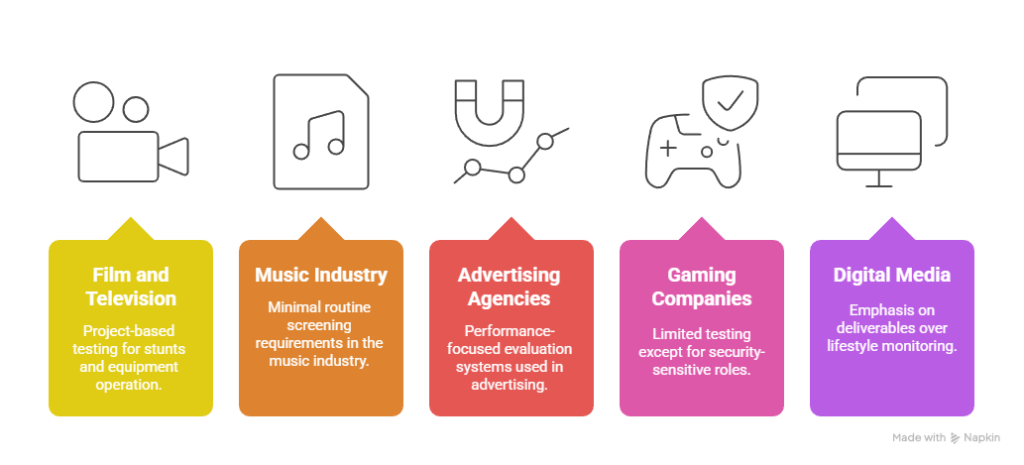
- Film and Television: Project-based testing for stunts and equipment operation
- Music Industry: Minimal routine screening requirements
- Advertising Agencies: Performance-focused evaluation systems
- Gaming Companies: Limited testing except for security-sensitive roles
- Digital Media: Emphasis on deliverables over lifestyle monitoring
The creative sector emphasizes talent acquisition over personal lifestyle restrictions. However, insurance requirements may mandate testing for specific high-risk projects or technical positions.
Tech Company Evolution
Major technology corporations view traditional drug testing as counterproductive to recruiting top talent. Companies like Google, Apple, and Microsoft focus on skills and performance rather than personal lifestyle choices. Startup companies often eliminate all pre-employment drug screening to attract innovative candidates.
However, technology companies maintain workplace drug testing policies for reasonable suspicion situations. Safety-sensitive roles involving server maintenance or data center operations may require testing. Government contracts often mandate comprehensive screening programs regardless of company preferences.
Entertainment Sector Policies
Production companies implement testing for specific projects involving stunts or equipment operation. Insurance companies require comprehensive screening for high-budget productions. Child-focused content often mandates background checks and substance abuse screening for all personnel.
Union agreements significantly influence workplace drug testing policies in entertainment industries. Screen Actors Guild contracts may limit testing to safety-sensitive situations. Directors Guild agreements focus on professional conduct rather than personal lifestyle monitoring.
Financial Services and Banking
Financial institutions face unique regulatory requirements due to federal oversight and fiduciary responsibilities. Banks and investment firms must maintain comprehensive compliance programs including pre-employment drug screening protocols. The FDIC and other regulatory bodies expect institutions to implement risk management measures through workplace drug testing policies. These requirements stem from the need to protect customer assets and maintain public trust.
Industry specific drug screening is standard across most financial services positions. This particularly applies to cash handling, investment advisory roles, and compliance functions. Executive and management positions require testing due to fiduciary duties and access to sensitive financial information. Tellers, vault personnel, and armored car services face comprehensive screening due to cash handling responsibilities.
Securities industry professionals face additional testing requirements through FINRA regulations. Registered representatives must maintain clean records to preserve their licenses. Investment advisors undergo comprehensive background checks including substance abuse screening. Bank executives face enhanced scrutiny due to oversight responsibilities and access to sensitive information.
Insurance companies implement workplace drug testing policies similar to other financial institutions. Claims adjusters handling large settlements require pre-employment drug screening. Actuaries and underwriters face testing due to critical decision-making responsibilities. Customer service representatives handling sensitive financial information undergo screening protocols.
Random testing implementation varies by institution size and risk profile. Community banks may limit programs to pre-employment drug screening only. Major financial institutions maintain ongoing monitoring programs for certain positions. Regulatory examinations review testing policies as part of overall risk management assessments.
Construction and Manufacturing Safety
Construction and manufacturing industries have expanded workplace drug testing policies due to safety concerns and insurance requirements. These sectors experience higher accident rates making industry specific drug screening a critical risk management tool. Workers' compensation insurers provide premium discounts for comprehensive testing programs. OSHA regulations influence many construction industry policies through safety oversight requirements.
Safety-sensitive positions face the strictest testing requirements:
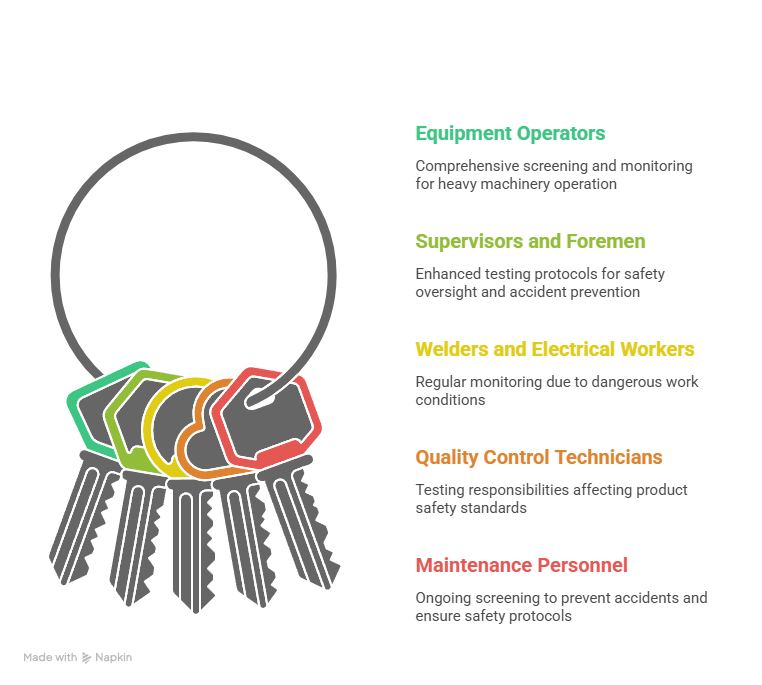
- Equipment Operators: Heavy machinery operation requires comprehensive screening and ongoing monitoring throughout employment
- Supervisors and Foremen: Enhanced testing protocols ensure proper safety oversight and accident prevention in high-risk environments
- Welders and Electrical Workers: Regular monitoring due to dangerous work conditions and potential for serious workplace injuries
- Quality Control Technicians: Testing responsibilities affect product safety standards and overall company liability exposure
- Maintenance Personnel: Equipment access requires ongoing screening to prevent accidents and ensure proper safety protocols
Companies with poor safety records face increased regulatory scrutiny often resulting in mandatory testing programs. Non-union contractors implement aggressive policies to compete for contracts and demonstrate safety commitment.
Manufacturing facilities implement comprehensive workplace drug testing policies due to safety hazards and regulatory requirements. Assembly line workers face pre-employment screening and ongoing monitoring throughout their employment. Chemical plants require extensive testing due to environmental risks and safety concerns. Food processing facilities maintain strict protocols to ensure product safety and regulatory compliance.
Pharmaceutical manufacturing maintains healthcare-level testing standards due to controlled substance access. Medical device manufacturers implement strict protocols due to product safety implications and FDA oversight. Automotive plants require comprehensive testing for workers operating heavy machinery and advanced robotics systems.
Education Sector Variations
Educational institutions implement diverse workplace drug testing policies depending on funding sources and student age groups. K-12 schools receiving federal funding maintain stricter industry specific drug screening than higher education institutions. Private schools have more flexibility in establishing pre-employment drug screening protocols. State education departments provide guidance on testing requirements for public institutions.
School districts commonly test bus drivers, coaches, and safety-sensitive positions while varying requirements exist for classroom teachers:
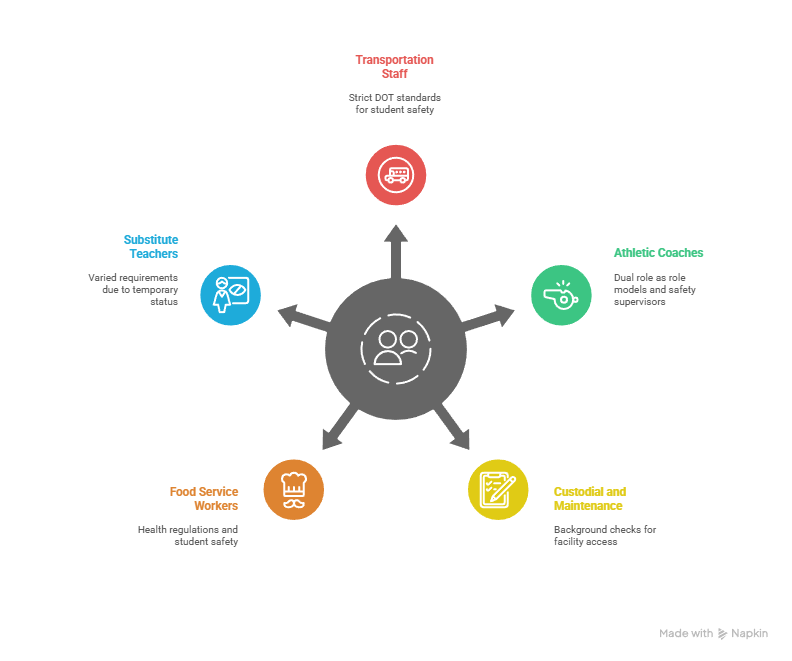
- Transportation Staff: DOT requirements create strictest standards due to student safety and federal transportation regulations
- Athletic Coaches: Enhanced scrutiny serves dual purposes as role models and safety supervisors for student activities
- Custodial and Maintenance: Facility access during non-school hours requires background checks and substance abuse screening
- Food Service Workers: Health department regulations and student safety considerations mandate comprehensive screening programs
- Substitute Teachers: Different requirements may apply compared to full-time faculty due to temporary employment status
Higher education institutions maintain more flexible approaches to testing policies. Research universities may limit screening to laboratory and facilities positions due to safety concerns. Community colleges often align with local K-12 requirements for consistency. Private colleges and universities exercise greater autonomy in establishing testing protocols.
University security personnel face comprehensive screening due to campus safety responsibilities. Residence hall staff may undergo testing due to student supervision duties. Laboratory technicians working with hazardous materials require ongoing monitoring. Facilities management staff operating heavy equipment face safety-focused testing requirements.
Retail and Hospitality Standards
Retail and hospitality sectors maintain inconsistent workplace drug testing policies across different market segments. High-end retailers implement comprehensive industry specific drug screening programs while entry-level positions have limited pre-employment drug screening requirements. Customer-facing and cash-handling positions receive screening priority due to theft prevention and customer safety concerns.
The retail industry increasingly considers cannabis legalization when developing workplace drug testing policies. Many major retailers eliminated pre-employment drug screening for marijuana in non-safety positions. They continue testing for alcohol and hard drugs affecting job performance. Restaurant and hotel management require testing due to alcohol service responsibilities and regulatory compliance.
| Industry Segment | Testing Requirements | Key Positions |
| Luxury Retail | Comprehensive screening | Management, loss prevention, sales associates |
| Quick Service Food | Limited requirements | Management, delivery drivers, kitchen supervisors |
| Hotels | Moderate screening | Front desk, housekeeping, security, maintenance |
Gaming and casino operations maintain strict policies due to licensing requirements and regulatory oversight. These businesses face additional scrutiny from gaming commissions requiring comprehensive employee monitoring programs.
Loss prevention personnel undergo comprehensive pre-employment drug screening due to security responsibilities. These positions involve potential legal testimony and law enforcement cooperation. Pharmacy staff in retail settings face healthcare-level testing requirements due to controlled substance access. They must maintain professional standards similar to hospital pharmacies.
Hotel housekeeping staff may undergo testing due to guest room access and property security. Front desk personnel handling cash and customer information require screening for theft prevention. Restaurant servers in establishments serving alcohol face testing requirements in many jurisdictions. Kitchen staff working with knives and equipment may undergo safety-focused screening protocols.
Energy and Utilities Sector
Power plant operators face extensive workplace drug testing policies due to public safety responsibilities and critical infrastructure protection. Nuclear facilities implement the most comprehensive industry specific drug screening programs due to national security concerns. Oil and gas workers require rigorous pre-employment drug screening and ongoing monitoring throughout their careers. Pipeline workers transport hazardous materials requiring strict federal safety protocols.
Refinery employees work in high-risk environments with explosive materials and dangerous chemicals. Emergency response teams face enhanced testing due to critical decision-making responsibilities affecting public safety. Control room operators make decisions affecting thousands of customers and require comprehensive screening. Field service technicians require testing due to equipment operation and safety responsibilities.
Solar and wind energy technicians work at dangerous heights requiring safety-focused testing programs. Water treatment facility operators ensure public health requiring comprehensive screening and ongoing monitoring. Environmental compliance staff undergo screening due to regulatory oversight responsibilities and potential legal implications.
Utility companies maintain comprehensive workplace drug testing policies covering multiple employee categories. Electrical lineworkers face strict requirements due to high-voltage work and public safety implications. Gas utility technicians require testing due to explosion risks and emergency response duties. Customer service representatives may face limited testing depending on access to sensitive infrastructure information.
Conclusion
Workplace drug testing policies and industry specific drug screening requirements vary dramatically across sectors based on safety considerations, regulatory mandates, and cultural attitudes toward substance use. Healthcare worker drug tests and DOT drug testing requirements maintain the strictest protocols due to public safety responsibilities and federal oversight requirements. Technology and creative industries increasingly adopt performance-focused approaches emphasizing results over personal lifestyle monitoring.
Financial services, government, and education sectors maintain moderate to strict pre-employment drug screening requirements based on regulatory compliance needs and public trust considerations. Manufacturing, construction, and energy sectors prioritize safety-sensitive positions while implementing comprehensive programs to reduce workplace accidents and liability exposure. Understanding these variations helps professionals make informed career decisions while maintaining appropriate workplace conduct standards.
Job seekers should research specific company policies and industry requirements before applying to positions. Many organizations provide policy information during application processes or upon request from human resources departments. Career changers should prepare for different testing requirements when transitioning between industries with varying regulatory frameworks. Professional development and compliance training help workers understand their responsibilities under various workplace drug testing policies.
Frequently Asked Questions
Which industries have the strictest workplace drug testing policies?
Healthcare worker drug tests, DOT drug testing requirements for transportation, and government/security sectors maintain the most comprehensive industry specific drug screening protocols due to safety-sensitive responsibilities and federal regulatory requirements.
Do all construction jobs require pre-employment drug screening?
Not all construction positions require testing, but most safety-sensitive roles including equipment operators and supervisory positions face pre-employment drug screening and post-accident testing under workplace drug testing policies.
Can technology companies still implement industry specific drug screening?
Yes, technology companies retain the right to drug test employees, though many have eliminated routine marijuana testing from pre-employment drug screening for non-safety-sensitive positions while maintaining workplace drug testing policies for reasonable suspicion situations.
How do DOT drug testing requirements affect transportation workers?
DOT drug testing requirements mandate random screening for 50% of safety-sensitive transportation workers annually, with 10% tested for alcohol, using computer-generated selection processes under federal workplace drug testing policies.
Are teachers subject to pre-employment drug screening requirements?
Pre-employment drug screening requirements for teachers vary by state and school district, with many K-12 public schools requiring testing while higher education institutions often have more flexible workplace drug testing policies.
How do workplace drug testing policies vary in retail?
Retail industry specific drug screening varies significantly by company and position, with management roles and cash-handling positions more likely to require pre-employment drug screening than entry-level customer service positions.
Additional Resources
- Department of Transportation Drug Testing Requirements
https://www.transportation.gov/odapc - FMCSA Drug and Alcohol Clearinghouse Information
https://clearinghouse.fmcsa.dot.gov - OSHA Workplace Safety and Drug Testing Guidelines
https://www.osha.gov/drug-free-workplace - Society for Human Resource Management Testing Policies
https://www.shrm.org/resourcesandtools/tools-and-samples/toolkits/pages/drugfreeworkplace.aspx - National Institute on Drug Abuse Workplace Resources
https://www.drugabuse.gov/drug-topics/workplace - Equal Employment Opportunity Commission Testing Guidelines
https://www.eeoc.gov/laws/guidance
Still have questions?
Get in touch with our team today for a personalized demo and discover how our tailored volume pricing and packages can drive results for your business!
How useful was this page?*
Note: your comments are anonymous. We use them to improve the website. Do not include any personal details.
Visit our FCRA Compliance Tool or leave a message here if you need a response.
Credits

From the blog Explore the GCheck Content Hub

What Shows Up on a Home Health Aide Background Check: A Complete Compliance Guide for Employers and Job Seekers
4 Dec, 2025 • 18 min read
Hospital Volunteer Background Check: Complete Compliance Guide for Healthcare Facilities
4 Dec, 2025 • 20 min read
Florida MVR Check: Complete Guide to Driving Record Screening for Employers
4 Dec, 2025 • 16 min readThe information provided in this article is for general informational and educational purposes only and should not be construed as legal advice or a substitute for consultation with qualified legal counsel. While we strive to ensure accuracy, employment screening laws and regulations—including but not limited to the Fair Credit Reporting Act (FCRA), Equal Employment Opportunity Commission (EEOC) guidelines, state and local ban-the-box laws, industry-specific requirements, and other applicable federal, state, and local statutes—are subject to frequent changes, varying interpretations, and jurisdiction-specific applications that may affect their implementation in your organization. Employers and screening decision-makers are solely responsible for ensuring their background check policies, procedures, and practices comply with all applicable laws and regulations relevant to their specific industry, location, and circumstances. We strongly recommend consulting with qualified employment law attorneys and compliance professionals before making hiring, tenant screening, or other decisions based on background check information.