



Integrating criminal background checks into HR policies is critical in ensuring a consistent and legally compliant hiring process. This integration must be handled clearly and precisely, focusing on several key areas.
Policies go beyond the simple documentation; they actually impact the treatment of an individual. From my perspective, the integration of background checks within human resources policies not only meets compliance needs but also sets an equitable, consistent, and open standard that respects both the organization and the individual. Open policies and frank conversations all the way through the recruitment process ensure an atmosphere of trust and not anxiety. By following transparency-oriented principles, respect, and legal conformity, organizations ensure that safe work conditions coexist with rehabilitative possibilities. We therefore build effective teams, not just efficiently, but build teams that recognize, treasure, and truly enjoy the individual strengths of the others. �
Establishing Clear Guidelines
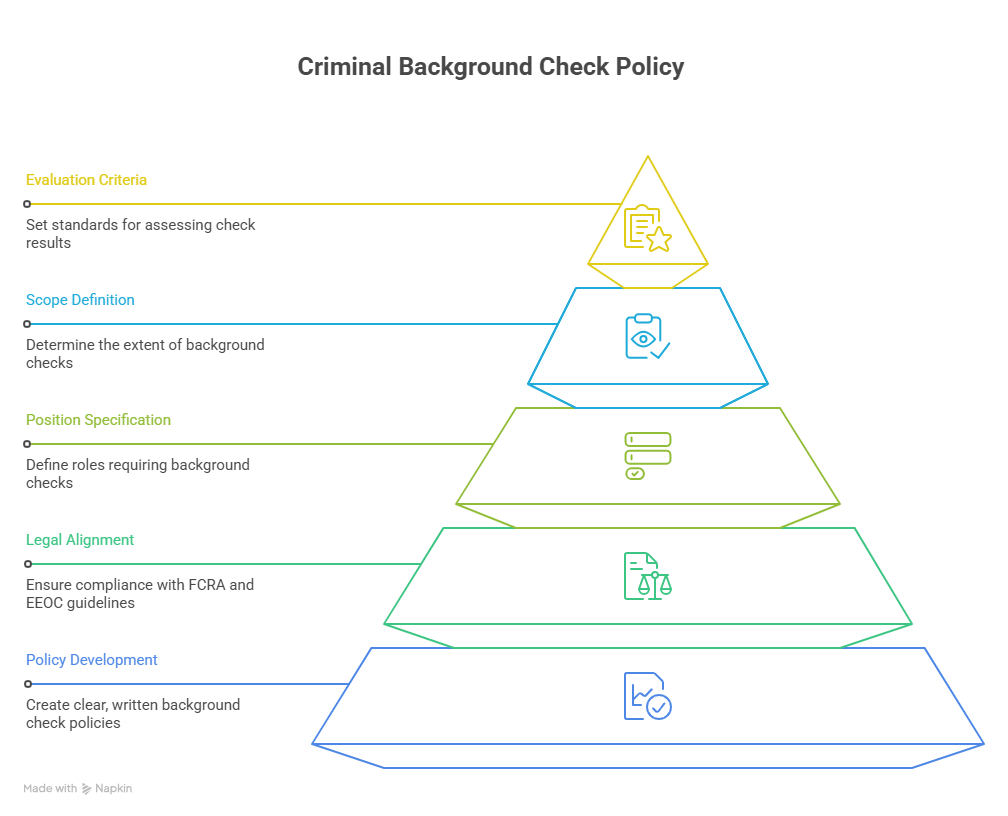
- Develop clear, written policies outlining when and how criminal background checks will be conducted. This policy should specify the types of positions that require a background check, the scope of the check, and the criteria for evaluating the results.
- Ensure that the policy aligns with legal requirements, including FCRA compliance and adherence to EEOC guidelines.
Training HR Staff
- Provide comprehensive training to HR staff on conducting and interpreting background checks. This training should cover legal compliance, ethical considerations, and company-specific procedures.
- Regularly update training to reflect changes in laws and best practices.
Regular Policy Review and Update
- Periodically review and update the background check policy to ensure it remains compliant with changing laws and industry standards.
- Stay informed about new developments in employment law and best practices in background screening.
Documentation and Record-Keeping
- Maintained detailed records of background checks, including consent forms, reports, and decision-making processes. This documentation is crucial for compliance and may be necessary for audits or legal inquiries.
- Ensure that these records are stored securely and confidentially.
Communicating Policies to Candidates and Employees
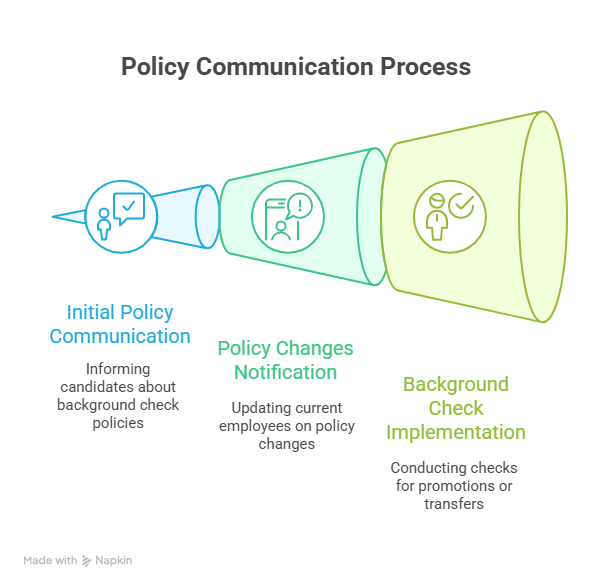
- Communicate background check policies to potential candidates during the recruitment process.
- Inform current employees of any policy changes, especially if background checks may be conducted for existing staff under certain circumstances (e.g., promotions, transfers).
Frequently Asked Questions
How do we determine which positions require a criminal background check?
Answer: Determine which positions require a background check based on the nature of the job. Positions that involve handling sensitive information, financial responsibilities, working with vulnerable populations, or high levels of trust may necessitate a thorough background check. Assess the risk associated with each position to make this determination.
What is the best way to keep up with changes in laws related to background checks?
Answer: Keeping up with legal changes involves regularly consulting legal resources, subscribing to HR and legal newsletters, attending professional workshops, and possibly consulting with legal experts. Staying connected with HR professional groups and networks can also provide updates on laws and best practices changes.
How long should we keep records of background checks?
Answer: The retention period for background check records depends on state and federal laws. Generally, keeping these records for at least the duration of the individual’s employment plus a few years post-employment is advisable. However, consult your legal counsel for specific guidance based on location and industry.
How should we handle background checks for current employees?
Answer: Background checks for current employees should be handled with the same level of care and legal compliance as for new hires. Ensure a clear policy outlines the circumstances under which an existing employee might be subject to a background check, such as promotions or transfers to sensitive positions. Employee consent and transparency remain crucial.
Can we perform background checks on contractors or temporary workers?
Answer: Yes, background checks can and often should be performed on contractors or temporary workers, especially if they have access to sensitive company information or assets. The same legal and ethical considerations apply, and it’s important to include this requirement in the contract or agreement with the individual or the staffing agency.
Conclusion
At the center of each background check is an individual—with a unique story, dreams, and a desire to be included. As a company, it is our duty to make wise decisions that protect our people and support our purpose, while ensuring fairness and respect. By infusing our background check process with clear policy, consistent practice, and open communication, we build a culture based on trust instead of fear. This process goes beyond making the simple decision of who we invite in; it becomes a way through which we open our doors to more people. Additionally, when approached thoughtfully, in compliance, and with compassion, the background check process is elevated from a mere protective measure to a vehicle for creating safer, stronger, and more inclusive workplaces.

ABOUT THE CREATOR
GCheck Editorial Team
Meet the GCheck Editorial Team, your trusted source for insightful and up-to-date information in the world of employment background checks. Committed to delivering the latest trends, best practices, and industry insights, our team is dedicated to keeping you informed.
With a passion for ensuring accuracy, compliance, and efficiency in background screening, we are your go-to experts in the field. Stay tuned for our comprehensive articles, guides, and analysis, designed to empower businesses and individuals with the knowledge they need to make informed decisions.
At GCheck, we're here to guide you through the complexities of background checks, every step of the way.