



Ensuring the safety and security of your organization, its employees, customers, and the public is paramount. Background checks are critical in achieving this goal by providing valuable insights into the history and character of individuals seeking to be part of your workforce. Here’s why safety and security are of utmost importance:
Safety isn’t about rule-following; it’s the commitment we make to all the people who enter our space. Each background check becomes a choice that can prevent injuries, save lives, and build a culture of trusting versus doubting. Research indicates that a comprehensive background check can help prevent injuries, save lives, and build a culture of trusting people versus doubting them. Administered with sensitivity, background checks are about revealing the strengths of people rather than their vulnerabilities. They seek to enable the building of a workplace wherein people are safe, respected, and free to thrive. That’s the goal we all must strive for. �
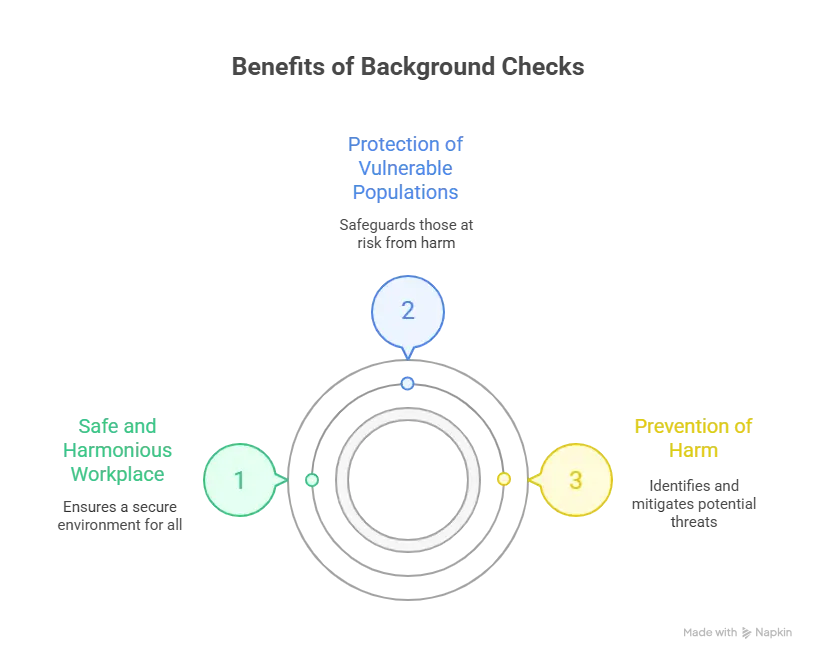
Preventing Harm
Background checks can reveal past criminal activities, including violent or fraudulent behavior. By identifying these red flags, organizations can prevent individuals with harmful intentions from entering their ranks.
Protecting Vulnerable Populations
In fields such as healthcare, childcare, and education, organizations have a special duty to protect vulnerable populations. Background checks help ensure that those interacting with vulnerable individuals have no history of abuse, neglect, or violence.
Avoiding Workplace Conflicts
Employees and coworkers deserve a safe and harmonious workplace. Background checks help identify potential conflicts, such as individuals with a history of violence or harassment, enabling organizations to mitigate risks.
Conducting background checks isn’t just good practice; it’s often a legal requirement. Organizations must adhere to specific guidelines when performing background checks to remain compliant with federal, state, and local laws. Here’s why legal and compliance reasons are crucial:
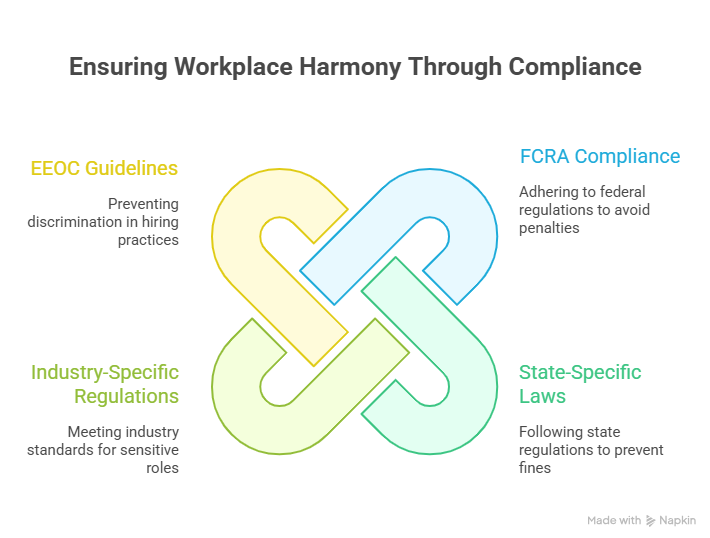
FCRA Compliance
The Fair Credit Reporting Act (FCRA) sets forth strict rules for background checks. Non-compliance can result in legal penalties and lawsuits. Organizations must obtain written consent, provide disclosure, and follow proper adverse action procedures.
State-Specific Laws
Many states have additional background check regulations, such as ban-the-box laws, which restrict the timing and scope of inquiries into an applicant’s criminal history. Non-compliance can result in fines and lawsuits.
Industry-Specific Regulations
Certain industries, like healthcare and finance, have industry-specific regulations mandating background checks due to the sensitive nature of the work. Non-compliance may lead to regulatory penalties and revocation of licenses.
EEOC Guidelines
The Equal Employment Opportunity Commission (EEOC) guides avoiding discrimination during the background check process. Organizations must be aware of these guidelines to prevent legal action related to unfair hiring practices.
Conclusion
A strong reputation is a valuable asset for any organization. The public’s perception of your organization can be heavily influenced by the actions of your employees and volunteers. Protecting your organization’s reputation is critical for several reasons:
- Trust and Credibility: A positive reputation builds customer, partner, and stakeholder trust. A single incident involving an employee or volunteer with a questionable background can tarnish that trust.
- Attracting Talent: A good reputation makes your organization attractive to potential employees and volunteers. People want to be associated with organizations that prioritize safety and integrity.
- Avoiding Negative Publicity: Scandals related to unchecked backgrounds can lead to negative media coverage, social media backlash, and damage to your brand. This negative publicity can be costly and long-lasting.
- Legal and Financial Implications: Reputation damage can lead to legal action and financial losses. Organizations may be sued for negligent hiring if it’s proven they didn’t conduct adequate background checks.
This highlights the fact that screens are not just about regulations, but rather about embodying our forward-thinking attitude and cautiousness. That forward thinking reaches far beyond the mere protection of our work; it reaches to the protection of the workmates we work with and the clients we serve daily. A proper screening process sends a powerful message: here, we put trust first. Adopting such a mindset, we build a culture full of integrity, safety, and respect.

ABOUT THE CREATOR
GCheck Editorial Team
Meet the GCheck Editorial Team, your trusted source for insightful and up-to-date information in the world of employment background checks. Committed to delivering the latest trends, best practices, and industry insights, our team is dedicated to keeping you informed.
With a passion for ensuring accuracy, compliance, and efficiency in background screening, we are your go-to experts in the field. Stay tuned for our comprehensive articles, guides, and analysis, designed to empower businesses and individuals with the knowledge they need to make informed decisions.
At GCheck, we're here to guide you through the complexities of background checks, every step of the way.