


Education background checks are an increasingly common part of the hiring process, leaving many job seekers wondering, “How far back do these education background checks go?” and “What exactly do they reveal?” This article aims to answer those questions and provide a comprehensive understanding of education background checks so you can be prepared and confident when applying for jobs.
Key Takeaways
- Unlimited Time Frame: Education background checks can verify academic records regardless of how long ago they were obtained, as there is generally no time limit on these verifications.
- Information Verified: These checks typically confirm degrees earned, institutions attended, dates of attendance, and majors or minors, but do not usually include grades, GPA, specific coursework, disciplinary records, or financial information.
- Purpose for Employers: Employers conduct education background checks to verify qualifications, prevent fraud, and ensure candidates possess the necessary skills and knowledge for the role.
- Preparation for Candidates: Job seekers should gather their educational documents, be transparent about any discrepancies, understand their rights under the Fair Credit Reporting Act (FCRA), and verify the accuracy of their school’s records to prepare for these checks.
- Addressing Issues: If discrepancies are found during an education background check, candidates can dispute incorrect information by contacting the background check company and, if necessary, their educational institution to correct the records.
Though the subject of drug testing can be sensitive, it remains a crucial topic for discussion. Understanding its importance is vital for both legal compliance and workplace safety. Employers and employees alike benefit from being well-informed about the intricacies of labor laws and company policies. �
What Are Education Background Checks?
An education background check is a process employers use to verify the academic credentials and qualifications a job applicant claims. This typically includes verifying the degrees earned, the institutions attended, and the dates of attendance. There are different levels, from simple degree verification to more thorough transcript reviews. These checks are typically conducted by the employer’s human resources department or third-party agencies specializing in background screening.
How Far Back Can Education Background Checks Go?
Unlike other background checks, there’s generally no time limit on how far back this type of check can go. This means employers can verify degrees and attendance records from decades ago. This is because educational records are considered public information, and no laws restrict how far back employers can look. However, it’s important to note that while there’s no legal time limit, the practicality of verifying very old records may be limited by the availability and accessibility of those records.
What Do Education Background Checks Reveal?
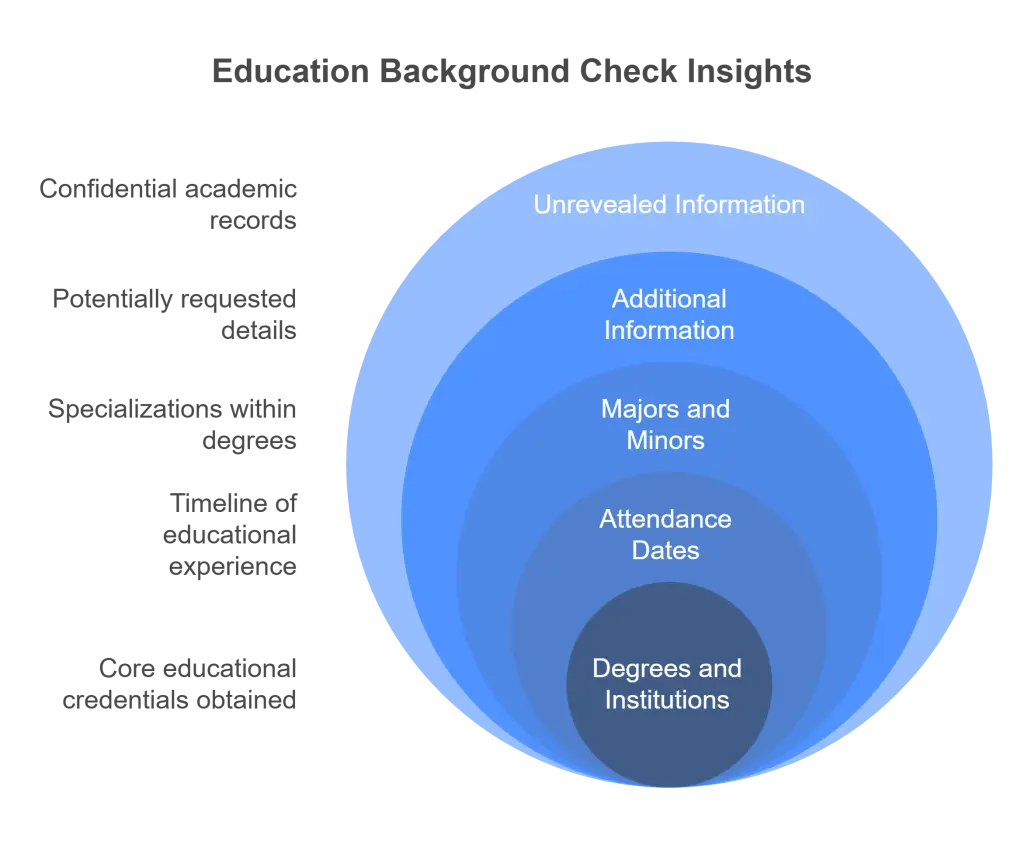
It will typically reveal the following information:
- Degrees Earned: Confirmation of whether the candidate has completed the degree(s) listed.
- Institutions Attended: Verification of enrollment or graduation from specific schools or universities.
- Dates of Attendance: Start and end dates for education can help validate timelines.
- Majors/Minors: Information on the area of study or concentration, if relevant.
It typically does not reveal the following:
- Grades or GPA: This is generally not disclosed unless explicitly requested and authorized. In some industries or roles, employers may request GPA, honors, or class rank. This is more common in fields where academic performance directly impacts job requirements, such as academia or research-intensive roles.
- Specific Coursework: While the major can be confirmed, individual classes or academic projects are rarely detailed.
- Disciplinary Records: These are not typically included in a standard check unless relevant to a specific inquiry.
- Financial Information: Information such as student loans or payments is excluded due to privacy laws.
Sometimes, if an employer has a legitimate business reason, they may request additional information like GPA or honors earned. This is more common in fields where academic performance is directly relevant to the job, such as teaching or research.
Why Do Employers Conduct Education Background Checks?
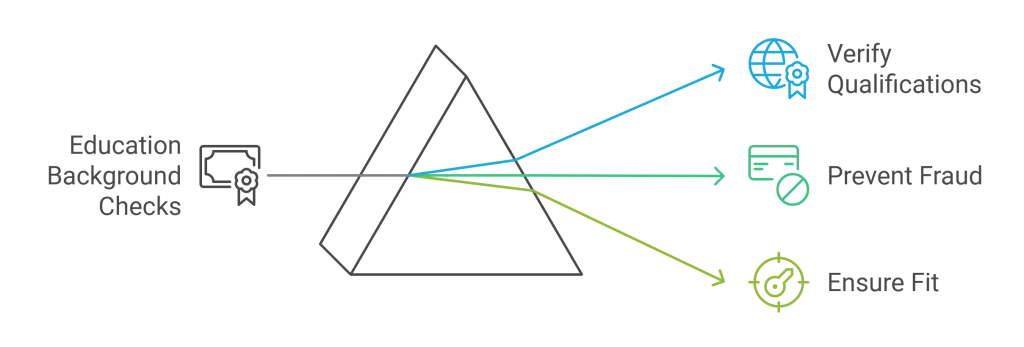
There are several reasons why employers conduct education background checks:
- Verify Qualifications: Employers want to ensure that job applicants possess the educational qualifications they claim to have. This is especially important in fields where specific degrees or certifications are required.
- Prevent Fraud: Education background checks help to deter applicants from misrepresenting their educational history or submitting fake degrees.
- Ensure Fit: By verifying educational backgrounds, employers can better understand candidates’ skills, knowledge, and potential fit for the role.
Industries commonly rely on education background checks, including finance, healthcare, education, government, and technology.
How to Prepare for an Education Background Check
Preparing for an education background check is wise if you’re applying for jobs. Here are some tips:
- Gather your records: Collect copies of your diplomas, transcripts, and other relevant educational documents.
- Be transparent: If there are any discrepancies or gaps in your educational history, be upfront about them. Employers are generally more understanding of honest explanations.
- Know your rights: The Fair Credit Reporting Act (FCRA) provides you with certain rights regarding background checks. Familiarize yourself with these rights to protect yourself from inaccurate or unfair reporting.
- Contact your school(s): If you’re unsure about the accuracy of your school’s records, contact the registrar’s office to confirm.
What if an Education Background Check Reveals an Issue?
You can dispute incorrect information or discrepancies. Contact the background check company and provide them with evidence of the correct information. If the issue originated there, you may also need to contact your school to correct their records.
Additional Considerations
- International degrees: The verification process may differ slightly if you earned a degree outside the United States. Employers may need to work with agencies specializing in global education verification.
- Online education verification services: There are online services that can help you verify your educational credentials. This can help ensure the accuracy of your records before applying for jobs.
- Diploma mills: Be wary of “diploma mills” that offer fake degrees. These can be harmful to your career and may have legal consequences.
Conclusion
Education background checks are important for employers and job seekers must understand how they work. Remember, there’s generally no time limit on how far back these checks can go, so be honest and transparent about your educational history. By preparing in advance and knowing your rights, you can confidently navigate the process.

ABOUT THE CREATOR
GCheck Editorial Team
Meet the GCheck Editorial Team, your trusted source for insightful and up-to-date information in the world of employment background checks. Committed to delivering the latest trends, best practices, and industry insights, our team is dedicated to keeping you informed.
With a passion for ensuring accuracy, compliance, and efficiency in background screening, we are your go-to experts in the field. Stay tuned for our comprehensive articles, guides, and analysis, designed to empower businesses and individuals with the knowledge they need to make informed decisions.
At GCheck, we're here to guide you through the complexities of background checks, every step of the way.